Неолитийн үеийн шавар эдлэл дээр үлдсэн энэхүү ул мөр нь тухайн үеийн гар урлалын үйл ажиллагаа болон өдөр тутмын амьдралын онцлогийг илтгэж байна.
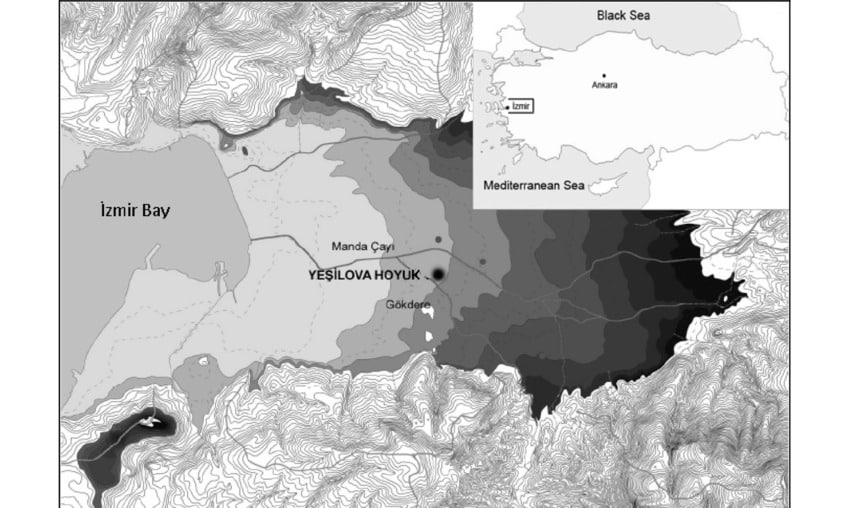
Туркийн Измайр хотын Ешилова овоонд хийсэн малтлагын явцад археологичид ойролцоогоор 8500 жилийн настай, шавар дээр дардас болон үлдсэн хурууны хээг илрүүлжээ. Эрдэмтдийн таамаглаж буйгаар эдгээр хээ нь тухайн үед амьдарч байсан эмэгтэйчүүд болон хүүхдүүдэд хамаарах аж. Шаврыг сав суулга хийх зорилгоор бэлтгэсэн байсан ч гэнэтийн гал түймрийн улмаас иргэд суурингаа яаран орхин гарахад хүрч, эдгээр олдвор газарт булагдан үлдсэн байна.
Ege University-ийн Археологийн тэнхимийн дэд профессор Зафер Деринээр удирдуулсан судалгааны баг 2005 оноос хойш тус бүс нутагт малтлага хийж байгаа юм. Шинжилгээгээр хурууны хээ үлдсэн шавар бөмбөлгүүдээс гадна шавар сав суулга, зан үйлийн зориулалттай эд зүйлс болон гэрэлтүүлгийн эртний хэрэгслүүд олдсон нь тухайн үеийн гар урлалын төв байсныг гэрчилж байна.
Судлаачид тусгай найрлагатай шаврыг зуурч, хэлбэржүүлэх явцад хурууны хээ тод үлдсэнийг тогтоожээ. Хэдийгээр шавар зуурмагт ашигласан нэмэлт бодисын найрлага одоогоор тодорхойгүй байгаа ч эдгээр олдвор нь неолитийн үеийн хүмүүсийн аж төрөх ёс, гар урлалын үйл явцыг танин мэдэхэд чухал баримт болж байна.
Ешилова овоо нь Измайр хотын хамгийн эртний суурин гэдгээрээ алдартай бөгөөд жил бүрийн малтлагаар шинэ мэдээлэл нэмэгдсээр байна. Судлаачид газрын гүнд нуугдаж буй энэхүү соёлыг бүрэн дүүрэн нээж, 8500 жилийн өмнөх амьдралын дүр зургийг сэргээн босгох зорилгоор ажлаа үргэлжлүүлж байна.
Дэлгэрэнгүйг эх сурвалжаас харах
↓Эх сурвалжийг нээх ↓
During an excavation in the Yeşilova Mound in İzmir , archaeologists gave identified fingerprints believed to belong to women and children that they were preserved in clay for roughly 8,500 years. The prints survived on lumps of clay that had been prepared for pottery-making but were apparently abandoned in haste.
Yeşilova Höyüğü is widely regarded as İzmir’s oldest known prehistoric settlement, and excavation work there has continued since 2005 under the direction of Assistant Professor Zafer Derin of Ege University’s Faculty of Letters, Department of Archaeology. The project has received support from the Ministry of Culture and Tourism, Ege University, and the Bornova Municipality.
For the study team, the find is noteworthy not just for its age but what it suggests about daily life in the Neolithic period. It shows how people worked, what they made, and whose hands touched the materials they used.
A Center of Craftsmanship 8,000 Years Ago
The area currently under excavation dates to the Neolithic period, and according to statements Zafer Derin, the archaeologist leading the excavation, gave to Anadolu Agency, the team continues to learn something new each year as they peel back layers of a culture long buried beneath the soil.
“Each year we obtain new data,” he said, “we are trying to bring to light a hidden culture buried under the soil.”
The study team has also encountered numerous pieces of pottery from that era, allowing them to reconstruct how such vessels were made, and alongside the pottery, researchers found large lumps of clay. Derin explained that a major fire appears to have brought an end to this phase of settlement, forcing the inhabitants to abandon the site.
Among the recovered items, Derin added, were also ceremonial vessels, described as containers used in rituals, along with what may be some of the earliest lighting implements found from this period, dated to roughly 8,500 years ago.
Fingerprints Left in the Clay
The most striking discovery, however, involves the fingerprints themselves. Derin described finding clay lumps prepared by the community roughly 8,500 years ago, material that had been mixed with additive substances, kneaded, and shaped into workable masses intended for further processing into pottery.
“Ancient people made the clay pots with other ingredients and thanks to those ingredients – which we have not yet identified – the fingerprints reveal themselves,” said Derin, as quoted by NTV. “We have also found that the people left the area after the fire occurred”. He also explained that those responsible had to leave the lumps behind and depart.

As he put it when describing the significance of the fingerprints, the clay lumps show that Yeşilova functioned as a production site, and, he added, “those who kneaded these clay lumps left their fingerprints behind.” Researchers now consider these impressions a valuable piece of evidence about who was involved in craft production at the settlement, suggesting they belonged to women and children.
What Else the Excavation Has Revealed?
The fingerprint discovery did not emerge in isolation. It forms part of a wider body of findings that the excavation team, led by Ege University, has been compiling since work began at the site in 2005. Each excavation season adds new information to the picture, gradually revealing details of a settlement that had otherwise remained hidden beneath layers of earth.

Pottery fragments, ceremonial vessels, lighting implements, and the fingerprint-bearing clay lumps together give archaeologists a clearer picture of daily life at Yeşilova. Already recognized as İzmir’s earliest known prehistoric settlement, the mound keeps yielding material evidence that helps piece together life at the site nearly 8,500 years ago.
Enjoyed this article? Subscribe to our free newsletter for engaging stories, exclusive content, and the latest news.

