Эрдэмтэд Cape Canaveral-д болсон пуужингийн ослын үеэр үүссэн хэт нам давтамжтай дууны долгионыг ашиглан дэлбэрэлтийн хүчийг тооцоолсон байна.
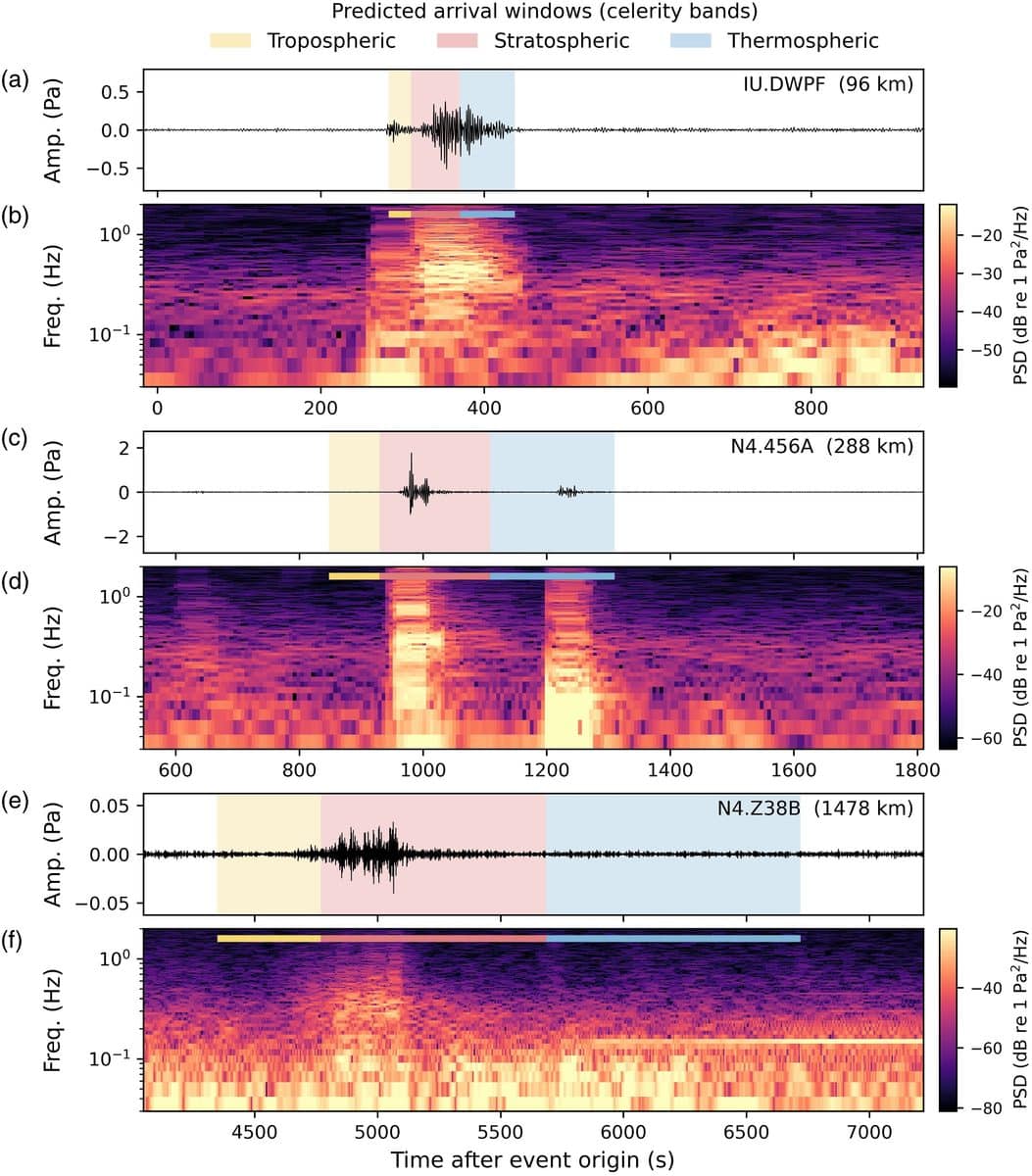
Тавдугаар сарын 29-нд Blue Origin компанийн New Glenn пуужингийн хөдөлгүүрийн туршилтын үеэр гарсан дэлбэрэлт АНУ-ын нутаг дэвсгэр даяар тархсан үл үзэгдэх дууны долгионыг үүсгэжээ. Судлаачид АНУ даяар байрлах 36 гаруй тусгай станцын мэдээлэлд дүн шинжилгээ хийсэн бөгөөд хамгийн алс буюу Техас мужаас 1,684 км-ийн зайнаас уг дэлбэрэлтийн хэт нам давтамжтай долгионыг (infrasound) бүртгэж авсан байна. Энэхүү үзэгдэл нь томоохон хэмжээний эрчим хүчний ослыг алсын зайнаас хэрхэн хянах боломжтойг судлах ховор боломжийг эрдэмтдэд олгожээ.
The Seismic Record сэтгүүлд нийтлэгдсэн судалгаагаар дэлбэрэлтийн хүчийг 0.131 килотонн буюу 144 тонн TNT-тэй тэнцэхүйц хэмжээний энерги ялгаруулсан гэж тооцоолсон байна. Энэхүү үзүүлэлт нь 1986 онд Чернобылийн атомын цахилгаан станцад гарсан анхны дэлбэрэлтийн эрчим хүчтэй дүйцэхүйц бага зэрэг өндөр дүн юм. Sandia National Laboratories-ийн эрдэмтэн Элизабет Силберийн тайлбарласнаар, түлш болон исэлдүүлэгч нь бүгд нэгэн зэрэг урвалд орохгүй байх боломжтой тул дэлбэрэлтийн үеэр түлшний 3-6 хувь нь эхний шатанд зарцуулагдсан байж болзошгүй гэж таамаглаж байна.
Ослын шалтгааныг Blue Origin компани наймдугаар сарын 5-нд хийсэн шинэчилсэн мэдээллээрээ хүчилтөрөгчийн хавхлагын гэмтэлтэй холбоотой байж болзошгүй гэж тодорхойлсон. Туршилтын талбайд гарсан энэхүү осол нь хүний амь нас хохироогүй ч пуужин хөөргөхөөс өмнөх хамгийн хүчтэй ослуудын нэгд тооцогдож байна. Одоогоор тус компани New Glenn пуужингийн дараагийн туршилтын ажиллагааг хийгээгүй байна.
Дэлгэрэнгүйг эх сурвалжаас харах
↓Эх сурвалжийг нээх ↓
When Blue Origin’s New Glenn rocket exploded during a test at Cape Canaveral, the blast sent invisible sound waves across a large part of the United States. Researchers now estimate that the explosion produced enough energy to equal 0.131 kilotons, or about 144 U.S. tons of TNT.
The accident happened on May 29 during a static “hotfire test” at Cape Canaveral Space Force Station in Florida, shortly before New Glenn’s planned fourth launch. The booster suddenly broke apart, creating a massive fireball, throwing burning debris into the air and briefly lighting up the night sky.
No one was injured, but the explosion quickly became one of the most powerful rocket test failures recorded before launch. The event gave scientists a rare chance to examine how a large explosion can be detected from thousands of miles away using infrasound, a type of low-frequency sound wave that humans cannot hear.
The Rocket Blast Traveled Across the United States
People living near Cape Canaveral felt the immediate effects of the explosion, with many reporting a powerful boom and a strong shockwave. A report from Florida Today noted that the wave reached areas up to 135 miles (217 kilometers) from the launchpad.
The event was later studied through data collected by specialized listening stations across the country. Published Aug. 12 in The Seismic Record, the research found that at least 36 stations detected infrasound signals linked to the New Glenn explosion.
The farthest detection came from northeast Texas, where instruments picked up the low-frequency waves about 1,046 miles (1,684 kilometers) away from Cape Canaveral Space Force Station. Although these vibrations were impossible for people to hear, monitoring systems were able to capture them after their long journey through the atmosphere.
Elizabeth Silber, a physicist and planetary scientist at Sandia National Laboratories in Albuquerque, New Mexico, described the event as “a very rare opportunity to study [the] large real-world energetic event” in detail.
The Blast Was Far More Powerful
By analyzing the frequency of the waves and the distance they traveled, researchers calculated the estimated energy released by the explosion. Their results placed the blast at 0.131 kilotons, equivalent to 144 U.S. tons of TNT. A comparison showed that this estimate is slightly higher than the initial explosion that destroyed the Chernobyl nuclear reactor in 1986. This one was based on a 2009 study that examined the energy released during that accident.
The team also investigated how much of New Glenn’s cryogenic propellant contributed to the first moments of the explosion. Since the exact amount of fuel inside the booster was unknown, researchers estimated that between 3% and 6% of the propellant was consumed during the initial blast.

That amount may appear small compared with the size of the fireball, but researchers said it matches what can happen during a large propellant accident. Fuel and oxidizer do not always mix and react at the same time, meaning some material can contribute to the first explosion while other fuel burns later.
“In a large propellant accident, the fuel and oxidizer do not necessarily mix and react all at once,” Silber said. “Some material can contribute to the initial blast, while other material can burn more gradually in the fireball and the plume.”
A Rocket Failure Turned Into Science
Before the explosion, New Glenn had already completed three missions. The rocket first launched in January 2025, sending a Blue Origin prototype spacecraft platform into low Earth orbit. During its November 2025 flight, it carried two NASA spacecraft toward Mars and successfully landed its reusable booster, making Blue Origin the second company after SpaceX to achieve such a milestone.
New Glenn returned to space on April 19, 2026, but the mission ended with the failure of its communications satellite deployment. The May test accident happened before another launch attempt could take place. In an update released on Aug. 5, Blue Origin identified a faulty oxygen valve as the likely cause of the explosion, as reported by Space.com. The company had not attempted another New Glenn launch following the incident.
Enjoyed this article? Subscribe to our free newsletter for engaging stories, exclusive content, and the latest news.

