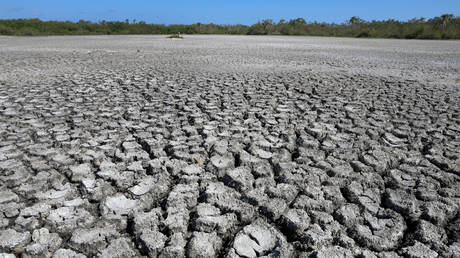
Европын холбооны Коперникийн уур амьсгалын өөрчлөлтийн албаны мэдээлснээр, дэлхийн дундаж температур 2026 оны наймдугаар сард 16.96 хэмд хүрч, түүхэн дээд үзүүлэлтийг тогтоолоо.
Коперникийн уур амьсгалын өөрчлөлтийн албаны мэдээллээр, 2026 оны наймдугаар сарын дэлхийн дундаж температур аж үйлдвэржилтийн өмнөх үе буюу 1850-1900 оны дунджаас 1.65 хэмээр илүү байв. Энэ нь 1940 оноос хойшхи хамгийн халуун наймдугаар сар болсон бөгөөд 2023 оны долдугаар сард бүртгэгдсэн түүхэн дээд үзүүлэлттэй бараг ижил түвшинд хүрсэн байна. Мэргэжилтнүүдийн дүгнэлтээр, хүн төрөлхтөн сүүлийн дор хаяж 100 мянган жилийн турш ийм өндөр температурыг мэдэрч байгаагүй ажээ.
Баруун Европын орнууд түүхэн дэх хамгийн халуун зуныг үдсэн бөгөөд Франц, Их Британи, Бельги улсуудад хэт халалт, ган гачиг, ойн түймэр газар авсан байна. Ялангуяа Франц улсад 53 хоногийн турш үргэлжилсэн хэт халалтын улмаас амиа алдсан хүний тоо эрс нэмэгдэж, зургаа болон долдугаар сард нийт 7,000 гаруй хүн нас барсан гэсэн тооцоо гарчээ. Тус улсын засгийн газар фермерүүдийн санхүүгийн хүндрэлийг шийдвэрлэх зорилгоор нэг тэрбум гаруй еврогийн яаралтай тусламжийг зарласан байна.
Цаг агаарын хүнд нөхцөл байдал нь хөдөө аж ахуй болон тээврийн салбарт сөргөөр нөлөөлж байна. Тухайлбал, Германы үр тарианы ургац 7.3 хувиар буурч, Рейн мөрний усны түвшин багассанаас усан замын тээвэр саатжээ. Есдүгээр сарын эхэн гэхэд Европын холбооны нутаг дэвсгэрт 647,000 га талбай бүхий газар түймэрт өртсөн нь сүүлийн 20 жилийн дунджаас хоёр дахин их үзүүлэлт юм.
НҮБ-ын уур амьсгалын асуудал хариуцсан тэргүүн Симон Стиелл энэхүү нөхцөл байдлыг хүн төрөлхтний чулуужсан түлшнээс хэт хамааралтай болсны үр дагавар хэмээн тодорхойлсон байна. Тэрээр нүүрс, газрын тос, байгалийн хийн хэрэглээг зогсоохгүй бол дэлхийн хэмжээний хэт халалт үргэлжлэх эрсдэлтэйг анхаарууллаа. Одоогийн байдлаар дэлхийн дулаарал аж үйлдвэржилтийн өмнөх үеэс 1.4 хэмээр өсөөд байна.
Дэлгэрэнгүйг эх сурвалжаас харах
↓Эх сурвалжийг нээх ↓
Western Europe also endured its hottest summer ever recorded, as heatwaves and drought battered the region, according to Copernicus
Global heat hit an all-time high in August, with temperatures averaging 16.96C worldwide, according to the EU’s Copernicus Climate Change Service. Western Europe suffered its hottest summer on record, as heatwaves, drought, and wildfires battered the region.
August 2026 was 1.65C hotter than the 1850-1900 average, a period commonly used as the benchmark for temperatures before large-scale industrial warming, Copernicus said on Thursday. It was the hottest August in records dating back to 1940 and effectively matched July 2023, the previous all-time monthly high, with less than 0.01C separating them.
“Humans haven’t seen temperatures as hot as today for, arguably, at least the last 100,000 years,” Samantha Burgess of the European Center for Medium-Range Weather Forecasts, which oversees Copernicus, told AFP. Copernicus records extend back to 1940. Scientists use evidence including ice cores, tree rings, and corals to reconstruct temperatures further in the past.
The record followed an exceptionally hot summer across Western Europe. France, the UK, and Belgium all recorded their hottest summers; France endured 53 heatwave days and received almost 40% less rainfall than normal, making it the country’s second-driest summer since 1959.
The extreme heat also triggered a sharp rise in mortality. France registered an estimated 5,764 excess deaths from all causes during the June 17-July 2 heatwave – 36% above the expected level in affected areas, according to Sante publique France. Another 1,243 excess deaths were recorded during heatwave periods from July 3-22.
The combination of scorching temperatures and scarce rainfall hit crops and transportation. Germany’s grain harvest fell an estimated 7.3% year-on-year, with the authorities blaming heat and drought, while falling water levels on major rivers including the Rhine disrupted shipping.

France announced more than €1 billion ($1.16 billion) in emergency aid for farmers as tens of thousands of farms faced financial difficulties.
Dry vegetation fueled wildfires across the continent. More than 647,000 hectares had burned across the EU by early September, nearly twice the 20-year average for that point in the season, according to the European Commission’s Joint Research Center.
Oceans outside the polar regions reached their joint-highest monthly sea-surface temperature, extending a three-month run of record warmth. Scientists attribute the long-term warming trend primarily to human-caused greenhouse gas emissions, while natural phenomena such as El Niño can further boost temperatures in the short term.
UN climate chief Simon Stiell called the latest records “the spiraling price of humanity’s fossil fuel addiction,” warning that extreme heat will continue while coal, oil, and gas are burned. Long-term global warming is currently around 1.4C above pre-industrial levels.

