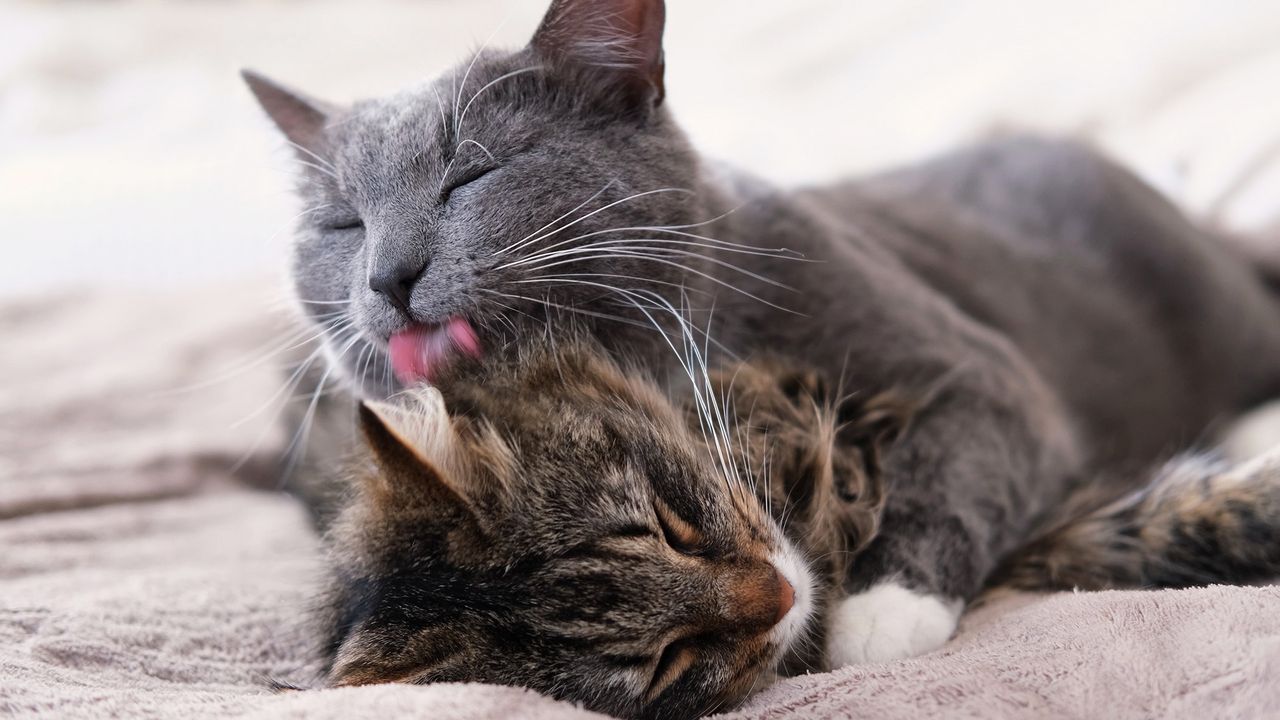
Муурнууд бие биеэ долоох нь зөвхөн нөхөрлөлийн илэрхийлэл төдийгүй нийгмийн харилцааг зохицуулах болон эрүүл ахуйн ач холбогдолтой цогц үйлдэл болохыг эрдэмтэд тогтоожээ.
Гент их сургуулийн судлаач Морган Ван Белл болон түүний багийнхан 53 өрхийн муурын зан төлөвийг ажиглан судалсны үндсэн дээр муурны харилцан бие биеэ долоох (allogrooming) үйлдэл нь нөхцөл байдлаас хамааран өөр өөр зорилготой байдгийг тогтоосон байна. Тухайлбал, муурнууд хэвтэж байхдаа бие биеийнхээ чихийг долоох нь тайвшрах, нийгмийн харилцаагаа бэхжүүлэх зорилготой байдаг бол зарим тохиолдолд тоглоом эхлүүлэх дохио болдог ажээ.
Гэвч энэхүү зан үйл нь үргэлж эерэг шинжтэй байдаггүй. Судалгаагаар муурнууд зөрчилтэй нөхцөл байдлыг намжаах, мөргөлдөөнөөс зайлсхийх зорилгоор бие биеэ долоох нь элбэг бөгөөд энэ нь өрсөлдөгчөө тайвшруулах буюу “эвлэрүүлэгч дохио” болдог байна. Зарим тохиолдолд энэ нь хүзүү орчмыг долоох байдлаар илрэх бөгөөд энэ нь тулааны үед хаздаг хэсэг тул далд түрэмгийллийн шинж байж болзошгүй гэж судлаачид таамаглаж байна.
Нийгмийн харилцаанаас гадна муурнууд өөрсдөө хүрэхэд хүндрэлтэй толгой, хүзүүний хэсгээ цэвэрлэхийн тулд бие биеэ долоодог байх магадлалтай. Мал эмнэлгийн зан төлөв судлаач Терри Кёртисийн үзэж буйгаар муурны зан төлөв нь олон хүчин зүйлээс хамаардаг тул тэдний яг ямар шалтгаанаар бие биеэ долоож байгааг бүрэн дүүрэн тайлбарлах нь төвөгтэй хэвээр байна.
Дэлгэрэнгүйг эх сурвалжаас харах
↓Эх сурвалжийг нээх ↓
In a multicat household, it’s common to see one cat licking another. When some people see this behavior, known as allogrooming (“allo” means “another individual”), they assume it’s a sign of friendship.
But is that really the case? Are there hidden, more complex reasons for why cats lick each other?
While research into allogrooming is ongoing, scientists have suggested different explanations for why cats lick each other, including some social reasons and some more practical ones.
Social bonding or social tension?
The historical view, based on observations of free-roaming-cat colonies, was that allogrooming is a sign of affection and helps cats create and maintain bonds with other cats in their social group, perhaps by creating a shared group smell.
But a 1998 study of 25 cats living together in an indoor-outdoor enclosure poked holes in this theory. The study found that aggressive behavior showed up in about 35% of allogrooming sessions, which suggested that allogrooming might not be about friendship. Instead, the authors proposed, it may help to defuse a tense situation in a confined space, where an actual fight would be too risky.
Sign up for our weekly Life’s Little Mysteries newsletter to get the latest mysteries before they appear online.
To investigate, Morgane Van Belle, a cat behavior scientist at Ghent University in Belgium, and her colleagues analyzed videos of allogrooming from 53 two-cat homes. They concluded that allogrooming may have different social functions, depending on the situation.
The team noticed that the cats sometimes licked each other while huddling together and copying one another’s body postures. In these moments, allogrooming probably helps strengthen social bonds, the researchers proposed. Most licking was directed toward the ears; this may help cats relax because the skin there is rich in sensory nerve endings, Van Belle said. Allogrooming produces a relaxing effect in other animals too. For example, it lowers the heart rate in horses and triggers the release of feel-good hormones in monkeys.
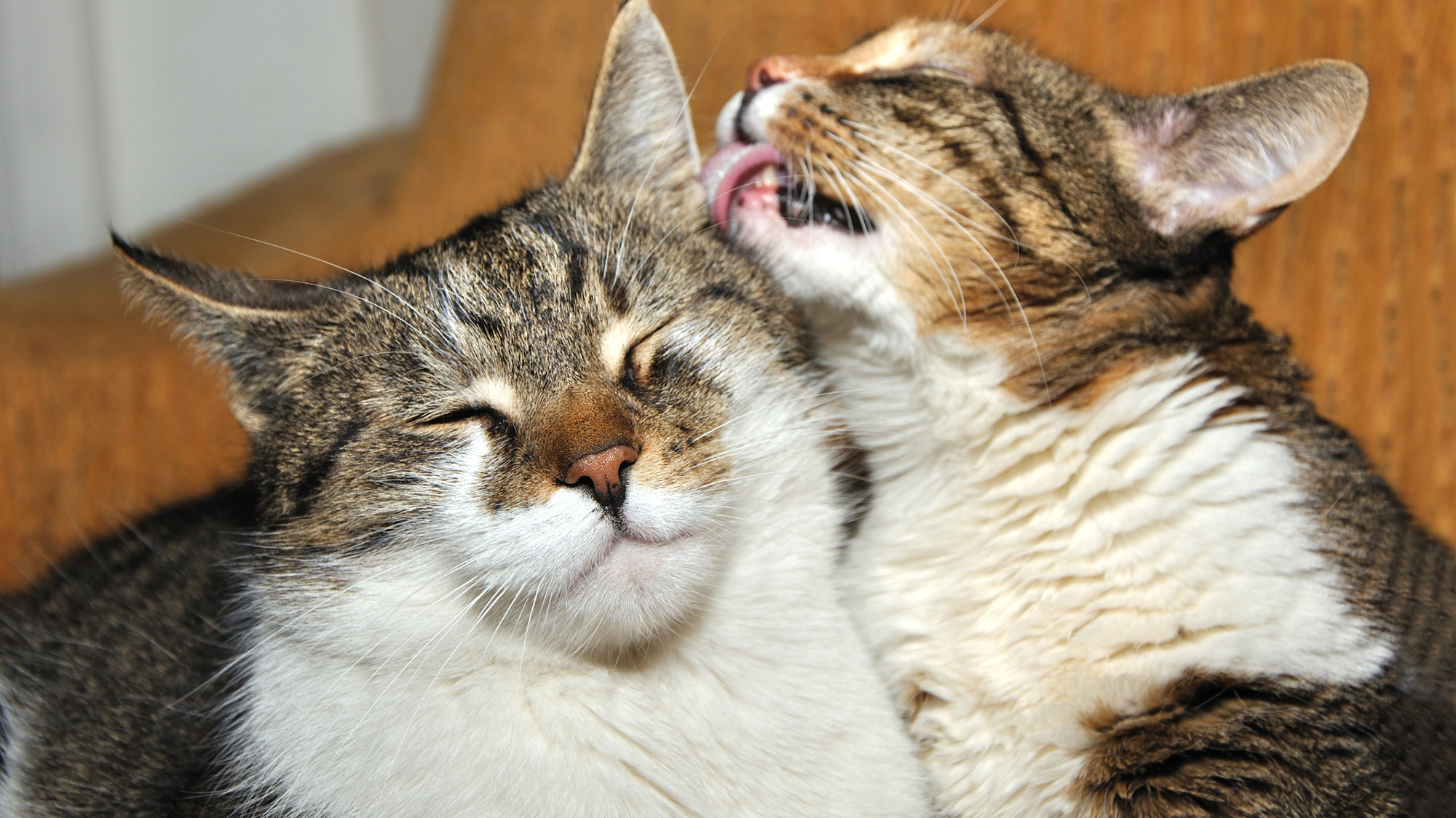
They also noted that allogrooming sometimes led to friendly wrestling, in which the cats grabbed each other with their front legs and tumbled around. This suggests that allogrooming may serve as a signal to start play.
In other situations, however, the researchers noticed that allogrooming was followed by behaviors linked to conflict, such as turning the ears backward, pawing, and biting. In these cases, one cat would stand or lean over the other, and both cats showed subtle signs of stress like lip licking, head shaking or self-scratching.
Based on these observations, Van Belle’s team think that allogrooming may be an “appeasement signal” in fraught moments that could lead to conflict or injury, for example, when one cat wants to take over a sleeping spot already occupied by another. They think it possible that the licking helps to calm things down and keeps a spat from turning into a real fight. Similar behavior has been seen in meerkats, where subordinate individuals groom dominant ones to placate them.
Yet because this licking often targets the neck — the same area cats bite during fights — it also may signal a subtle aggressive threat, the researchers suggested.
Hygiene and grooming
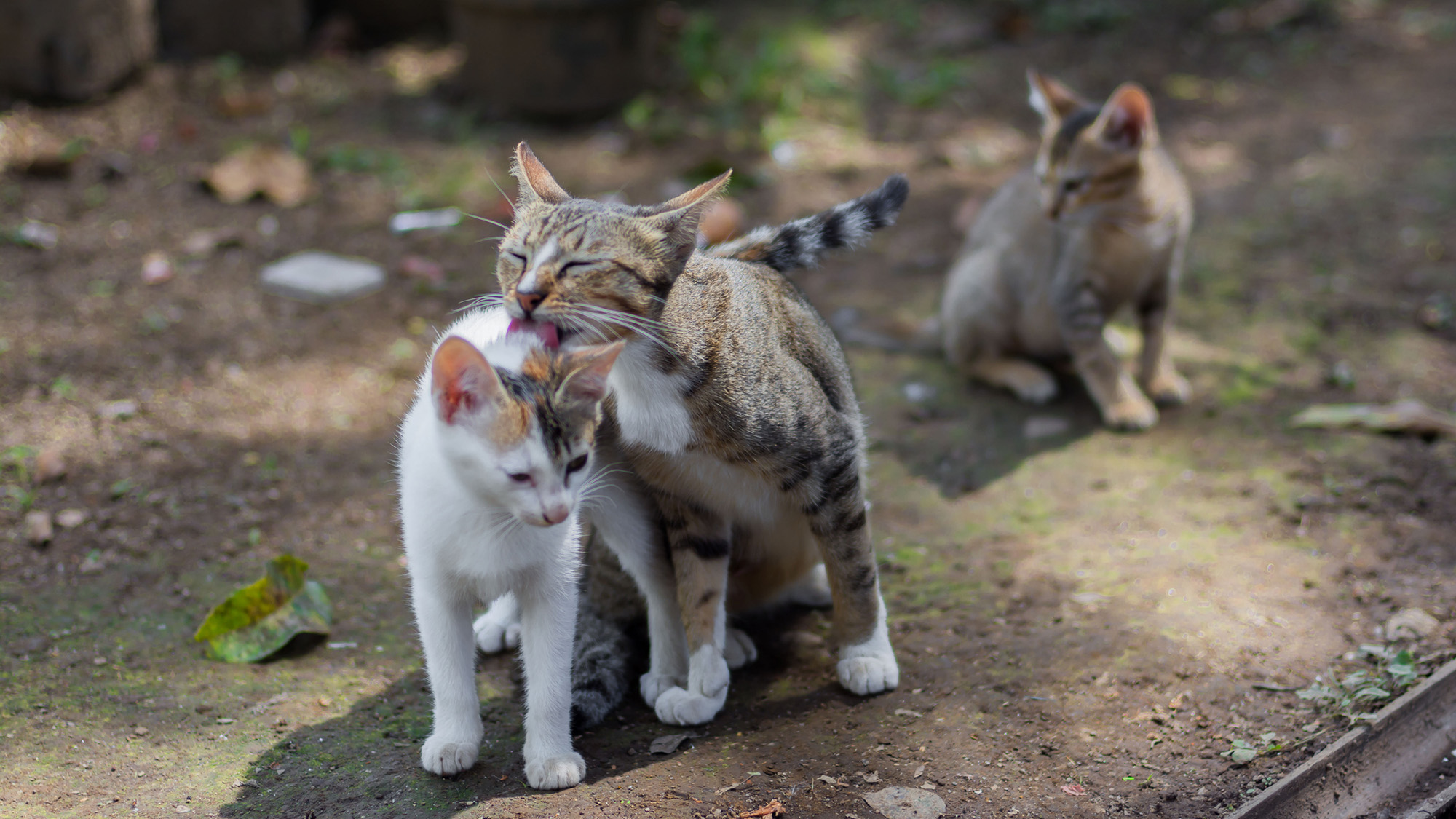
Van Belle and her colleagues think that, beyond sending social signals, allogrooming may help with hygiene. After all, it’s often aimed at the head and neck — the areas that are “least accessible for the cat itself during grooming,” Van Belle said. Allogrooming is thought to have a hygienic function in other species too. For example, ants achieve colony-level hygiene by grooming heavily infected individuals more, and primates concentrate their grooming on body parts the recipient can’t easily reach. When it comes to cats, however, more research is needed. Van Belle’s study did not measure parasites, infections or skin cleanliness to see whether such grooming actually reduces dirt or bugs.
Dr. Terry Curtis, a veterinary behaviorist who has studied how often allogrooming happens, also thinks cats might groom each other for hygiene reasons. She wonders whether feral cats, who likely carry more fleas than house cats, might have a different allogrooming pattern.
The explanations proposed by Van Belle and colleagues are reasonable but not definitive, Curtis said. Because so many factors can shape a cat’s behavior, she’s skeptical that researchers will ever be able to say with real confidence exactly why one cat grooms another.
After working as a veterinary behaviorist for 25 years, Curtis has concluded it is often impossible to understand what’s going on in a cat’s mind.
“Congratulations, you got a cat,” she said. “Let the mystery begin.”
How much of a cat fan are you? Find out by taking our cat quiz!

