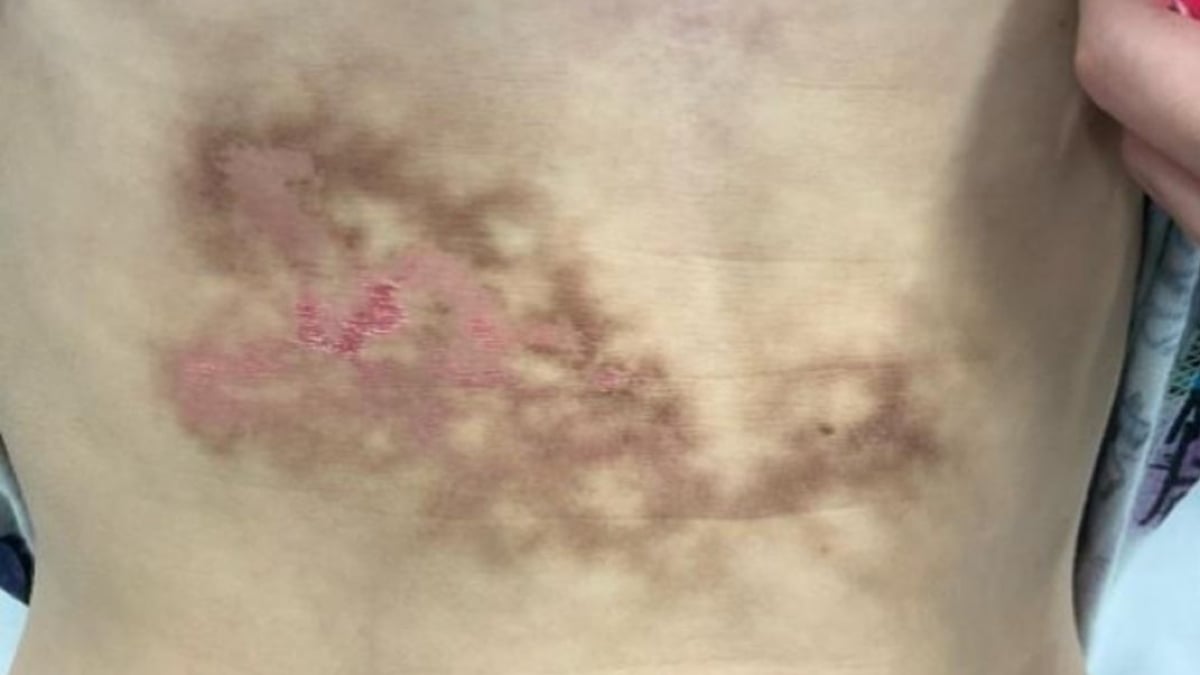
Удаан хугацаагаар халуун эх үүсвэрт өртсөний улмаас арьсанд үүсдэг “erythema ab igne” буюу “шарласан арьсны хам шинж” оношлогдсон тохиолдлыг BMJ Case Reports сэтгүүлд нийтэлжээ.
Эмнэлгийн яаралтай тусламжийн тасагт хэвлийн хэсгээрээ тодорхойгүй шалтгаантай хөхөрсөн мэт тууралттай ирсэн өсвөр насны хүүгийн биеийн байдлыг эхний үзлэгээр тогтоож чадаагүй байна. Рентген болон CT зураг оношийг тодруулаагүй бөгөөд тууралт нь өвдөлтгүй, загатнадаггүй байв. Гэвч хэдэн долоо хоногийн дараа тууралт ихсэж, өвдөлт мэдрэгдэх болсон тул нарийвчилсан судалгаа хийхэд хүү өдөрт найман цаг хүртэлх хугацаанд зөөврийн компьютерээ хэвлий дээрээ тавьж ашигладаг болох нь тогтоогджээ.
Энэхүү хам шинж нь халуун усны сав, халаагуур, зөөврийн компьютер зэрэг төхөөрөмжөөс ялгарах бага хэмжээний дулаанд удаан хугацаагаар өртөх үед үүсдэг. Арьс түлэгдэх хэмжээний өндөр халуун биш тул өвчтөн өвдөлт мэдрэхгүй байх нь элбэг бөгөөд энэ нь эмч нар оношийг буруу тодорхойлох эсвэл анзаарахгүй өнгөрөх шалтгаан болдог байна.
Эмч нар хүүг дулааны эх үүсвэрээс хол байхыг зөвлөснөөр тууралт аажмаар бүрэн арилжээ. Хэдийгээр ихэнх тохиолдолд шинж тэмдэг нь аяндаа эдгэрдэг боловч архагшсан тохиолдолд арьсны хорт хавдар үүсэх эрсдэлтэйг судлаачид анхааруулж байна. Технологийн хэрэглээ нэмэгдэж буй өнөө үед ийм төрлийн өвчлөл хүүхэд, өсвөр насныхны дунд ихсэх хандлагатай байгаа аж.
Дэлгэрэнгүйг эх сурвалжаас харах
↓Эх сурвалжийг нээх ↓
When a young boy reported to the emergency department with a mysterious form of ‘spontaneous bruising’ marking his abdomen, doctors were basically stumped.
Neither the boy nor his parents had any idea how the strange lesions had formed, and a range of tests all came up clear.
But as the unusual rash worsened over the weeks following, a single piece of information dropped into the doctors’ laps, solving the medical mystery.
It turns out the trauma, detailed in BMJ Case Reports, was a case of erythema ab igne (aka ‘toasted skin syndrome’), which occurs when people experience prolonged heat exposure.
Toasted skin syndrome can be caused by anything that emits heat to skin over long periods, including hot water bottles, heating blankets, heaters, and fireplaces.
While it’s understandable that heating appliances and fireplaces might overheat you if you’re too close to them for too long, the concerning part about erythema ab igne is how insidious its triggers can be.
The condition arises from exposure to relatively low-grade heat that’s below the threshold required to cause thermal burns – meaning people don’t notice a sharp pain to indicate they’re being hurt.
As the boy’s case demonstrates, even the simple act of repeatedly resting a laptop on your body is enough to induce a serious bout of toasted skin.
While his doctors eventually deduced that, his case shows why it’s easy for practitioners to miss signs of toasted skin syndrome.
Especially since many patients themselves might not realize that devices like laptops can harm the skin like this, so it may get missed in patient interviews.
When the boy first went to the emergency department, the marks on his abdomen had been there for about a week. They didn’t itch, and they weren’t tender.

The patient was healthy, with no history of trauma, and no signs of illness. An X-ray revealed nothing that could explain the rash.
After the boy indicated he’d been pushed into a chair during some play-fighting with his brother, doctors suspected he might have a form of liver injury, but CT imaging didn’t show any underlying trauma.
Nothing could explain the strange marks.
“A 15-centimeter [6-inch] flat, reticulated, reddish-brown patch was noted over the right upper quadrant of the abdomen,” his doctors write in their case report.
“The lesion exhibited a distinct pattern, with interlacing lines forming irregular circles and a lace-like morphology.”
With little else to go on, the boy was eventually discharged.
Several weeks later the patient returned, by which time the rash had worsened considerably.
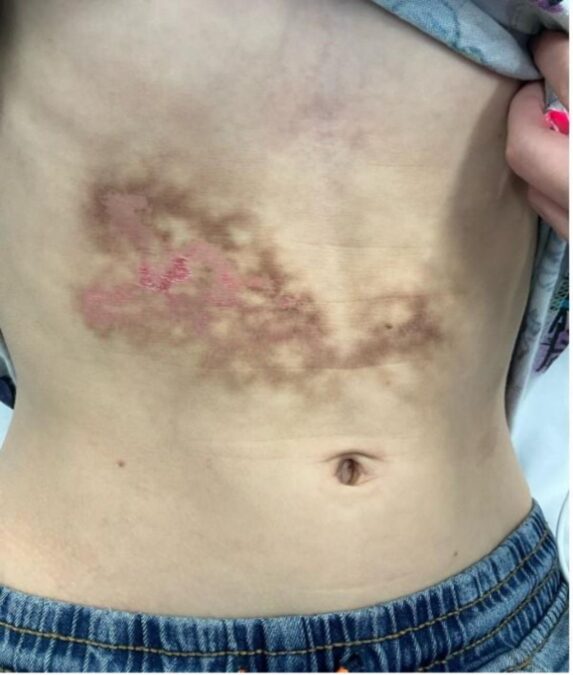
It was more painful when touched, and covered a larger area of his abdomen in a pattern of darkened brown and pink patches.
The previous visit had suggested the boy wasn’t exposed to any common heat sources that might be behind his injury, but when pressed again, the cause and diagnosis finally became clear.
“Further questioning revealed that the patient was being home-schooled and routinely used a laptop for educational activities,” the doctors write.
“He reported resting his laptop on his abdomen for up to eight hours daily, often while charging.”
With the knowledge of the boy’s laptop use, the doctors were able to diagnose erythema ab igne, and to assure the boy’s family that his condition was benign.
He was advised to avoid further direct heat exposure, and with time, the injury gradually improved until it fully disappeared.
While erythema ab igne diagnoses from laptop use are still relatively rare, it could be a growing problem.
Researchers have warned that toasted skin syndrome in children and adolescents is likely to increase in future because of the “greater and sometimes inappropriate use of technological devices”.
Related: A Man Crashed His Car Into a Deer. Then He Mysteriously Became Sick.
Another factor could be that, ever since COVID–19, more people have been working from home, which likely results in many people using laptops for work on couches, armchairs, and in bed.
Most cases of the condition linked to laptop use tend to appear on the thighs, which is presumably where most people position the devices.
While symptoms seem to clear up readily once the source of heat exposure is removed, chronic cases of toasted skin syndrome may become malignant, with emerging evidence linking the condition to the development of various skin cancers.
We really shouldn’t call them laptops.
The findings are reported in BMJ Case Reports.
This article was fact-checked by Rachel Garner and edited by Rebecca Dyer. While we pride ourselves on our process, we are only human. If you spot a mistake, please let us know.

