
Йемений нутаг дэвсгэрээс олдсон хэлтэрхий нь Саудын Арабын зэвсэглэлд байдаг Хятадад үйлдвэрлэсэн DF-15A загварын богино зайн баллистик пуужингийн үлдэгдэл байж магадгүй гэж шинжээчид үзэж байна. Энэ нь тус улс өөрийн нууцлагдмал пуужингийн зэвсэглэлээ анх удаа байлдааны нөхцөлд ашигласан тохиолдол байж болох ч албан ёсны баталгаа хараахан гараагүй байна.
Йемений Мариб мужийн Рагван дүүргээс олдсон пуужингийн хэлтэрхий нь байндаа хүрэхээсээ өмнө задарсан эсвэл осолдсон байж болзошгүйг харуулж байна. Хути босогчид ийм төрлийн баллистик пуужинг замд нь устгах чадвартай агаарын довтолгооноос хамгаалах зэвсэг эзэмшдэггүй гэж үздэг.
Саудын Араб болон Хути босогчдын хоорондох мөргөлдөөн сүүлийн долоо хоногуудад эрчимжиж, Мариб болон Таиз хотуудын орчимд ширүүн тулаан өрнөж байна. Хутичууд Саудын Арабын цэргийн болон эрчим хүчний дэд бүтцэд чиглэсэн нисгэгчгүй онгоц, пуужингийн довтолгоогоо нэмэгдүүлж, Улаан тэнгис дэх газрын тосны тээвэрлэлтийн замд заналхийлж байгаа юм.
Саудын Араб нь 1980-аад оноос хойш Хятадаас баллистик пуужин нууцаар худалдан авч ирсэн түүхтэй бөгөөд DF-3A болон DF-21 зэрэг системүүдийг эзэмшдэг гэх мэдээлэл олон улсын шинжээчдийн дунд түгээмэл байдаг. Хэрэв DF-15A пуужин ашигласан нь тогтоогдвол энэ нь Саудын Араб өөрийн стратегийн зэвсэглэлээ Ираны нөлөө бүхий бүс нутгийн мөргөлдөөнд нээлттэй ашиглахад бэлэн байгааг илтгэх томоохон дохио болох юм.
Дэлгэрэнгүйг эх сурвалжаас харах
Эх сурвалжийг нээх ↓
Debris from a Chinese-made ballistic missile found in Yemen could have inadvertently revealed a previously undisclosed addition to Saudi Arabia’s secretive ballistic missile arsenal. Imagery circulating online appears to show the wreckage of a Chinese DF-15A short-range ballistic missile (SRBM), potentially marking the first known Saudi combat use of a weapon in this class, although both the identification and ownership remain unconfirmed.
It is also unclear what happened to the missile itself. The debris suggests the missile broke apart or crashed before reaching its target. The Houthis are not known to possess any weapons that could have intercepted it.
The development comes amid a sharp escalation in the long-running Saudi-Houthi conflict. After years of relative de-escalation following the 2022 truce, fighting has intensified in recent weeks as Houthi forces have dramatically overrun Saudi-backed Yemeni government positions, including around strategically important Marib and Taiz. The Houthis have also escalated missile and drone attacks against southern Saudi Arabia, targeting military and energy infrastructure while threatening the kingdom’s ability to move oil through the Red Sea. The group has declared the Bab el-Mandeb closed to Saudi oil traffic, adding a direct threat to one of Riyadh’s critical energy-export routes.
You can catch up with our latest coverage of the fighting here.
As for the DF-15, also known by its NATO designation CSS-6, this is a road-mobile, solid-fueled SRBM developed by China during the 1980s. The system formed part of Beijing’s effort to develop a new generation of conventionally armed mobile ballistic missiles, including systems primarily intended for export.
As you can read about here, the DF-15 family has evolved through several variants, although open-source information concerning their capabilities remains inconsistent.
The DF-15A reportedly entered Chinese service in the mid-1990s. Estimates of these missiles’ maximum range vary substantially, from roughly 600 kilometers (373 miles) for the original DF-15 to as much as 900 kilometers (559 miles) for later versions.
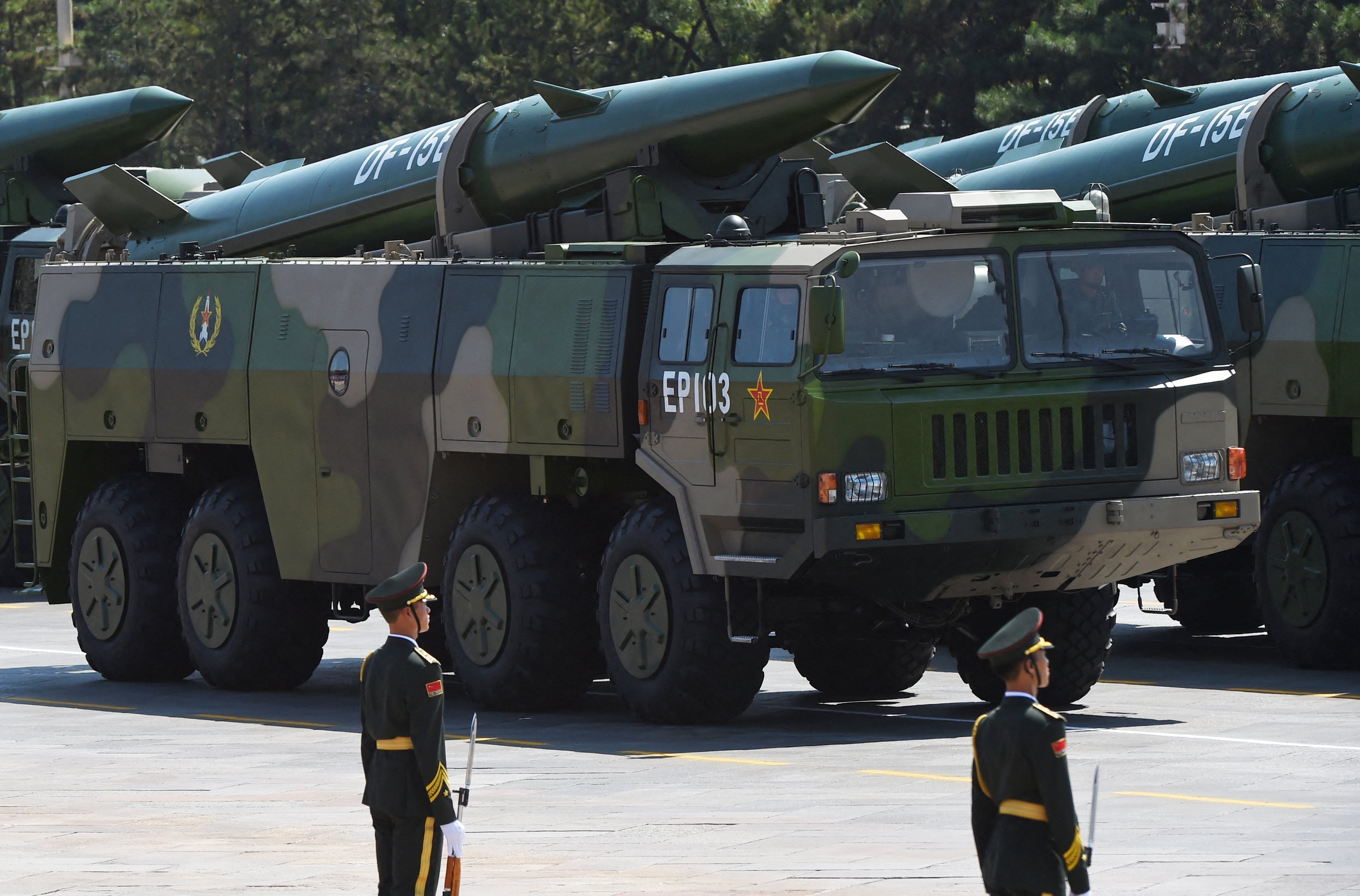
China is the only confirmed operator of the DF-15 family. There have been longstanding reports of Chinese transfers of the DF-15 or the related M-9 export version to Egypt, Iran, Pakistan, and Syria, but in each case, the export record is heavily disputed, with some reports likely conflating the DF-15 with the broadly similar DF-11.
While Saudi Arabia has never publicly acknowledged operating the DF-15 family, it has a well-established history of acquiring Chinese ballistic missiles.
Saudi Arabia imported Chinese ballistic missiles to expand its long-range strike options. Its desire for a land-based strategic deterrent was initially driven by concerns over Iran, regional missile proliferation, and nuclear hedging. More recently, however, it shifted toward fielding more accurate, mobile systems with greater conventional military utility.
Riyadh secretly obtained DF-3A missiles from China beginning in the late 1980s, establishing a strategic ballistic-missile capability that remained largely outside public view.
The kingdom has also subsequently been linked to the DF-21 family. Satellite imagery and other open-source intelligence have provided evidence of Chinese-designed ballistic-missile infrastructure in Saudi Arabia.
While the Houthis have their own ballistic-missile arsenal, this is principally associated with Iranian technology, captured Yemeni systems, and locally produced or modified weapons.
Saudi employment of an SRBM in the current fighting would represent a notable expansion of the kingdom’s response options. If Saudi Arabia did indeed do this is, its main advantage would be speed and responsiveness. A solid-fuelled ballistic missile could reach targets deep inside Yemen within minutes while keeping Saudi aircraft and crews out of the immediate engagement area, providing Riyadh with a rapid strike option against fixed Houthi targets. That could be particularly valuable as the conflict expands and Saudi forces face pressure to respond quickly to Houthi attacks on military and energy infrastructure.
Previous losses at the hands of Houthi ground-based air defenses could also dissuade Riyadh from relying on crewed aircraft to strike targets on the ground deep inside Yemen. Houthi air defenses, while pathed together in many ways, are capable enough to give even U.S. airpower a serious run for their money.
At the same time, a conventional SRBM like the DF-15A can deliver a large warhead at very high speed, imparting significant kinetic energy, making it particularly useful against fixed, high-value, or hardened targets.
Use of an SRBM would also be in line with the current pattern of escalation, with the Houthis conducting missile and drone attacks against Saudi military and energy targets while Saudi-backed Yemeni forces are engaged in renewed ground fighting. Riyadh’s demonstration of an SRBM capability in this campaign would also signal that it is is willing to draw more heavily on its strategic missile inventory as the conflict intensifies, potentially further raising the stakes of the confrontation.
Such a move would carry a message beyond Yemen. Using a previously unacknowledged ballistic missile capability in combat would signal to Iran that Riyadh is now willing to employ this arsenal, after decades of keeping it very much in the shadows.
If the evidence ultimately points to a Saudi DF-15A launch, the discovery would offer a rare look at the operational use of an extremely secretive part of the kingdom’s arsenal, and add a significant new dimension to the rapidly escalating Saudi-Houthi war.
Contact the author: thomas@thewarzone.com
The post Saudi Arabia Appears To Have Used Its Secretive Stash Of Ballistic Missiles For The First Time appeared first on TWZ.

