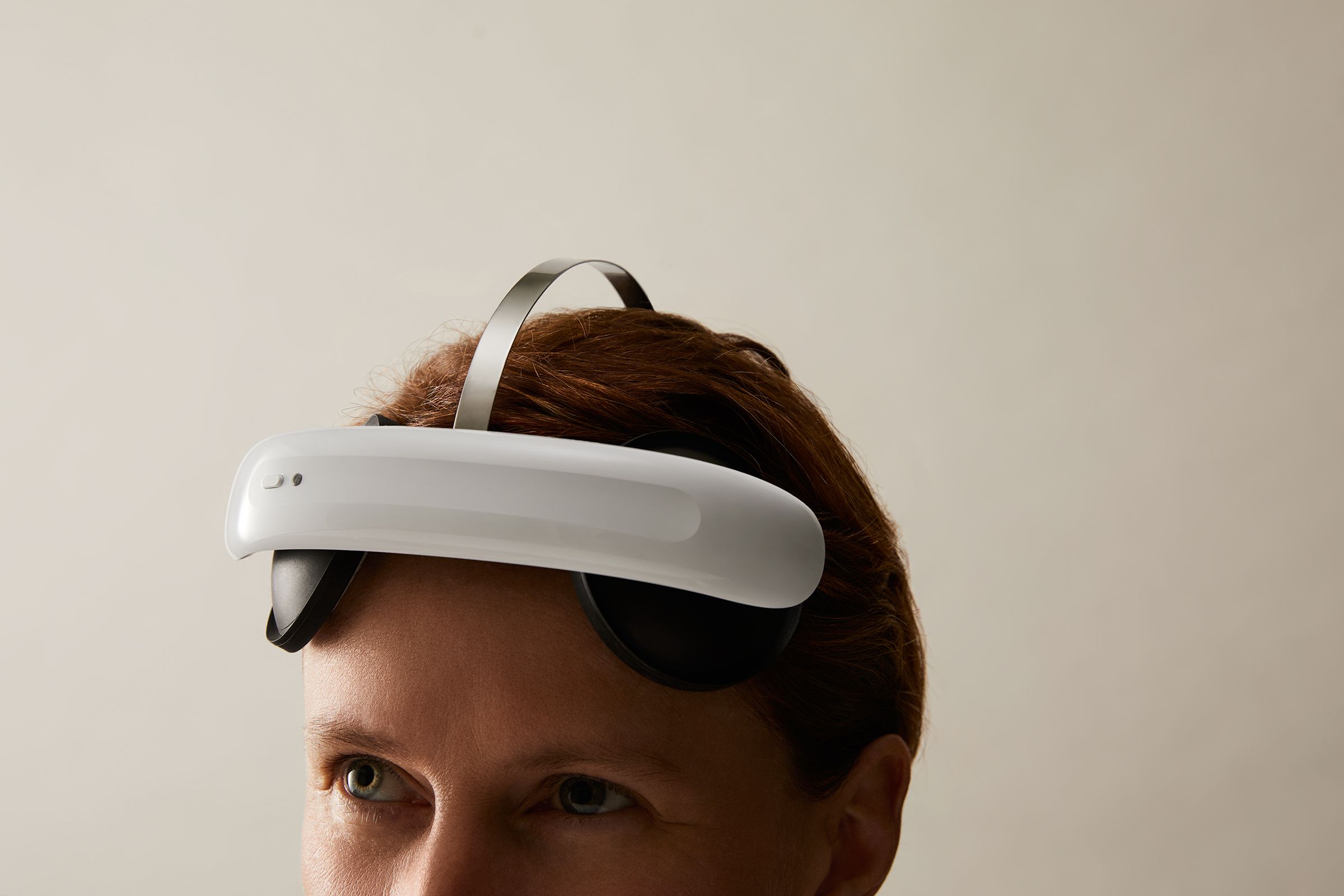
Шведийн Flow Neuroscience компанийн бүтээсэн уг төхөөрөмж нь гэрийн нөхцөлд тархины үйл ажиллагааг цахилгаанаар өдөөж, сэтгэл гутралын шинж тэмдгийг бууруулах зорилготой юм.
АНУ-ын Хүнс, эмийн удирдлагын газраас (FDA) зөвшөөрөл авсан энэхүү өмсдөг төхөөрөмж нь тархины зүүн урд хэсэгт бага чадлын цахилгаан гүйдлээр нөлөөлдөг. Сэтгэл гутралтай хүмүүсийн тархины энэ хэсэгт мэдрэлийн холбоос суларч, идэвхжил буурдаг тул уг төхөөрөмж нь сэтгэл санаа болон сэтгэл хөдлөлийг зохицуулахад туслах зорилготой. Хэрэглэгчид өдөрт 30 минутын турш уг төхөөрөмжийг духан дээрээ зүүж, гар утасны аппликейшнээр дамжуулан удирдах боломжтой.

Энэхүү технологи нь эмнэлгийн орчинд хийгддэг тархины соронзон өдөөх эмчилгээтэй (TMS) ижил зарчмаар ажилладаг боловч илүү хялбар, гэрийн нөхцөлд ашиглах боломжтой хувилбар гэдгээрээ онцлог юм. 174 оролцогчийг хамруулсан эмнэлзүйн туршилтаар уг төхөөрөмжийг ашигласан хүмүүсийн 45 хувь нь 10 долоо хоногийн дараа шинж тэмдгийн хувьд сайжирсныг тогтоожээ. Харьцуулбал, хуурамч төхөөрөмж ашигласан хяналтын бүлгийн оролцогчдын 22 хувьд л ийм өөрчлөлт ажиглагдсан байна.
Компанийн зүгээс уг төхөөрөмжийг уламжлалт эмчилгээний нэмэлт болгон ашиглах боломжтой гэж үзэж байгаа бөгөөд туршилтад эм ууж буй болон уудаггүй хүмүүсийг хоёуланг нь хамруулсан байна. Гэсэн хэдий ч төхөөрөмжийн өндөр үнийн улмаас зах зээлд өргөнөөр нэвтрэхэд тодорхой хугацаа шаардагдаж болзошгүй гэж шинжээчид үзэж байна. Энэ нь орчин үеийн тархины үйл ажиллагааг хянах, өдөөх зориулалттай технологийн шинэ давлагааны нэг хэсэг болон гарч ирж байгаа юм.
Дэлгэрэнгүйг эх сурвалжаас харах
↓Эх сурвалжийг нээх ↓
An at-home wearable for the treatment of depression is now available by prescription in the US.
With roughly one in six American adults taking an antidepressant medication, Swedish firm Flow Neuroscience is positioning its device as an alternative to traditional drugs. But at the current four-figure price tag, it might take a while for the futuristic-looking headset to catch on with patients.
Worn on the forehead for 30 minutes a day and operated with an app, the device provides low-intensity electrical stimulation to the left frontal lobe of the brain, an area involved in regulating mood and emotions. People with depression tend to have lower activity and weaker neural connections in that part of the brain.
Flow received approval from the Food and Drug Administration last December, and its device is among a new breed of wearables that monitor, record from, or stimulate the brain. California-based Cognixion, for instance, has modified the Apple Vision Pro to build a communication system for paralyzed people that doesn’t depend on speech or motor control. A headband by Muse promises to improve meditation, and a device by Elemind is meant to help people fall asleep faster.
The Flow device targets the same part of the brain as transcranial magnetic stimulation, or TMS, an approved treatment for depression that uses magnetic fields to activate neurons. With TMS, patients have to go to a clinic, and a full dosing series typically requires treatment sessions administered five days a week over several weeks. The whole course of treatment can cost up to $15,000 without insurance.
Flow CEO Daniel Månsson, a clinical psychologist before he cofounded the company, says he set out to make a more convenient option for patients. “In order to have a real impact on the problem, you need to create something that has the effect on the brain needed, but that can be used in a home environment in a safe and effective way,” he says.
Photograph: Courtesy of Flow Neuroscience
In a trial of 174 people with major depressive disorder, 45 percent of participants who received Flow’s device experienced a remission in symptoms at 10 weeks compared to 22 percent of those in a control group who received a sham version. The trial included people who were taking antidepressants and those who weren’t—evidence that the device can, under medical supervision, be used in addition to medication, Månsson says.

