
Цукубагийн их сургуулийн судлаачид эртний үлэг гүрвэлийн өндөгний хальсны хэлтэрхийг шинжилж, шинжлэх ухаанд өмнө нь бүртгэгдээгүй төрөл зүйлийг тодорхойллоо.
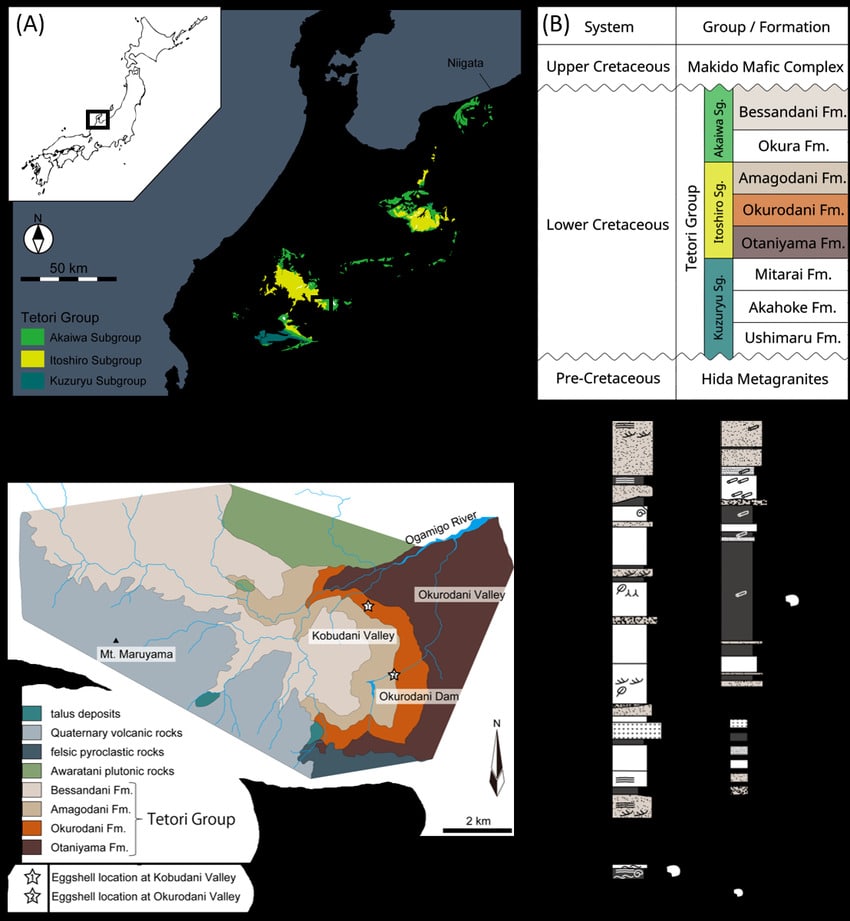
Японы Гифү мужийн Окуродани тогтоцоос 1988-2009 оны хооронд цуглуулсан долоон хэлтэрхий болон зургаан өндөгний мөрийг судлаачид хорин жилийн турш судалжээ. Эдгээр олдвор нь тус улсын нутаг дэвсгэрээс олдсон хамгийн эртний өндөгний үлдэгдэл бөгөөд Цэрдийн галавын эхэн үед хамаарч байна. Шинжилгээгээр эдгээр олдворын дийлэнх нь Ramoprismatoolithus okurai хэмээх шинэ төрөл зүйлд хамаарах болохыг тогтоосон бол зарим нь яст мэлхийн өндөгний Testudoolithidae овогт хамаарч байв.
Судлаачид өндөгний хальсны бүтэц болон филогенетик шинжилгээнд үндэслэн энэхүү үлэг гүрвэлийг жижиг биетэй, махчин төрлийн троодонтид (troodontids) бүлгийн амьтан байсан гэж таамаглаж байна. Тухайн үеийн чулуулаг давхаргаас ямар нэгэн ясны үлдэгдэл олдоогүй тул эдгээр өндөг нь тус амьтны оршин байсныг батлах цорын ганц нотолгоо болж байна. Хэлтэрхийн хэмжээг тооцоолсноор, өндөглөсөн эх бодгаль нь 12-17 кг жинтэй байсан байх магадлалтай аж.

Энэхүү судалгаа нь жижиг биетэй амьтдын чулуужсан яс олдох ховор тохиолдолд өндөгний үлдэгдэл нь эртний экосистемийг сэргээн зураглахад хэрхэн чухал ач холбогдолтойг харууллаа. Түүнчлэн уг нээлт нь жижиг биетэй, шувуу бус теропод үлэг гүрвэлүүдийн тархац болон цаг хугацааны хүрээг Ази тивийн зүүн хязгаар хүртэл өргөжүүлж байна. Судлаачид энэхүү олдворыг Historical Biology сэтгүүлд нийтлүүлжээ.

Дэлгэрэнгүйг эх сурвалжаас харах
↓Эх сурвалжийг нээх ↓
Fossilized eggshell fragments unearthed in Gifu Prefecture, Japan, have led to the identification of a previously unknown dinosaur egg species, dating back to the Early Cretaceous period. The discovery, made by a research team from the University of Tsukuba, offers rare insight into the smaller creatures that once inhabited this ancient landscape, animals whose bones rarely survive long enough to be found.
Dinosaurs are usually associated with towering skeletons and imposing fossils, but eggshells tell a different, often overlooked part of the story. Because smaller animals are less likely to leave behind preserved bones or teeth, their eggs can become one of the few remaining traces of their existence millions of years later.
This is exactly what happened in northern central Japan, where scientists studied fragments collected over the course of two decades. According to the University of Tsukuba, the material was gathered from the Okurodani Formation between 1988 and 2009, making it the oldest eggshell evidence ever recorded in the country.
A Two-Decade Collection Yields New Classifications
The study, published in the journal Historical Biology, examined a modest but revealing set of fossils: seven eggshell fragments and six eggshell impressions. Researchers sorted this material into at least two distinct categories.
Two of the fragments were attributed to Testudoolithidae, an already-known family of turtle egg fossils. Two of the impressions, meanwhile, could not be assigned to any specific group and remain classified as indeterminate.
The bulk of the collection, five fragments and four impressions, turned out to represent something entirely new; a genus and species never previously described, which the team named Ramoprismatoolithus okurai.
Tracing the Eggs Back to a Small Theropod
To determine which dinosaur might have laid these eggs, the researchers combined a detailed physical analysis of the shell structure with phylogenetic analysis, a method used to trace evolutionary relationships between species. The results pointed toward troodontids, a group of small, non-avian theropod dinosaurs.
“The shell fragments of Ramoprismatoolithus are characterized by a prismatic microstructure with branching ridges on the outer surface,” explained study co-author Professor Kohei Tanaka. “Our analysis suggests an affinity with the troodontids, a group of small non-avian theropod dinosaurs.”

No skeletal remains of this particular dinosaur have turned up in the same Lower Cretaceous rock layers, which means the eggs currently stand as the only evidence that the species lived there at all. First author Rina Uematsu noted that by working out the dimensions of the fragments, the team estimated that the adult maniraptorans responsible for laying them would have weighed somewhere between 12 and 17 kilograms. As Uematsu put it:
“The discovery of small maniraptoran eggs of this age in Japan also extends the temporal and geographic ranges of these small, non-avian theropods to the middle of the Early Cretaceous of the eastern margin of Asia.”
Small Fossils Help Rebuild a 100-Million-Year-Old World
The turtle eggshells identified within the same collection add another layer to the picture. They point to the presence of small, non-marine turtles in the region, a finding that lines up with, and reinforces, skeletal remains previously recovered from the same strata.
The fragments and impressions do more than simply add a new name to the scientific record. They illustrate how even small, fragmentary pieces of fossil evidence can help reconstruct entire ancient ecosystems, particularly by revealing the presence of smaller animals that skeletal fossils alone tend to leave out.

Enjoyed this article? Subscribe to our free newsletter for engaging stories, exclusive content, and the latest news.

