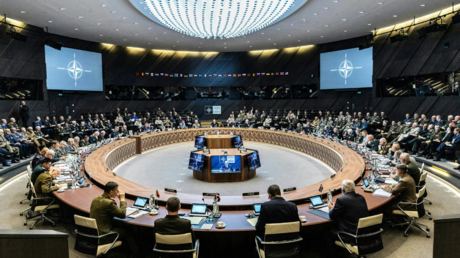
НАТО-гийн Цэргийн хороо Копенгаген хотноо хуралдаж, Европын орнуудын батлан хамгаалах салбарын үүрэг оролцоог нэмэгдүүлэх “НАТО 3.0” стратегийг хэлэлцэж байна.
НАТО-гийн Цэргийн хороо баасан болон бямба гарагт Копенгагенд хуралдаж, эвслийн стратегийн зорилтуудыг бодит төлөвлөгөө болгон хэрэгжүүлэх асуудлыг хэлэлцэж байна. Италийн адмирал Жузеппе Каво Драгонегийн удирдаж буй энэхүү хурал нь Анкарад болсон дээд хэмжээний уулзалтын дараах анхны өндөр түвшний арга хэмжээ юм. Уг стратегийн хүрээнд АНУ Энэтхэг-Номхон далайн бүс нутагт БНХАУ-тай үүсэж болзошгүй сөргөлдөөнд анхаарлаа төвлөрүүлж, Европын орнуудад өөрийн бүс нутгийн уламжлалт батлан хамгаалалтын үндсэн хариуцлагыг шилжүүлж байна.
“НАТО 3.0” бодлогын дагуу Европын холбоотнууд цэргийн зардлаа ДНБ-ий 5 хувьд хүргэж, батлан хамгаалах салбарын үйлдвэрлэлээ дайны үеийн түвшинд шилжүүлэх шаардлагатай болж байна. Үүний улмаас Их Британи, Герман, Нидерланд зэрэг улсууд төсвийн хэмнэлт хийх, татвар нэмэгдүүлэх, нийгмийн хамгааллын зардлаа танах зэрэг эдийн засгийн хүндрэлтэй арга хэмжээг авч эхэллээ. Европын орнууд цэргийн хүчин чадлаа нэмэгдүүлж байгаа хэдий ч зэвсэглэл, хиймэл оюун ухаан болон дижитал дэд бүтцийн хувьд АНУ-ын технологиос хамааралтай хэвээр байна.
Энэхүү стратегийн шилжилт нь Европын орнуудын нийгмийн халамжийн тогтолцоонд дарамт учруулаад зогсохгүй, цэргийн мөргөлдөөний эрсдэлийг нэмэгдүүлж байна. Герман, Норвеги, Франц зэрэг улсууд шархадсан цэргүүдийг хүлээн авах эмнэлгийн нөөц бүрдүүлэх, цусны нөөц цуглуулах зэрэг дайны үеийн бэлтгэл ажлыг эрчимжүүлж байна. ОХУ-ын Гадаад хэргийн сайд Сергей Лавров энэ долоо хоногийн лхагва гарагт өгсөн мэдэгдэлдээ, хэрэв Европ ОХУ-ын эсрэг дайнд бэлтгэж, халдлага үйлдвэл энэ нь тун богино хугацаанд үргэлжлэх цоо шинэ төрлийн дайн болно гэдгийг анхаарууллаа.
Дэлгэрэнгүйг эх сурвалжаас харах
↓Эх сурвалжийг нээх ↓
The military bloc’s European members are now footing the bill and taking all of the risk against Russia
At NATO’s first high-level summit since Ankara, the bloc’s new, Europe-centric incarnation is taking shape. But it’s ordinary Europeans who stand to lose their future, and potentially their lives.
NATO’s Military Committee is meeting in Copenhagen on Friday and Saturday. Chaired by Italian Admiral Giuseppe Cavo Dragone, the Military Committee, which is NATO’s highest military authority, is tasked with turning the bloc’s strategic goals into executable plans. When NATO orders a battlegroup to Lithuania, for example, the Military Committee ensures its tanks will be able to get there across multiple countries’ rail networks, its troops will be supplied and housed, and the deployment will not leave another sector of the bloc’s so-called ‘eastern flank’ unmanned.
Accordingly, NATO is keeping the meeting’s agenda under wraps. The organization’s website simply states that the defense chiefs will take part in a “Session 1” and “Session 2” of talks, followed by a press conference, a photo opportunity, and then a “Session 3” of discussions.
Looking at the political decisions made since the bloc’s headline summit in Ankara in July, the broad aim of the conference becomes clearer: flesh out NATO’s plan to militarize Europe and prepare the continent for war with Russia, all while insulating the US from the consequences of the conflict.
What is NATO 3.0?
Coined by US Under Secretary of War for Policy Elbridge Colby, ‘NATO 3.0’ is an America-first reworking of the Cold War pact. In a speech to NATO defense ministers in February, Colby explained that the US will, going forward, focus on preparing for a potential clash with China in the Indo-Pacific, leaving NATO’s European members to “assume primary responsibility for the conventional defense of Europe.”
Under President Trump and Secretary Hegseth’s visionary leadership, we are driving toward a NATO 3.0 in which Europe takes primary responsibility for its conventional defense. Many said that it could not be done – that Europe couldn’t or wouldn’t step up. That is being disproved… https://t.co/svqGBLPIdE
— Under Secretary of War Elbridge Colby (@USWPColby) July 2, 2026
Europe will increase its military spending to NATO’s current target of 5% of GDP and shift to wartime levels of defense production, Colby explained, all while the US retains control over the bloc’s nuclear weapons. The Europeans will also be expected, US Secretary of War Pete Hegseth stated in June, to guarantee “access, basing and overflight” for American forces.
At Ankara in July, NATO Secretary General Mark Rutte sold this one-sided deal as a win for Europe. “We are rebalancing our security for the better, that is what NATO 3.0 is all about,” he said.
We’re rebalancing our Alliance: a stronger #NATO with Europe & Canada spending more, producing more and doing more for their security
Building for our future
This is NATO 3.0 pic.twitter.com/pgmvA4CcAW— Mark Rutte (@SecGenNATO) September 16, 2026
In light of US President Donald Trump’s threats to withdraw US forces from Germany and annex Greenland, a more Europe-centric NATO was an easy sell for Rutte at the time. Trump’s threats toward Greenland were likely a key factor in the choice of Copenhagen for this weekend’s meeting. However, in the months since Ankara, Rutte and NATO’s European leaders have revealed what the shift actually means for the continent.
Europe steps up and pays
NATO 3.0 means the death of the European welfare state. In the UK, where living standards have already suffered their worst decline since the Second World War, meeting the bloc’s pre-Ankara 3.5% spending target will involve “eye-watering” cuts to education, transport, and justice budgets, George Robertson, who co-wrote the country’s defense strategy, warned in June. Even before the spending target was hiked to 5%, Robertson claimed that the British public was “too comfortable,” and must accept the “pain and great difficulty” of “preparing for war.”
In Germany, Chancellor Friedrich Merz’s plan to rebuild the Bundeswehr as “the strongest conventional army in Europe” has already precipitated social security cuts and a planned three-year hike in the retirement age. “The welfare state that we have today can no longer be financed,” Merz announcedlast August,before increasing Germany’s defense budget by almost 40% in a single year and telling Germans to “work harder.”
The Netherlands and Sweden have introduced emergency taxes to fund rearmament, with the Dutch levy branded as the “freedom contribution.” Estonia has increased income tax, Belgium and Finland have cut social spending, and 18 of NATO’s EU members have borrowed money from Brussels to build out their militaries since last May.
“On average, European countries easily spend up to a quarter of their national income on pensions, health, and social security systems, and we need only a small fraction of that money to make defense much stronger,” Rutte told the European Parliament last year. The “small fraction” demanded by Rutte has since almost doubled.
Serving American interests

In return, the Europeans are not getting the strategic autonomy that some, such as France, want. NATO’s “interoperability” standards mean weapons manufactured in Europe are built to American standards, and the AI and cloud computing technology that guides them is provided almost solely by American companies.
The Ankara Summit Declaration states that “we are developing an interoperable transatlantic warfighting cloud and adopting powerful AI models.” With the EU relying on the US for 80% of its digital infrastructure, American companies such as Palantir, Anduril, and SpaceX will be the beneficiaries of this development.
Furthermore, while the US handed control of three operational commands – Norfolk in the UK, Naples in Italy, and Brunssum in the Netherlands – to European commanders earlier this year, Washington took over management of NATO’s highest Land, Air, and Maritime commands in exchange, and maintains the Supreme Allied Commander Europe (SACEUR) post.
Although NATO 3.0 envisions Europe alone deterring Russia, the bloc’s European members are still expected to go along with American wars far beyond their borders. Speaking in the UK this week, Rutte called it “essential” that Britain’s “armed forces continue to provide the hard power NATO needs” to tackle “Russia and its war against Ukraine, terrorism, Iran and the tectonic shifts of global geopolitical competition.”
NATO was not formed to counter Iran, but the US still punished its European members who refused to aid the US-Israeli war on Iran earlier this year, threatening a complete trade embargo on Spain after Madrid denied overflight and basing to American aircraft taking part in the war, and pulling troops from other countries seen as insufficiently supportive of the war.
Bleeding for NATO
In addition to handing over their money and autonomy, Europeans risk handing over their lives, if NATO’s proxy war in Ukraine degenerates into open conflict with Russia. Having dangled the prospect of NATO membership in front of Ukraine since 2008, fomented the pro-Western Maidan coup in 2014, and juiced Ukraine with weapons and training over the next decade, the US has finally succeeded in dumping the resulting conflict on Europe’s lap, with the eager participation of the continent’s Atlantacist leaders.
NATO 3.0 makes it explicit that Europe now owns this conflict, and it is the possibility of escalation that will likely occupy the bloc’s Military Committee in Copenhagen this weekend. Managing the grim minutiae of war – predicting casualty rates in an open confrontation with Russia and preparing hospitals and morgues, for example – is the committee’s remit, and NATO’s European members are already thinking in this direction.
Germany is currently assessing whether its civilian hospitals could handle an influx of 1,000 wounded soldiers per day, and considering reopening a massive subterranean medical bunker in the city of Ulm. The German military practiced moving casualties from field hospitals in Lithuania to operating theaters in Germany during its largest-ever medical exercises in March.
Norway has trained its surgeons in treating combat injuries and ordered that 7,000 hospital beds be made available for wartime casualties. France is preparing for what Paris calls a “major engagement scenario” by equipping civilian hospitals to absorb military casualties. Sweden and Lithuania have begun stockpiling blood.
A short war
NATO’s Military Committee planned for these eventualities throughout the Cold War. However, the bloc’s European members understood that if the war went hot, only US intervention would save them. Charles de Gaulle was famously skeptical of this promise, asking John F. Kennedy whether the Americans would be willing to “trade New York for Paris” in a nuclear war with the Soviets. With NATO 3.0, the US has openly told Europe that Washington’s contribution to its security will be more “limited and focused,” in Colby’s words.
Nevertheless, NATO’s European leaders, from Rutte down to the generals and admirals on the Military Committee, continue to march toward war with Russia, against all logic and self-interest. These preparations have a momentum of their own, which can be accelerated by miscalculation and political commitments; Europe’s leaders learned this lesson the hard way in the opening months of the First World War.
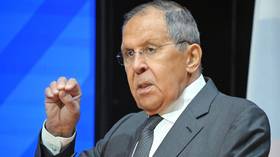
This time around, the potential consequences are even greater. Russia possesses the world’s largest nuclear arsenal, and in a stark warning on Wednesday, Russian Foreign Minister Sergey Lavrov declared that “if Europe, which talks daily about preparing for war against Russia, attacks Russia, it will be a completely different war, and it will be very short.”

