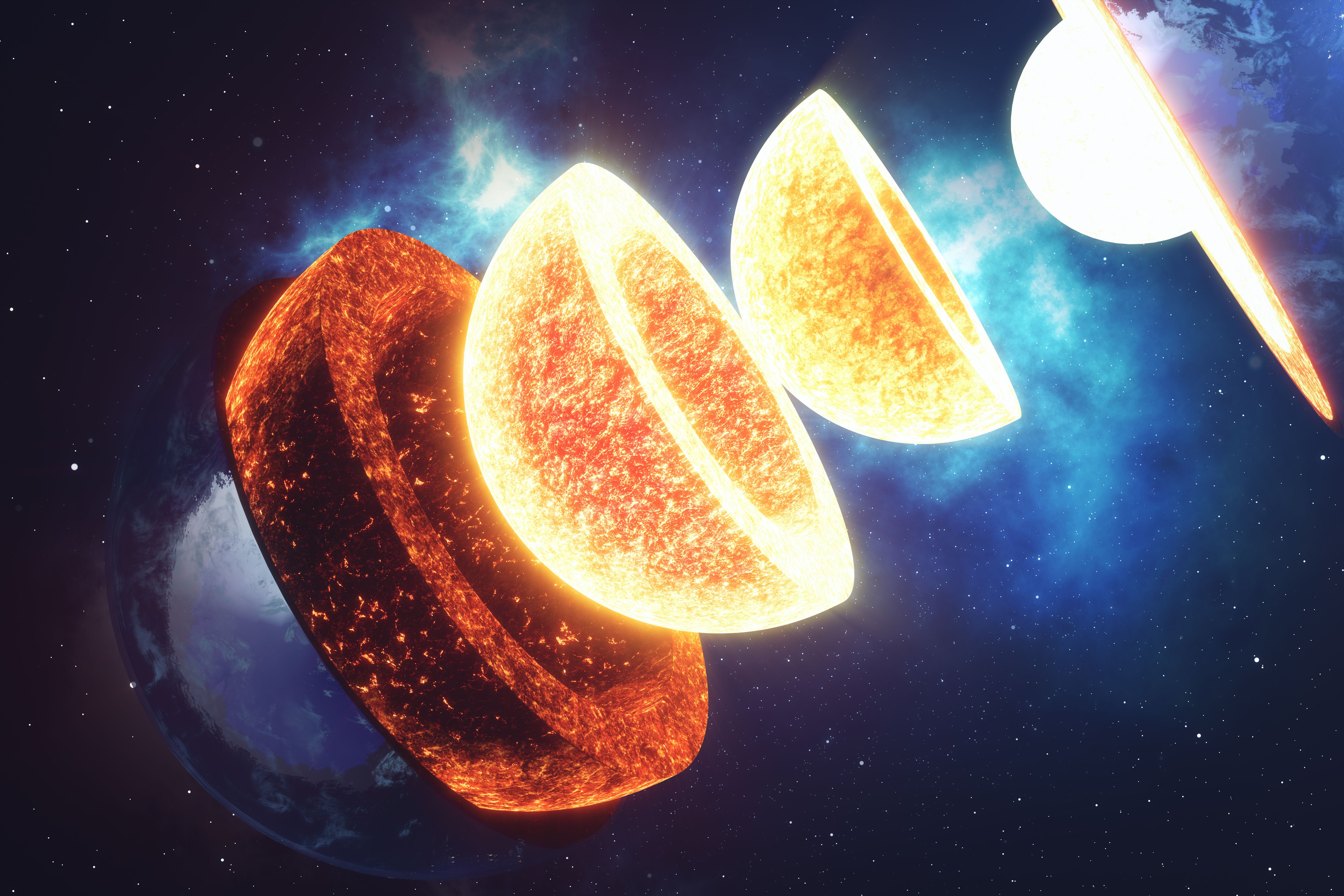
Эрдэмтэд дэлхийн дотоод цөм болон мантийн хоорондох таталцлын хүчний зөрчилдөөн нь хоногийн үргэлжлэх хугацааг өөрчилдөг болохыг тогтоожээ.
Дэлхийн эргэлтийн хурд бага зэрэг хэлбэлздэг нь олон арван жилийн туршид хийсэн ажиглалтаар тогтоогдсон. Уур амьсгалын өөрчлөлт, далай тэнгисийн нөлөө, хүчтэй газар хөдлөлт, мөсөн голуудын хайлалт зэрэг нь гаригийн эргэлтийн хурдад нөлөөлдөг хүчин зүйлс гэдгийг эрдэмтэд өмнө нь тогтоосон билээ. Гэсэн хэдий ч сүүлийн хэдэн арван жилд ажиглагдсан эргэлтийн хэлбэлзлийн зарим хэсэг нь Дэлхийн гүн дэх үйл явцтай холбоотой байж болзошгүй гэж үзэж байсан юм.
Nature сэтгүүлд нийтлэгдсэн шинэ судалгаагаар эрдэмтэд энэхүү үйл явцыг тайлбарлах таталцлын загварыг дэвшүүллээ. Судлаачдын үзэж буйгаар Дэлхийн дотоод цөм нь бусад давхаргаасаа ялгаатай хурдаар эргэдэг тул мантийн масс дахь тогтворгүй байдалтай зөрчилддөг аж. Энэхүү зөрчилдөөнийг засах гэсэн таталцлын хүч нь Дэлхийн гадаргын эргэлтийн хурдад минут төдий хэмжээгээр нөлөөлж, хоногийн уртад өөрчлөлт оруулдаг байна.
Альбертагийн их сургуулийн геофизикч Матью Думберри болон түүний багийнхан 1964-2019 оны хоорондох үеийн дотоод цөмийн эргэлтийн сейсмийн тооцоолол болон гадаад цөм дэх шингэн металлын урсгалын загварыг ашиглан судалгаагаа хийжээ. Тэдний боловсруулсан таталцлын загвар нь олон арван жилийн турш ажиглагдсан эргэлтийн хурдны аажим өөрчлөлтийн цаг хугацаа, хэмжээг нарийвчлалтайгаар давтан харуулсан байна.
Хэдийгээр энэхүү загвар нь бүх хүчний харилцан үйлчлэлийг бүрэн тайлбарлаагүй бөгөөд өөр тодорхойгүй хүчин зүйлс нөлөөлж болзошгүй ч эрдэмтэд энэхүү таталцлын “тулаан” нь эргэлтийн хэлбэлзлийн гол бүрэлдэхүүн хэсэг гэж үзэж байна. Энэхүү нээлт нь Дэлхийн дотоод давхаргуудын хоорондох таталцлын харилцан үйлчлэл гаригийн эргэлтэд хэрхэн нөлөөлдгийг ойлгоход чухал ач холбогдолтой юм.
Дэлгэрэнгүйг эх сурвалжаас харах
↓Эх сурвалжийг нээх ↓
Earth’s days are not exactly the same length. Scientists have been recording small variations in for decades. These changes are minuscule—sometimes just a few milliseconds—and mostly imperceptible, but scientists are keen to understand them as they point to a much more monumental change: Our planet’s rotation speed is shifting.
Scientists have already pinpointed a handful of compounding causes. Fluctuations in the atmosphere and oceans can slightly speed up or slow down the Earth’s rotation; major earthquakes can redistribute part of the planet’s mass; and by depositing enormous amounts of water into the oceans, melting continental ice is also a factor.
These influences account for some of the more sudden and recent changes, but on a several decades-long timescale, some of the variation appears to originate from a source much deeper within the Earth. Beneath our planet’s rocky mantle lies the outer core—a 1,400 mile thick layer of ultra-hot liquid metal that is in constant motion. As these flows change, they can slightly alter the speed at which the rest of the planet rotates.
However, how these forces are transmitted from one region to another has remained a mystery. Friction between the core and the mantle is too weak, so geologists have been searching for other mechanisms operating in the Earth’s interior.
In a new study published this week in Nature, researchers believe they have identified one of these hidden gears. They propose that the gravity of the inner core pushes rotation in one direction, while other interactions between the core and the mantle oppose it. The result of this competition, accumulated over decades, would be small accelerations and decelerations in the planet’s spin.
The idea is based on the fact that the inner core does not rotate at the same rate as the rest of the planet, causing it to become slightly misaligned with certain mass irregularities in the mantle. But the core “wants to be aligned,” Mathieu Dumberry, a geophysicist at the University of Alberta involved in the study, said in a press release. What this means is that gravity tries to pull the layers of the inner Earth back into their more harmonic position, which influences—albeit minutely—the rotation of the planet’s surface.
The authors reconstructed how this interaction influenced Earth’s spin between 1964 and 2019 using seismic estimates of the inner core’s rotation and models of liquid metal flows in the outer core. Their gravitational model closely reproduced both the timing and the magnitude of real gradual changes that had been observed over the decades.
Other yet-unknown factors are likely involved, but this proposal unravels a major component of our variable days. The model also didn’t account for all the forces competing involved, but it didn’t need to to produce a compelling result. Because it might be a tug-of-war, Dumberry said, but “gravity still wins.”
This story originally appeared in WIRED en Español and has been translated from Spanish.

