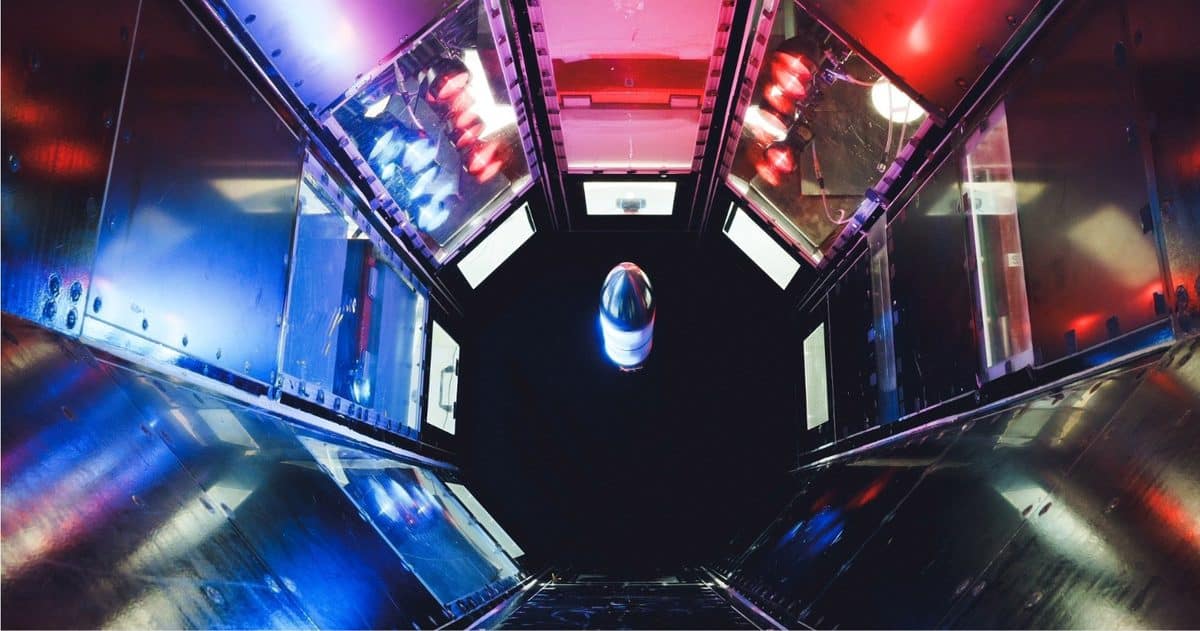
Тохокугийн их сургуулийн судлаачид гадаргуугийн нарийн бүтэц нь агаарын урсгалын шилжилтийн үед үрэлтийн эсэргүүцлийг мэдэгдэхүйц бууруулж болохыг туршилтаар нотоллоо.
Агаарын хөлгийн далавчны гадаргууг аль болох гөлгөр байлгах нь олон арван жилийн турш аэродинамикийн үндсэн зарчим байсаар ирсэн. Гэсэн хэдий ч Тохокугийн их сургуулийн дэд профессор Айко Якено тэргүүтэй судлаачид салхин хонгилд хийсэн туршилтаараа гадаргууг зориудаар микро хэмжээний барзгар болгох нь агаарын эсэргүүцлийг 43.6 хувиар бууруулж болохыг илрүүлжээ. Энэхүү судалгаанд соронзон түдгэлзүүлэлтийн систем ашиглан нэг метр урттай хөнгөн цагаан загварыг ямар нэгэн тулгуургүйгээр агаарын урсгалд тогтоон хэмжилт хийсэн байна.
Судлаачид гадаргууг 2.6-2.8 микрометрийн барзгар бүтэцтэй болгосноор агаарын урсгал жигд бус, эмх замбараагүй болох процессыг хойшлуулж, арьсны үрэлтийн эсэргүүцлийг бууруулж байгааг ажиглажээ. Энэхүү үзэгдэл нь гольфын бөмбөгний хонхорхой үүсгэдэг даралтын эсэргүүцлийг бууруулах механизмтай ижил биш бөгөөд илүү нарийн, судалгаа шаардсан үйл явц болохыг тогтоосон байна.
Гэсэн хэдий ч энэхүү үр дүн нь зөвхөн тодорхой нөхцөл бүхий салхин хонгилын туршилтаар батлагдсан тул бодит агаарын хөлөг эсвэл бусад тээврийн хэрэгсэлд шууд хамаатуулах боломжгүй юм. Судалгааны явцад загварын байрлал бага зэрэг хэлбэлзэж байсан нь үр дүнд нөлөөлсөн байж болзошгүй тул цаашид илүү олон төрлийн хэлбэр, хурдны хүрээнд нэмэлт туршилт хийх шаардлагатай байна.
Дэлгэрэнгүйг эх сурвалжаас харах
↓Эх сурвалжийг нээх ↓
Inside a Japanese wind tunnel, a 10.75-kilogram aluminum model roughly one meter long floated in the airflow without touching a wire, strut, or conventional support. The streamlined body contained a permanent magnet, while ten electromagnetic coils around the test section held it steady against the moving air.
Then the researchers deliberately made its surface rougher. Instead of polishing the model, they sandblasted the coating to create microscopic roughness averaging about 2.6 to 2.8 micrometers, or a few thousandths of a millimeter. Each feature was tiny compared with the boundary layer, the thin region of air flowing directly along the model’s surface, measuring roughly 1% of its thickness.
Despite the added roughness, the model produced substantially less aerodynamic resistance. A team led by Associate Professor Aiko Yakeno of Tohoku University’s Institute of Fluid Science reported a maximum 43.6% drag reduction compared with the same body in its smooth condition. Drag is the force that resists an object’s motion through air. The result, published in the Journal of Fluid Mechanics, came from a single wind-tunnel model rather than an aircraft wing.
The distinction matters. The study does not show that simply roughening an airplane would produce the same result, but it does suggest that carefully controlled surface texture can reduce drag under specific transitional-flow conditions, meaning the stage when airflow is changing from smooth to chaotic.
Why Aerodynamicists Usually Want Smooth Surfaces
For decades, engineers have generally tried to make aerodynamic surfaces smoother, not rougher. Air moving across a streamlined surface can initially remain orderly, a state known as laminar flow, in which layers of air move smoothly with relatively little mixing. Disturbances can later grow until the boundary layer becomes turbulent.
Delaying the shift to turbulent flow, where the air becomes irregular and mixes more strongly, has therefore been an aerodynamic goal since at least the 1940s. The paper refers to early work by Japanese aerodynamicist Ichiro Tani, whose laminar-wing concepts were difficult to realize because real aircraft surfaces could not be manufactured smoothly enough.
That experience helped establish the idea that maintaining laminar flow requires an exceptionally smooth surface. Tohoku University says the new results challenge that assumption by showing that certain forms of very fine, randomly distributed roughness can behave differently.
Roughness is normally used in wind tunnels to force, or “trip,” a boundary layer into turbulence at a known location. Yakeno’s group had previously found in numerical simulations that extremely small random roughness could instead reduce drag during transition. According to Yakeno, the surface appears to suppress some turbulent energy and reduce skin-friction drag, the resistance created as air rubs along a surface.
Measuring Drag Without a Physical Support
Small drag changes are difficult to measure because the structures that hold wind-tunnel models can disturb the surrounding airflow. To avoid that problem, the researchers used a one-meter magnetic suspension and balance system, which uses magnetic forces to support and measure a model without physically touching it.
Drag was determined from the electrical currents required by the electromagnets to hold the model in place. The system had a reported measurement error equal to 0.36% of its full-scale load of 2.87 newtons, with a newton being a standard unit used to measure force.
The model had a cylindrical center section and tapered ends based on a laminar-flow airfoil profile, or a shape designed to encourage smooth airflow. In part of the experiment, two strips of tape were placed near the front to deliberately trigger transition and make the different surfaces easier to compare.

With the smooth surface, drag began rising at a Reynolds number of about 1.9 million. Reynolds number is a dimensionless value engineers use to compare the effects of inertia and viscosity in a fluid and to predict whether flow is likely to remain smooth or become turbulent.
With the roughened surface, that increase was delayed until around 2.2 million, while the largest reduction appeared near 2.25 million. Both roughened surfaces continued to produce less drag than the smooth version up to the highest tested Reynolds number of roughly 3.6 million.
In an earlier test, glass beads 38 to 53 micrometers wide cut drag by as much as 34.4% when transition tape was used. Without the tape, however, those beads behaved more like ordinary roughness and caused transition earlier.
The authors suggest that the geometry of the surface features matters, noting that the better-performing sandblasted coating contained fewer but relatively deeper pits. That means the effect may depend not simply on how rough a surface is, but on the size, depth, and distribution of its microscopic features.
Why This Probably Isn’T the Golf-Ball Effect
The obvious comparison is with golf-ball dimples, which reduce drag largely by changing the boundary layer and delaying flow separation, the point where moving air detaches from a surface. That mechanism primarily reduces pressure drag, the resistance caused by pressure differences between the front and rear of an object.
The researchers found that this could not explain most of their result. Large-eddy simulations, a computer method used to model large turbulent motions in a fluid, estimated the model’s total pressure-drag coefficient at about 0.00021 at the highest tested Reynolds number, while the measured drag change was closer to 0.001.
Even eliminating all pressure drag would therefore explain only around one-fifth of the observed reduction. Oil-flow visualization, a technique that uses a thin oil coating to reveal how air moves across a surface, also showed broadly similar patterns on the smooth and roughened models.

At lower Reynolds numbers, total drag was essentially the same even though small areas of reverse flow appeared near the rear. That supports the conclusion that the main effect came from friction rather than a major change in flow separation.
The roughness was also extremely small. Tohoku University says its height corresponded to about 1.2 to 1.7 viscous units, a scale that compares surface roughness with the very thin layer where air viscosity dominates near the wall.
That value is below the threshold of roughly five normally used to classify a surface as hydraulically smooth. In practical terms, that means the roughness is so small that the airflow would normally be expected to behave almost as though the surface were perfectly smooth.
Important Limitations Remain
The paper includes several caveats. The numerical simulations did not explicitly reproduce the transition tape used in the physical experiment, and the magnetically suspended model moved slightly during testing.
Its position fluctuated by as much as 0.04 millimeters, a scale comparable with some of the surface features. The authors cannot completely rule out an effect on transition, although the vibration spectrum, or the pattern of frequencies at which the model moved, remained nearly identical across test speeds.
The findings therefore provide experimental evidence that carefully controlled roughness can reduce drag under particular conditions, but they do not yet demonstrate the same effect on real aircraft, cars, ships, or trains. More testing is needed across different shapes, speeds, and operating environments.
Tohoku University says the technique could eventually help reduce energy use and emissions in transportation. Yakeno’s team is now working with Professor Jonathan Morrison’s group at Imperial College London to understand exactly how the roughness alters the transitional boundary layer and lowers friction.
Enjoyed this article? Subscribe to our free newsletter for engaging stories, exclusive content, and the latest news.

