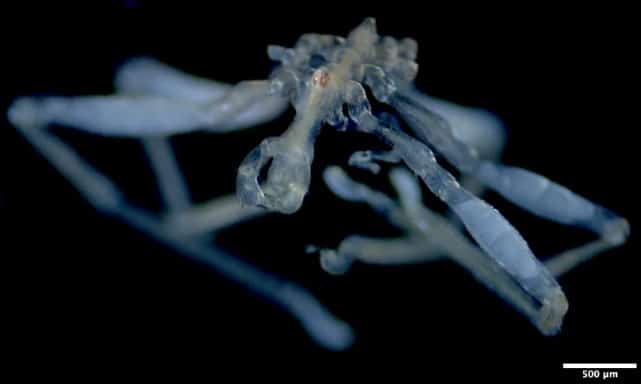
Бритиш Колумбийн их сургуулийн судлаачид сүүлийн 100 гаруй жилд анх удаа тус бүс нутгаас далайн аалзны шинэ төрөл зүйлийг олж тогтоосон нь далайн амьтдын олон янз байдлыг судлахад чухал ач холбогдолтой юм.
Бритиш Колумбийн их сургуулийн судлаачид 2023 оны есдүгээр сараас 2024 оны наймдугаар сарын хооронд Ванкувер болон Куадра арлын ойролцоох гүехэн уснаас Callipallene pilosuspedes болон Tanystylum kiixin хэмээх хоёр шинэ зүйлийг илрүүлжээ. Эдгээр нэг сантиметр орчим хэмжээтэй далайн үе хөлтөн нь дэлхий даяар мэдэгдэж буй 1300 гаруй зүйл бүхий Pycnogonida бүлэгт хамаардаг. Судлаач Кормак Толер-Скотт тэргүүтэй баг эдгээр амьтан нь хуурай газрын аалзтай зарим талаар төстэй боловч хэзээ ч хуурай газарт гарч байгаагүй, зөвхөн усан орчинд амьдрах чадвартай болохыг онцолжээ.
Шинээр илрүүлсэн хоёр зүйл нь биеийн бүтэц, онцлогоороо эрс ялгаатай байна. Callipallene pilosuspedes нь улаан нүд, гурван уруулт ам, хөл дээрээ муруй нуруутай бол Tanystylum kiixin нь богино, бүдүүн хөлтэй бөгөөд биеэ цэвэрлэх тусгай бүтэцгүй, олдсон даруйдаа шороо, хог хаягдлаар хучигдсан байдалтай байжээ. Tanystylum kiixin нэрийг олдвор олдсон газрын ойролцоох эртний уугуул иргэдийн Кииксин тосгоны нэрээр нэрлэсэн байна.
Далайн аалз нь хуурай газрын аалзнаас ялгаатай нь тор нэхдэггүй бөгөөд гидройд хэмээх далайн амьтдыг цоолж, тэдний эсээс шим тэжээлийг сорж хооллодог өвөрмөц аргатай. Мөн нөхөн үржихүйн хувьд эр аалз нь өндгөө ангаах хүртэл биедээ тээж хамгаалдаг ажээ. Эдгээр амьтан нь хор, соёогүй тул орчиндоо дасан зохицох, өнгөлөн далдлах замаар амьд үлддэг байна. Судлаачид тус бүс нутгийн далайн аалзны олон янз байдлыг цаашид үргэлжлүүлэн судлахаар төлөвлөжээ.
Дэлгэрэнгүйг эх сурвалжаас харах
↓Эх сурвалжийг нээх ↓
Scientists in Canada have discovered two new species of sea spiders living in the shallow waters of the Salish Sea, between Washington State and British Columbia. The tiny marine creatures, found near Vancouver Island and Quadra Island, are the first new specimens identified in the area in more than 100 years.
The two species, Callipallene pilosuspedes and Tanystylum kiixin, were collected during dives between September 2023 and August 2024 by researchers from the University of British Columbia. Measuring around one centimeter across, they belong to the group of marine arthropods known as Pycnogonida, which includes more than 1,300 known sea spider species around the world.
Although their name suggests a connection with spiders found on land, sea spiders are very different animals. They live underwater, move slowly along the seafloor and have developed their own way of feeding and surviving in marine environments.
Two Species With Very Different Appearances
Cormac Toler-Scott, who led the research team at the University of British Columbia, told NPR that sea spiders are related to land spiders in some ways, but they never made the move onto land.
“They really need to be in the water,” he explained, “They’re quite slow moving. They just kind of crawl on the seafloor.”
The two new species stand out because of their different body shapes and features. Callipallene pilosuspedes has red eyes, a triangular three-lipped mouth and a curved spine running across its legs.
The species also has special limbs called ovigers, which come from the underside of its body. These structures help it clean itself by removing dirt and algae. Toler-Scott pointed out that not all of them have this ability. Tanystylum kiixin has a completely different appearance. It has shorter, thicker legs attached to its central body and does not have the same cleaning structures. When researchers found it, the animal was covered with dirt and debris.
The species was named after Kiixin, an ancient Indigenous village located near the discovery site. While both animals are small, their different features show the variety that exists within the sea spider family.
A Strange Feeding Method Beneath the Surface
The newly discovered sea spiders were found attached to hydroids, small colonial marine animals that often look like underwater plants. These colonies provide a place for the sea spiders to live and feed. Unlike land spiders, which often use webs to catch prey, sea spiders feed directly on other organisms. They use their mouthparts to pierce hydroids and absorb nutrients from their tissues.
Speaking to NPR, Toler-Scott described how the animals move through the hydroid colonies before feeding.
“They just kind of poke a hole into the hydroid itself, and then they suck the juices out of it, like the cells out of the hydroid. That’s how they get their food.”
This unusual feeding strategy is part of what makes these creatures different from their better-known land relatives. Their survival depends on close interactions with other organisms living on the seafloor.
The Ocean Creatures Where Males Carry the Eggs
Sea spiders also have a reproduction system that is different from land spiders. Females produce the eggs, but males are responsible for carrying and protecting them until they hatch. The males use their ovigers to hold the eggs during their development. The newly discovered species also do not have venom or fangs, meaning they rely on other ways to survive.
Many sea spiders use camouflage to avoid predators. Some species are transparent and can even take on colors linked to the organisms they have eaten. Toler-Scott said discovering new species is a rare experience for researchers. He also explained that this type of work can be difficult to fund because scientists often begin their research without knowing what they will find.

More dives are planned by the University of British Columbia team as they continue exploring the waters around British Columbia and studying the diversity of sea spiders living there.
Enjoyed this article? Subscribe to our free newsletter for engaging stories, exclusive content, and the latest news.

