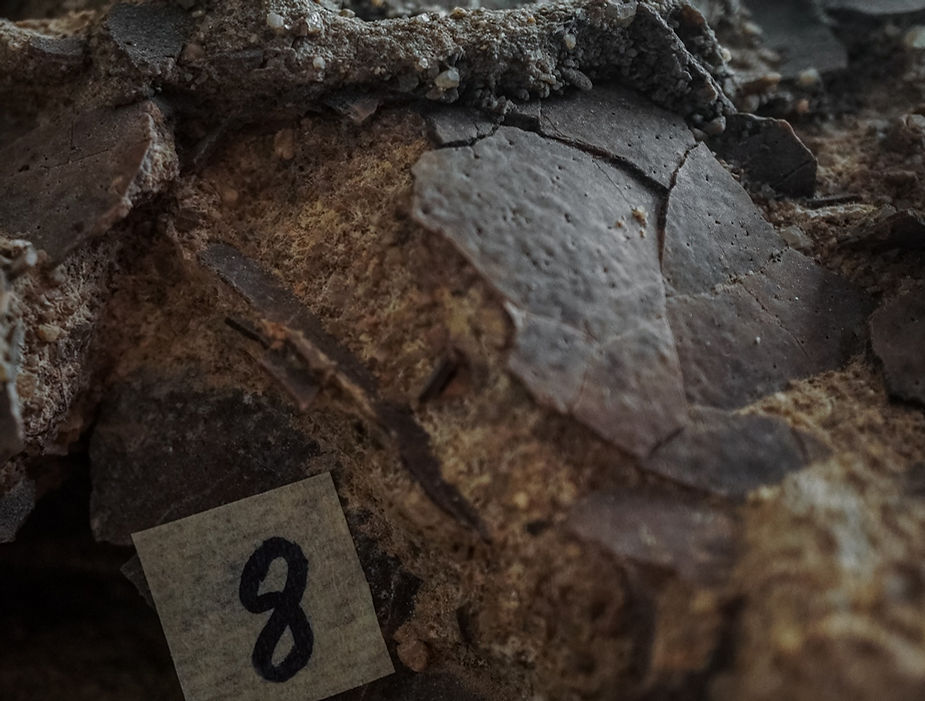
Лиссабоноос хойд зүгт орших Санта Круз эрэг дээрх хадны тогтоцоос Юрийн галавын сүүлч үед хамаарах үлэг гүрвэлийн 10 орчим өндөг бүхий үүр илэрснийг судлаачид нэгдүгээр сарын 13-нд мэдээллээ.
Torres Vedras Natural History Society-ийн Ci2Paleo багийнхан малтлагын үеэр олдворыг анх илрүүлсэн бөгөөд өндгүүд нь эмх цэгцтэй байрлалтай байсан нь тэдгээрийг анх тавьсан байрлалаасаа хөдлөөгүй болохыг илтгэж байна. Энэхүү олдвор нь үлэг гүрвэлүүд өндгөө голын эрэг орчимд булж үлдээдэг байсан байж болзошгүй гэсэн таамаглалыг дэвшүүлж байгаа бөгөөд тухайн бүс нутгийн элсэрхэг хурдас чулуулгийн бүтэц нь тухайн үеийн орчныг сэргээн босгоход чухал ач холбогдолтой юм.
Судлаачид өндөгний хэлбэр болон бүрхүүлийн сүвэрхэг байдалд үндэслэн эдгээр нь махчин үлэг гүрвэлийнх байх магадлалтай гэж үзэж байгаа боловч нарийвчилсан лабораторийн шинжилгээ хийгдээгүй тул тодорхой төрөл зүйлийг тогтоох боломжгүй хэвээр байна. Бруно Камилогийн тайлбарласнаар, өндөгний хальсны хэлтэрхийнүүд дотогшоо чиглэн хагарсан байдал нь үр төлүүд нь амжилттай хагарч гарсан байх магадлалыг харуулж байгаа аж.
Одоогоор олдворын дотоод бүтцийг судлахын тулд компьютер томографийн шинжилгээ хийхээр төлөвлөж байгаа бөгөөд энэ нь үлэг гүрвэлийн үржлийн үйл явц болон тухайн үеийн орчны нөхцөл байдлын талаар илүү тодорхой мэдээлэл өгөх юм. Энэхүү судалгаа нь эртний амьтдын нүүдлийн болон үржлийн зан төлөвийг ойлгоход нэн ховор бөгөөд үнэ цэнтэй баримт болж байна.
Дэлгэрэнгүйг эх сурвалжаас харах
↓Эх сурвалжийг нээх ↓
The eggs were not scattered randomly through the rock. Instead, they were grouped together in an orderly cluster, a detail that immediately stood out to researchers surveying the cliffs at Santa Cruz beach, about 50 kilometers north of Lisbon. Their arrangement suggested that the eggs may have remained close to the position in which they were originally laid rather than being moved around after burial.
The discovery was made by members of the Ci2Paleo team from the Torres Vedras Natural History Society during paleontological survey work along the coast. While examining the exposed rock, the team identified what appears to be a small dinosaur nest containing around 10 eggs. The find attracted particular attention because clearly organized dinosaur nesting sites from this period are relatively uncommon.
The society announced the discovery on January 13. According to Xinhua’s report on the announcement, the fossils date to the Late Jurassic, roughly 150 million years ago. The Torres Vedras Natural History Society’s own account also outlines the team’s preliminary interpretation of the site, although more laboratory work is still needed before firmer conclusions can be drawn.
Eggs Preserved in Their Original Arrangement
One of the most striking aspects of the find is the position of the eggs. They appear to remain in a natural arrangement, and researchers say the orderly grouping is unlikely to have been produced by water transport, which would normally disturb or scatter the eggs. That makes an original nesting site the team’s leading interpretation.
The sediment surrounding the eggs is also unusual. They are embedded in a granular sandstone that the researchers described as uncommon in this type of fossil deposit, and the composition of the rock may help reconstruct the environment in which the nest formed. The team has suggested that the sandstone could point to a riverbank setting, although that interpretation remains preliminary and has not yet been confirmed.
A Carnivorous Dinosaur May Have Laid the Eggs
Based on the overall form of the eggs and the porosity of their shells, the research team currently suspects that they were laid by a carnivorous dinosaur. Those physical characteristics can sometimes help paleontologists narrow down which groups of dinosaurs may have produced fossil eggs. However, egg shape and shell texture alone are not enough to identify a particular dinosaur species with certainty.
The identification therefore remains tentative. The fossils have not yet undergone the detailed laboratory analysis needed to compare their microscopic structure with other known dinosaur eggs, and the researchers have not assigned them to a specific species. Future examination of the shell and the interior of the eggs may provide more evidence about the animal that produced them.
The team was particularly surprised by the relatively small number of eggs in the nest and by the type of sediment in which they were found. Both features differ from what researchers might expect based on some previously studied dinosaur nesting sites. Those differences could eventually provide useful information about nesting behavior, burial conditions, or the local environment during the Late Jurassic.

The site may also offer clues about how the eggs were laid. Some previously documented dinosaur nests suggest that eggs were placed directly on the ground surface, while the Santa Cruz fossils appear to indicate that these eggs may have been at least partly buried. If confirmed, that detail could help researchers better understand the nesting strategy used by the dinosaur responsible for the clutch.
Portugal is among the relatively small number of places where Late Jurassic dinosaur eggs and nesting sites have been discovered. Fossils of this age can provide unusually direct evidence of dinosaur reproduction because they preserve more than just the bones of adult animals. A well-preserved nest can offer information about egg laying, incubation, hatching, and the environment in which young dinosaurs began their lives.
Eggshell Fragments Suggest the Young May Have Hatched
Bruno Camilo, director of the Torres Vedras Natural History Society and a researcher at Instituto Superior Técnico, examined the position of the eggshell fragments and suggested that most of the eggs may have successfully hatched. Many of the broken shell pieces appear to have shifted inward rather than spreading widely around the nest. He interpreted that pattern as being consistent with hatchlings breaking through the shells from inside.
The limited sideways dispersion of the fragments also supports the possibility that the shells were broken during hatching rather than scattered by later transport. At the same time, researchers have not ruled out the possibility that some embryonic material remains inside the fossil block. Sediment still obscures the internal sections of the eggs, so their contents cannot yet be examined directly.

The next major step will involve computed tomography scanning. CT imaging should allow researchers to build a three-dimensional model of the block’s interior without damaging the fossils and determine whether any embryonic remains or other hidden structures are present. Microscopic analysis of the eggshells is also planned to compare their structure with other known dinosaur eggs.
Together, these analyses may help researchers narrow down which dinosaur group produced the eggs and better understand how the nest formed. They could also clarify whether the apparent hatching pattern is supported by evidence inside the block. For now, the findings remain preliminary, but the site offers a rare opportunity to study dinosaur reproduction from around 150 million years ago.
Enjoyed this article? Subscribe to our free newsletter for engaging stories, exclusive content, and the latest news.

