Судлаачид эртний хүмүүсийн мөчдийн ясны бүтцэд хийсэн шинжилгээгээр хүн төрөлхтний хөдөлгөөний хэв маяг хэрхэн өөрчлөгдсөнийг тодрууллаа.
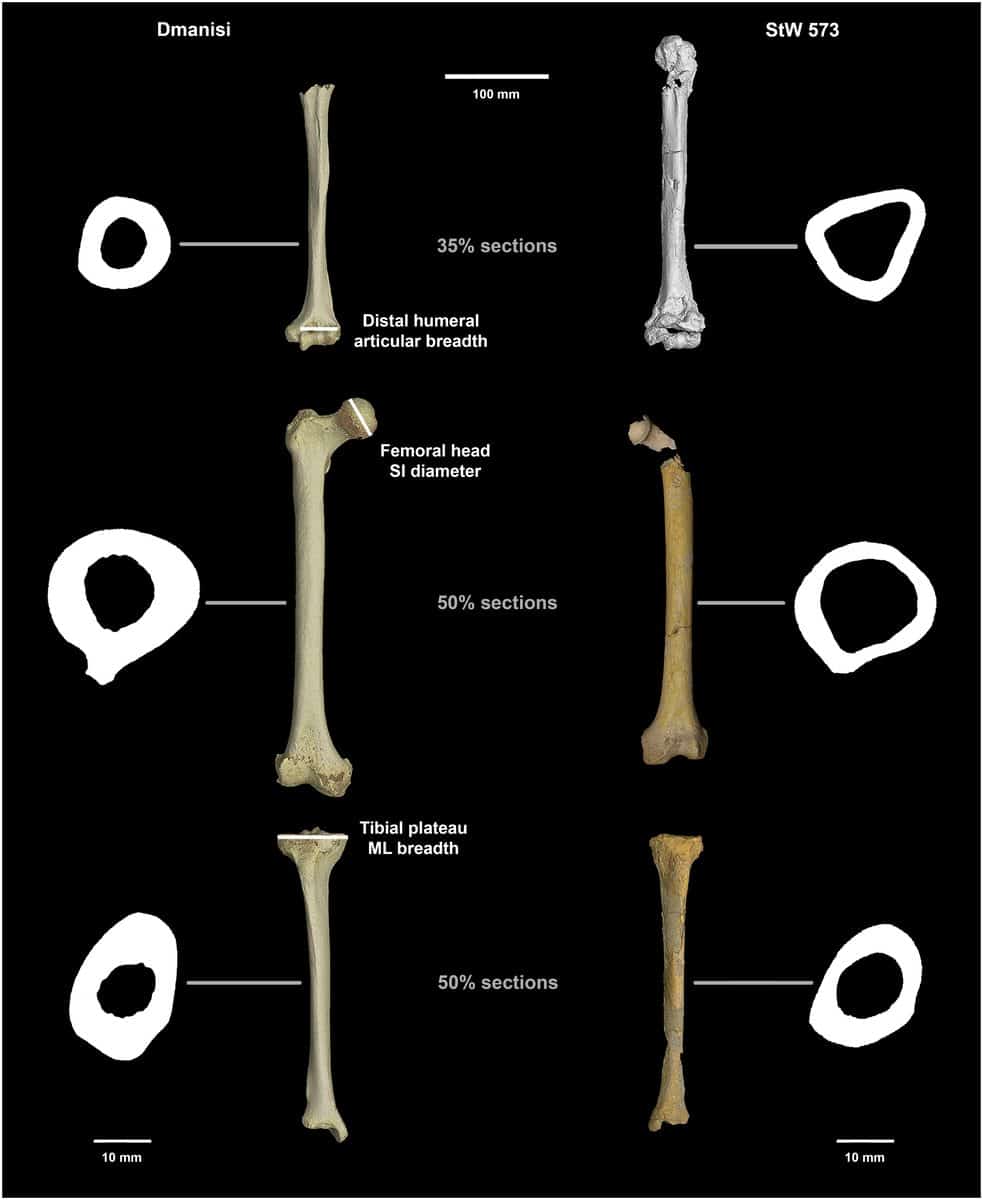
Keck School of Medicine of USC-ийн судлаачдын баг Science Advances сэтгүүлд нийтлүүлсэн судалгаандаа 1.5-аас 3.7 сая жилийн настай долоон хүний үлдэгдэлд компьютер томографын шинжилгээ хийжээ. Тэд ясны бүтцийн зузаан, мушгирах болон нугарах ачааллыг тэсвэрлэх чадварыг хэмжих замаар Australopithecus болон эртний Homo төрлийн бие махбодын онцлогийг харьцуулсан байна.
Шинжилгээгээр Australopithecus-ийн гарны яс хүчтэй, харин хөлний яс нь хүнлэг шинжтэй байсан нь тогтоогджээ. Энэхүү холимог бүтэц нь тэднийг модны амьдрал болон газраар алхах хэв маягийг хослуулдаг байсныг илтгэж байна. Энэ нь орчин үеийн ямар ч амьтанд ажиглагддаггүй өвөрмөц хөдөлгөөний стратеги байсан гэж судлаач Кристиан Ж.Карлсон тайлбарлав.
Харин 1.8-аас 2.3 сая жилийн өмнө амьдарч байсан эртний Homo-гийн хувьд гуяны яс нь гарныхаа яснаас харьцангуй хүчтэй болсон нь орчин үеийн хүмүүстэй төстэй байна. Энэхүү өөрчлөлт нь 2 сая орчим жилийн өмнө хүн төрөлхтний амьдралын хэв маягт үндсэн шилжилт болсныг харуулж байгаа юм.
Судлаачид мөчдийн харьцангуй хүч чадлын энэхүү өөрчлөлтийг зан үйлийн томоохон шилжилтийн илэрхийлэл хэмээн үзэж байна. Энэхүү үйл явц нь тархины хэмжээ огцом нэмэгдсэн үетэй давхцаж байгаа нь хөдөлгөөний шинэ хэв маяг нь бие махбод болон тархины хөгжилд нөлөөлсөн байж болзошгүй гэсэн таамаглалыг дэвшүүлжээ.
Дэлгэрэнгүйг эх сурвалжаас харах
↓Эх сурвалжийг нээх ↓
A new analysis of fossilized limb bones suggests that Australopithecus walked upright without giving up the trees. The research, led by the Keck School of Medicine of USC and published in Science Advances, points to a major change in movement around the transition to early Homo.
Walking on two legs, or bipedalism, is one of the traits that set humans apart from other apes. But a question has hung over the field for a long time: when did our ancestors stop moving both through trees and across the ground, and start living almost entirely on the ground?
To get at it, an international team looked at fossils from seven individuals, some Australopithecus and some of its descendants, early Homo. The specimens span roughly 1.5 million to 3.7 million years in age. Australopithecus itself lived about 2 million to 4 million years ago.
What The Bones Remember?
Bones adapt to the forces placed on them, so animals that regularly move through trees tend to have relatively strong arm bones, while humans who walk upright on the ground tend to have stronger thigh bones. Comparing those strengths complements studies of skeletal features that evolved over many generations.
The team used computed tomography (CT) scans, which rely on X-rays to produce detailed images of bones and their internal structure. They measured the thickness and structure of the bone shafts, estimated their resistance to bending and twisting, and compared the upper arm, thigh, and shin within each individual.
Australopithecus Bridged Two Worlds
The Australopithecus bones showed an odd mix. Arm strength was high relative to thigh strength, much like in modern apes. Yet within the legs, the relationship between thigh and shin followed a more human-like pattern. Put together, that suggests the upper limbs stayed important for moving through trees while the lower limbs supported upright walking.
“Australopithecus combined an ape-like upper limb strength with a human-like pattern in the legs, suggesting they had a unique movement strategy that has no modern comparison,”the lead author Kristian J. Carlson, a professor of clinical medical education at the Keck School.

That matters because researchers have long disagreed about how much time Australopithecus spent in each environment. Some have argued these ancestors mostly walked upright on the ground. According to the study, the new evidence instead suggests that movement in trees remained a substantial part of their lives.
Early Humans Entered a New Era
The picture changes with early Homo, which lived about 1.8 million to 2.3 million years ago. Their thigh bones were relatively strong compared with their arm bones, a pattern resembling modern humans and suggesting a greater reliance on walking on the ground. The results support the idea that a substantial behavioral shift had occurred by roughly 2 million years ago.
As stated by the Keck School of Medicine of USC, the team is proposing that relative limb strength is a threshold trait, meaning a difference that marks an important and fundamental shift in behavior between Australopithecus and Homo.

This shift in limb use roughly coincides with the beginning of a dramatic increase in brain size. Scientists have offered explanations for that growth involving language, tool use, and changes in how human ancestors found food. The study team stated that:
“We speculate that the shift toward more walking may have placed new demands on the body and brain, which could help explain why these changes happened around the same time.”
Enjoyed this article? Subscribe to our free newsletter for engaging stories, exclusive content, and the latest news.

