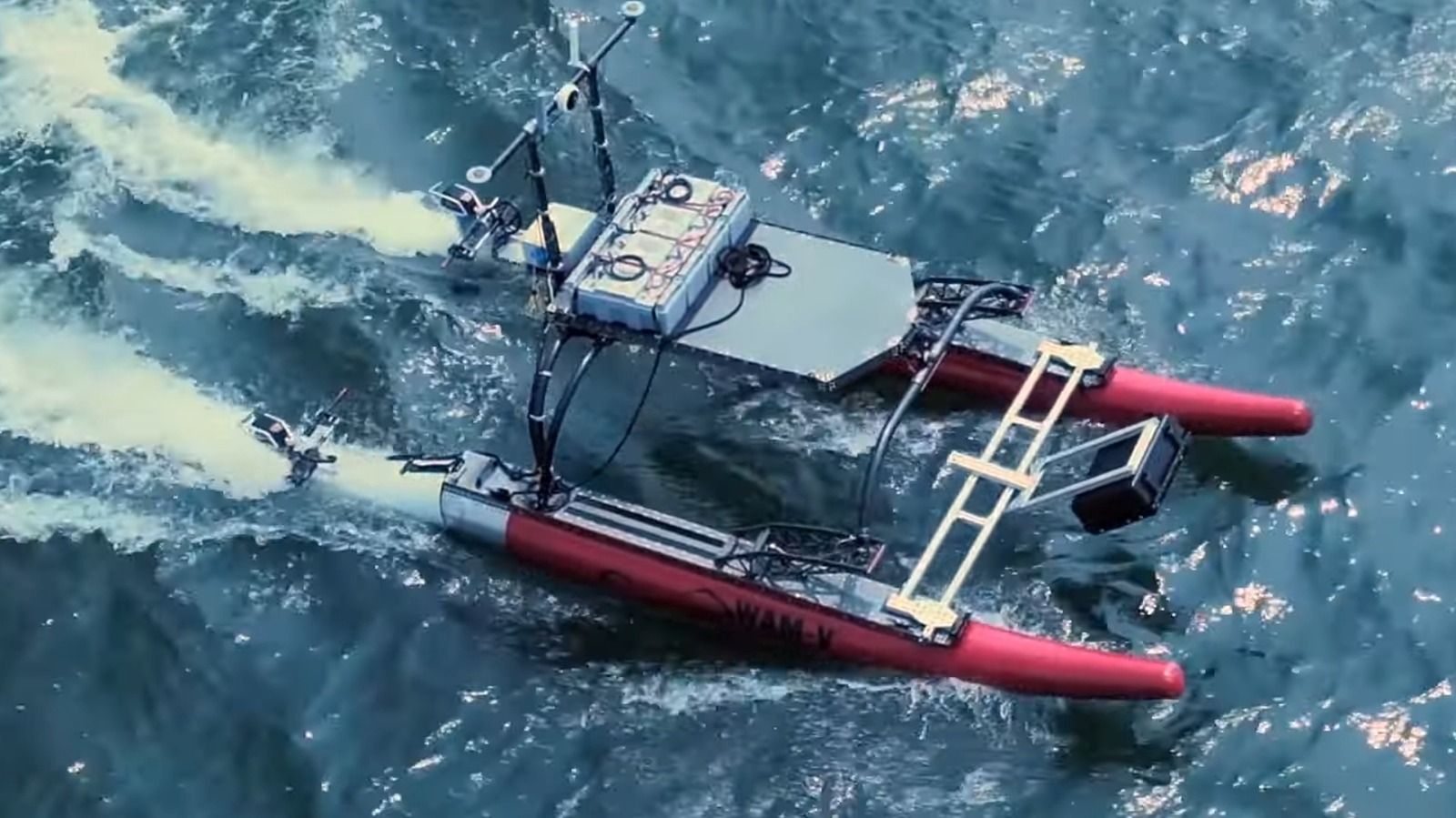
АНУ-ын армийн Инженер, судалгаа, хөгжлийн төв далайн эрэг болон давалгаа хагарах бүсэд ажиллах боломжтой WAM-V 8 загварын алсын удирдлагатай хөлөг онгоцыг (USV) туршиж эхэллээ.
АНУ-ын арми нь гол төлөв хуурай замын цэргийн ажиллагаанд төвлөрдөг ч логистик болон эрэг орчмын ажиллагааг хангах зорилгоор усан тээврийн хэрэгслүүдийг ашигладаг. Одоогийн байдлаар армийн инженерүүд далайн гүехэн хэсэг болон давалгаа ихтэй эрэг орчимд том хөлөг онгоц нэвтрэхэд хүндрэлтэй байдаг асуудлыг шийдвэрлэхээр Ocean Power Technologies компанийн бүтээсэн WAM-V 8 дроныг судалж байна. Энэхүү төхөөрөмж нь ердөө 4 инчийн усны гүнд ажиллах чадвартай тул эрэг орчмын нарийн төвөгтэй бүсэд нэвтрэхэд тохиромжтой юм.
Катамаран загварын, хоёр хийлдэг хөвөгчтэй WAM-V 8 дрон нь 340 фунтын жинтэй бөгөөд 100 фунт хүртэлх ачаа тээвэрлэх хүчин чадалтай. Лити-ион батерейгаар ажилладаг хоёр цахилгаан мотортой энэхүү систем нь 3 зангилаа хурдтайгаар 10 цаг тасралтгүй ажиллах боломжтой. Төхөөрөмжийг хялбархан задалж, агаарын тээврээр зөөвөрлөх эсвэл пикап автомашины тэвшинд тээвэрлэх боломжтой нь давуу тал болж байна.
Дроныг цэргийн зориулалтаар ашиглах олон талт боломжуудыг судалж байгаа бөгөөд үүнд эрэг орчмын газрын зураглал гаргах, далайн ёроолыг сонар төхөөрөмжөөр сканнердаж аюул илрүүлэх, мөн хангамжийн бараа тээвэрлэх зэрэг багтаж байна. Түүнчлэн C4ISR (команд, удирдлага, холбоо, тагнуул, ажиглалт) болон нисгэгчгүй онгоцны эсрэг ажиллагаанд ашиглах боломжийг судалж байгаа юм.
Одоогоор долоо хоногийн туршилтын үр дүнг албан ёсоор танилцуулаагүй байгаа бөгөөд АНУ-ын арми уг төхөөрөмжийг худалдан авах эсэх нь тодорхойгүй байна. Цаашид илүү нарийвчилсан туршилтуудыг хийх шаардлагатай байгааг холбогдох албаныхан мэдэгдлээ.
Дэлгэрэнгүйг эх сурвалжаас харах
Эх сурвалжийг нээх ↓
While it may seem counterintuitive given the branch’s primary mission of ground warfare, the United States Army does have several types of boats in its inventory. The Army primarily uses these for logistics and cargo transport, though its maritime force also includesships for storming beaches.Another area of interest is drone warfare, and while most Army drones fly, some float, and a new uncrewed surface vessel (USV) could potentially be used to help future Army coastal operations.
The Army is looking to acquire a USV that can drive into the surf, which is incredibly difficult and often dangerous for most vessels. It’s long been a difficult area to patrol, but the Army might overcome this issue with Ocean Power Technologies’WAM-V 8 USV, which is unlike any drone currently used by the military. A weeklong study put the eight-foot-long and four-foot-wide WAM-V 8, which only draws 4 inches of water, through several tests, aiming to meet the Army’s requirements for a craft that can handle the surf and cruiseright up to the coastline without issue.
The highly mobile, easily deployable USV could solve the Army’s coastal surf-breaking concern, which limits the use of larger vessels too close to shore. With a WAM-V 8, Army watercraft operators, also known as Army mariners, could fully map coastlines, aiding the Army Corps of Engineers’ coastal operations. The drone could also be useful for command, control, communications, intelligence, surveillance, and reconnaissance (C4ISR); counter-uncrewed aerial systems (cUAS; and locating mines, among others.
Ocean Power Technologies’ WAM-V 8 USV
The Army Engineer Research and Development Center’s Coastal and Hydraulics Laboratory wants a system that can move where waves break, and that’s where Ocean Power Technologies’ WAM-V 8 USV comes into play. The drone has a 100-pound payload capacity, weighs 340 pounds unloaded, and can operate for 10 hours when moving at 3 knots.
The WAM-V 8 runs on two 1,100-watt electric motors powered by lithium-ion batteries, and it’s easily transportable in the back of a pickup truck. It’s also easy to take apart and reassemble, so the Army should be able to move it by air as well. The drone could help the Army transport food, equipment, and fuel to shore, which would come in handy in the absence of a nearby port. In such a situation, the WAM-V 8 could scout a shoreline, identify sandbars, and map them, enabling larger vessels to enter the area safely.
The drone is a catamaran sitting atop two inflatable pontoons. It has a suspension that adjusts the pontoons to move with the waves, stabilizing it as much as possible. It carries sonar equipment in a device similar to a camera gimbal, which scans the bottom for potential hazards. While the Army has tested the WAM-V 8, it’s unclear whether the branch will move forward with procurement, as more testing is necessary. Neither the Army nor OPT has released the results of the initial week-long study.

