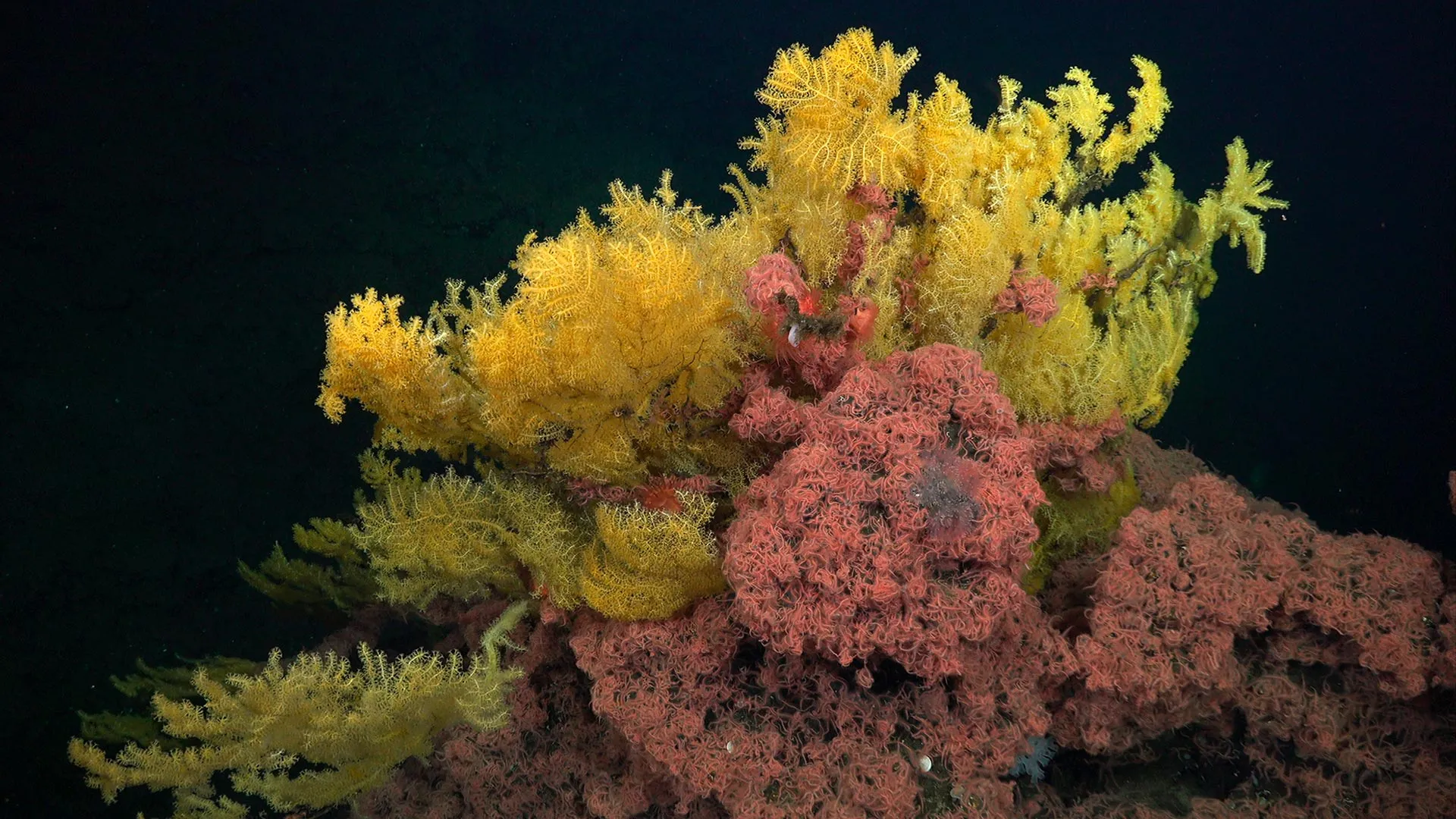
Эрдэмтэд Номхон далайн гүнээс илрүүлсэн уг шүрийг генетик болон бүтцийн өвөрмөц онцлогтой тул ангилал зүйн цоо шинэ бүлд хамааруулав.
Коста-Рикагийн эрэг орчмын далайн гүний ууланд хийсэн судалгааны явцад “алтан мод” хэмээн нэрлэгдсэн өвөрмөц шүр олджээ. Schmidt Ocean Institute-ийн судлаачид 2019 болон 2023 онд хийсэн экспедицийн үеэр 360-529 метрийн гүнээс уг шүрийг илрүүлсэн байна. ZooKeys сэтгүүлд нийтлэгдсэн судалгаагаар, энэхүү тод шар өнгийн, модлог хэлбэртэй шүр нь урьд өмнө бүртгэгдсэн ямар ч шүрийн бүлд хамаарахгүй болохыг тогтоожээ.
Судалгааны багийнхан эхэндээ шүрийн генийг дарааллуулахдаа уламжлалт арга ашигласан боловч үр дүн нь зөрчилтэй байсан тул олон зуун генийг зэрэг харьцуулдаг филогенетикийн аргад шилжсэн байна. Энэхүү нарийвчилсан шинжилгээгээр уг зүйл нь Eunicellidae бүлэгтэй хамгийн ойр төрлийнх боловч генетик болон анатомийн хувьд ялгаатай тул Laurinqueidae хэмээх шинэ бүл, мөн Laurinque хэмээх шинэ төрлийг үүсгэх шаардлагатай гэж үзжээ.
Шүрийн шинжлэх ухааны нэршлийг Ж.Р.Р.Толкиений зохиосон “Эльф” хэлнээс санаа авч өгсөн байна. Laurinque нь “алтан мод”, elenya нь “оддын” гэсэн утгатай бөгөөд энэ нь шүрийг хүрээлэн буй олон тооны хэврэг од (brittle stars)-ын нөлөөгөөр үүссэн ид шидийн мэт орчинтой холбоотой ажээ.
Universidad de Costa Rica-гийн доктор Одалиска Бридигийн удирдсан олон улсын багийнхан энэхүү олдвор нь далайн гүний экосистем хэр зэрэг судлагдаагүй байгааг харуулж байна гэв. Эдгээр шүрэн цэцэрлэгүүд нь гурван хэмжээст бүтцээрээ дамжуулан далайн олон амьтдад амьдрах орчин бүрдүүлдэг тул биологийн олон янз байдлын чухал төвд тооцогддог.
Дэлгэрэнгүйг эх сурвалжаас харах
↓Эх сурвалжийг нээх ↓
Scientists surveying underwater mountains off Costa Rica have identified a remarkable new coral that is unlike any known coral family. Its genetic makeup and physical features were so distinctive that researchers created an entirely new family to classify it. The bright yellow coral, which has a branching, tree-like appearance, was discovered between 360 and 529 meters below the Pacific Ocean’s surface. The findings are reported in the open-access journal ZooKeys.
Some colonies grow more than a meter tall. Researchers collected specimens using the remotely operated vehicle SuBastian during expeditions in 2019 and 2023 aboard the research vessels Falkor and Falkor (too), which are operated by the Schmidt Ocean Institute. The expeditions explored seamounts near Isla del Coco and along Costa Rica’s Pacific margin.
A Golden Coral Among Fields of Stars
The coral was especially abundant on rocky outcrops where brittle stars covered nearly every available surface. Against this shimmering backdrop, the bright yellow branches appeared to rise from the seafloor like glowing trees surrounded by stars.
That unusual scene helped inspire the scientific name. The new genus, Laurinque, is derived from “Laurinquë,” which means “golden tree” in Quenya, the Elvish language created by J.R.R. Tolkien for The Lord of the Rings and The Silmarillion. Researchers selected the name because of the coral’s vivid yellow color and tree-like shape.
Its species name, elenya, means “stellar” or “of the stars” in Quenya. The name refers to the dense populations of brittle stars surrounding the coral colonies. Together, the genus and species names reflect what the researchers described as an almost mystical elvish landscape on the deep ocean floor.
DNA Reveals a New Coral Family
Determining where the coral fit on the evolutionary family tree proved far more complicated than expected. Scientists initially sequenced three genes commonly used to identify and classify corals. Instead of pointing toward the same group, each gene suggested a different and unrelated family.
Because those results were unusually inconsistent, the researchers used phylogenomics, a method that compares hundreds of genes at the same time. The broader genetic analysis finally clarified the coral’s evolutionary position.
The results showed that the species does not belong to any previously recognized coral family. It represents a distinct evolutionary lineage that is most closely related to Eunicellidae, but its genetics and anatomy differ enough to justify the creation of a new family called Laurinqueidae. Researchers also established the new genus Laurinque specifically for the species.
Dr. Odalisca Breedy of the Universidad de Costa Rica (lead researcher on the study) said:
“I saw the octocoral garden for the first time in 2019 and I was impressed by the beauty of the landscape, which inspired, later the elvish name of the taxa. I thought the species could belong to a known family and genera, but after the preliminar morphological analysis I realised that it was something very different that I could not match with the known taxa.
“In 2023 we collected more samples and thanks to the exhaustive molecular analyses made by my colleagues, Cathy McFadden, Catalina Murillo and Andrea Quattrini, we were able to determine the taxonomic placement of the stunning species, in one of the most enigmatic sites.”
Costa Rica’s Deep Sea Still Holds Surprises
Dr. Breedy led the research with an international team of collaborators. The Schmidt Ocean Institute supported the expeditions, along with a National Geographic Society research grant.
The find joins a growing number of previously undocumented species discovered on Costa Rica’s seamounts. It also highlights how much of the deep ocean remains poorly explored, even though it covers roughly two-thirds of Earth’s surface.
Coral gardens like this one are considered vulnerable marine ecosystems. Their complex three-dimensional structures provide habitat for many other forms of deep-sea life, making them important centers of biodiversity in environments that scientists are only beginning to understand.

