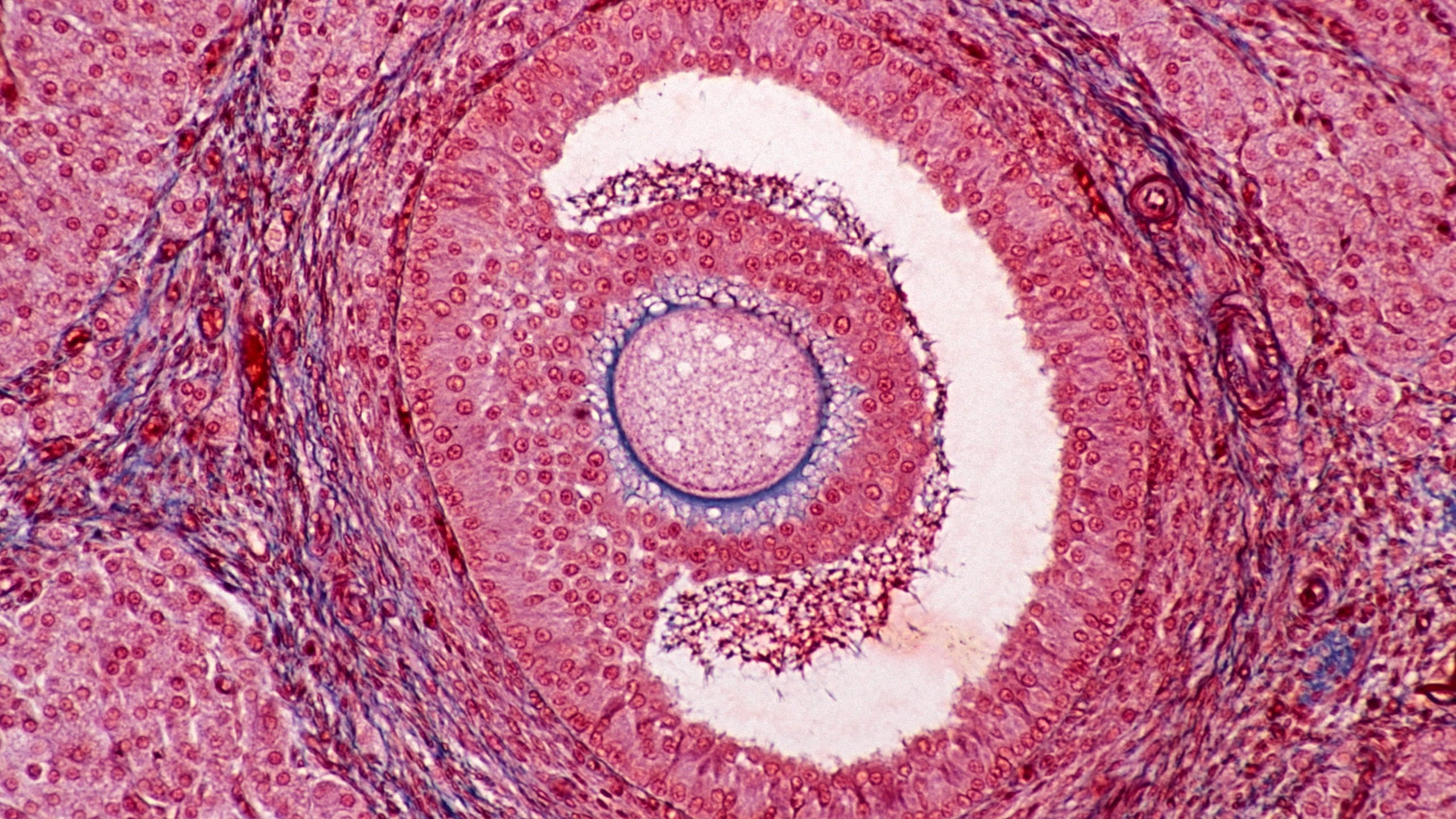
Шведийн Karolinska Institute-ийн судлаачид фталат бодисын задралын бүтээгдэхүүн болох MEHP нь хүний өндгөвчний эсүүдэд хэрхэн нөлөөлдгийг судалжээ.
Хуванцар эдлэл, гоо сайхны бүтээгдэхүүн болон хүнсний сав баглаа боодолд түгээмэл ашиглагддаг DEHP химийн бодис нь хүний биед орсныхоо дараа MEHP болон хувирдаг. eBioMedicine сэтгүүлд нийтлэгдсэн шинэ судалгаагаар MEHP нь өндгөвчний эсүүдийн үйл ажиллагаа, эс хоорондын харилцаа холбоо болон энергийн солилцоонд сөрөг нөлөө үзүүлдэг болохыг тогтоожээ. Судалгааны багийн ахлагч, нөхөн үржихүйн биологич Паулина Дамдимопуло (Pauliina Damdimopoulou)-ийн хэлснээр, фталат нь зөвхөн өндгөн эс төдийгүй өндгөвчний олон төрлийн эсэд нөлөөлдөг бөгөөд ялангуяа мэдрэлийн системийн эсүүд энэ бодист илүү мэдрэг болох нь тогтоогдсон байна.
Судлаачид долоон хүний өндгөвчний эдийн дээжийг лабораторийн нөхцөлд MEHP-ийн өөр өөр тунгаар 6 хоногийн турш туршжээ. Үүний үр дүнд эпидемиологийн хувьд бодитой гэж үзэхүйц бага тунгаар ч гэсэн эсүүдийн генийн илэрхийлэл өөрчлөгдөж, эсийн бүтэц, наалдац болон энерги үйлдвэрлэх үйл явц алдагдсан байна. Энэхүү судалгаа нь фталат бодис нь хүний нөхөн үржихүйн эрхтний үйл ажиллагаанд хэрхэн сөрөг нөлөө үзүүлж болзошгүйг харуулсан чухал баримт болж байна.
Судалгаанд хамрагдсан эдийн дээжүүд нь хүйсээ батлах мэс засал болон кесар хагалгааны үеэр цуглуулсан бөгөөд оролцогчид өндгөвчний өвчний түүхгүй байжээ. Гэсэн хэдий ч судлаачид энэхүү үр дүнг бүх хүн амд шууд хамаатуулахын тулд илүү өргөн хүрээтэй судалгаа шаардлагатайг онцолсон байна. Мөн энэхүү судалгаа нь фталат бодисын хор нөлөөг судлахдаа зөвхөн өндгөн эсэд анхаарахаас гадна өндгөвчний бусад эд эс, тэр дундаа мэдрэлийн эсүүдийн хариу урвалыг авч үзэх шаардлагатайг харууллаа.
Дэлгэрэнгүйг эх сурвалжаас харах
↓Эх сурвалжийг нээх ↓
A class of chemicals called phthalates is widespread in our lives, and there are growing concerns about what impact they’re having on our reproductive health.
The most common phthalate – DEHP (di-2-ethylhexyl phthalate) – is usually added to materials to make them more flexible. It’s used in PVC pipes, cling wrap, shower curtains, medical tubing, eyelash glue, and many other everyday items.
It can easily get into our bodies, particularly if it’s in our food or water, since it’s readily absorbed through the lining of the intestines. When DEHP enters the human body, our enzymes convert it to MEHP (mono-(2-ethylhexyl) phthalate).
Many in vitro and animal studies have also demonstrated that this byproduct can disrupt the endocrine system, potentially affecting fertility.
New research published in eBioMedicine adds to this picture by mapping out how MEHP exposure affects the cellular machinery of human ovarian tissue.
The study was conducted by a team from the Karolinska Institute and its affiliated hospital in Sweden.
Restrictions on the use of DEHP vary widely from country to country.
Generally, restrictions apply to children’s toys, but policy relating to its use in medical equipment, cosmetics, food packaging, and household items is inconsistent, due to uncertainty around how harmful it really is.
These products offer a lot of convenience, make people a lot of money, and in the case of medical equipment, can save lives, so scientists will need to present strong evidence of harm that outweighs these benefits if DEHP is to be restricted more widely.
Prior research in this area has focused on the egg-producing follicles, since these are the ovarian cells directly involved in reproduction.
But the follicles can’t pump out an egg without the help of the many other kinds of cells that surround and support them. We need to understand how MEHP affects these non-follicular cells, too.
“Our results show that phthalates affect considerably more cell types in the ovary than the egg cells and follicles that have traditionally been the focus of research,” says reproductive biologist Pauliina Damdimopoulou, the study’s senior author.
“The most unexpected finding was that cells from the ovary’s nervous system appeared to be particularly sensitive to the exposure.”
To arrive at these conclusions, the team experimented on ovarian tissue samples from seven individuals. Five of these donors donated the tissue as part of gender-affirming ovary removal; the other two donors’ tissues were collected as a biopsy during elective cesarean section.
None of these donors had a history of ovarian disease, and none were current smokers (though a few had a history).
The donors who were undergoing gender-affirming surgery had also been on androgen therapy for three to eight years, which can sometimes cause changes to the ovaries similar to women with PMOS. As such, their ovarian tissue may not be totally representative of the general population.
But donated human ovarian tissue is difficult to come by: presumably, not many women with healthy ovaries are volunteering to give them up.
For many valid ethical reasons, studies like this one are about as close as medical research can get to experimenting directly on humans.
Once removed from a donor’s body, the researchers grew the ovarian tissue in a lab. The samples spanned a wide variety of ovarian cells: oocytes, granulosa cells, stromal cells, perivascular cells, endothelial cells, immune cells, and glial cells.
Each sample was exposed to one of three treatments across six days: one group was treated with an MEHP-free chemical solvent, for comparison; the other two were exposed to either 20.51 nanomoles per liter (nM) or 20.51 × 1000 nM of MEHP.
The 20.51 nM dose, the authors note, is an ‘epidemiologically relevant’ concentration, meaning it’s a more realistic exposure level.
The team conducted single-cell sequencing to get a detailed picture of how one donor’s tissue responded to MEHP exposure. This donor was a 23-year-old who had undergone gender-affirming oophorectomy.
Across all seven cell types, gene expression was significantly different between the control treatment and the MEHP exposure groups, which suggests the phthalate byproduct can change the normal function of cells (though scientists will need to replicate this in tissue from many more individuals to know if human cells generally respond in this way).
In most cells, the gene expression difference seemed to follow a dose-dependent pattern: higher MEHP exposure meant a greater number of differentially-expressed genes.
It disrupted pathways related to maintaining cell structure, adhesion, and oxidative phosphorylation, which is a crucial step in how cells generate energy.
But in glial cells, nervous-system cells that have only recently been discovered in ovaries, the number of differentially-expressed genes wasn’t all that different between MEHP concentrations. The researchers say this could indicate that glial cells are particularly sensitive to MEHP exposure.
MEHP exposure also reduced the ability of cells to communicate with each other, with a greater effect at a higher dose.
“Taken together, current evidence indicates that phthalates disrupt human ovarian function at epidemiologically relevant concentrations, extending beyond the follicular compartment,” the authors conclude.
“In particular, the observed susceptibility of glial cells to MEHP offers new modes of action for environmental chemical-mediated disruption of ovarian biology and may explain reported links between phthalate exposure and polycystic ovaries.
“These findings should encourage ovarian toxicity research to expand its focus beyond follicles and guide chemical safety testing accordingly.”
The research has been published in eBioMedicine.
This article was fact-checked by Fiona MacDonald and edited by Fiona MacDonald. While we pride ourselves on our process, we are only human. If you spot a mistake, please let us know.

