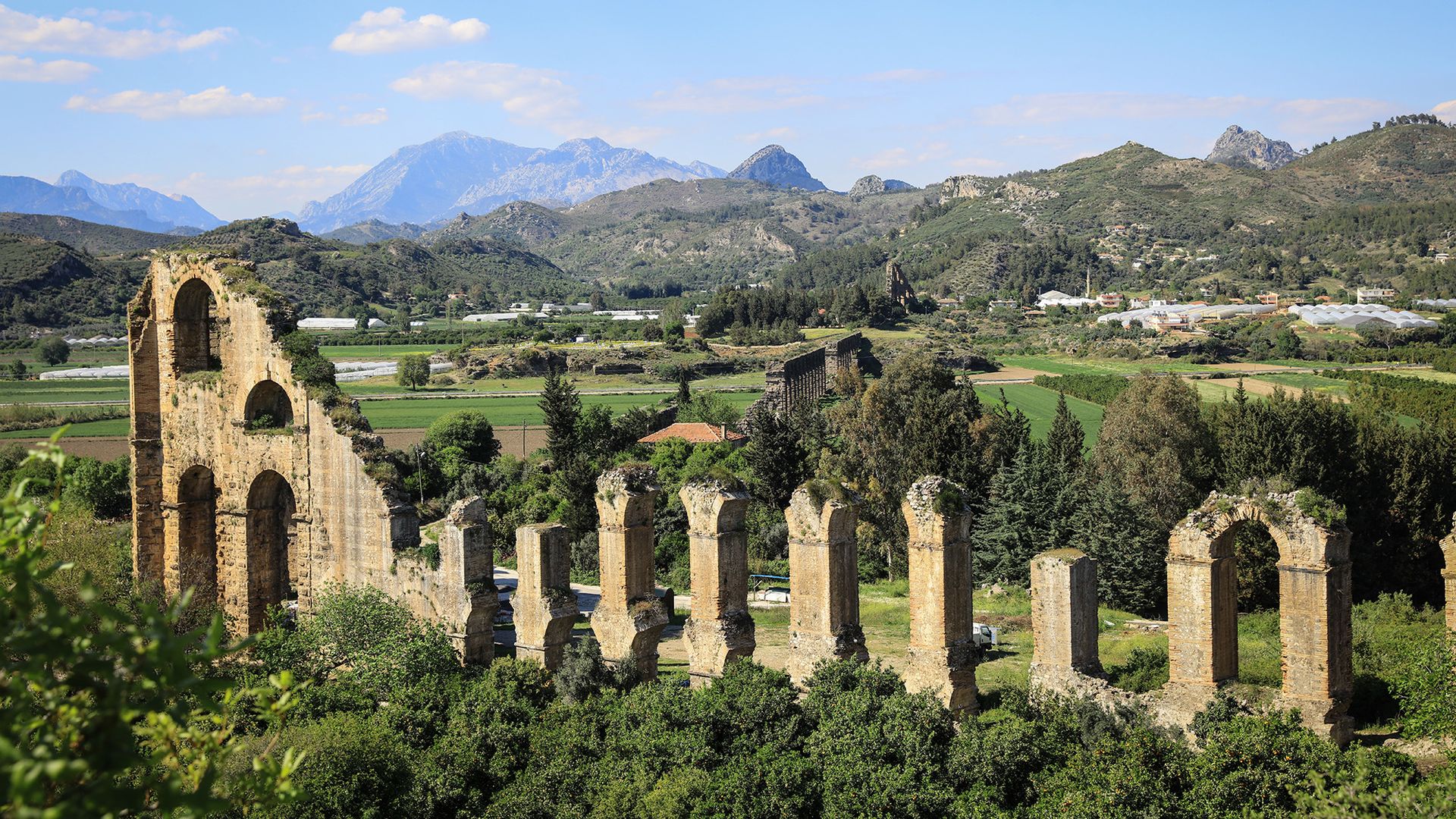
Ромын эзэнт гүрний инженерүүд хүндийн хүчний зарчмыг ашиглан хот суурин руу ус татахдаа өгсүүр газрыг давахын тулд инверт сифон болон ус өргөх төхөөрөмжүүдийг ашиглаж байжээ.
Эртний Ромын усан хангамжийн систем нь голчлон хүндийн хүчний тусламжтайгаар ус урсгахад чиглэгдсэн байдаг ч Туркийн Аспендос зэрэг газарт усыг өгсүүр замаар тээвэрлэх шаардлага гардаг байв. Археологичдын судалгаагаар, Ромын инженерүүд ийм тохиолдолд “инверт сифон” буюу урвуу сифоны системийг ашиглаж байжээ. Энэ нь хөндийн нэг талд өндөрлөг байрлах савнаас усыг доошлуулан, даралтын хүчээр эсрэг талын цамхаг өөд өгсүүр урсгах зарчимтай аж.
Системийн үр ашгийг хангахын тулд усны даралтыг тогтворжуулж, агаарын бөмбөлгийг гадагшлуулах том савнуудыг байрлуулдаг байв. Радбудын их сургуулийн судлаач Пол Кессенер болон бусад эрдэмтдийн тэмдэглэснээр, энэ нь хоолой дотор агаарын цоорхой үүсэхээс сэргийлж, усны тасралтгүй урсгалыг хангадаг байжээ. Гэсэн хэдий ч Ромын инженерүүд боломжтой үедээ сифон ашиглахын оронд гүүрэн байгууламж барихыг илүүд үздэг байсан нь Испанийн Сеговиа дахь байгууламжаас тод харагддаг.
Усыг өндөрлөг газар руу шахах өөр нэг арга нь ус өргөх механик төхөөрөмжүүд байв. Үүнд малын хүчээр эргүүлдэг Архимедийн шураг болон хувин бүхий усны хүрдүүд багтдаг бөгөөд эдгээрийг ихэвчлэн тариалангийн талбайг услах эсвэл уурхайн гүнээс ус зайлуулахад ашигладаг байжээ. Түүнчлэн Ктесибиусын насос хэмээх поршений систем нь гараар ажилладаг хөшүүргийн тусламжтайгаар ус шахах боломжийг бүрдүүлж байсан нь Ромын инженерийн ур ухаан хэр зэрэг өндөр түвшинд байсныг нотолж байна.
Дэлгэрэнгүйг эх сурвалжаас харах
↓Эх сурвалжийг нээх ↓
Aqueducts are some of the ancient Romans’ most prominent surviving archaeological remains. These aqueducts relied on gravity to bring down the water to cities gradually. But some, such as the aqueduct at Aspendos in Turkey, had sections where they had to go uphill. So how did the Romans get water to flow upward?
The Romans used a few methods, including siphons and various water-lifting devices, experts told Live Science.
Inverted siphons
One strategy was a system called an inverted siphon (sometimes simply called a siphon).
At Aspendos, in southern Turkey, there is a second-century-A.D. Roman aqueduct with inverted siphons that scholars have reconstructed with a virtual modeling simulation. To get water through a valley, the Romans built a “header tank” on one end of the valley and a slightly lower “receiving tank” (or “outlet tank”) on the other side. In the valley, they constructed two towers between the tanks, Paul Kessener, a researcher in the Department of Language and Culture Studies at Radboud University in the Netherlands, noted in an article published in 2000 in the Journal of Roman Archaeology.
As water dropped down a steep hill, the resulting pressure pushed it up the first tower before dropping it steeply down the other side, with the force allowing it to climb the second tower. The water eventually reached the receiving tank on the other side of the valley and continued toward the city of Aspendos.
It was important to prevent air pockets from forming as the water went through the inverted siphons. The header and receiving tanks were relatively large, allowing air bubbles to escape, Giovanni De Feo, a professor of industrial engineering at the University of Salerno in Italy, noted in an email.
“As the flow entered a relatively large chamber, its velocity decreased, allowing air bubbles to rise naturally to the water surface and escape through the open top of the structure,” De Feo explained. This reduced the risk of air pockets forming.
The Romans tried to avoid using inverted siphons, said Charles Ortloff, a research associate in the Department of Anthropology at the University of Chicago who has a background in both engineering and history. When “Roman engineers encounter a valley, rather than construct a siphon, they [preferred] to build a bridge with a top channel to cross a valley,” Ortloff said in an email. One example of this is at the Segovia aqueduct in Spain, which has a stunning bridge that still survives today.
Roman water-lifting devices
While the Romans used inverted siphons to move water upward in an aqueduct, they employed other devices to push water out.
Perhaps the best known of these devices is the Archimedes screw, which was sometimes used to help lift water from rivers to fields. (It was allegedly designed by Archimedes, a Greek inventor who lived during the third century B.C. However, it might have actually been invented at an earlier time, noted historians Stephanie Dalley and John Peter Oleson in a 2003 paper.) When “turned by use of animal power, [it] can effectively raise water from lower river heights to higher land area heights,” Ortloff said.
The Archimedes screw “consisted of a wooden shaft that had [curves] of thin and flexible willow or wicker branches one stuck on top of the other, so that an endless screw was created,” the Kotsanas Museum of Ancient Greek Technology’s website notes. This screw was placed within a wooden pipe, and the “device was placed in the water with an inclination of 30 degrees,” the museum representatives wrote. As the screw was rotated, it lifted the water.
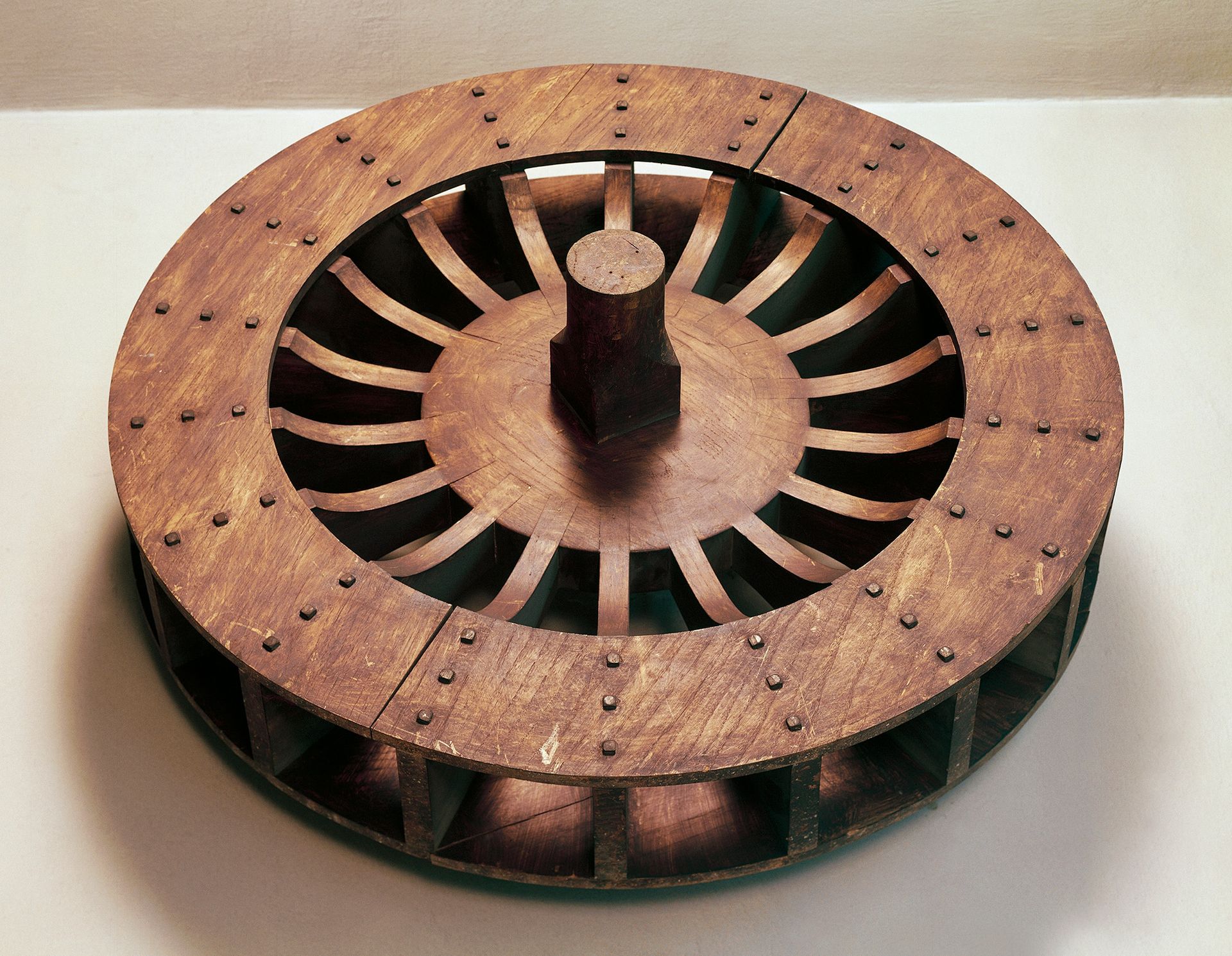
Water wheels were also used to lift water, including in Roman mines. “The water wheel is a device that raises water and that is made up of several buckets that are fastened to a big wheel,” scientists wrote in a 2024 paper. This “kind of wheel resembles a carriage wheel but it is larger and features buckets to catch water in addition to its larger size,” they explained.
Another device, sometimes known as Ctesibius’ pump, “was hand-moved, operating a wooden lever with a swinging motion,” the scientists wrote. It had two cylinders connected to a central chamber through pistons, and the driven water exited through a nozzle connected to the central chamber.
Whatever method was used, the Romans would not let an uphill climb stop them from bringing water where they wanted it to go.
From Augustus to Nero, see how much you know about ancient Rome’s famous leaders with our Roman emperor quiz!

