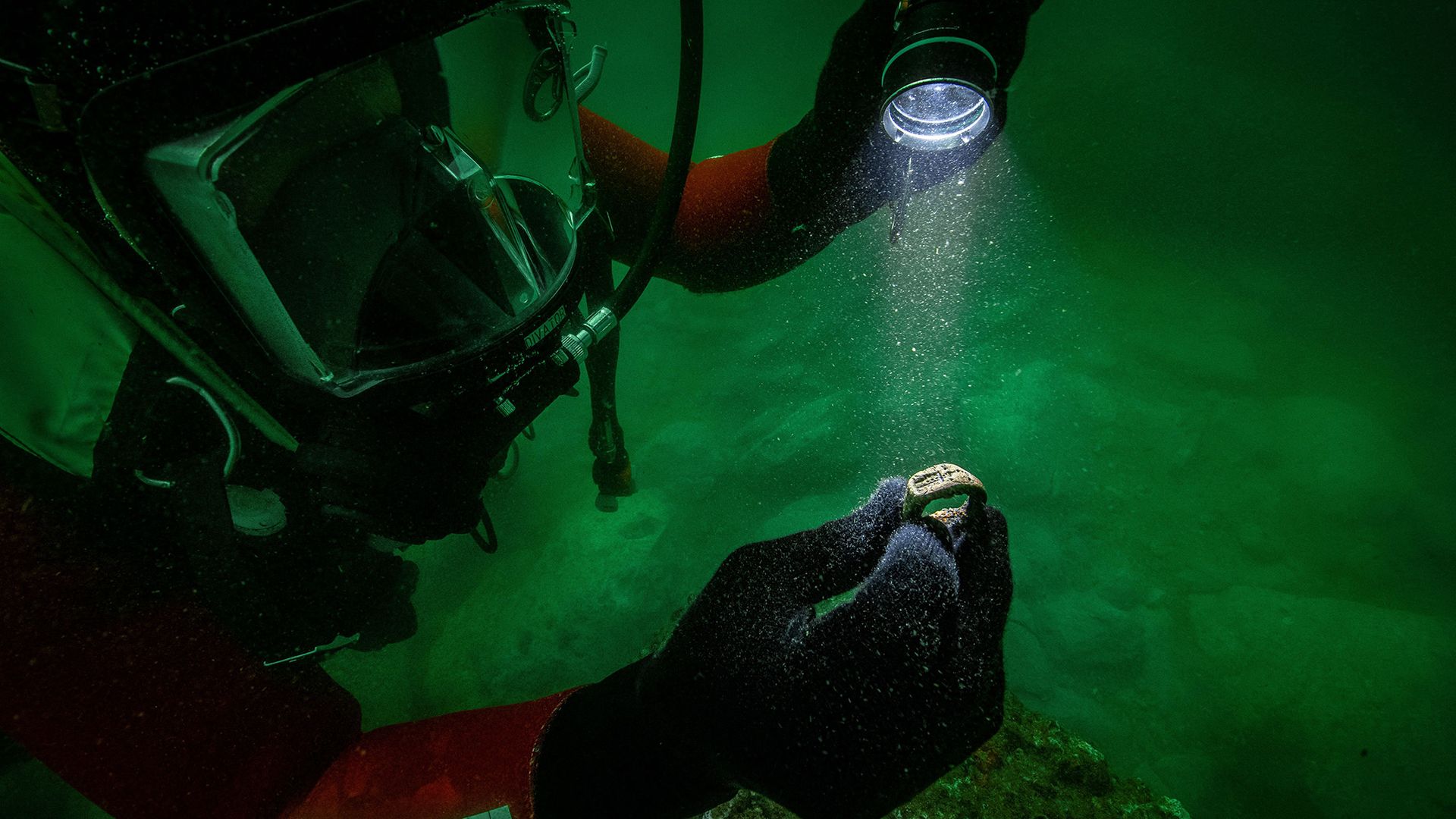
Египетийн Александрия хотын эрэг орчмын усан доороос эртний дэлхийн долоон гайхамшгийн нэг болох Александрын гэрэлт цамхгийн дүрс бүхий хүрэл тамгатай бөгж олджээ.
Европын усан доорх археологийн хүрээлэн (IEASM) болон Египетийн Аялал жуулчлал, эртний олдворын яамны хамтарсан баг Антиродос арлын усан доорх ордны тууриас уг олдворыг малтан илрүүлсэн байна. Энэ нь гэрэлт цамхгийн дүрс бүхий анхны тамгатай бөгж олдсон тохиолдол бөгөөд хоёрдугаар зууны үеийн зоосон дээрх дүрслэлтэй тун төстэй байгааг судлаачид онцоллоо.
Антиродос арал нь Агуу Александрын жанждын нэгний үр удам болох Птолемейн угсааны хаадын эрх мэдлийн төв байсан юм. МЭӨ 280 орчим онд баригдсан уг гэрэлт цамхгийг эртний түүхчид дэлхийн гайхамшигт тооцдог байсан бөгөөд далайн эргийн элэгдэл, газар хөдлөлтийн улмаас сүйрчээ.
Судлаачдын үзэж буйгаар, уг бөгжийг лав эсвэл шавар дээр дардас буулгахад ашигладаг байсан нь тус ордон гэрэлт цамхгийн захиргааны үйл ажиллагаанд холбоотой байсныг гэрчилж байна. Бөгжний дээд хэсэгт буй асимметр дүрс нь гэрэлт цамхгийн орой дээрх Зевсийн хөшөөний гартаа барьсан тосон дэнлүүний утааг илтгэж байж болзошгүй гэж эрдэмтэд таамаглаж байна.
Дэлгэрэнгүйг эх сурвалжаас харах
↓Эх сурвалжийг нээх ↓
A bronze signet ring depicting the Lighthouse of Alexandria, a wonder of the ancient world, has been discovered underwater in the Mediterranean off Alexandria, Egypt.
A joint team from the European Institute for Underwater Archaeology (IEASM) and the Egyptian Ministry of Tourism and Antiquities found the artifact in the remains of a palace on the now-submerged island of Antirhodos, marking the first time a signet ring featuring the image of the lighthouse has been found, the IEASM team said in a statement.
The image on the ring is similar to depictions of the lighthouse that have been previously found on coins dating to the second century, representatives of IEASM said.
“The discovery of the ring-signet is even more important as it has been excavated in the legendary palace of the Island of Antirhodos, that once was a centre of power,” Franck Goddio, president of IEASM, said in the emailed statement.
The palace was used by Egyptian pharaohs who reigned during the Ptolemaic period (304 to 30 B.C.), a dynasty of rulers descended from one of Alexander the Great’s generals. The lighthouse was built on the island of Pharos around 280 B.C. and stood more than 328 feet (100 meters) tall. Some ancient writers, such as Pliny the Elder, considered it among the wonders of the world, and it continued to be used into the Middle Ages, until earthquakes and erosion resulted in its destruction and disappearance beneath the sea.
While the lighthouse was modified over time, it would have had a statue, possibly of Zeus, at the top holding an oil lamp that helped guide mariners.
Whoever was wearing a signet ring could have used it to make an impression on soft materials, such as clay and wax, to create a seal. The discovery of the ring in the remains of the palace at Antirhodos suggests that the palace was used for administrative functions related to the lighthouse, representatives of IEASM said in the statement.
Even though the ring’s engraving is somewhat worn, it likely depicts the lighthouse, said Doris Behrens-Abouseif, a professor emeritus of history of art and archaeology at the University of London who has written about the lighthouse but was not part of the research team.
There are “thousands of coins from Alexandria showing a similar depiction of the lighthouse,” she told Live Science in an email. Those coins date to the Ptolemaic or Roman (29 B.C. to A.D. 395) periods, she noted.
Behrens-Abouseif added that she wasn’t familiar enough with rings from Alexandria to comment on whether this is the only ring that contains this image.
Other scholars told Live Science that they, too, believe that this ring depicts the lighthouse, with two scholars noting that it may feature smoke coming from a lamp at top.
The “most interesting thing about the new signet ring engraved gem is an asymmetrical feature at its peak,” which “may depict a plume of smoke from the oil lamp in the hand of the crowning statue,” Andrew Chugg, an independent researcher who wrote the book “The Pharos Lighthouse in Alexandria: Second Sun and Seventh Wonder of Antiquity” (Routledge, 2024), said in an email.
Margaret Miles, a professor emeritus of art history and classics at the University of California, Irvine, also noticed the possible plume of smoke. Miles noted in an email that this “ring could have been used as a signet ring by a merchant from Alexandria who used the profile of the [lighthouse] to signal his location in Alexandria. The lighthouse was famous, so it became a symbol of the city.”
Research off the coast of Alexandria over the past few years, including the discovery of 22 massive blocks, has revealed more information about the lighthouse, including how exactly it looked, which is helping researchers who are trying to digitally reconstruct it.
Are you a fan of mummies and hieroglyphs? Find out with our ancient Egypt quiz!

