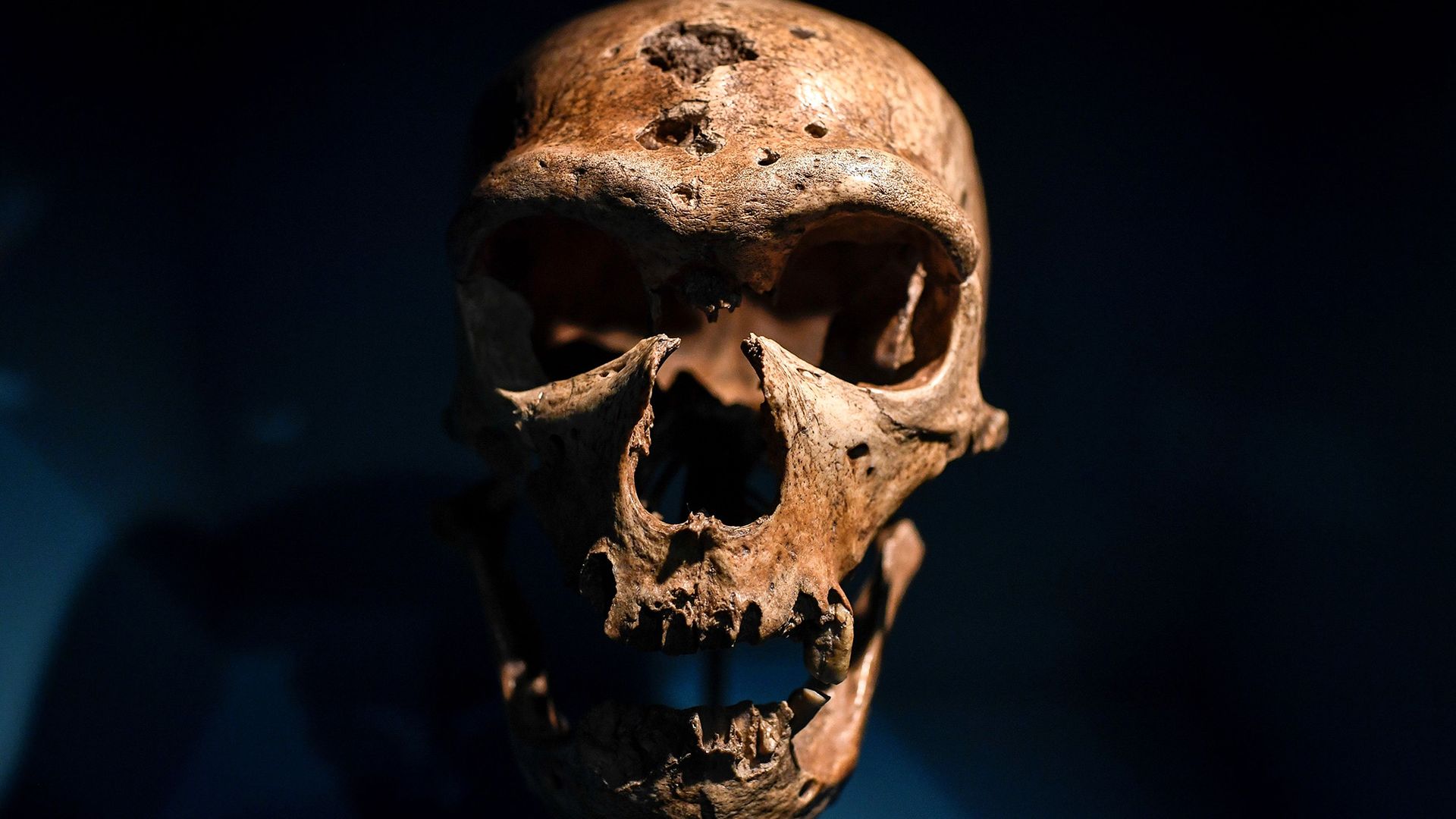
Эрдэмтэд Неандерталь хүний устаж үгүй болсон шалтгааныг тухайн цаг үеийн нийгэм, улс төрийн үзэл сурталтай холбон тайлбарлаж ирсэн байна.
Түүхч Петер Залинс өөрийн шинэ бүтээлдээ Неандертальчуудын мөхлийг тайлбарлахдаа орчин үеийн нийгмийн түгшүүр, улс төрийн үзэл баримтлал хэрхэн нөлөөлдгийг хөнджээ. Тухайлбал, 2011 онд хэвлэл мэдээллийн хэрэгслээр тэднийг цагаачлалын улмаас шахагдан устаж үгүй болсон хэмээн мэдээлж байсан бол, COVID-19 цар тахлын дараа өвчин эмгэг тэднийг мөхөөсөн гэх таамаглал хүчээ авсан юм.
Уур амьсгалын өөрчлөлт нь Неандертальчуудын мөхлийн гол шалтгаан гэх онол сүүлийн хорин жилийн турш зонхилох байр суурийг эзэлж байна. Эрдэмтэд Неандертальчуудыг мөстлөгийн үеийн эрс тэс уур амьсгалд дасан зохицож чадаагүй, эсвэл технологийн хувьд хэт консерватив хандаж, шинэчлэлийг эсэргүүцсэн нь тэднийг мөхөлд хүргэсэн гэж үздэг.
Гэвч энэхүү “консерватив” гэх тодорхойлолт нь 19-р зууны үеийн антропологийн “зэрлэг” гэх ойлголттой холбоотой байж болзошгүйг судлаачид анхааруулж байна. Энэ нь Неандертальчуудын түүхийг бидний өөрсдийн соёл, улс төр, нийгмийн хөгжлийн толь болгон харах хандлагатай байгааг харуулж байгаа юм.
Дэлгэрэнгүйг эх сурвалжаас харах
↓Эх сурвалжийг нээх ↓
Since the discovery of their remains in the 19th century, Neanderthals have fascinated scientists and the general public alike. Although our understanding of these ancient hominins has been transformed tremendously since then, how we have viewed this other human lineage became deeply entrenched in how we see our own species, with geopolitical events shaping the rhetoric around our ancient relatives.
In his new book, “Neanderthals Among Us: The Making of a Prehistoric Human” (Oneworld Publications, 2026), historian and author Peter Sahlins examines our complicated view of Neanderthals, with this lost human lineage being viewed through the lens of cultural and political ideologies. In this excerpt, he looks at our theories for why they went extinct and the philosophical reckoning we’ve placed up on them.
Between violent extermination and peaceful absorption — with cultural exchange — prehistorians and others propose a wide range of theories to account for Neanderthals’ extinction. Just as we’ve projected our concerns and anxieties about race and gender onto Neanderthals, so too do contemporary challenges shape how we imagine their extinction.
Sometimes it’s the newspapers that translate a more neutral science into easily relatable headlines. “Immigrants Halt Neanderthal Era,” announced the Glasgow Herald (29 July 2011), claiming that “Europe’s earliest residents may have been crowded out by uncontrolled immigration 40,000 years ago.” Glossing a highly technical study by Cambridge archaeologist Paul Mellars about the notable increase in population size during the Upper Palaeolithic, the news reports tweaked the science to speak to contemporary anxieties.
But often the science itself is framed or informed by current events. The pathogen thesis gained credence during and after the COVID-19 epidemic. A 2024 study of a 50,000-year-old case of herpes in a sequenced viral genome confirmed widespread speculation that Sapiens-borne pathogens were passed to a Neanderthal population without immunities. Jonathan Kennedy’s popular world history “Pathogenesis” (Crown, 2023) argued that Homo sapiens would have been less vulnerable to Neanderthal diseases because they arrived in much larger numbers and had more evolved immune systems from their tropical environment.
Of growing importance over the last twenty years is the thesis that climate change, our own existential challenge of the Anthropocene, was the principal cause of Neanderthal extinction. The idea takes many shapes, beginning with an update of French geologist Georges Cuvier’s “catastrophism,” where species died off in cataclysmic geological events like earthquakes and volcanic eruptions. Since 2007, researchers point to the Campanian Ignimbrite eruption near Naples (Italy), now dated to around 39,280 BP [before present] (+/- 110 years), fictionalised in the 2013 animated film The Croods.
Scientists argue that arriving Homo sapiens were not as affected, perhaps because there were fewer directly touched by the 120 cubic miles [500 cubic kilometers] of magma released, or perhaps because almost everyone died out — but waves of Sapiens arrived later. After all, while most of us share small parts of the Neanderthal genome, the lineages from which we ‘directly’ descend settled much later in Europe — long after the Ice Age. By far, the greatest portion of our genome comes from our Neolithic, not Palaeolithic, ancestors.
But perhaps “Climate Change Killed the Neanderthals,” that is, the extreme climatic fluctuations during the Upper Pleistocene that National Geographic (9 February 2004) announced, following the work of an international team of thirty scientists who laboured for more than seven years on the study. The team identified a general climatic instability during the Middle Palaeolithic marked by a severe cooling event around 41,000 years ago, lasting six centuries — interstadials GIS 13 to 7 of the Greenland ice-core records, to be precise.
For the last twenty years, scientists have sought to specify the timing, magnitude and ecological impact of a “mini-Ice Age” — the prehistorical obverse of global warming — that reduced vegetation and herbivore food sources, forcing Neanderthals towards warmer climates, including southern Spain. Clive Finlayson, trained as a zoologist, was an early contributor to sophisticated ecological modeling of Neanderthal extinction. At Gibraltar, he argued, “the last Neanderthal” could be found as late as 29,000 years ago, but there’s competition for the title: elsewhere in the southern climatic refugium, Zafarraya (Granada) yielded a skeleton dated to 30,000 BP, but there are skeptics, while other candidates come from the Mezmaiskaya Caves in the Caucasus.
The trope, we’ve seen, is a frequent one in Neanderthal fiction, including Claire Cameron’s “The Last Neanderthal” (Little Brown & Co., 2017), a moving, feminist revision of “Neanderthal Woman.” It’s also been widely used in popular nonfiction, including in Ludovic Slimak’s 2023 account of twenty-five years of research in the Mandrin Cave .
Some of the science blaming climate change for the demise of Neanderthals marks a retreat from the recent archaeological rehabilitation of Neanderthals as a type of human equal to Homo sapiens, as these theories need to account for Sapiens’ survival in the same severe conditions. Some experts rewrite basic wisdom, arguing that Neanderthals were not a cold-adapted species, since their origins lay during a warm interglacial stage (MIS 11); or that they lacked the technologies for making complex (and warm) clothing; or perhaps that their preexisting biological cold adaptations delayed the development of such technologies — a story about their technological inertia and deep conservatism.
That Neanderthals died out because of their conservatism, while humans alone mastered innovation, and with it, conquered the world, is the principal claim in Philip Lieberman’s “The Unpredictable Species: What Makes Humans Unique” (Princeton University Press, 2013), and it’s a widely shared belief.
- Adversity shaped our evolution as a species. People raised in it may have underrecognized strengths because of it.
- ‘More Neanderthal than human’: How DNA from our long-lost ancestors affects our health today
- Scientists claimed the world’s oldest rock art is 67,800 years old. But is the science behind that estimate flawed?
Aside from the fact that the high value placed on “innovation” corresponds to the ideological superstructure of contemporary neoliberalism and late-stage capitalism, it seems fitting that Neanderthals died out because, in this view, they were, well, truly Neanderthal. The rhetorical figure returns to haunt the science: Neanderthals were conservative, backward, clinging mindlessly to the past in a changing world.
Neanderthal conservatism — not rhetorically, but as an original character trait — has origins in nineteenth-century anthropological judgements about “primitive” peoples. Augustus Pitt Rivers, an early innovator in British archaeology, underscored “the form of a persistent conservatism” of indigenous peoples, and quoted approvingly his colleague E. B. Tylor’s “Primitive Culture” (1871): “The savage is firmly, obstinately conservative. No man appeals with more unhesitating confidence to the great precedent-makers of the past; the wisdom of his ancestors can control against the most obvious evidence of his own opinions and actions.”
Just as “savages” were once seen as descendants of Neanderthals, so too is their conservatism a cultural legacy, even when anthropologists, transcending an outdated comparative method, no longer deem them ancestral, or even savage.
NEANDERTHALS AMONG US: The Making of a Prehistoric Human by Peter Sahlins is published by Oneworld, hardback £28.
Help us improve Live Science Pro: We’re always trying to make our content better. Leave us feedback about Pro here.
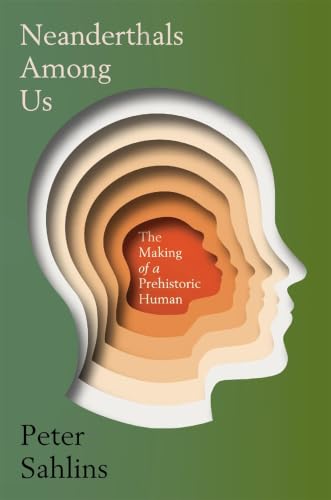
In “Neanderthals Among Us,” historian Peter Sahlins offers a sweeping interdisciplinary history of an obsession that has made Neanderthals into a distorting mirror of our claims to human uniqueness and our anxieties about human difference.
At their discovery, Neanderthals helped invent prehistory itself, saturated with racial science; initially cast as ugly, stupid, and hairy, they underwent a long and uneven rehabilitation, with science and popular culture moving at different speeds, and sometimes in opposite directions.
The reputation of “Neanderthal Man,” our Paleolithic double, has been in constant flux, remaining a site of endless fascination and debate about human uniqueness, race, gender, and the very look of the human.

