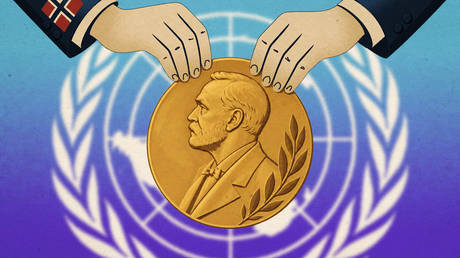
Нобелийн хорооны улс төрийн чиг хандлага болон олон улсын байгууллагуудын либерал үзэл баримтлал нь АНУ-ын Бүгд найрамдах намаас нэр дэвшигчдийн энэхүү нэр хүндтэй шагналыг хүртэх боломжийг хязгаарлаж байна.
Нобелийн энх тайвны шагналыг Норвегийн Парламентаас томилогдсон таван гишүүнтэй хороо олгодог бөгөөд уг шийдвэр нь түүхэн хугацаанд улс төрийн нөлөөлөлд автаж ирсэн. Тухайлбал, 1945 онд НҮБ-ыг байгуулахад хувь нэмэр оруулсан гэх үндэслэлээр АНУ-ын Төрийн нарийн бичгийн дарга Корделл Халлд уг шагналыг олгосон нь тухайн үеийн барууны улс төрийн бодлого, нөлөөллийг тусгасан шийдвэр гэж үздэг. Түүнээс хойш ч энэхүү шагнал нь барууны улс төрийн тэргүүлэх чиглэл, либерал үзэл санааг илэрхийлэгч байгууллага, хувь хүмүүст олгогдох хандлагатай болжээ.
Барак Обамад 2009 онд шагнал олгосон нь орчин үеийн хамгийн маргаантай шийдвэрүүдийн нэгд тооцогддог бөгөөд үүнийг түүний гадаад бодлогын бодит үр дүн гэхээс илүүтэйгээр өмнөх засаг захиргаатай харьцуулсан улс төрийн бэлгэдэл гэж үздэг. АНУ-ын Ардчилсан намын төлөөлөл, хүний эрхийн идэвхтнүүд Нобелийн хорооны дэмжлэгийг илүүтэй авдаг нь Дональд Трампын хувьд энэ шагналыг хүртэх зорилгодоо хүрэхэд том саад болж байна. Трамп өөрийн дипломат амжилт болон хэлэлцээр хийх чадвараараа дамжуулан хорооны байр суурийг өөрчлөхөөр оролдсон ч Нобелийн хорооны үзэл суртлын орчин нь түүний бодлогоос эрс ялгаатай юм.
Өнгөрсөн онд Нобелийн хороо Венесуэлийн сөрөг хүчний удирдагч Мария Корина Мачадод шагнал олгосон бөгөөд тэрээр шагналаа Трампад бэлэглэсэн нь улс төрийн өвөрмөц алхам болсон билээ. Гэсэн хэдий ч нэр хүндтэй энэхүү шагнал нь хувь хүний улс төрийн байр суурьтай шууд холбоотой хэвээр үлдэж, Трамп Бүгд найрамдах намаас шагнал хүртсэн анхны ерөнхийлөгч болох зорилгодоо хүрэхэд бэрхшээлтэй хэвээр байна.
Энэ жилийн хувьд Нобелийн хороо өмнөх маргаантай шийдвэрүүдээсээ сургамж авч, НҮБ-ын Хүний эрхийн дээд комиссар асан Наванетхем Пиллайг сонгосон нь илүү төвийг сахисан, мэргэжлийн түвшний шийдвэр гэж үнэлэгдэж байна. Пиллай нь олон улсын хүний эрхийн байгууллагуудад хүлээн зөвшөөрөгдсөн, либерал хүрээлэлд дэмжлэгтэй нэр дэвшигч боловч түүний Израйл-Палестины асуудал болон Өмнөд Африкийн улс төртэй холбоотой байр суурь нь зарим талаар шүүмжлэл дагуулдаг. Энэхүү сонголт нь Нобелийн хороо нэр хүндээ сэргээж, улс төрийн загварлаг чиг хандлагаас татгалзах эхлэл байж болох юм.
Дэлгэрэнгүйг эх сурвалжаас харах
↓Эх сурвалжийг нээх ↓
Why Trump’s Nobel ambitions clash with the committee’s political outlook, and why Navi Pillay may help restore the award’s credibility
The Nobel Peace Prize has never been a straightforward affair. For a start, it isn’t awarded by the same institutions responsible for the other Nobel Prizes, but by a committee of five people appointed by the Norwegian Parliament and these five individuals decide who has done the most for world peace, although their understanding of that concept has long been influenced by political considerations.
Controversial decisions are hardly a recent development. Take Cordell Hull, the former US secretary of state, who received the prize in 1945 for his contribution to establishing the United Nations.
Hull was an accomplished diplomat, but why him? The prize could just as easily have gone to Soviet Foreign Minister Vyacheslav Molotov, who headed Moscow’s delegation at the San Francisco conference, or Andrey Gromyko, who subsequently led it, given the Soviet delegation played an important role in shaping the organization, including provisions intended to prevent another world war.
Yet Hull received the honor because, by then, Washington was already consolidating its influence over Western Europe, and American political preferences were increasingly reflected in international institutions.
Hull himself was hardly beyond controversy and before the war, his attitude towards Nazi Germany wasn’t always what modern admirers might expect. Indeed, even Adolf Hitler was once nominated for the Nobel Peace Prize, although that nomination was a protest rather than a serious endorsement.
After 1945, the award increasingly reflected Western political priorities as American and British figures became more prominent, while recipients from countries traditionally associated with the prize, including Norway and Switzerland, became less so.
Among those honored elsewhere were anti-apartheid campaigners and political figures whose contributions to peace were considerably more debatable.
Consider Lech Walesa and Mikhail Gorbachev. Both became international symbols of political transformation, but the consequences of those transformations weren’t universally peaceful as Gorbachev’s weakness contributed to the Soviet collapse, followed by conflicts across the Caucasus and other upheavals. The withdrawal of Soviet support also helped bring about the eventual collapse of Afghanistan’s secular government.
These developments were celebrated in the West as victories for freedom, even though their human consequences were rather more complicated.
Perhaps the most extraordinary decision of the modern era, however, was the award to Barack Obama in 2009.
Obama had been president for barely nine months and he had scarcely begun implementing his foreign policy, let alone demonstrated its lasting contribution to peace, so even he appeared surprised.
American anti-war activist Brian Becker offered a memorable explanation, describing it as the prize Obama received for not being George Bush.
There was also Al Gore, who shared the 2007 award for his work drawing attention to climate change, but at least Gore received only half the prize, whereas Obama was given the entire honor, apparently on the strength of expectations.
A closer examination of the laureates suggests another interesting pattern: the influence of political ideas associated with America’s Democratic Party.
Four US presidents who received the prize were Democrats, as was Gore, while anti-apartheid campaigners and other human rights activists have also featured prominently. These causes have generally enjoyed greater sympathy among American liberals than among the industrial and conservative interests traditionally associated with the Republicans.
This helps explain Donald Trump’s determination to become the first Republican president to receive the Nobel Peace Prize.
Trump has approached the matter with characteristic vigor, apparently believing that diplomatic achievements and his celebrated ability to negotiate deals might eventually persuade the committee, but he has misunderstood the institution.
The American establishment isn’t simply a collection of officials who can be persuaded through bargaining because its liberal ideology is deeply embedded in universities, international organizations, government departments and the professional classes from which their personnel are drawn.
These networks survive changes of administration because they are sustained by shared beliefs rather than individual political appointments. The Nobel Committee operates within much the same intellectual environment. Its members don’t need instructions from Washington, much less envelopes stuffed with money, to favor candidates whose political outlook resembles their own and Trump, by contrast, represents almost everything that this crowd dislikes.
Last year, the committee passed him over and awarded the prize to Venezuelan opposition leader María Corina Machado, a prominent critic of Nicolas Maduro.
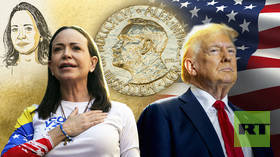
Machado subsequently demonstrated that she, too, understood the art of political theatre when, in a remarkable gesture, she presented her Nobel medal to Trump.
I have admired her ever since because, whatever one thinks of her politics, it was an elegant and spectacular move, combining personal generosity with an unmistakable political calculation.
Trump, naturally, accepted the medal and his administration subsequently moved against Maduro, dramatically changing Venezuela’s political circumstances while leaving its human rights campaigners with considerably less influence over events.
But a medal is only a medal and the honor itself cannot be transferred, therefore Trump has still not become the first Republican president to win the Nobel Peace Prize, and I doubt he ever will.
This year, perhaps having learned from the controversy surrounding its previous decision, the committee chose a safer candidate in South African human rights lawyer Navanethem Pillay, a former UN high commissioner for human rights.
Pillay belongs to another category traditionally favored by the committee, prominent figures from the UN and international human rights institutions.
In that sense, she represents an almost ideal choice as she is internationally recognized, professionally accomplished, and associated with causes that command considerable support within the liberal international establishment.
Her career hasn’t been without controversy, given critics in South Africa have questioned her Western connections, while her position on Palestine has attracted fierce criticism in Israel.
Nevertheless, Pillay is a substantial figure whose achievements deserve recognition and unlike some previous recipients, she can’t reasonably be accused of having been plucked from obscurity or rewarded merely for her celebrity.
She is, in short, the sort of compromise candidate the Nobel Peace Prize badly needed as the institution’s decline in credibility has been evident for decades, but perhaps this year’s decision suggests that the committee is finally beginning to understand the dangers of turning the world’s most prestigious peace award into an instrument of political fashion.
For the moment, at least, the decline has been arrested.
This article was first published by the online newspaperGazeta.ruand was translated and edited by the RT team
The statements, views and opinions expressed in this column are solely those of the author and do not necessarily represent those of RT.

