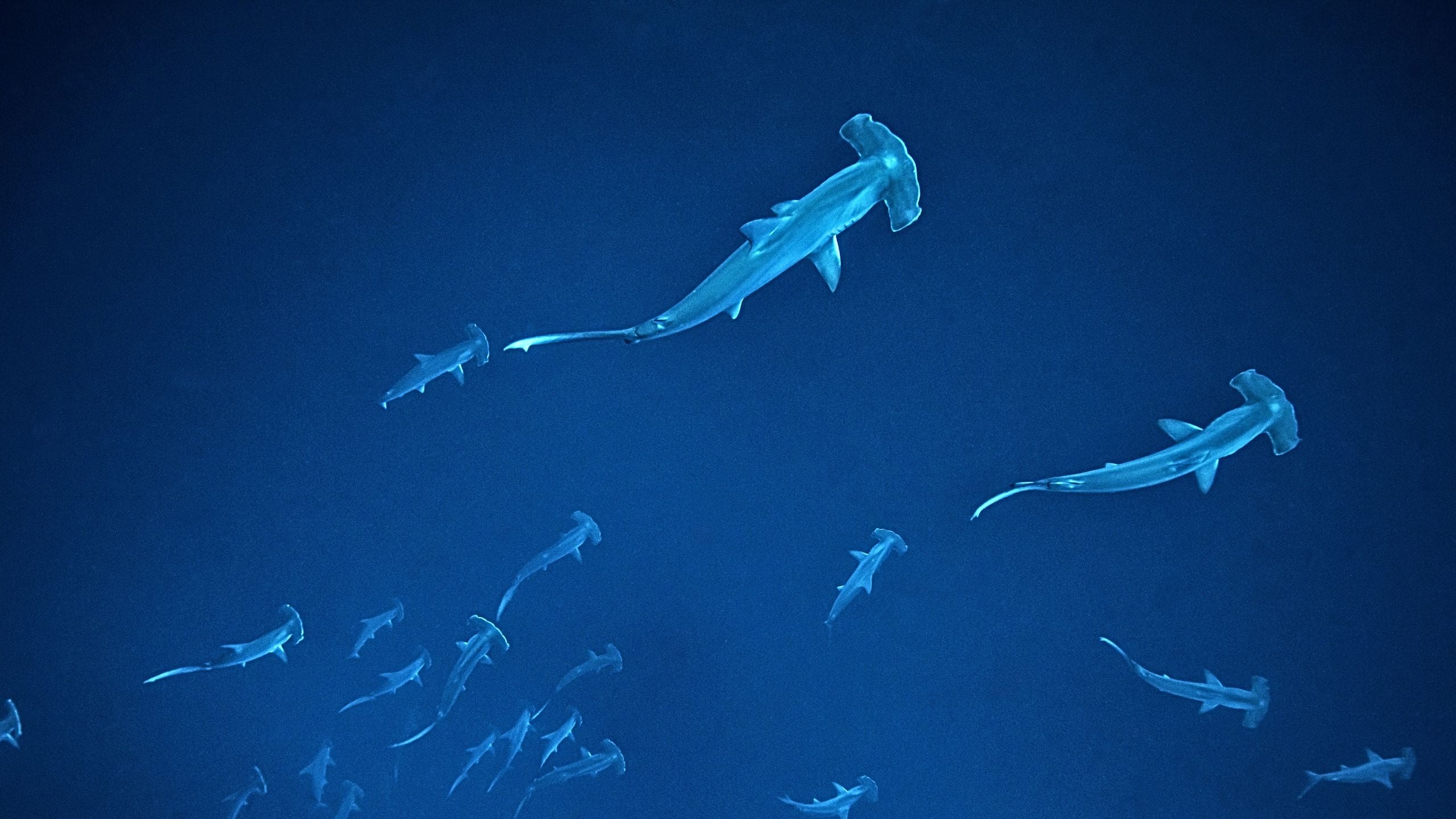
Судлаачид дроны тусламжтайгаар Австралийн зүүн эрэг орчимд залуу алх толгойт акулууд (Sphyrna lewini) олноор цугладаг болохыг тогтоов.
Австралийн Квинсленд мужийн эрэг орчимд явуулсан судалгаагаар 80-100 орчим залуу алх толгойт акулын сүрэг бүртгэгджээ. Мэддисон Кросс болон түүний багийнхан 2020 оны есдүгээр сараас 2024 оны арванхоёрдугаар сар хүртэлх 20,911 удаагийн дроны нислэгээс цуглуулсан мэдээллийг шинжилсэн байна. Энэхүү ажиглалт нь алх толгойт акулуудын амьдрах орчин, зан төлөвийг судлахад чухал ач холбогдолтой юм.
Судалгааны үр дүнгээс үзэхэд, ихэнх акул нь 1.09 метр орчим урттай, өсвөр насныхан байжээ. Тэд ихэвчлэн дөрөв, тав, зургадугаар сард эргийн ойролцоох хад чулуулаг бүхий хэсгүүдэд цуглардаг бөгөөд энэ нь тэднийг махчин амьтдаас хамгаалах эсвэл хоол тэжээлээ олоход тусалдаг байж болзошгүй гэж эрдэмтэд таамаглаж байна.
Дэлхий дахинд “ховордсон” ангилалд багтдаг алх толгойт акулуудын хувьд эдгээр эргийн бүс нутаг нь тэдний өсөлт хөгжилтөд нөлөөлөх чухал бүс байж болох юм. Гэвч тус бүс нутагт акулын халдлагаас сэргийлэх зорилгоор тор болон бусад төхөөрөмж ашигладаг нь залуу акулуудад эрсдэл учруулдаг байна. Судлаачид цаашид акулуудыг үргээхгүйгээр ажиглах, тэдний нүүдэл болон амьдрах орчны уялдаа холбоог нарийвчлан судлах шаардлагатай гэж үзэж байна.
Дэлгэрэнгүйг эх сурвалжаас харах
↓Эх сурвалжийг нээх ↓
Drones watching for sharks off Australia’s east coast have filmed dozens of young hammerheads swimming together in shallow water near popular beaches.
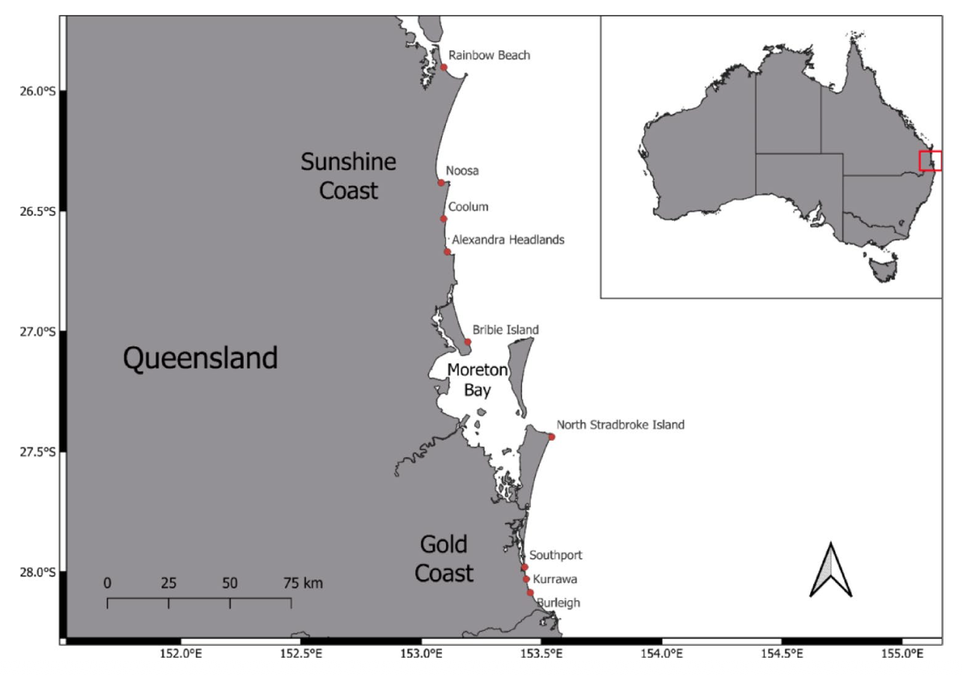
In southeast Queensland, researchers recorded groups of up to 80 scalloped hammerhead sharks at Burleigh Beach on the Gold Coast. Farther north, at Noosa Main Beach on the Sunshine Coast, the largest group contained an estimated 100.
Several years of drone records showed where these young sharks gathered and when the biggest groups appeared. The researchers say these stretches of coast may be important habitat for juveniles.
Shark researcher Maddison Cross, affiliated with the University of the Sunshine Coast and Queensland’s Department of Primary Industries, led thestudy.
The team used records from Queensland’s SharkSmart program, which flies drones near beaches to monitor sharks for public safety. The flights also record animals moving through coastal waters, allowing scientists to study them without catching or handling them.
Researchers analyzed data from 20,911 flights at nine beaches between September 2020 and December 2024. They identified 84 occasions when scalloped hammerheads were seen, totaling 2,696 shark observations. Some animals were probably recorded more than once, so this is not a count of distinct individuals.
Most observations came from Burleigh and Noosa, where hammerheads usually appeared in groups. At other beaches, they were generally alone or in pairs.
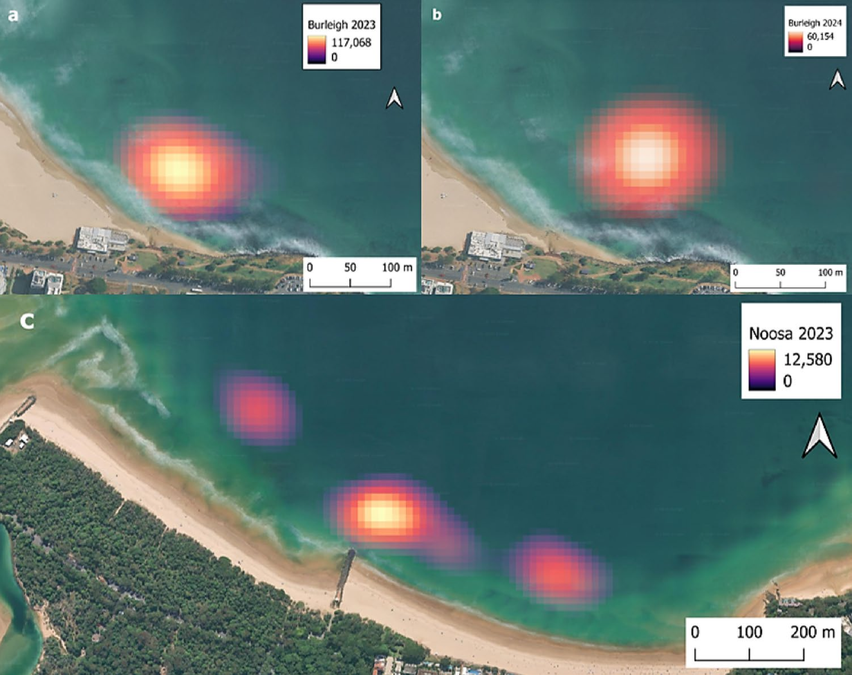
The largest gatherings occurred in April, May, and June, during Australia’s autumn and early winter. At Burleigh, groups repeatedly used waters near the rocky headland at the beach’s southern end. Recorded movement paths overlapped in 2023 and 2024.
From above, the team could map where groups gathered and compare their movements across beaches. Larger hammerheads off North Stradbroke Island generally followed straighter coastal routes, while juveniles at Burleigh and Noosa used smaller areas.
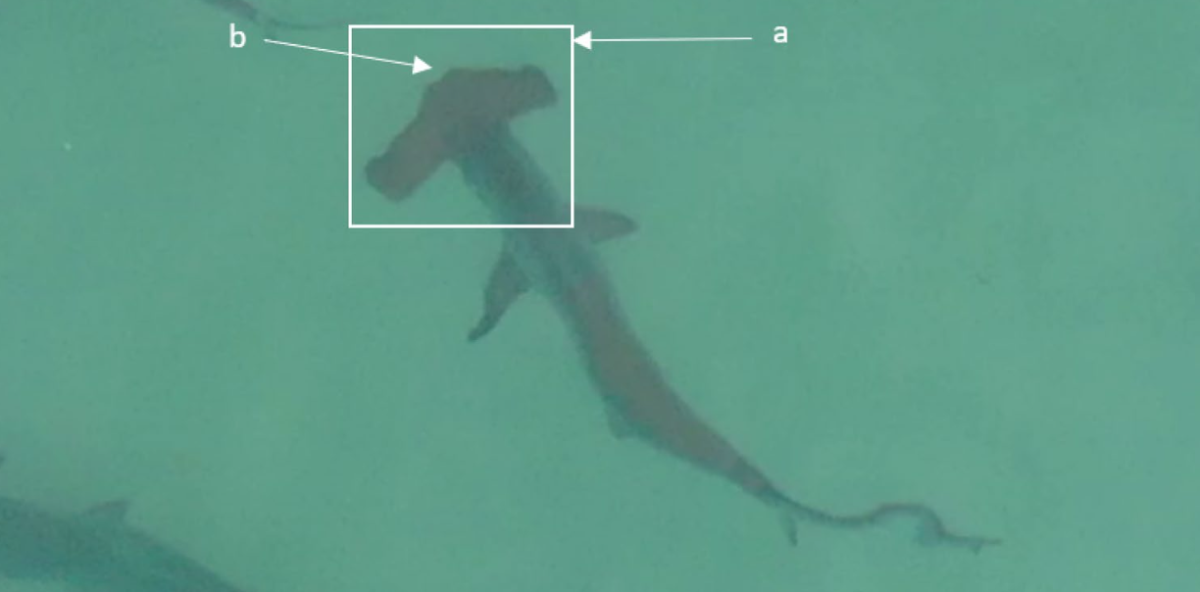
Across the full dataset, estimated shark length averaged about 1.09 meters (3.6 feet). Most of the sharks at those two sites were juveniles. Estimated sizes pointed to a mix of animals in their first year and others around one to two years old.
They were not newborn pups, and the researchers could not confirm that these beaches met the criteria for nursery grounds.
The researchers propose that the sites may give young sharks somewhere to feed or shelter. Nearby reefs and rocky areas could support prey, and swimming together might help juveniles avoid predators. Why they gather remains unclear.
Researchers could not reliably recognize individual sharks, so they cannot establish whether the same animals returned each year or how long they stayed. At Noosa, gatherings recorded in 2023 were not seen during the corresponding period in 2024. The researchers note that changes in habitat use or water clarity could explain the difference, since murky water makes sharks harder to detect.
Scalloped hammerheads have sufferedsteep population declinesand are classified globally as critically endangered.
Both gathering sites are covered by Queensland’s shark-control program. Burleigh uses shark nets, while Noosa uses nets and baited drumlines to reduce shark-bite risk.
Government records cited in the study show that the program caught 675 scalloped hammerheads statewide between 2001 and 2024. All but 10 were dead. At Burleigh and Noosa combined, 63 were caught in nets and two on drumlines, including both juveniles and adults.
The study notes that captures of juvenile sharks under 120 centimeters peak from September to February, while drone surveys recorded gatherings from March to June. The team suggests this difference may reflect young sharks moving from sheltered nursery areas into more exposed coastal waters as they grow.
Some groups temporarily split apart when snorkelers or paddleboarders approached, although these encounters were not systematically measured. The researchers list keeping a distance from the groups and avoiding chasing or surrounding the sharks among possible measures to reduce disturbance.
They also call for longer-term monitoring, including tracking individuals with acoustic tags, to establish how these coastal sites connect with nearby nursery habitats.
The research has been published in Marine Biology.
This article was fact-checked by Fiona MacDonald and edited by Fiona MacDonald. While we pride ourselves on our process, we are only human. If you spot a mistake, please let us know.

