
NASA-гийн сансрын нисгэгчид сарны гадаргуу дээрх галт уулын бүсүүдээс шар, ногоон, хүрэн өнгийн шинж тэмдгүүдийг ажигласан нь сарны геологийн түүхийг судлахад шинэ сэжүүр болж байна.
2026 оны дөрөвдүгээр сарын 6-нд Artemis II номлолын хүрээнд Orion сансрын хөлгөөр аялсан багийнхан сарны гадаргууг 6,400 километрийн зайнаас ажиглахдаа саарал өнгөөр танигдсан сарны гадаргуу илүү олон өнгөний хувилбартай болохыг тогтоожээ. Аристотархын тэгш өндөрлөг (Aristarchus Plateau) зэрэг галт уулын идэвхжил өндөртэй бүсүүдээс шар болон хүрэн өнгийн судал, ногоон туяа бүхий хэсгүүдийг ажигласан байна.
Эрдэмтдийн таамаглаж буйгаар эдгээр өнгө нь сарны дотоод давхаргаас галт уулын дэлбэрэлтийн үеэр ялгарч, хурдан хөрөх явцдаа шилжин хувирсан химийн найрлага бүхий бөмбөлгүүдтэй холбоотой байж болзошгүй юм. Apollo 15 болон 17 номлолоор цуглуулсан дээжүүдээс титан болон магнийн өндөр агууламжтай ийм төрлийн шилэнцэрүүд олдож байсан нь энэхүү таамаглалыг дэмжиж байна.
Түүнчлэн сансрын нисгэгчид Orientale сав газрын бүсэд ажиглалт хийхдээ намгархаг гэмээр ногоон, хүрэн өнгө болон цайвар уул нуруудыг олж харжээ. Эдгээр ажиглалт нь сарны гадаргуу дээрх химийн найрлагын ялгааг илүү нарийвчлан тодорхойлох, геологийн үйл явцыг ойлгоход чухал ач холбогдолтой юм.
NASA-гийн тайланд дурдсанаар, бэлтгэгдсэн сансрын нисгэгчдийн хүний нүдээр хийсэн ажиглалт нь зөвхөн камерын дүрслэлээс илүү өргөн хүрээтэй, контекст бүхий мэдээллийг өгч чаддаг байна. Хэдийгээр эдгээр өнгө нь шууд эрдэс бодисын найрлагыг батлахгүй ч цаашдын судалгаа болон ирээдүйн сансрын хайгуулын чиглэлийг тодорхойлоход үнэ цэнтэй мэдээллийн эх үүсвэр болж байна.
Дэлгэрэнгүйг эх сурвалжаас харах
↓Эх сурвалжийг нээх ↓
The moon revealed an unexpected range of colors during NASA’s Artemis II flyby in April 2026. According to a newly released NASA lunar science report, astronauts observed yellow, green, brown, and blue features across ancient volcanic landscapes, offering fresh clues about the geological processes that shaped Earth’s nearest neighbor.
A Lunar Landscape That Looked Nothing Like the Moon Seen From Earth
For most people, the moon is a familiar world of pale gray plains, bright craters, and dark patches visible against the night sky. But on April 6, 2026, four astronauts aboard NASA’s Orion spacecraft encountered a considerably more complex landscape.
During a nearly seven-hour lunar flyby, commander Reid Wiseman, pilot Victor Glover, mission specialist Christina Koch, and Canadian astronaut Jeremy Hansen examined the surface from approximately 4,000 miles (6,400 kilometers) away.
Their observations, documented in NASA’s 130-page Artemis II Preliminary Lunar Science Report and shared on October 8, describe an unexpectedly colorful lunar environment.
One of the most striking locations was the Aristarchus Plateau, an elevated volcanic region on the moon’s northwestern near side. Known for its extensive lava deposits and ancient volcanic activity, the plateau appeared distinctly yellow in places.
Image credit: NASA
Koch compared the landscape to “a yellow snow-capped mountain,” describing its overall appearance as “a jaundiced cheek of the Moon.”
Glover identified additional variations while photographing the region.
“There’s also a green. I see brown, especially Aristarchus and north toward the north pole,” he reported, describing brown streaks extending across the terrain.
These observations suggest that subtle differences in lunar surface materials may be more apparent to trained human observers under particular lighting conditions.
Why Green and Yellow Colors Could Reveal the Moon’s Volcanic History
The unusual colors are not simply visual curiosities. They may provide evidence of ancient volcanic eruptions that deposited chemically distinct materials across the lunar surface.
According to NASA’s report, some of the observed hues could be associated with volcanic glass beads similar to those recovered during the Apollo 15 and Apollo 17 missions.
These tiny particles formed when molten material erupted from the moon’s interior and cooled rapidly into glass.
The report identifies possible connections between orange, titanium-rich glass and green, magnesium-rich glass. Such materials can preserve information about the composition of the lunar interior and the conditions under which volcanic eruptions occurred.
The Aristarchus Plateau is particularly interesting because it contains extensive volcanic deposits and features associated with past eruptions.
Differences in surface composition, weathering, and illumination can all influence the colors astronauts perceive. Visual observations alone cannot establish the exact mineral composition of the terrain.
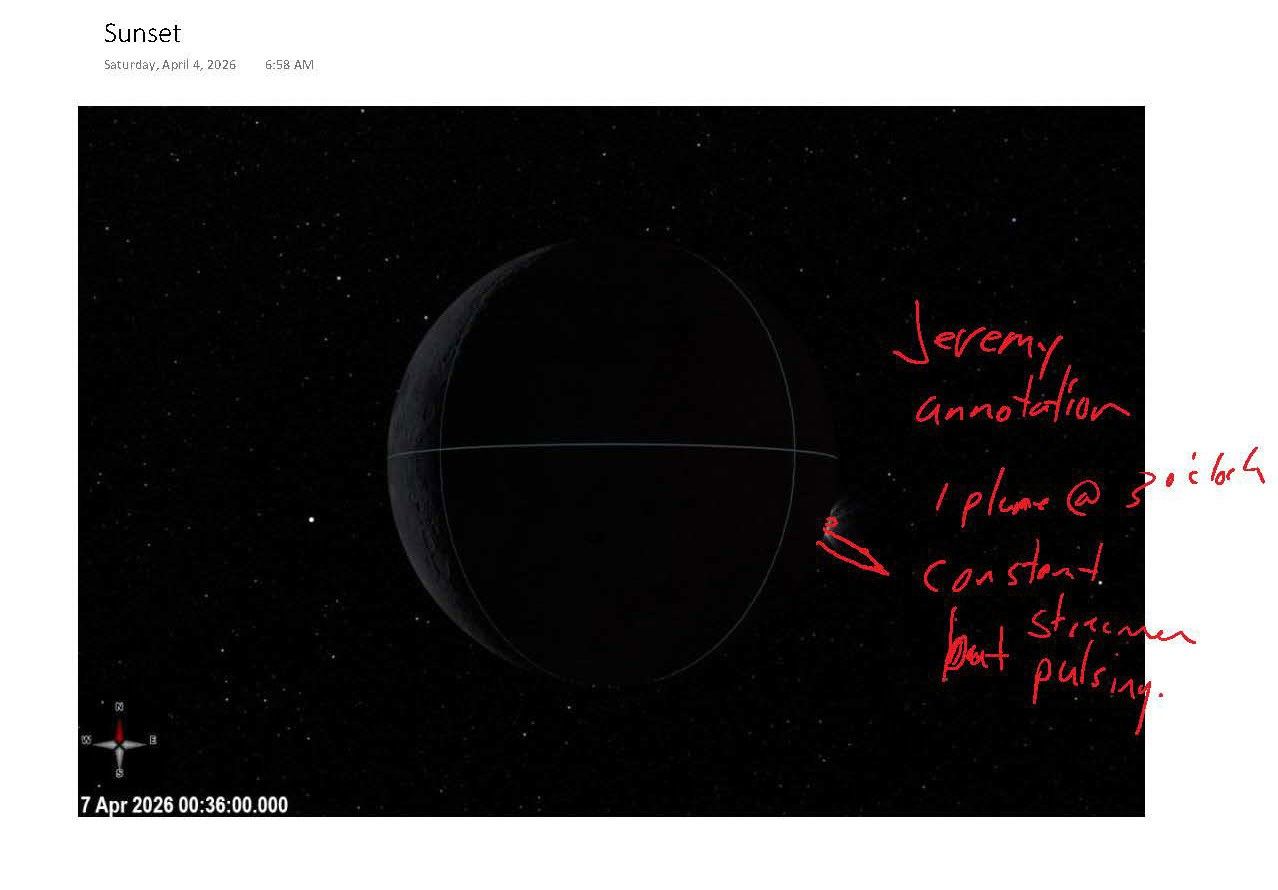
Credit: NASA/CSA
Still, identifying unusual color patterns can help scientists select regions for further orbital investigation and potential future exploration.
A Giant Lunar Impact Basin Revealed Another Unexpected Scene
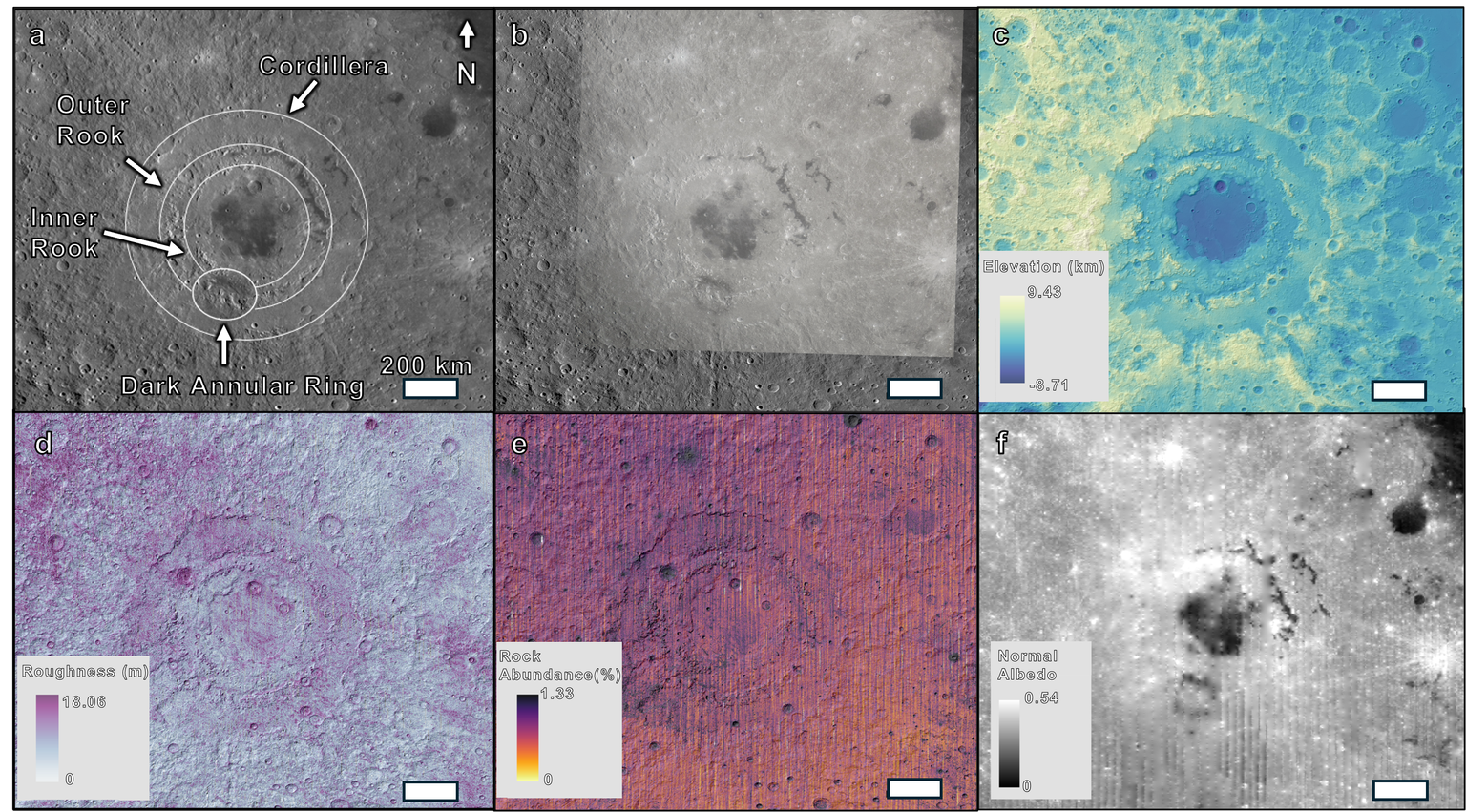
The crew’s observations extended beyond volcanic terrain to Orientale Basin, one of the moon’s most recognizable impact structures.
Located along the boundary between the lunar near and far sides, this enormous multiringed basin was formed by an ancient collision that reshaped a vast portion of the surface.
As Orion passed the region, the astronauts identified gray, brown, tan, and green features across its rugged landscape.
Koch described the basin’s outer ring as displaying “almost swamp-like colors,” while Glover noticed pale mountain ridges resembling dusted peaks.
Wiseman was struck by the enormous scale of the impact’s aftermath.
“It has just created chaos across that entire area,” he observed.
The crew also described chains of secondary craters extending outward from the basin, evidence of material thrown across the surface during the original collision.
These observations provide additional geological context for understanding how major impacts altered the moon’s crust.
Credit: NASA/GSFC/Intuitive Machines
NASA Says Human Eyes Can Reveal What Cameras Alone May Miss
The scientific value of these descriptions reflects years of preparation. Before their flight, the Artemis II astronauts underwent more than two years of geological training, including terrestrial fieldwork, classroom instruction, and simulated lunar observations.
Their mission generated approximately 814 gigabytes of photographs, video, and audio recordings, giving researchers a substantial record against which to examine the crew’s descriptions.
NASA’s report emphasizes that trained astronauts can recognize patterns and relationships across a landscape while continuously adjusting their observations.
“The Artemis II mission demonstrated the exceptional value of human observation and cognition as scientific assets in planetary exploration,” the report authors concluded.
“Unlike cameras, which capture isolated moments and often narrow subsets of a scene, human observers continuously interpret their surroundings, integrating realtime visual perception with contextual understanding.”
That distinction matters for future lunar missions, where astronauts may need to identify scientifically promising formations, interpret unfamiliar terrain, and select samples directly on the surface.
The colors reported during Artemis II do not establish new mineral discoveries on their own. They provide observational evidence that scientists can compare with existing lunar maps, orbital measurements, and laboratory analyses.
For future exploration, the mission offers a reminder that the moon’s seemingly uniform gray exterior conceals a complicated geological history, one that trained human eyes can help bring into focus.
Enjoyed this article? Subscribe to our free newsletter for engaging stories, exclusive content, and the latest news.

