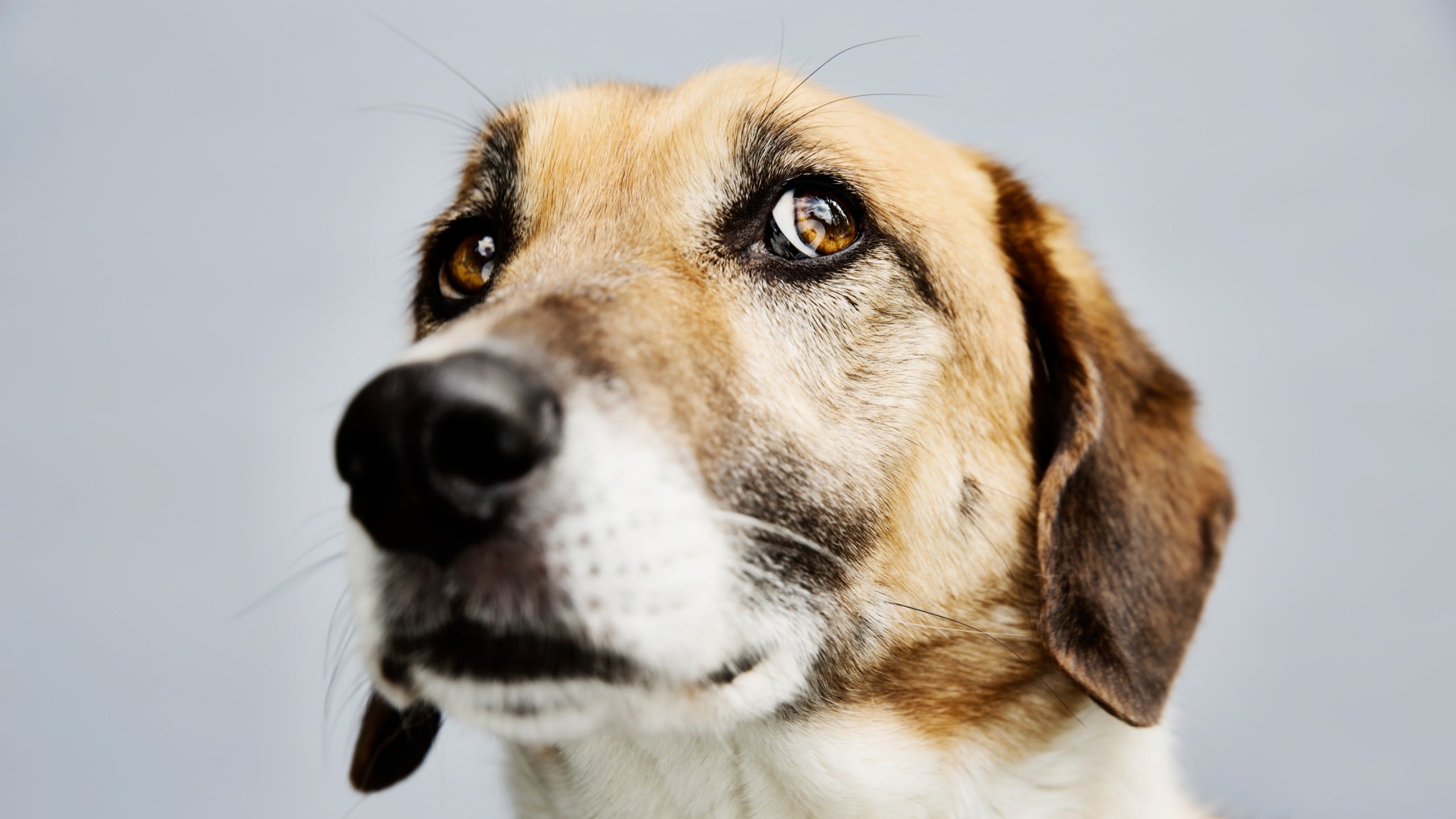
Эрдэмтэд нохойнууд “Буба” болон “Кики” гэх мэт хийсвэр үгсийг тодорхой дүрс хэлбэртэй холбон ойлгож чаддаг болохыг судалгаагаар илрүүлжээ.
Италийн Пармагийн их сургуулийн амьтан судлаач Элеонора Биффи тэргүүтэй баг 70 нохойг оролцуулсан туршилт явуулж, тэдний дуу авиа болон дүрслэлийг холбох чадварыг судалжээ. Туршилтын явцад нохойнуудад “Буба” гэх дууг сонсгоход дугуй хэлбэртэй дүрс рүү, харин “Кики” гэх дууг сонсгоход өнцөг бүхий үзүүртэй дүрс рүү илүүтэй анхаарлаа хандуулж байгаа нь ажиглагдсан байна.
Энэхүү үзэгдлийг 1920-иод оноос хойш хүмүүс дээр судалж ирсэн бөгөөд хэл шинжлэл, соёлын ялгаа харгалзахгүйгээр хүн төрөлхтөн дуу авиа болон дүрслэлийг ижил төстэй байдлаар холбодог болохыг тогтоосон юм. Одоо энэхүү ерөнхий зүй тогтол нь нохойны хувьд ч мөн адил үйлчилдэг болох нь шинжлэх ухааны үндэслэлтэй боллоо.

Судлаачид нохойны эздийн нөлөөллийг хасах зорилгоор хоёр дахь туршилтыг зохион байгуулсан бөгөөд эзэд нь чихэвчээр хөгжим сонсож, тухайн дуу авиаг сонсохгүй байх нөхцөлийг бүрдүүлжээ. Үр дүнд нь нохойнууд эздийнхээ дохио зангааг дагахгүйгээр өгөгдсөн дуу авиа болон дүрслэлийг өөрсдийн зөнгөөр зөв холбож байв.
Энэхүү нээлт нь нохойнууд хүний хэлийг хэрхэн хурдан сурч, бидний хамгийн дотны нөхөр болох хүртлээ хэрхэн хувьсан өөрчлөгдсөнийг ойлгоход чухал ач холбогдолтой юм. Судалгааны үр дүнг Proceedings of the Royal Society B: Biological Sciences сэтгүүлд нийтэлжээ.
Дэлгэрэнгүйг эх сурвалжаас харах
↓Эх сурвалжийг нээх ↓
Picture a shape called ‘Bouba’. What features does it have? Is it angular, rounded, soft, hard? What about a shape called ‘Kiki’?
There’s no correct answer to this – the words are made up. But for some strange reason, most people who are asked this question – regardless of the language or alphabet they use to speak or write – agree that Kiki is spiky, and Bouba is round.
This fascinating psychological experiment was first conceived in the 1920s, and it suggests there may be something universal about the way we humans connect visual information, like shapes, with sounds.
Now, a new study published in Proceedings of the Royal Society B: Biological Sciences suggests even our canine companions might follow this trend.
Animal behaviorist Eleonora Biffi at the University of Parma in Italy led the research.
She and her team recruited 70 domestic dogs to participate in two almost identical experiments.
The first experiment involved 51 dogs and their owners. Each dog/owner pair entered a room set up with a screen and a speaker to the left, and another screen and speaker to the right.
After giving the dog an opportunity to explore the room and get settled in, the owner sat with them, facing the middle of the setup while the screens and speakers played.
Over roughly 15 minutes, the screens and speakers alternated through different combinations of a human saying either ‘Bouba’ or ‘Kiki’ over the speakers, and the two shapes above swapping between the left and right screens.
Meanwhile, a GoPro recorded each dog during the trials. The researchers later fed these videos into an AI designed to track where the dogs’ heads were pointing, a stand-in for where they were looking, so they could check for any statistically significant patterns that might occur above random chance.
The second experiment, which involved 19 other dogs, was identical in design except that the owners wore headphones playing rock music to stop them from hearing the ‘Bouba’ and ‘Kiki’ sounds. The idea here was to remove any owner cues the dogs might have been following.
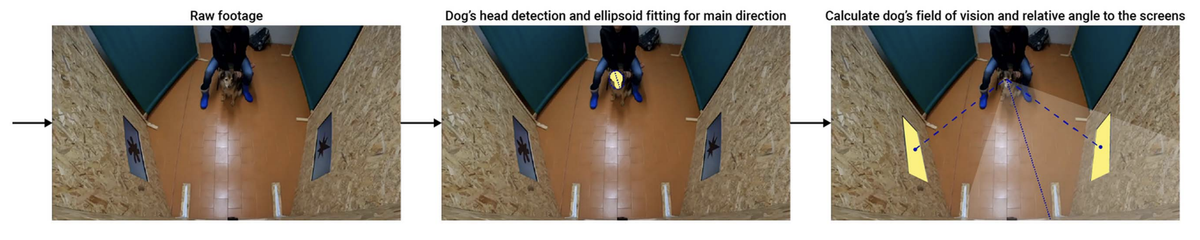
Overall, “dogs looked significantly more at the rounded shape while ‘Bouba’ was played, and they looked at and explored the spiky shape when ‘Kiki’ was played,” Biffi and team report.
The main difference between the two experiments was that dogs in study 1 showed a general bias toward looking at the spiky shapes. That bias disappeared in study 2, when their owners were wearing headphones.
“It could be hypothesized that the dogs were influenced by the owners’ unintentional cues. However, since humans typically show a stronger preference for rounded or curved shapes rather than spiky ones, this is unlikely,” the authors write.
“Another possible explanation could be that, in the case of dogs, animals’ facial configuration, especially when considering ancient dogs and wolves, is characterized by more angular, ‘spiky’ features, which contrasts with the round facial morphology typical of human infants and could plausibly contribute to an opposite bias.”
There’s still a lot more research to be done before scientists can definitively say dogs associate ‘Bouba’ with round shapes and ‘Kiki’ with sharp ones.
But these results are an interesting starting point for exploring bigger questions, like why dogs are quick to pick up on human language, and how they came to be our close companions in the first place.
The research has been published in Proceedings of the Royal Society B: Biological Sciences.
This article was fact-checked by Rebecca Dyer and edited by Rebecca Dyer. While we pride ourselves on our process, we are only human. If you spot a mistake, please let us know.

