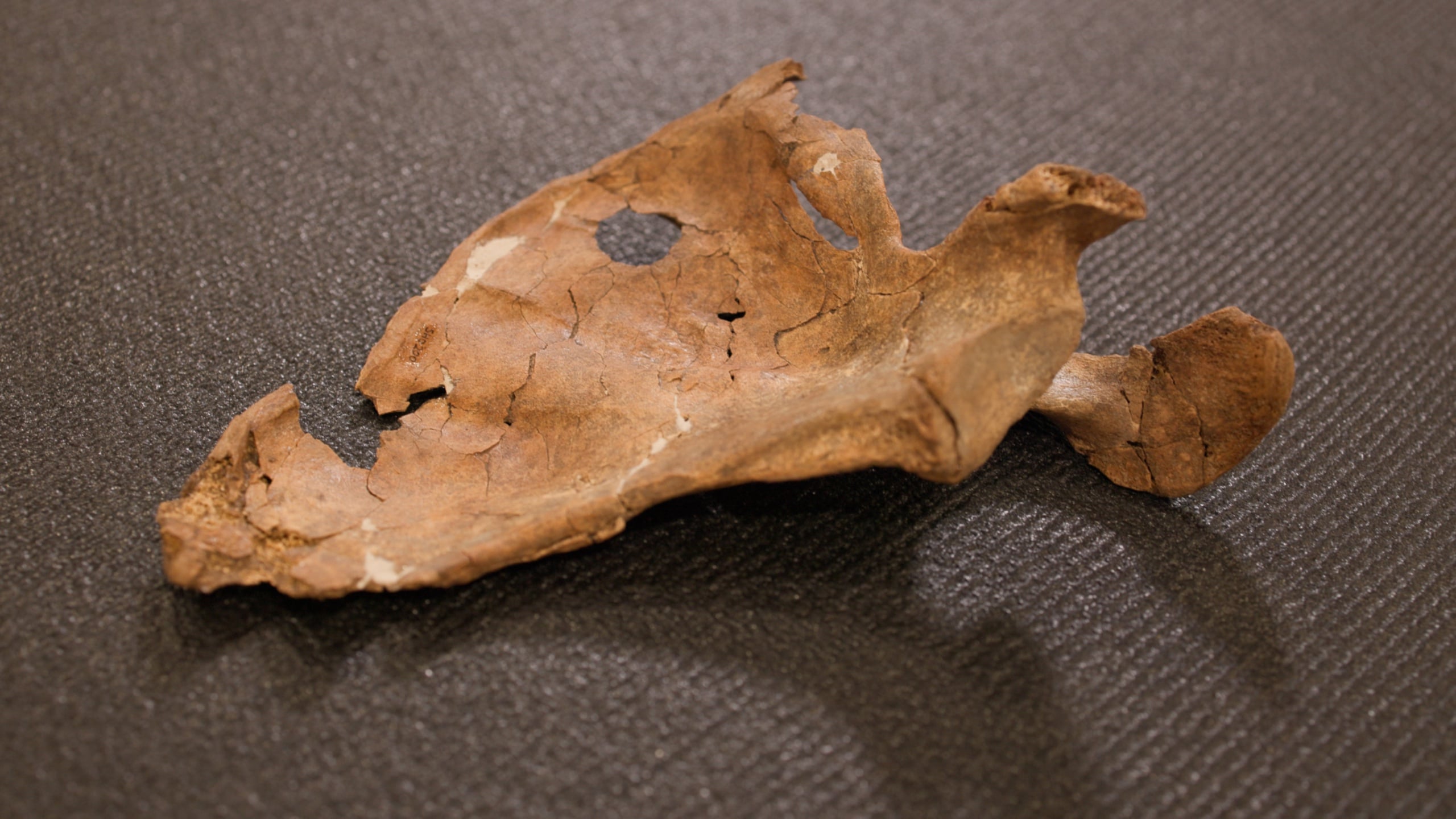
Иракийн Курдистаны Шанидар агуйгаас олдсон неандертал хүний ясны үлдэгдэл нь эртний хүмүүсийн хоорондын зэвсэгт мөргөлдөөний хамгийн эртний баримт байж магадгүй гэж судлаачид үзэж байна.
Кембрижийн их сургуулийн палеоантропологич Эмма Померой болон түүний багийнхан “Scientific Reports” сэтгүүлд нийтлүүлсэн судалгаандаа “Шанидар А” хэмээн нэрлэсэн, 45 орчим настай неандертал хүний мөрний ясан дахь 15 миллиметрийн диаметртэй нүхийг шинжилжээ. Уг шарх нь зүрх рүү чиглэсэн жадны дайралтаас үүдэлтэй байх магадлал өндөр бөгөөд энэ нь хүний өвөг дээдсийн үеийн олдворуудаас олдсон хамгийн эртний зэвсэгт халдлагын жишээ байж болох юм.
Шанидар агуй нь неандерталчуудын соёл, оршуулгын зан үйлийг судлахад чухал ач холбогдолтой газар бөгөөд эндээс олдсон 13 неандертал хүний үлдэгдэл нь тэднийг нас барагсдаа зориудаар, тодорхой хэв маягтайгаар оршуулдаг байсныг нотолж байна. Судалгааны багийн дүгнэснээр, Шанидар А-гийн мөрний шарх нь үхэлд хүргэхүйц байсан ч түүний цогцсыг бусад неандерталчуудын хамт нэг дор оршуулсан нь тухайн бүлэг хүмүүс нас барагсдаа хүндэтгэн ханддаг байсны илрэл юм.
Тус олдвороос гадна Шанидар А-гийн шүдний гэмтэл нь түүнийг амьд ахуйдаа хүнд бэртэл авч, улмаар бусдын асаргаанд нэлээд удаан хугацаагаар амьдарсныг гэрчилж байна. Хэдийгээр жадны ул мөр бүхий мод эсвэл зэвсэг олдоогүй ч 400,000 жилийн тэртээгээс модон жад ашиглаж байсан баримт байдаг тул энэхүү гэмтэл нь тухайн үеийн зэвсэгт мөргөлдөөн эсвэл ан агнуурын ослын улмаас үүссэн байх магадлалтай байна.
Дэлгэрэнгүйг эх сурвалжаас харах
↓Эх сурвалжийг нээх ↓
When the end came, it must have been very painful.
In a moment of violence roughly 75,000 years ago, something sharp pierced the body of the victim, known only as Shanidar A, an adult Neanderthal estimated to be 45 years old.
The deadly injury left a gaping 15-millimeter-wide hole in Shanidar A’s left shoulder blade.
We can’t say for sure what made that hole, but in a new study in Scientific Reports, researchers suggest it was probably a spear, meaning this could be the earliest known example of an interpersonal spear attack in the hominin fossil record.
“The position of the wound and the force required to push it right through the Neanderthal’s body bear the hallmarks of an intended kill shot directed towards the heart,” says paleoanthropologist Emma Pomeroy from Cambridge University.
In their study, researchers analyzed the remains of Shanidar A, which were excavated in 2019 and 2022 from Shanidar Cave in Iraqi Kurdistan, one of the world’s most important archaeological sites for understanding Neanderthal behavior, dating back to fossil discoveries that began in the 1950s.
The newly identified Shanidar A, whose sex remains unknown, is one of 13 Neanderthal individuals whose remains have been found in the cave, some with signs of deliberate burial, which has helped to reshape our understanding of Neanderthals, revealing evidence of specific cultural and funerary behaviors.
The most famous example of this – the symbolic “flower burial” theory, proposed in the 1970s after pollen was found in a grave – has since been challenged by some in the archaeological community, who argue animal activity may better explain the pollen.
But many agree that the repeated burials in the same spots in Shanidar Cave mean something very important about how Neanderthals laid their fallen to rest.
“The repeated use of a single circumscribed space to deposit the dead within a relatively short time-span (likely within generations…) is difficult to explain except in terms of intentional patterned behavior,” the researchers write in their paper.
“The highly restricted area within which the cluster was deposited points to specific meaning being attached to this location, rather than pure practicality or sentiment.”
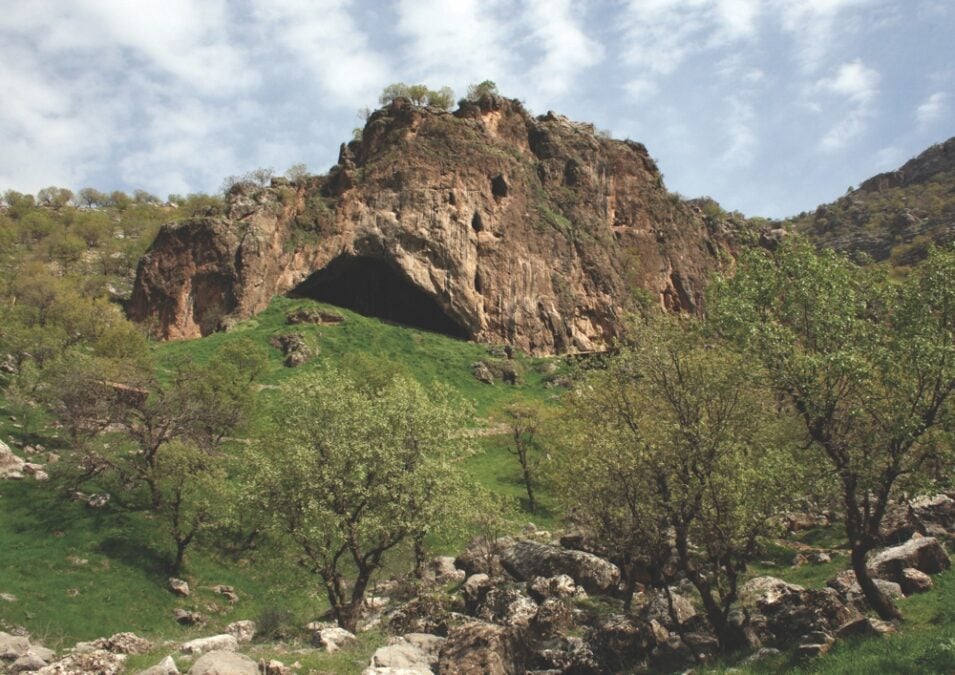
The discovery of Shanidar A adds to the argument, but as it happens, their violent end wasn’t the only remarkable thing about this ancient Neanderthal’s life.
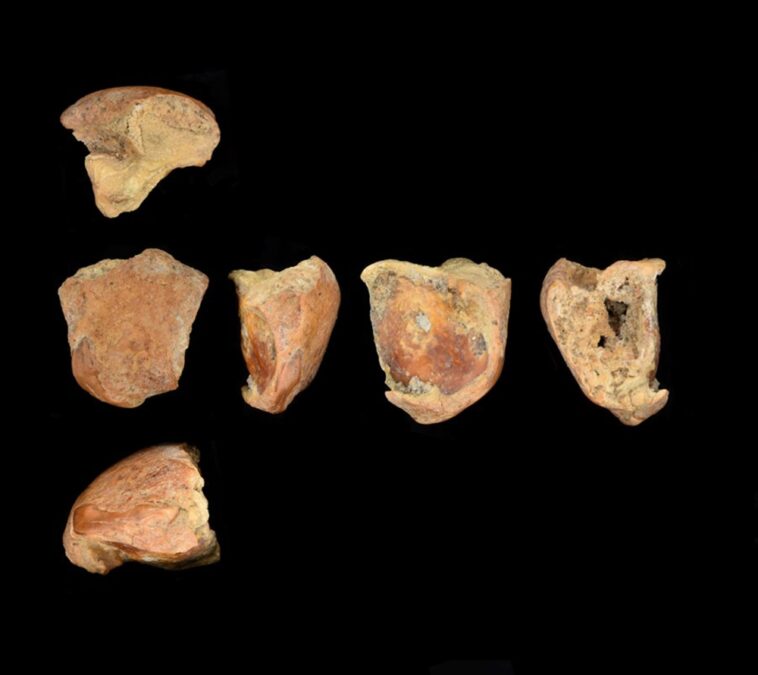
Not much of Shanidar A was recovered: only the shoulder blade, a mostly complete right hand, two left ribs plus a right-rib fragment, and some teeth.
One of those teeth showed signs of being split in half while Shanidar A was still alive, suggesting Shanidar A suffered some kind of major facial injury that broke their tooth apart, and then lived on with only a fragment of it in their mouth afterward.
“Surviving a blow that splits a tooth in this fashion, then continuing to live and eat for a period of at least a year and maybe more, would have required care and support from other Neanderthals,” says Pomeroy.
“There’s no doubt that Shanidar A would have had difficulty communicating and been in absolute agony for a long period of time… this was clearly an individual who was cared for during their lifetime.”
While we don’t know what caused the mouth injury, the researchers suggest it was most likely blunt force trauma, either from something like a fall onto a hard surface, or possibly another incident of interpersonal violence, like the hypothesized spear attack ultimately thought to have claimed Shanidar A’s life.
With regard to the fatal shoulder injury, aside from the 15-millimeter hole in the scapula, the team also found tiny fractures in the bone and displaced bone fragments around the perforation, which all point to a puncture wound, most likely caused by a rounded wooden spear, the researchers think.
“Whether the traumatic lesion on the scapula resulted from something like a hunting accident or from interpersonal violence cannot be known,” the researchers explain.
“Either way, the spear would have entered the individual’s body on the left-hand side whilst they were facing forward. Such an injury would have penetrated all the way through the chest, including the lungs and potentially major blood vessels, likely leading to a rapid death.”
While there’s no surviving sign of the spear or weapon in Shanidar Cave – which isn’t unusual, given how easily wood can decompose over long time periods – evidence for wooden spears dates back some 400,000 years, so it’s entirely plausible that one could have caused the fatal injury.
Whatever happened, it sounds like Shanidar A’s people did what they could.
“Shanidar A’s shoulder injury appears to have been fatal,” the researchers write, “but the apparent placement of the body in a location that subsequently became part of a tight cluster of Neanderthal individuals, who were likely intentionally deposited within living memory of each other, strongly suggests a level of care during and immediately after death.”
The findings are reported in Scientific Reports.
This article was fact-checked by Fiona MacDonald and edited by Fiona MacDonald. While we pride ourselves on our process, we are only human. If you spot a mistake, please let us know.

