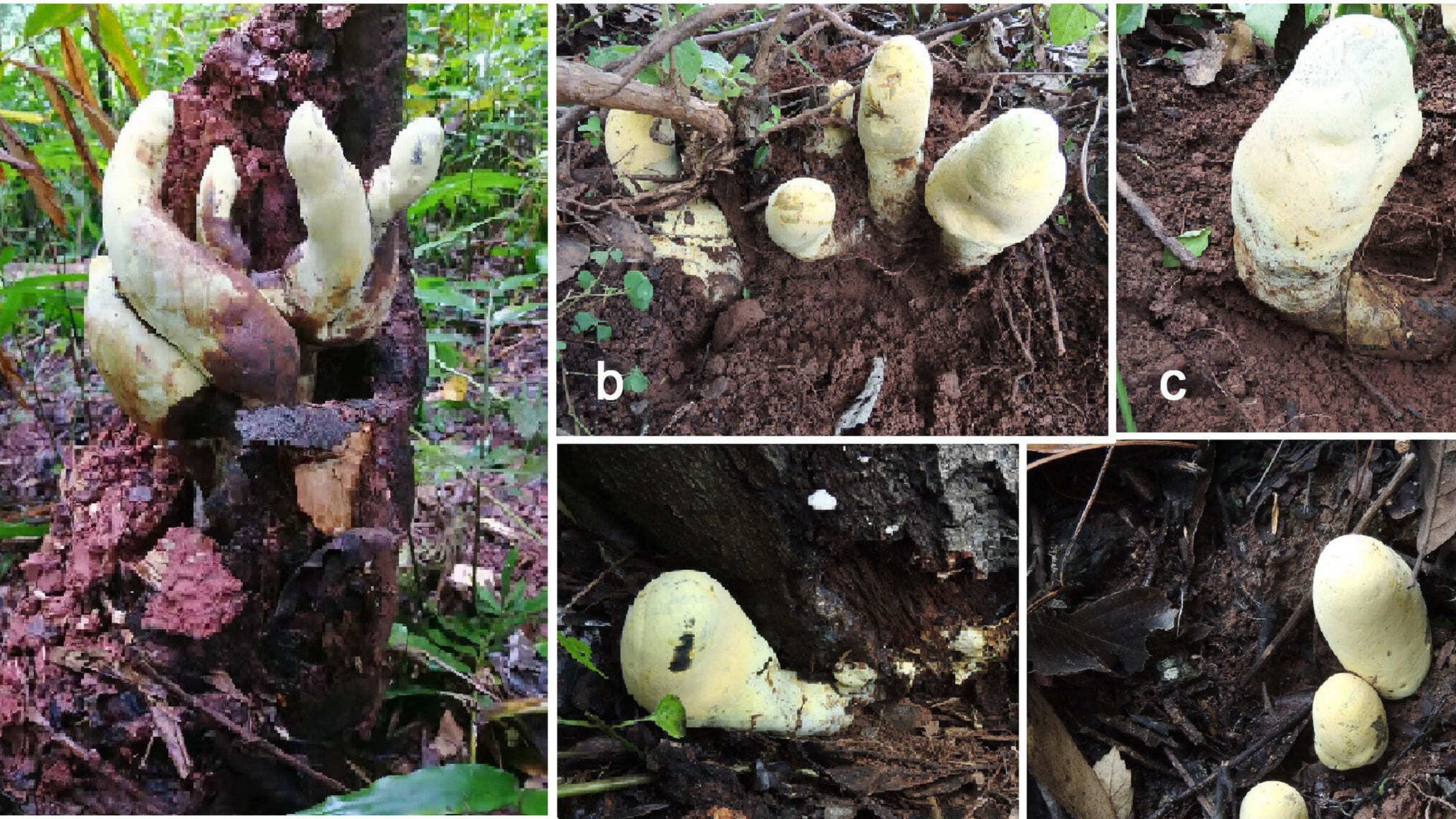
Хятадын Юньнань мужийн ойгоос олдож буй Dianjunus rex нэртэй энэхүү шинэ зүйл нь мөөгний хувьслын түүхийг ойлгоход чухал ач холбогдолтой юм.
Хятадын Шинжлэх ухааны академийн микологч Индунил Сенанаяке болон түүний баг Юньнань мужийн ойгоос Dianjunus rex (товчоор D. rex) хэмээх шинэ зүйлийн мөөгийг нээжээ. Энэхүү мөөг нь 50 сантиметр хүртэл өндөр ургадаг, 2.2 килограмм хүртэл жинтэй, одоогоор мэдэгдэж буй Ascomycota хүрээний хамгийн том биетэй мөөг юм.
Судлаачид ДНХ-ийн шинжилгээгээр уг мөөгний төрөл болох Dianjunaceae нь ойролцоогоор 65 сая жилийн өмнө буюу Чикшулуб астероид дэлхий дээр унаж, үлэг гүрвэлүүд мөхсөнөөс 1 сая жилийн дараа үүссэнийг тогтоожээ. Астероидын нөлөөгөөр дэлхийн уур амьсгал өөрчлөгдөж, их хэмжээний үхсэн ургамлын үлдэгдэл бий болсон нь мод задалдаг мөөгөнцөрүүдэд өсөж үржих шинэ боломжийг бүрдүүлсэн гэж эрдэмтэд үзэж байна.
D. rex нь ихэвчлэн царс модны үндэс, хожуул орчимд ургадаг. Эрдэмтэд энэхүү мөөгний аварга том хэлбэр нь өтгөн шигүү ойд салхиар дамжуулан үр спорoo хол зайд түгээх давуу талтай байж болохыг тайлбарлаж байна. Гэсэн хэдий ч ийм том биеийг бүрдүүлэхэд их хэмжээний энерги зарцуулагддаг тул энэхүү хувьсал нь зөвхөн экологийн тодорхой нөхцөлд л үр дүнтэй байдаг аж.
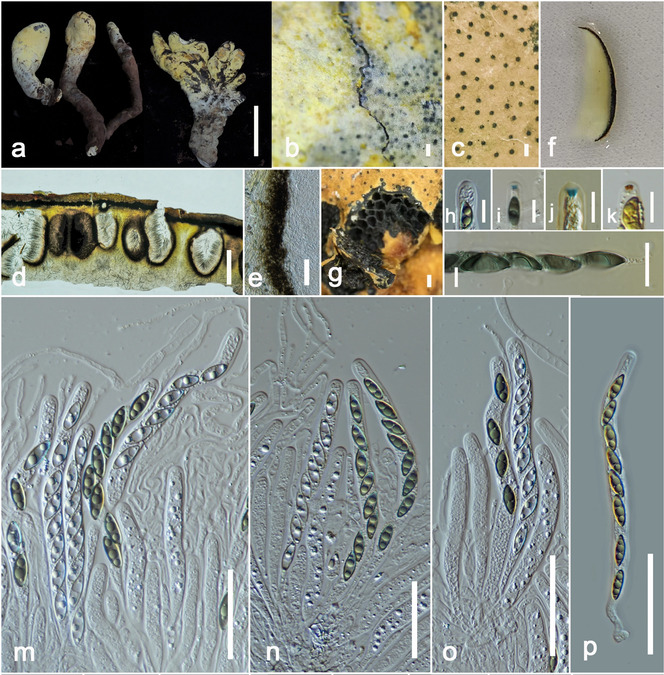
Энэхүү нээлт нь Зүүн Азийн ойд биологийн олон янз байдал хараахан бүрэн нээгдээгүй байгааг харуулж байгаа бөгөөд мөөгний хувьслын түүхийг судлахад чухал хувь нэмэр оруулж байна. Судалгааны үр дүнг Frontiers in Fungal Biology сэтгүүлд нийтэлжээ.
Дэлгэрэнгүйг эх сурвалжаас харах
↓Эх сурвалжийг нээх ↓
Yunnan Province in China is famous for its mushrooms and fungi, but somehow, scientists have only just come across a new species that has rightly earned the name ‘king’.
Named Dianjunus rex (or D. rex for short), its gigantic, club-like fruiting bodies can grow up to 50 centimeters tall, which is about one and a half feet, or the height of a traffic cone.
But its impressive size is not the only exciting thing about this fungus. Its genes also contain clues about a major moment in the history of life on Earth.
Mycologist Indunil Senanayake of the Chinese Academy of Sciences and her colleagues describe the new species in a paper published in Frontiers in Fungal Biology.
D. rex is the only known member of its family, Dianjunaceae.
“This remarkable species… provides a rare window into the evolution of extreme fungal body forms,” says Senanayake.
“The discovery illustrates how much fungus biodiversity remains to be discovered in East Asian forests.”
The researchers found the Dianjunaceae family split off from its closest known relatives about 65 million years ago, by comparing its DNA to hundreds of other fungi whose evolutionary history is well-known.
“This timing raises an intriguing possibility,” says Senanayake.
The family emerged just 1 million years after the Chicxulub asteroid impact, which triggered a mass extinction event.
The dramatic changes to Earth’s climate that resulted from the asteroid wiped out three-quarters of plant and animal species on Earth, including, famously, all non-avian dinosaurs.
“After the mass extinction, forests experienced dramatic changes, including the sudden availability of large amounts of dead plant material,” Senanayake says.
“For wood-associated decomposing fungi, such environmental disruption may have created new ecological opportunities.”
This isn’t the first time scientists have proposed that the dinosaur-killing asteroid led to a worldwide fungal ‘boom’. Fossils found in North Dakota, Colorado, and New Zealand show that massive spikes in fungal activity followed in the wake of this mass extinction.
Fungi typically prefer cooler temperatures and acidic environments. The cooler and darker conditions that arise when geological calamities shade our skies – as Chicxulub did – could have easily set the scene for an era dominated by fungi.
D. rex is related to fungi like morels, truffles, and cordyceps, in the phylum Ascomycota. Like all fungi, Ascomycetes live as mycelium, below the ground or inside the substrates (wood, poop, your toenails, etc.) upon which they feed.
D. rex is often found at the base of oak trees, including the Chinese cork oak (Quercus variabilis) in the forests of the Yunnan Province in south-western China. The specimens on record so far were growing on the decaying roots or stumps of these trees.
When it comes time to reproduce, D. rex sends out its gigantic white fruiting bodies, which are called stromata. These serve the same purpose as mushrooms do for other fungi, broadcasting spores into the air so more D. rex may flourish on the forest floor.
But it’s unclear why D. rex‘s stromata are quite so gargantuan – the largest of any Ascomycete on record. Some specimens the researchers collected weighed a whopping 2.2 kilograms.
“A fruiting body which towers above surrounding vegetation and debris could have better dispersal of spores by wind in dense forests,” Senanayake proposes.
“However, such a large structure requires substantial energy investment, suggesting that this strategy likely evolved only where the ecological benefits outweighed the costs.”
The research has been published in Frontiers in Fungal Biology.
This article was fact-checked by Fiona MacDonald and edited by Fiona MacDonald. While we pride ourselves on our process, we are only human. If you spot a mistake, please let us know.

