Хэт авиан оношилгооны тусламжтайгаар мэдрэлийн эргэн тойронд давсны уусмал шахах нь гар сувгийн хам шинжийн шинж тэмдгийг удаан хугацаанд намдаах боломжтой болохыг тогтоожээ.
Гар сувгийн хам шинж (carpal tunnel syndrome) нь бугуйн нарийн сувагт мэдрэл хавчигдсаны улмаас өвдөлт, бадайралт, сулрал үүсгэдэг эмгэг юм. Radiology сэтгүүлд нийтлэгдсэн судалгаагаар, гидродиссекц буюу хэт авиан оношилгооны удирдлага дор мэдрэлийг эргэн тойрны эдээс салгах зорилгоор давсны уусмал шахах процедур нь стероид тарилгаас илүү урт хугацааны үр дүн үзүүлж байгааг илрүүлжээ.
Махатма Гандигийн нэрэмжит Анагаах ухааны коллеж болон эмнэлгийн судлаач Анинидита Бозе тэргүүтэй баг 39 оролцогчийн 63 бугуйд судалгаа хийсэн байна. Оролцогчдыг гурван бүлэгт хувааж, давсны уусмалтай гидродиссекц, дан стероид тарилга, болон стероидтой гидродиссекц гэсэн аргуудыг харьцуулжээ. Үр дүнд нь, стероид тарилгын үр нөлөө хэсэг хугацааны дараа буурч байсан бол давсны уусмалаар гидродиссекц хийлгэсэн бүлгийн өвдөлт намдах үйлчилгээ зургаан сарын турш хадгалагдсан байна.
Уг процедур нь ойролцоогоор 15 минут үргэлжилдэг бөгөөд эмнэлэгт хэвтэх шаардлагагүй аж. Судлаач Анупама Тандоны тайлбарласнаар, энэхүү арга нь мэдрэлд ирэх даралтыг бууруулж, өвчтөний шинж тэмдгийг сайжруулдаг байна. Гэсэн хэдий ч, энэ нь хөнгөн болон дунд зэргийн шинж тэмдэгтэй тохиолдолд илүү үр дүнтэй бөгөөд хүнд хэлбэрийн үед мэс заслын эмчилгээ шаардлагатай хэвээр байгааг онцлов.
Судалгааны баг уг процедурын үр нөлөөг баталгаажуулахын тулд цаашид илүү өргөн хүрээтэй судалгаа хийх шаардлагатай гэж үзэж байна. Одоогийн байдлаар тэд давсны уусмалыг декстроз (нэг төрлийн сахар)-той харьцуулж, аль бодис нь илүү удаан хугацааны үр дүн үзүүлэхийг тогтоох дараагийн судалгаагаа эхлүүлээд байна.
Дэлгэрэнгүйг эх сурвалжаас харах
↓Эх сурвалжийг нээх ↓
Typing with numb fingers, struggling to hold a pen, or waking with an aching hand can make everyday life exhausting for people with carpal tunnel syndrome.
The condition develops when a nerve supplying the hand becomes squeezed inside a narrow passage at the wrist. Pressure can disrupt the nerve’s signals, causing pain, tingling, numbness, and weakness.
Now, a small trial has found that injecting saline around the trapped nerve could ease symptoms for longer than a steroid injection.
Relief persisted for six months after the saline procedure, by which time the initial benefits of steroid injection alone had largely faded.
The saline is used to open up space between tissues. In the procedure, called hydrodissection, a clinician uses ultrasound to guide a fine needle alongside the nerve. The sterile salt solution is injected around it, separating it from tissues that restrict its movement.
This aims to help the nerve move more freely. A steroid injection eases symptoms by reducing inflammation and swelling.
“This relieves the pressure on the nerve and improves patients’ symptoms,” radiologist Anupama Tandon, from University College of Medical Sciences and Guru Teg Bahadur Hospital in India, told ScienceAlert.
The researchers wanted to establish how much benefit came from separating the tissues. Most earlier hydrodissection studies included medication in the injected fluid, so it was hard to tell whether the procedure or the drug deserved the credit.
Led by radiologist Anindita Bose from Mahatma Gandhi Medical College and Hospital, the team studied 39 adults whose symptoms had persisted for more than three months, despite treatments such as medication or wrist splints.
Some had the condition in both hands, so the trial included 63 wrists.
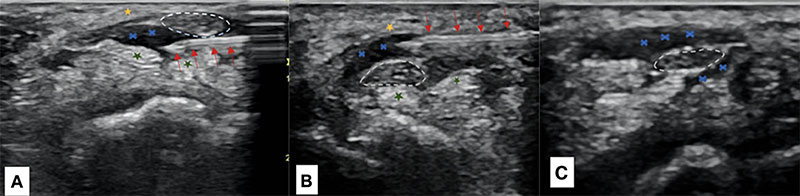
Each wrist was randomly assigned to one of three treatments. One group received hydrodissection with saline alone. Another received a steroid injection without the tissue-separating procedure. The third received hydrodissection with steroid added to the saline.
All treatments were guided by ultrasound. The steroid-containing injections also included a local anesthetic. The researchers then followed changes in pain, numbness, and difficulty using the hand, with ultrasound scans checking nerve swelling during the first three months.
All three treatments helped initially. The difference emerged over the following months: Pain returned in the steroid-only group, while relief continued in the saline-only hydrodissection group.
Adding steroid to hydrodissection did not clearly improve the results.
Ultrasound images supported the patients’ reports. Nerve swelling decreased more in both hydrodissection groups than in the group given steroid injections alone.
These findings support the researchers’ explanation that separating the nerve from surrounding tissues contributes to relief. However, the trial had no group that received a dummy injection, so the contribution of patients’ treatment expectations could not be assessed separately.
Tandon described a young typist whose pain and numbness had become so disruptive that her job was at risk. Medication and a wrist splint had failed to help.
“Post hydrodissection, she had improvement in her symptoms and was able to resume her work,” Tandon said.
Treatment took around 15 minutes and required no hospital stay. No major complications were observed. Some participants experienced mild pain and swelling that settled within a few days. One experienced tingling during needle placement, with no lasting neurological effects reported.
Larger studies are needed to establish how reliably the procedure works and how long relief lasts. This trial involved a small number of people at one center, with follow-up ending at six months. It did not directly compare hydrodissection with surgery.
“It is beneficial for mild to moderate CTS [carpal tunnel syndrome],” Tandon said, “while severe cases require surgery.”
The team has begun alonger study comparing saline with dextrose, a type of sugar, to investigate which fluid provides more lasting relief.
The research has been published in Radiology.
This article was fact-checked by Peter Dockrill and edited by Peter Dockrill. While we pride ourselves on our process, we are only human. If you spot a mistake, please let us know.

