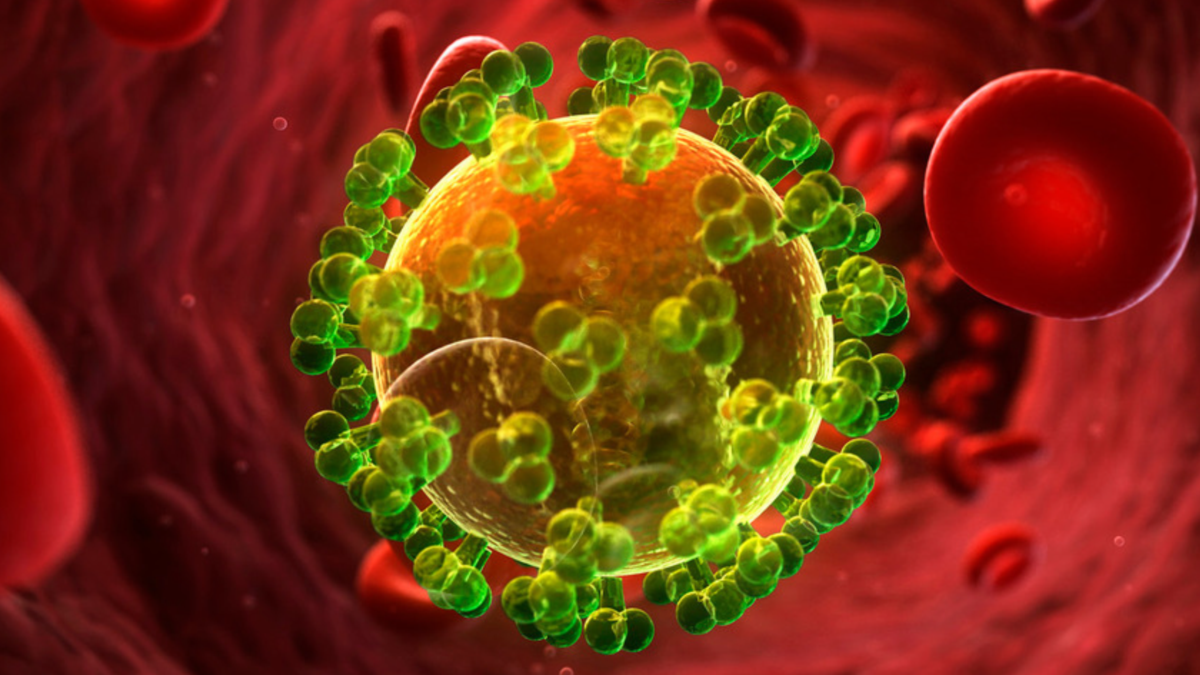
Дархлааны эсэд нуугдсан ХДХВ-ийн вирусийг устгах боломжтой эсрэг биеийн эмчилгээг эрдэмтэд туршиж байна.
ХДХВ болон түүнтэй төстэй SIV вирус нь хүний дархлааны эсэд нуугдаж, эмчилгээ зогссоны дараа дахин идэвхжих чадвартай байдаг. Калифорнийн их сургууль, Davis-ийн вирус судлаач Jesse Deere болон дархлаа судлаач Dennis Hartigan-O’Connor нарын баг Nature Microbiology сэтгүүлд нийтлүүлсэн судалгаандаа CCR5 уургийг агуулсан эсүүдийг онилох замаар вирусийн нөөцийг бууруулах аргыг туршжээ. Энэхүү эсрэг бие нь CCR5 болон дархлааны T эсийн CD3 уурагтай холбогдож, вирусийг тээгч эсүүдийг устгахаар дархлааны системийг чиглүүлдэг байна.
Судлаачид SIV халдвар авсан 20 шинэ төрсөн rhesus macaque сармагчинд антиретровирусийн эмчилгээг эхлүүлж, заримд нь туршилтын эсрэг биеийг нэмэлтээр хийжээ. Эмчилгээг 18 долоо хоногийн дараа зогсооход, зөвхөн антиретровирусийн эм уусан бүлгийн бүх амьтдад вирус долоо хоногийн дотор дахин илэрсэн байна. Харин CCR5/CD3 эсрэг бие тариулсан амьтдын зарим нь хэдэн сараас дөрвөн жил хүртэлх хугацаанд вирусийн идэвхжилгүй байжээ.
Судлаачид вирусийн нөөц багассаныг батлахын тулд дархлааны CD8 T эсийг түр хугацаанд саармагжуулж үзсэн боловч вирус дахин илрээгүй байна. Эд эсийн шинжилгээгээр ч вирусийн генетик материал илрээгүй нь энэ арга үр дүнтэй байж болохыг харуулж байна. Гэсэн хэдий ч судалгаа нь цөөн тооны амьтан дээр хийгдсэн бөгөөд эмчилгээг халдвар авсны дараа шууд эхлүүлсэн тул насанд хүрсэн хүн эсвэл удаан хугацааны халдварын үед үр нөлөө нь тодорхойгүй хэвээр байна.
Мөн эсрэг бие нь халдваргүй эрүүл эсүүдийг ч онилдог тул бусад халдварын эсрэг дархлааны системд хэрхэн нөлөөлөхийг цаашид судлах шаардлагатай. Энэхүү арга нь одоогоор хүн дээр туршигдаагүй тул аюулгүй байдал болон үр дүнг тогтоох нь дараагийн шатны зорилт юм.
Дэлгэрэнгүйг эх сурвалжаас харах
↓Эх сурвалжийг нээх ↓
HIV can fall silent without leaving the body. Hidden inside immune cells, it can survive treatment and start multiplying again when medication stops.
So researchers have started going after the hiding places themselves, with an experimental antibody tested in infant monkeys.
Given once alongside early antiviral treatment, it helped keep simian immunodeficiency virus (SIV), a relative of HIV, from returning for months after medication ended in some animals.
In one monkey, the virus remained undetectable in the blood for four years of follow-up.
A team including virologist Jesse Deere and immunologist Dennis Hartigan-O’Connor at the University of California, Davis tested an approach that does not require identifying each infected cell.
In a new study published in Nature Microbiology, they targeted a broader group of cells carrying a surface protein called C-C chemokine receptor type 5 (CCR5).
HIV and SIV can use CCR5 to enter cells. Once inside, they can insert their genetic material into the cell’s DNA and persist.
Infected cells that lie dormant without producing new virus form a latent viral reservoir.
Antiretroviral drugs, which prevent HIV from multiplying, control the infection but can’t clear the virus from these cells. Without viral proteins to expose them, the cells are also difficult for the immune system to recognize.
The experimental antibody binds both CCR5 and CD3, a protein complex on immune cells called T cells. This directs T cells to attack cells carrying CCR5. The targets include cells that could harbor the virus and cells it could infect later.
The importance of reducing viral reservoirs has also emerged from rare cases oflasting HIV remission after stem-cell transplants. Those transplants were performed to treat cancer. The new experiment tested whether an antibody could help reduce the reservoir.
Researchers exposed 25 newborn rhesus macaques (Macaca mulatta) to SIV, infecting 20. A week after infection, the animals began antiretroviral treatment.
The animals had been randomly assigned to three groups before exposure. One received the drugs alone. Another also received a single dose of the experimental CCR5/CD3 antibody. A third received a different antibody targeting a cell-surface protein called CD4.
Antibody treatment began two days after the antiviral drugs. The drugs continued for 18 weeks, then were stopped to see whether the virus returned.
In every animal given drugs alone, the virus reappeared in the blood within a week. In the CD4-targeting antibody group, six of eight animals rebounded within seven days, while one remained without detectable virus through the end of follow-up.
Some recipients of the CCR5/CD3 antibody stayed in remission for much longer.
Four showed no sign of the virus in their blood for more than three months. In two, it returned after 97 and 173 days. A third had no rebound before follow-up ended at around 29 weeks. In the longest-followed animal, that period reached four years.
This prolonged absence of detectable virus after medication ends is described as remission. It doesn’t, by itself, establish that the infection has been completely cleared.
The team performed further tests in three animals with sustained remission. Two had received the CCR5/CD3 antibody; one had received the antibody targeting CD4.
First, the researchers temporarily depleted CD8 T cells, which can help control viral infections. If these cells were suppressing a surviving infection, weakening that defense might allow it to rebound. No rebound occurred.
Tests of tissue from these animals found no viral genetic material. Attempts to recover infectious virus from their lymph-node cells also failed. Together, the findings support a substantial reduction in the viral reservoir.
However, one sample from the monkey followed for four years produced a tiny signal of possible viral RNA. The researchers couldn’t conclusively exclude contamination. They detected no accompanying viral DNA or return of virus in the blood.
The study was small, and treatment began soon after infection. The team chose infant monkeys partly because they can rebuild immune cells quickly. So it’s not known whether the approach would work similarly in adults or in longstanding infections.
The antibody also targets uninfected immune cells. The animals generally tolerated treatment, with mild reactions resolving within hours, but researchers need to investigate any effects on defenses against other infections.
“Our study demonstrates that targeting CCR5-expressing cells using the host immune system may be a surprisingly effective route to HIV cure, at least for infants that can be treated soon after infection,” the study authors conclude.
The approach has not been tested in people, so researchers still need to establish its effectiveness and safety in humans.
The research has been published in Nature Microbiology.
This article was fact-checked by Rebecca Dyer and edited by Rebecca Dyer. While we pride ourselves on our process, we are only human. If you spot a mistake, please let us know.

