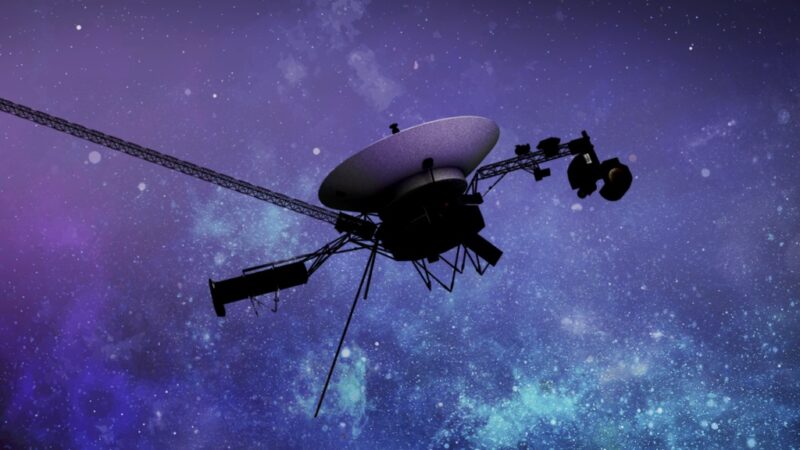
Энэ үйл явдал хүн төрөлхтний бүтээсэн биет Дэлхийгээс урьд өмнө хүрээгүй хол зайд хүрэх түүхэн босго болно.
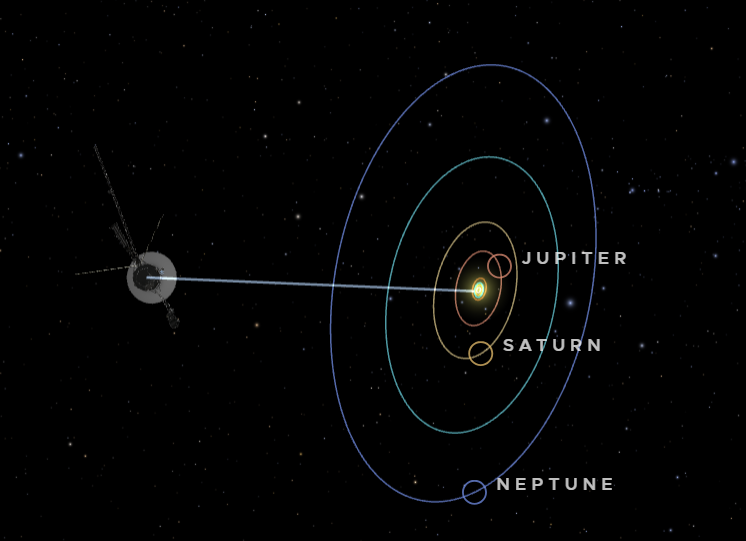
1977 оны есдүгээр сарын 5-нд хөөргөсөн Voyager 1 Бархасбадь, Санчир гаргийг судалсны дараа Нарны аймгаас гадагш чиглэн аялжээ. Тэрээр 2012 онд Нарны нөлөөний хязгаар болох гелиопаузыг давж, одоогоор Дэлхийгээс хамгийн алслагдсан хүний бүтээсэн биет болж байна. NASA-гийн мэдээлснээр, 2026 оны арваннэгдүгээр сарын 18-ны 00:16:07 цагт Дэлхийгээс гэрэл 24 цагт туулах зайд хүрнэ.
Нэг гэрлийн өдрийн зай нь ойролцоогоор 25.9 тэрбум км буюу 173.14 одон орны нэгжтэй тэнцэнэ. Аравдугаар сарын эхээр хөлөг Дэлхийгээс 25.72 тэрбум км орчим зайд байсан бөгөөд түүнээс ирэх гэрэл бидэнд хүрэхэд 23 цаг 52 минут 30 секунд зарцуулж байжээ. 1977 онд хөөрснөөс хойш энэ зайг туулахад 49 жил, хоёр сар, 11 хоног шаардлагатай гэж тооцоолжээ.
Энэ үйл явдлыг тохиолдуулан NASA дэлхий даяарх “Shine Bright” арга хэмжээг зохион байгуулж байна. Арваннэгдүгээр сарын 17-ны мягмар гарагт нар жаргасны дараа хүмүүс гар чийдэн, утасны гэрэл зэрэг гэрлээр тэнгэр өөд чиглүүлэн, Voyager-ийг төлөөлөх V-G-R үсгийг Морзын кодоор анивчуулж оролцож болно: V нь цэг-цэг-цэг-зураас, G нь зураас-зураас-цэг, R нь цэг-зураас-цэг.
Voyager 1 болон Voyager 2 Дэлхийтэй холбоо барьсаар байгаа ч нэг чиглэлийн мэдээлэл дамжихад ойролцоогоор нэг өдөр зарцуулдаг бөгөөд хоёр хөлгийн ихэнх багаж ажиллахаа больжээ. Voyager 2 нь Voyager 1-ээс 3.2 тэрбум км орчим ойр бөгөөд нэг гэрлийн өдрийн зайд 2035 оны арваннэгдүгээр сард хүрэх төлөвтэй байна. NASA эрчим хүч хэмнэхийн тулд 2026 оны дөрөвдүгээр сард од хоорондын орчны электрон, ион, сансрын цацрагийг хэмждэг LECP багажийг унтраасан ч ирээдүйд дахин асааж хэмжилт хийх боломжтой гэжээ.
Дэлгэрэнгүйг эх сурвалжаас харах
Эх сурвалжийг нээх ↓
Voyager 1 to reach 1 light-day from Earth in November
Voyager 1 is the most distant human-made object from Earth. It launched into space on September 5, 1977, and visited Jupiter and Saturn before heading out of the solar system. It officially crossed out of our solar system, passing the heliopause – the sphere of the sun’s influence – back in 2012. And at 12:16:07 a.m. CST on November 18, 2026, NASA said that Voyager 1 will reach a major milestone: 1 light-day from Earth. That’s the distance it takes light to travel in 24 hours.
This historic milestone of 1 light-day is equal to about 16.1 billion miles (25.9 billion kilometers), or 173.14 astronomical units (AU). As of early October, the Voyager 1 spacecraft is about 15.98 billion miles (25.72 billion km) away from Earth. If we could peer at Voyager 1 through a telescope on Earth, the light we see left the spacecraft 23 hours, 52 minutes and 30 seconds ago. On November 18, it will breach the 24-hour mark.
And how long did it take Voyager 1 to travel 1 light-day? It took 49 years, 2 months, and 11 days to travel that distance from Earth. Keep on reading for how to celebrate this milestone.
Here’s how to celebrate!
To mark Voyager 1’s milestone of 1 light-day distant, NASA is organizing a worldwide Shine Bright celebration. After sunset on Tuesday, November 17, people can participate by pointing a flashlight, phone, glow stick or other light toward the sky and flashing the letters V-G-R for Voyager in Morse code.
So how do you spell V-G-R in Morse code? V is dot, dot, dot, dash. G is dash, dash, dot. And R is dot, dash, dot. If that’s too complicated, you can just NASA’s automated flasher here.
NASA hopes the worldwide light display will celebrate humanity’s remarkable achievement in sending a spacecraft farther into space than anything else they’ve ever built.
What about Voyager 2?
And where is Voyager 2? You might know that Voyager 2 actually launched a few weeks before its sister craft. But while Voyager 1 only visited Jupiter and Saturn, Voyager 2 took a Grand Tour, visiting all the gas giant planets: Jupiter, Saturn, Uranus and Neptune. So it’s not as far from Earth as Voyager 1.
But it’s not too far behind, relatively speaking. Voyager 2 is about 2 billion miles (3.2 billion km) closer to Earth than Voyager 1. It’s also moving a bit slower, so it can never catch up. Besides, Voyager 1 and 2 are not headed in the same direction anyway. Voyager 1 is headed “up” out of the solar plane, while Voyager 2 is headed “down.” Voyager 1 is moving toward the direction of the constellation Ophiuchus. And Voyager 2 is headed in the direction of the constellation Andromeda.
So when will Voyager 2 reach a distance of 1 light-day from us? NASA said not for nine more years, in November 2035.
Are the Voyager spacecraft still functioning?
Both Voyager spacecraft are still in communication with Earth, even though that process takes approximately a day for one-way messages. But most of the instruments on the Voyagers are no longer working. Over the years, NASA has turned off one system after another in order to save power. Just this year, in April 2026, NASA turned off the Low-Energy Charged Particle (LECP) instrument to save energy. This instrument was detecting electrons, ions and cosmic rays in the interstellar medium. But NASA could still turn it on at some point in the future for new measurements.
Both Voyager spacecraft carry a golden record that is etched with images and sounds to represent life on Earth. The golden records were a largely symbolic gesture meant to represent Earth in the wider universe and with the off-chance that an alien civilization would one day find them and learn something of their origins. As Carl Sagan said:
The spacecraft will be encountered and the record played only if there are advanced space-faring civilizations in interstellar space, but the launching of this ‘bottle’ into the cosmic ‘ocean’ says something very hopeful about life on this planet.
Bottom line: The Voyager 1 spacecraft — which launched from Earth in 1977 — will reach 1 light-day from Earth on November 18, 2026. It is the first human-made object to travel that far from Earth.
Read more: Why are the Voyager spacecraft getting closer to Earth now?

