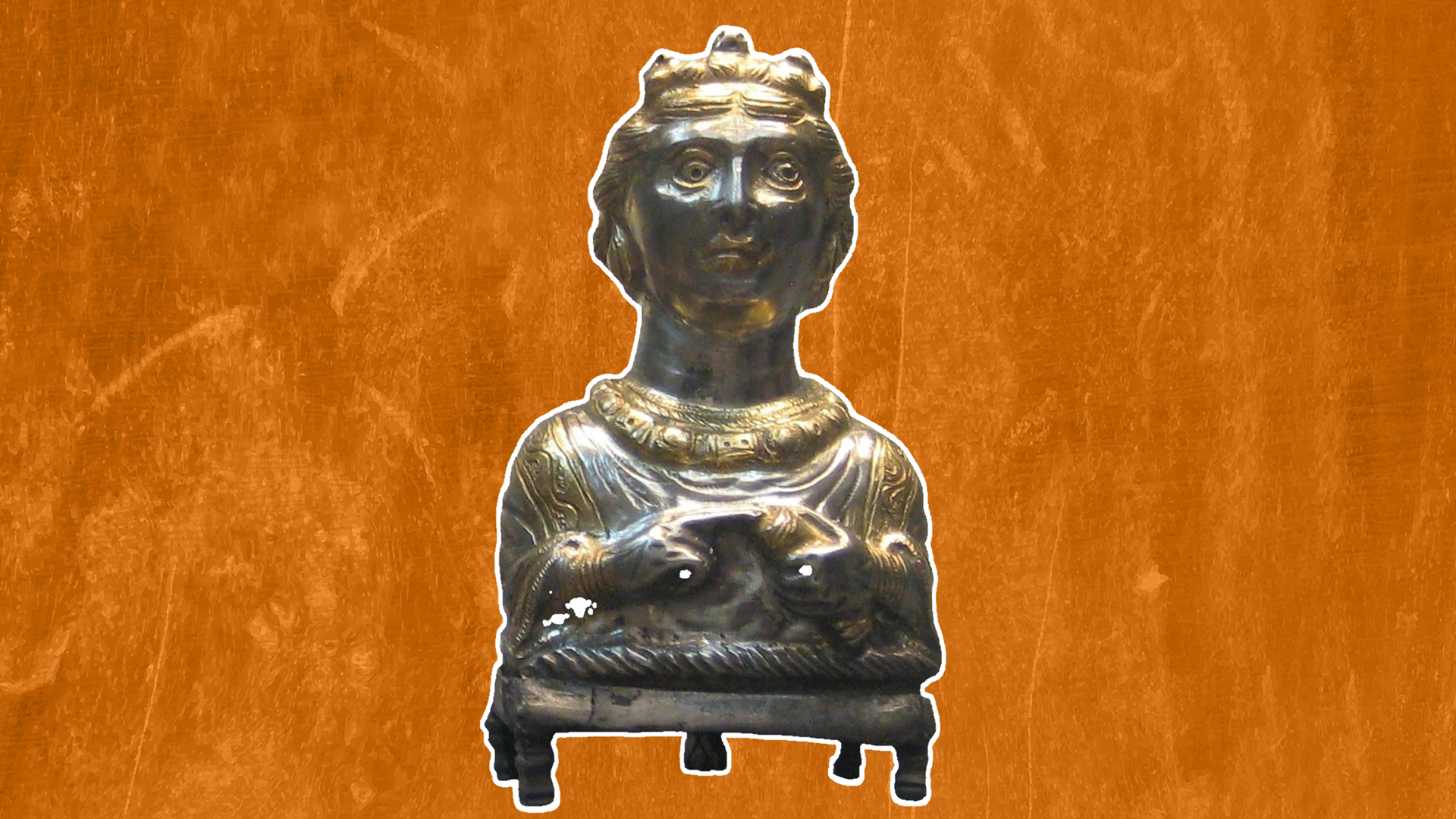
Английн Хоксн тосгоны нутгаас эртний Ромын үед хамаарах, эмэгтэй хүний дүрс бүхий ховор мөнгөн сав олдсон нь тухайн үеийн тансаг хэрэглээг илтгэж байна.
1992 онд Английн зүүн өмнөд хэсгийн Хоксн тосгоны нэгэн фермер металл илрүүлэгч ашиглан гээгдүүлсэн алхаа хайж байгаад Ромын үеийн 15,000 гаруй зоос, үнэт эдлэл, ширээний хэрэгсэл бүхий асар том эрдэнэсийн санг санамсаргүйгээр олжээ. Уг олдворуудын дунд “Хатан хаан” хэмээн нэрлэгдсэн, эзэнт гүрний язгууртан эмэгтэйн дүрс бүхий мөнгөн сав байсан нь Британийн музейн судлаачдын анхаарлыг ихэд татсан байна. Ойролцоогоор 10 см өндөр энэхүү сав нь МЭ 350-400 оны үед бүтээгдсэн гэж үздэг бөгөөд нүд, уруул, үс болон гартаа барьсан гар бичмэлийг алтаар чимэглэжээ.
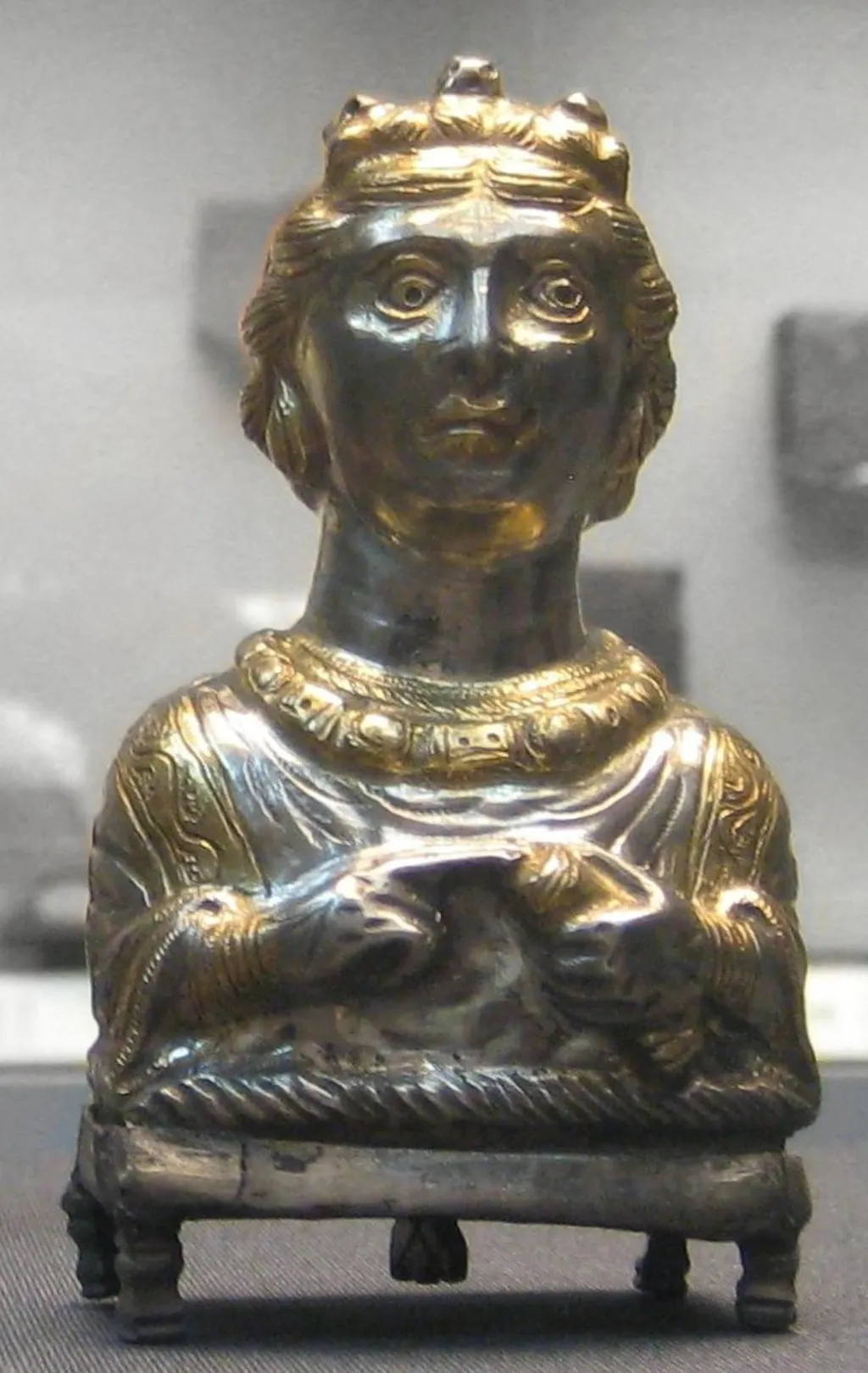
Уг савны ёроолд гурван байрлалтай тусгай диск байрлах бөгөөд энэ нь чинжүүг саванд хийх, хэрэглэх болон хааж битүүлэх зориулалттай байв. Ромын эзэнт гүрний үед чинжүү нь Энэтхэгээс импортолдог маш үнэтэй амтлагч байсан тул ийм сав эзэмшиж байсан нь тухайн гэр бүлийн чинээлэг байдлын баталгаа болдог байжээ. Судлаачдын үзэж буйгаар, энэхүү эд зүйлс нь Ромын захиргаа Британид унах үед нутгийн нэгэн чинээлэг гэр бүлийн нууж үлдээсэн эд хөрөнгө байсан бололтой.
Британийн музейн захирал асан Нил МакГрегорын тэмдэглэснээр, энэ нь төрийн тогтолцоо доройтох үед өөрийн хөрөнгөө авч явахад бэлэн байсан чинээлэг иргэдийн амьдралын нэгэн жишээ юм. Хэдийгээр дүрслэгдсэн эмэгтэй нь хааны гэр бүлийн гишүүн биш боловч түүний барьсан гар бичмэл нь тухайн эмэгтэйг боловсролтой, нөлөө бүхий нэгэн байсныг илтгэж байж болох юм.
Дэлгэрэнгүйг эх сурвалжаас харах
↓Эх сурвалжийг нээх ↓
Name: Hoxne ‘Empress’ pepper pot
What it is: A silver spice dispenser
Where it is from: Hoxne, Suffolk, England
When it was made: A.D. 350 to 400
In 1992, a farmer in the village of Hoxne in southeastern England was searching for a lost hammer with a metal detector when he stumbled upon a massive hoard of more than 15,000 ancient Roman coins, jewelry and tableware. Among the artifacts in the Hoxne hoard was a silver spice container in the shape of an imperial lady.
The artifact, named the Empress, is one of four pepper pots (“piperatoria” in Latin) discovered in the Hoxne hoard, according to the British Museum. The silver container stands about 4 inches (10 centimeters) tall and is decorated with gold around the woman’s eyes, mouth, hair and accessories, including a scroll in her left hand. The woman’s elaborate hairstyle helps date the creation of the pepper pot to the fourth century, but experts think the hoard may have been buried in the early fifth century, when Roman rule in Britain was ending.
At the bottom of the pot, which rests on a four-legged base, there is a disc that can be set at three positions: wide open, closed and partly open. The pot would have been filled in the open position with cracked pepper and then used in the partly open position for sprinkling the spice over food.
The ancient Romans were huge fans of pepper, Neil MacGregor, former director of the British Museum, wrote in “A History of the World in 100 Objects” (Penguin Books, 2010). Pepper didn’t grow in the Roman Empire, so merchants procured it from India. This made it an expensive spice, and filling up the pepper pot would have been costly.
A wealthy Romano-British family likely used the pepper pot as elaborate tableware, MacGregor wrote. It is unclear whom the Empress was meant to depict, but researchers don’t think it features a member of the Roman imperial family. However, the fact that she holds a scroll could indicate that she was both wealthy and well educated.
The ancient family who lived near Hoxne seems to have left its wealth behind during the breakdown of Roman rule in Britain, since the pepper pot was found in a chest that contained dozens of pieces of silverware, 29 pieces of gold jewelry, and more than 15,000 coins.
“This was the mobile wealth of a rich Roman family — precisely the type of person who is in danger when the state fails,” MacGregor wrote.
For more stunning archaeological discoveries, check out our Astonishing Artifacts archives.
Etruscan Abecedarium
Lycurgus Cup
Mold Gold Cape
Can you put together last week’s Astonishing Artifact?

