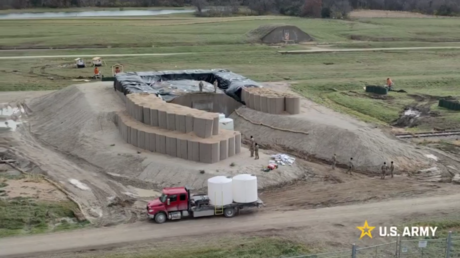
АНУ-ын арми Айова дахь зэвсгийн үйлдвэрт хадгалагдаж байсан хортой тэсрэх бодисыг олон нийтийн эсэргүүцэл, хуулийн маргааны дунд хяналттайгаар дэлбэлж устгалаа.
АНУ-ын арми Айова мужийн Миддлтаун дахь зэвсгийн үйлдвэрт 2009 оноос хойш хадгалагдаж байсан 4.5 тонн буюу 10,000 орчим фунт жинтэй хар тугалгын азид (lead azide) нэгдлийг лхагва гарагт устгав. Цэргийн албаныхны мэдээлснээр, тус бодис нь химийн хувьд тогтворгүй болж, тээвэрлэх эсвэл саармагжуулах боломжгүй эрсдэлтэй нөхцөлд хүрсэн тул ийнхүү дэлбэлэх шийдвэр гаргажээ.
WATCH: Drone footage captures the Army’s lead azide detonation in Iowa. https://t.co/yQSqUiwH1B
— Breaking911 (@Breaking911) November 25, 2026
Уг ажиллагааг эхлүүлэхээс өмнө орон нутгийн иргэд болон байгаль орчны байгууллагууд хар тугалгын тоос тархаж, орчныг бохирдуулах вий гэсэн болгоомжлолыг илэрхийлж байв. АНУ-ын Армийн хангамжийн командлалын командлагч, хошууч генерал Эрик Ширли уг ажиллагааг амжилттай болсон гэж мэдэгдээд, хүний эрүүл мэнд, аюулгүй байдалд учирч болох эрсдэлийг хамгийн бага түвшинд хүргэсэн хэмээн онцолсон байна.
Aerial View: Iowa weapons detonation of Lead Azide. https://t.co/Lc2o09X7rx
— Joshua T. Hosler (@JoshuaHosler) November 25, 2026
Армийн албаны хүмүүс агаарын чанарыг хянаж үзэхэд хар тугалгын хортой концентраци илрээгүй гэж мэдээлсэн боловч Айова мужийн Байгаль орчны зөвлөл болон “Sierra Club” зэрэг байгууллага цэргийнхнийг аюултай бодисыг удаан хугацаагаар хадгалж, нөхцөл байдлыг хүндрүүлсэн хэмээн шүүмжилсэн юм. Холбооны давж заалдах шатны шүүх даваа гарагт устгалын ажлыг эхлүүлэх зөвшөөрөл олгосны дараа Айова мужийн захирагчаар сонгогдсон Роб Санд ажиллагааны явц эмх замбараагүй, тодорхой бус байсанд шүүмжлэлтэй хандав.
Дэлгэрэнгүйг эх сурвалжаас харах
↓Эх сурвалжийг нээх ↓
Iowa residents were urged to evacuate or shelter indoors amid concerns over the spread of hazardous lead dust
The US Army has detonated nearly 10,000 pounds (4.5 metric tons) of unstable explosives at an ammunition plant in Iowa despite concerns that the operation could contaminate surrounding communities with toxic lead dust.
The controlled detonation took place at the Iowa Army Ammunition Plant in Middletown on Wednesday, following days of public backlash, legal wrangling and repeated delays.
The Army destroyed 68 barrels of lead azide, a toxic explosive compound that had been stored at the facility since 2009. Military officials said the material had become dangerously unstable, making it too risky to transport or chemically neutralize.
WATCH: Drone footage captures the Army’s lead azide detonation in Iowa. https://t.co/yQSqUiwH1B
— Breaking911 (@Breaking911) November 25, 2026
Experts warned that leaving the deteriorating stockpile untouched could result in an uncontrolled explosion.
“Inaction is no longer an option,” Major General Eric Shirley, commanding general of the US Army Sustainment Command, told reporters on Tuesday. He later called the detonation “tremendously successful” and said the Army “reduced as close to zero as humanly possible the risk to health and human safety.”
Aerial View: Iowa weapons detonation of Lead Azide. https://t.co/Lc2o09X7rx
— Joshua T. Hosler (@JoshuaHosler) November 25, 2026
An Army official told The Washington Post that air monitoring had found no harmful concentrations of lead.
Maps released by the Army ahead of the operation indicated that airborne lead particles could potentially travel more than 75 miles (120 km), reaching northern Missouri. Local farmers voiced concerns about possible contamination of their crops and livestock.
Lead exposure can cause serious long-term health problems, particularly in young children, whose neurological development can be affected.
The operation was originally scheduled for November 20 but was postponed amid public opposition and a legal challenge mounted by the Iowa Environmental Council (IEC) and the Sierra Club. A federal appeals court cleared the way for the detonation on Monday.
The IEC, Sierra Club and Earthjustice accused the military of negligence, arguing that it had allowed the explosives to deteriorate until safer disposal methods were no longer considered feasible. “This emergency is of the Army’s own making,” the groups said in a joint statement on Sunday.
Iowa Governor-elect Rob Sand commended the experts involved in minimizing the risks but criticized the handling of the operation, saying that the “lead-up to the detonation should never have been so chaotic and unclear.”
You can share this story on social media: