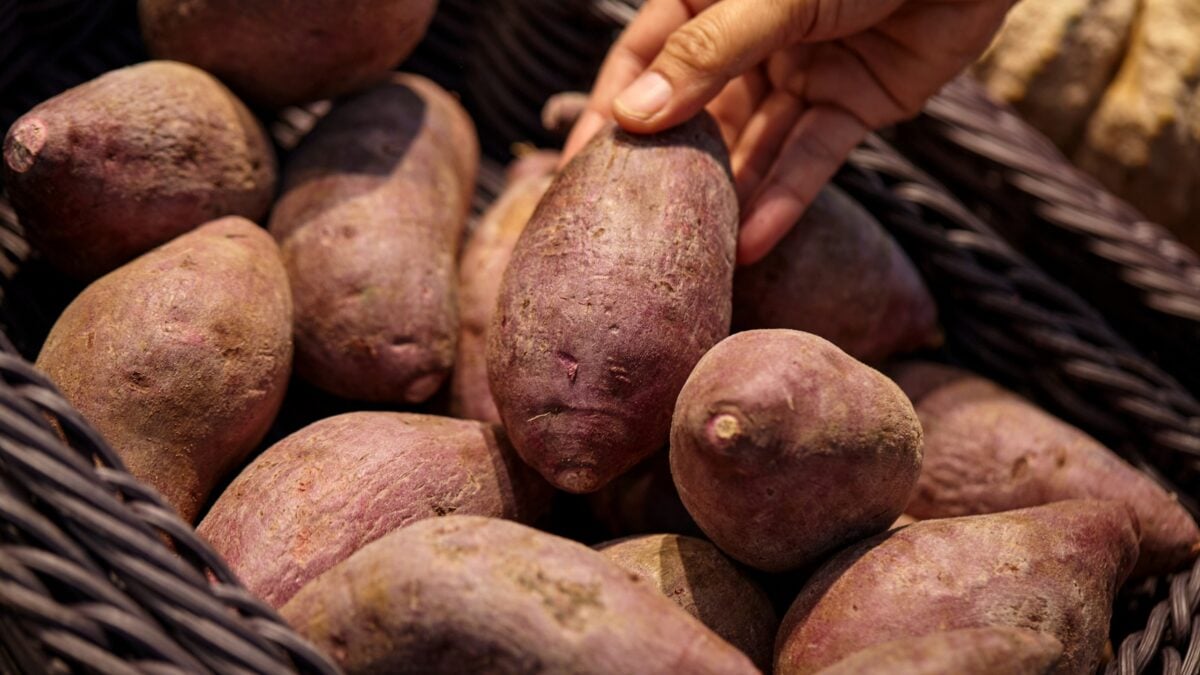
Амтат төмсний геномд эртнээс шингэсэн нянгийн ДНХ ургамалд зарим ашигтай шинж өгөх боломжтойг судалгаанууд харуулжээ.
Амтат төмсийг Төв болон Өмнөд Америкийн хүмүүс хэдэн мянган жилийн өмнөөс тариалж ирсэн ч түүний генд нянгийн ДНХ хүн төрөлхтөн ургамал тарьж эхлэхээс өмнө оржээ. 2015 онд хийсэн судалгаагаар дэлхийн өнцөг булан бүрийн таримал амтат төмсөнд гаднын ген байгааг илрүүлсэн бөгөөд шинжилсэн зэрлэг төрөл саданд нь ийм өөрчлөлт ажиглагдаагүй байна.
Үүнийг хөрсөнд амьдардаг Agrobacterium нян үүсгэжээ. Нян ургамлын эдэд халдварлахдаа өөрийн ДНХ-ийн хэсгийг ургамлын эсэд дамжуулж, геномд нь шингээдэг бөгөөд энэ хэсэг үржлийн үед удамшиж болно.
Аравдугаар сард Planta сэтгүүлд нийтэлсэн судалгаагаар амтат төмсөнд байдаг, Agrobacterium-ээс гаралтай нэг ген ургамлыг температурын хэлбэлзэл, өвчин болон исэлдэлтийн гэмтлээс хамгаалахад дэмжлэг үзүүлж болзошгүйг мэдээлжээ. Судлаачид уг генийг генетикийн судалгаанд өргөн ашигладаг Arabidopsis thaliana ургамалд туршихад хэд хэдэн эерэг нөлөө ажигласан байна. Мөн 2025 оны судалгаагаар амтат төмсөнд нянгаас гаралтай хоёр ген илэрсэн бөгөөд эдгээр нь эдийн өсөлт, антиоксидант үүсэлтэд нөлөөлж болзошгүй гэжээ.
Хувьслын явцад хортой нянгийн генүүд алдагдаж, ашигтай нь хадгалагдсан байж болох бөгөөд эртний тариаланчид илүү тохиромжтой ургамлыг сонгосноор энэ үйл явцыг санамсаргүй түргэсгэсэн байх боломжтой. Наймдугаар сард нийтэлсэн судалгаагаар нянгийн ДНХ агуулсан 2,600 гаруй ургамлын зүйл илэрч, хуурай газрын ургамлын зүйлсийн 12 хувь ийм ДНХ-тэй байж магадгүй гэж тооцжээ. Байгальд тохиолддог энэ ген дамжих үйл явц нь өнөөгийн генийн өөрчлөлттэй ургамал гарган авах аргын үндэс болдог.
Дэлгэрэнгүйг эх сурвалжаас харах
↓Эх сурвалжийг нээх ↓
Humans were not the first genetic engineers.
Other organisms were creating GMO plants millions of years before we began splicing foreign DNA into crops.
One staple of the Thanksgiving table is a perfect example of this.
The sweet potato was cultivated thousands of years ago by people in Central and South America, yet another organism had tampered with its genes long before our species came along and plucked it from the soil.
In 2015, researchers discovered that cultivated sweet potatoes from around the world contained foreign DNA, some of which was actively expressed by the plant.
This “rather remarkable” genetic insertion was observed in every single cultivated crop analyzed, but not in any wild relatives.
But where did it come from?
The genetic engineer in question is a tiny soil microbe called Agrobacterium.
This special bacterium is quite the tinker. When it infects plant tissue, it can transfer a small segment of its own DNA into the host’s cells.
This is called transfer DNA, or T-DNA, and the foreign genes can enter a cell’s nucleus, permanently altering the plant’s genome.
From then on, the plant may ‘read’ and ‘express’ the genes of this foreign pathogen. It can even pass the T-DNA on when it reproduces.
The use of T-DNA is a super unique skill set, primarily associated with Agrobacterium.
When it was discovered in the late 1970s, it gave scientists an idea.
If humans could remove the disease-causing genes from T-DNA, it could theoretically allow us to genetically engineer plants for the better.
Modern GMO products are the end result.
While these products are often vilified for being unnatural, they are actually based on a very natural process.
In nature, the T-DNA that a pathogen inserts into its host’s genome is for its own survival, but sometimes it can share unexpected advantages, too.
This seems to have happened with the sweet potato.
In October of this year, scientists published new evidence in Planta that shows a foreign gene in sweet potatoes, naturally acquired from Agrobacterium, could help plants withstand temperature changes, defend against disease, and reduce oxidative damage.
The authors tested this gene in thale cress (Arabidopsis thaliana), which is a widely used model plant for genetic engineering. It seemed to benefit the plant in numerous ways.

These results are supported by another study in 2025 that found two bacterial-derived genes in sweet potato that may actually help tissue growth and antioxidant production.
One possibility is that over evolutionary time, harmful bacterial genes were lost from sweet potato, while more beneficial genes persisted.
When ancient humans began cultivating these crops, they may have even unwittingly sped up the process by selecting the crops with the best bacterial genes.
That’s a longer, natural version of how humans create GMO crops today.
And it’s not just sweet potatoes that are a good example of natural GMOs, either.
There’s another key plate on the Thanksgiving table that also contains genes from Agrobacterium: cranberries (Vaccinium macrocarpon).
In fact, it’s looking more like natural GMO plants are all around us.
In August of this year, for instance, researchers published a paper that identified more than 2,600 species of naturally occurring GMO plants.
The team estimates that 12 percent of all land plant species may carry DNA inserted by bacteria.
These foreign genes are in the cinnamon of our pumpkin pies, the pepper we crack over our turkey, and the coffee we sip after a good meal with friends and family.
Perhaps this is the year to offer your thanks to Agrobacterium.
This article was fact-checked by Peter Dockrill and edited by Peter Dockrill. While we pride ourselves on our process, we are only human. If you spot a mistake, please let us know.

