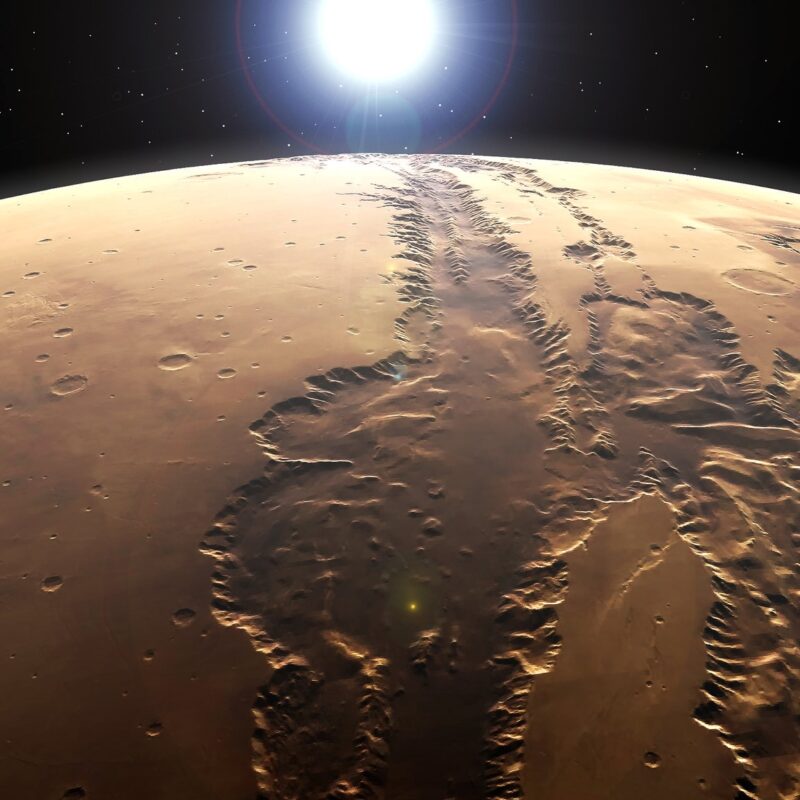
VaMEx төсөл алхах, явах, нисэх чадвартай бие даасан роботуудыг илгээж, Ангараг гарагийн аварга хавцлыг ойроос судлах зорилготой.
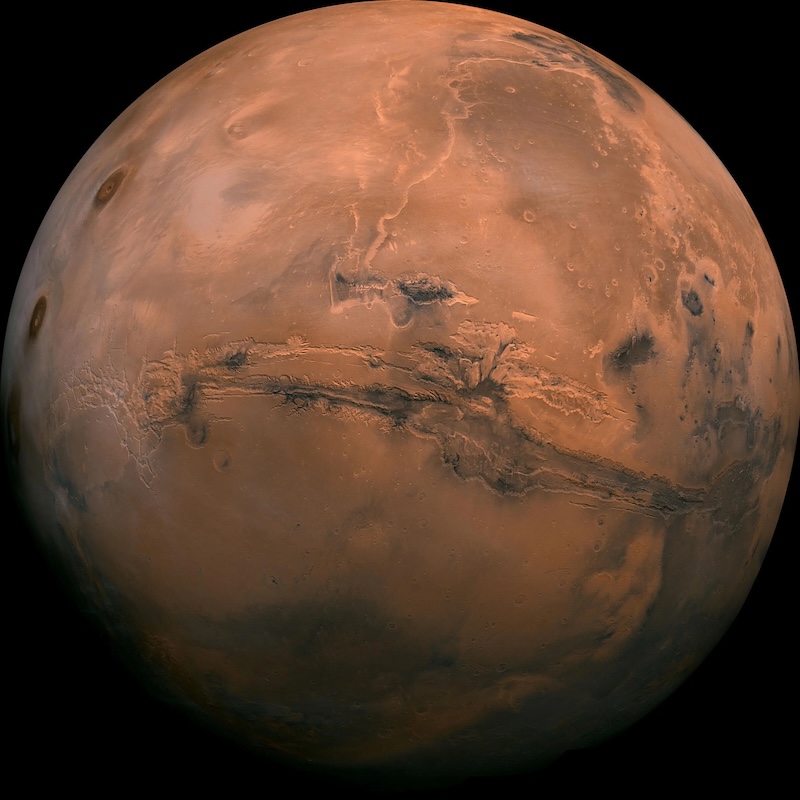
Ангараг гарагийн Вальес Маринерис нь Дэлхийн Их хавцлаас ч том хөндийн систем юм. Германы Сансрын агентлагийн удирдаж буй VaMEx төслийн хүрээнд тэнд бие даан ажиллах явуулын, жолоодлогот болон нисдэг роботуудыг илгээхээр төлөвлөжээ. Вюрцбургийн их сургууль төслийн талаар 2026 оны арваннэгдүгээр сарын 11-нд мэдээлсэн бөгөөд энэ нь хавцлыг ойроос судлах анхны оролдлого болох юм.
2012 онд эхэлсэн төсөл одоо хөгжүүлэлтийн дөрөв дэх шатандаа явж байна. Роботуудын системийн ерөнхий бүтэц, техникийн шаардлага, тоног төхөөрөмж болон программ хангамжийн уялдааг энэ шатанд тодорхойлж байгаа аж. Эгц өндөр хана, бартаатай гадарга бүхий хавцалд роботууд аюулгүй ажиллах нь томоохон сорилт болно; тэд агуй хайж, заримд нь нэвтрэх боломжтой гэж үзэж байна.
Төслийн нэг хэсэг болох SkyCAM нь Ангарагийн тэнгэрийг ажиглаж, аянга, үүл үүсэх, солир зэрэг богино хугацаанд ажиглагдах үзэгдлийг автоматаар илрүүлэхээр бүтээгдэж байна. Уг системийг 2027 оны дөрөвдүгээр сарын 5–18-нд Португалын Монсараз хотод зохион байгуулах AMADEE-27 загварчилсан туршилтын үеэр шалгахаар төлөвлөжээ. Хоёр эсвэл гурван станц тэнгэрийг зэрэг бичиж, хөдөлж буй биетийн зай, хурд, нислэгийн чиглэлийг хэмжихээс гадна роботын навигацид тусална.
Ангараг гарагт GPS шиг навигацын систем байхгүй тул судлаачид од, нар мэдрэгчийн мэдээллийг радио дохиоллын станцуудын байршлын өгөгдөлтэй нэгтгэх систем боловсруулж байна. Хэт өргөн зурвасын технологиор станц хүртэлх зай болон чиглэлийг хэмжиж, роботуудад байршил, явах чиглэлээ бие даан тогтоох боломж олгох зорилготой. Мөн NASA 2028 он гэхэд гурван SkyFall нисдэг төхөөрөмж хөөргөхөөр төлөвлөж байгаа бөгөөд тэд Ангарагийн геологи, цаг уурын түүхийг судална.
Дэлгэрэнгүйг эх сурвалжаас харах
Эх сурвалжийг нээх ↓
- An ambitious collaborative project could one day use walking, driving and flying robots to explore a giant Mars canyon called Valles Marineris.
- The robots would operate autonomously.
- Valles Marineris has never been studied up close before.The robots could explore the canyon system, perhaps even finding currently unknown Martian caves.
Exploring a giant Mars canyon for the 1st time
Valles Marineris is a gigantic canyon system on Mars that dwarfs Earth’s Grand Canyon. And now an ambitious collaborative project, headed by the German Space Agency (DLR), wants to send a swarm of walking, driving and flying robots to explore it. The University of Würzburg in Germany described the project on November 11, 2026. It’d be the first time the vast canyon system has been seen up close.
The initiative is called VaMEx, for Valles Marineris Explorer. Its driving and flying components would be somewhat like NASA’s Perseverance rover and its small helicopter, Ingenuity.
The initiative first began in 2012. It’s now in its 4th development phase. EarthSky previously reported on the mission concept back in 2024.
Flying, walking and driving robots
The robot swarms would be autonomous, meaning they could operate on their own without human help. Some of them would walk, some would drive (like current rovers) and some would fly (similar to the Ingenuity mini-helicopter).
In this new phase of the project, teams are initially involved in defining the overall system architecture, the requirements specifications and the relevant hardware and software interfaces.
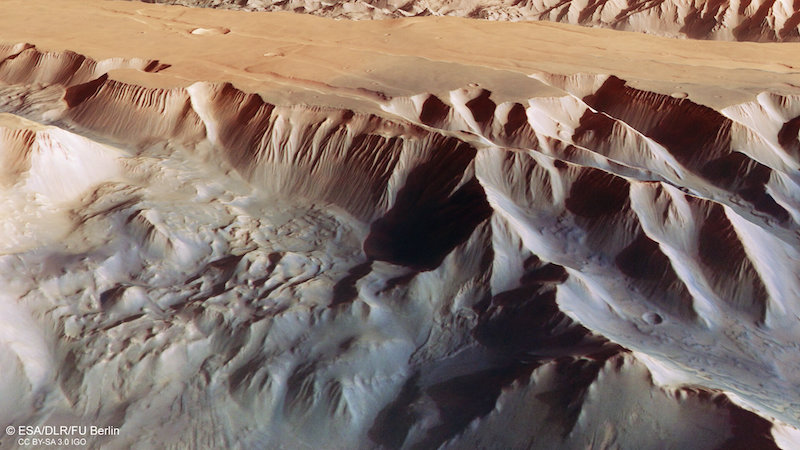
Valles Marineris would present unique challenges that current rovers haven’t yet had to face. The canyon is extremely rugged, with steep, towering walls. The views, of course, would be spectacular. But as with all missions, safety would be paramount, especially when exploring a giant Mars canyon!
The robots could look for, and even enter, caves in the canyon. How cool would that be?
SkyCAM
One of the most interesting and important parts of the project is the SkyCAM camera system. It’s designed to monitor the Martian sky and automatically detect short-lived celestial phenomena such as lightning, cloud formation, meteors or even unidentified anomalous phenomena (UAP) in the sky.
The researchers will test it at the AMADEE-27 analog mission next year. Hakan Kayal at the University of Würzburg in Germany said:
We are now adapting SkyCAM for integration onto the Janus Mars rover and will then prepare the system for deployment on the AMADEE-27 analog mission.
The Austrian Space Forum is conducting that test mission on Earth under conditions that are as close as possible to those on Mars. It’s scheduled for April 5-18, 2027, in Monsaraz, Portugal. Ideally, there will be two or three SkyCAM stations. They will simultaneously record the sky and synchronise with each other.
The photos and videos will be a highlight, of course, but SkyCAM will also measure the distance, speed and flight profile of moving objects. And it will also assist with the navigation of the VaMEx swarm’s robots.
Using autonomous navigation for exploring a giant Mars canyon
The robots are designed to operate on their own. They can navigate without a human on Earth being needed to drive, walk or fly them by sending computer commands to them.
But there are no navigation systems on Mars like GPS, so how will that work?
The researchers are developing a specialized navigation system that combines data from star and sun sensors with position data via a network of radio beacons. The system will use ultra-wideband (UWB) technology both for precise distance measurement and for determining the angles to the respective beacons.
When all of the measurement data is combined, the robots should be able to determine their position and direction of travel autonomously and reliably, even in challenging terrain.
SkyFall Mars helicopters
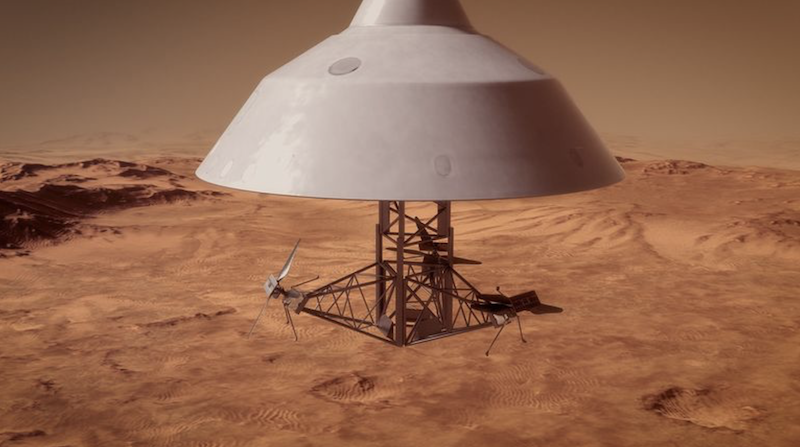
NASA is also developing its own next-generation Mars helicopters, called SkyFall. NASA is aiming to launch them by 2028.
They are similar to the Ingenuity helicopter, but this time there will be three of them. They will investigate the geology and climate history of Mars. Unlike Ingenuity, they will be deployed mid-air. The Space Reactor-1 (SR-1) Freedom, humanity’s first fission-powered interplanetary spacecraft, will deliver them to the Martian atmosphere.
Exploring a giant Mars canyon like Valles Marineris won’t be easy, but it will be exciting. What might these robots discover?
Bottom line: A swarm of autonomous robots could be exploring a giant Mars canyon, Valles Marineris, in the not-too-distant future.
Read more: Exploring Mars’ Grand Canyon, plus a UFO camera for Mars
Read more: See Mars’ Grand Canyon in stunning new photos

