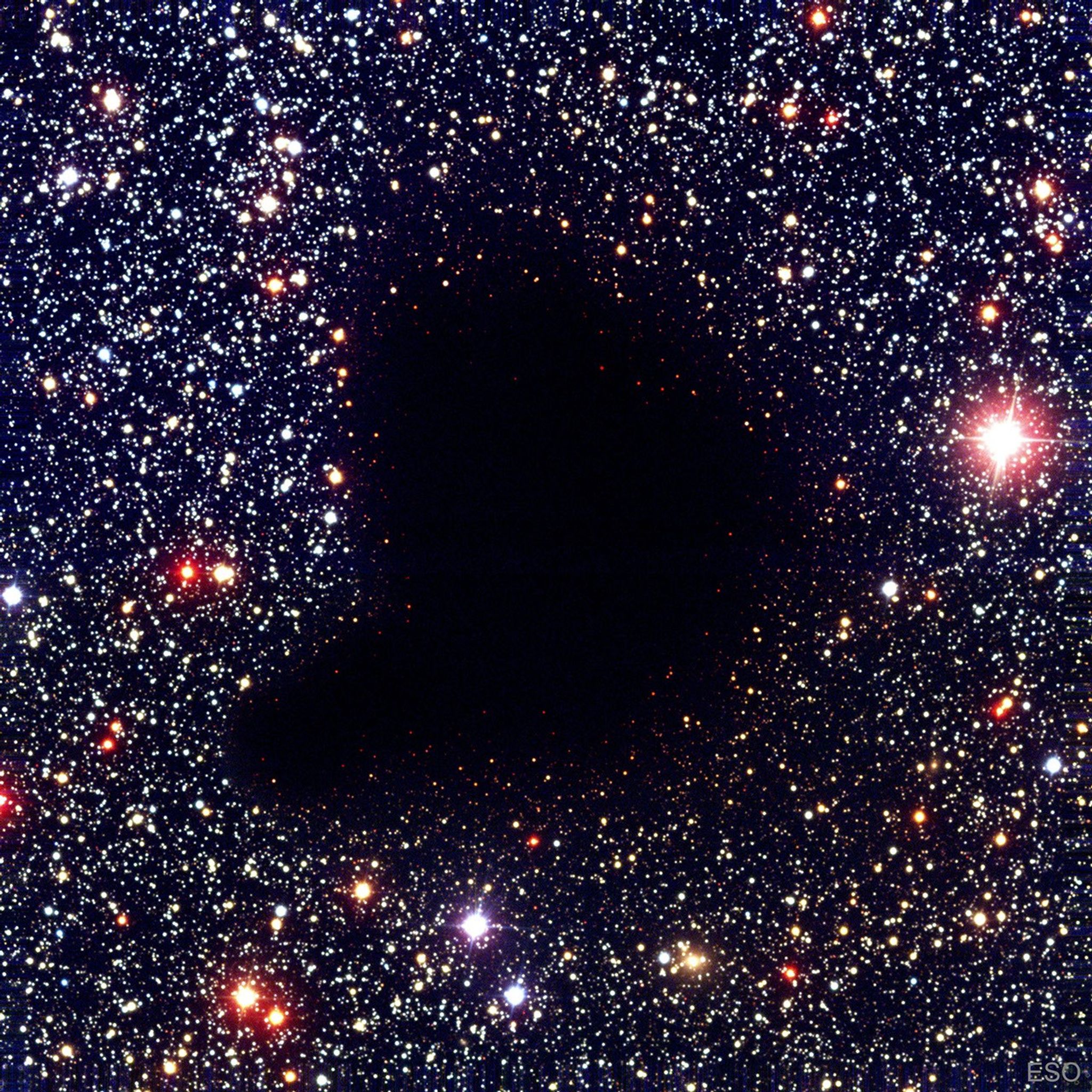
Эрдэмтэд Офиухус буюу Могой баригч одны ордод орших Барнард 68 хэмээх өтгөн тоосонцор, хийнээс бүрдсэн харанхуй мананцарыг судалж байна.
Өмнө нь огторгуйн уудам дахь хоосон нүх гэж андуурч байсан Барнард 68 нь үнэн хэрэгтээ молекул үүл болох нь тогтоогджээ. Энэхүү бүтэц нь тоос, молекул хийн өндөр концентрацитай тул арын одод үзэгдэх гэрлийг бараг бүхэлд нь шингээдэг байна. Ийм харанхуй мананцарууд нь орчлон ертөнцийн хамгийн хүйтэн бөгөөд тусгаарлагдсан орчин юм.
Барнард 68 нь дэлхийгээс 500 орчим гэрлийн жилийн зайд оршдог бөгөөд 0.5 гэрлийн жил орчим хэмжээтэй. Хэдийгээр эдгээр молекул үүл хэрхэн үүсдэг нь тодорхойгүй ч шинэ од бүрэлдэх таатай орчин болдог гэж судлаачид үздэг. Тухайлбал, Барнард 68 нь ирээдүйд нуран унаж, шинэ одны систем үүсгэх магадлалтай болохыг тогтоожээ.
Энэхүү үүлийг харагдах гэрлийн мужид харах боломжгүй ч хэт улаан туяаны долгионы уртад түүгээр шууд нэвтлэн харах боломжтой юм. Судалгааны үр дүн нь од үүсэх явцыг ойлгоход чухал ач холбогдолтой байна.
Дэлгэрэнгүйг эх сурвалжаас харах
Эх сурвалжийг нээх ↓
APOD
Astronomy Picture of the Day
Discover the cosmos! Each day a different image or photograph of our fascinating universe is featured, along with a brief explanation written by a professional astronomer.
Explanation: Where did all the stars go? What used to be considered a hole in the sky is now known to astronomers as a dark molecular cloud. Here, a high concentration of dust and molecular gas absorbs practically all the visible light emitted from background stars. The eerily dark surroundings help make the interiors of molecular clouds some of the coldest and most isolated places in the universe. One of the most notable of these dark absorption nebulae is a cloud toward the constellation of the Snake Carrier (Ophiuchus) known as Barnard 68, pictured here. That no stars are visible in the center indicates that Barnard 68 is relatively nearby, with measurements placing it about 500 light-years away and half a light-year across. It is not known exactly how molecular clouds like Barnard 68 form, but it is known that these clouds are themselves likely places for new stars to form. In fact, Barnard 68 itself has been found likely to collapse and form a new star system. It is possible to look right through the cloud in infrared light.
Tomorrow’s Picture: open space
| Date |
November 29, 2026 |
|---|---|
| Credit | |
| Authors & editors: |
Robert Nemiroff, Jerry Bonnell, Cecilia Chirenti, Keighley Rockcliffe |
| A service of: |
ASD at NASA / GSFC, |

