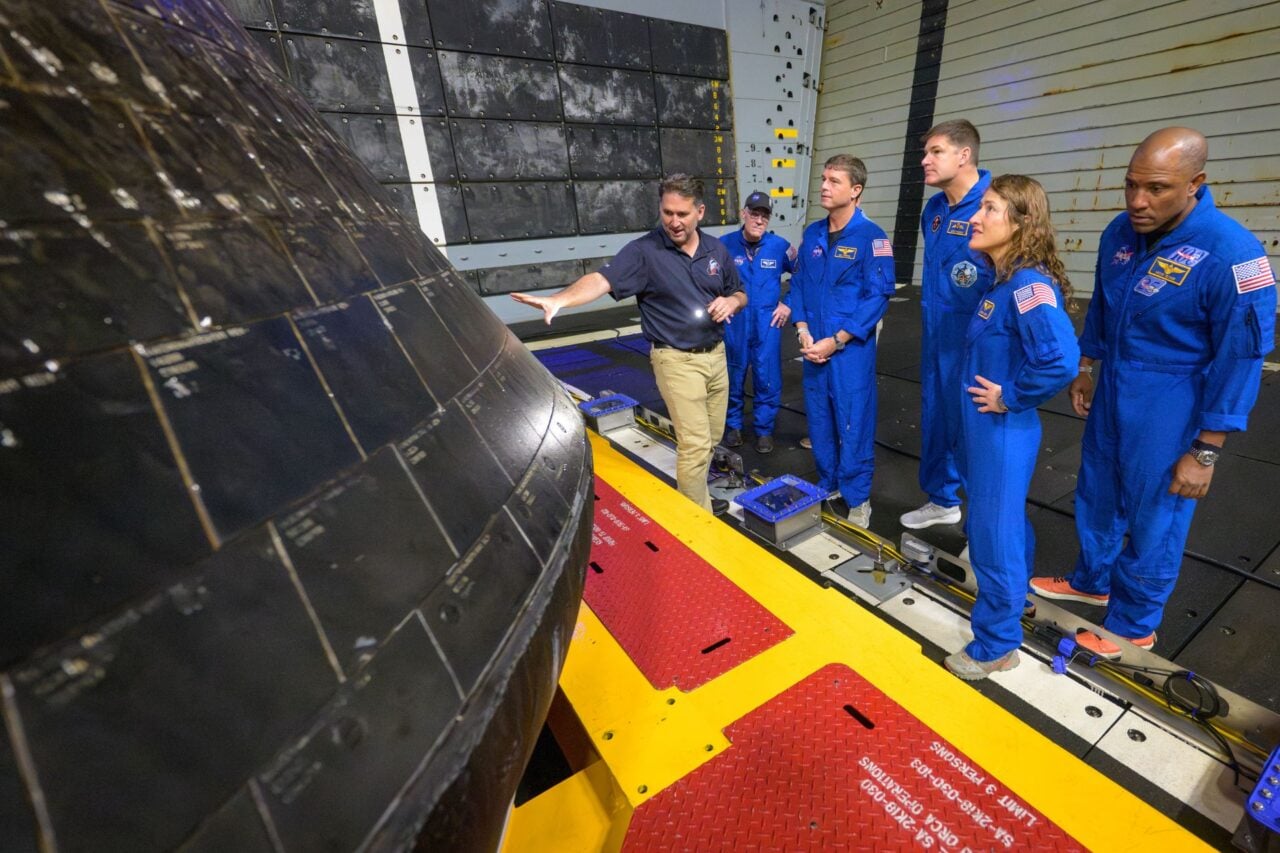
NASA-ийн сар руу чиглэсэн хүн төрөлхтний дараагийн алхам болох Артемис 2 (Artemis 2) төслийн Orion сансрын хөлөг дэлхийд амжилттай эргэн ирсний дараа эрдэмтэд түүний дулаан хамгаалалтын системд эхний үнэлгээг хийлээ.
2026 оны 4-р сарын 10-нд Номхон далайд буусан тус хөлгийн хамгаалалтын бүрхүүл агаар мандалд орж ирэх үеийн асар өндөр хэмийг амжилттай тэсвэрлэж, үүргээ бүрэн гүйцэтгэсэн нь батлагдлаа. Өмнөх Артемис 1 нислэгийн үеэр дулаан хамгаалалтын гадаргуу дээр тооцоолж байснаас илүү их шаталт, материалын алдагдал ажиглагдаж байсан бол энэ удаад NASA-ийн инженерүүд дахин орж ирэх траекторийг өөрчилсөн нь үр дүнгээ өгчээ.
Шинэ аргачлал нь хамгаалалтын гадаргуугийн доор хий хуримтлагдахаас сэргийлж, хагарал болон шаталтыг илт бууруулсан байна. Хөлгийг уснаас гаргасны дараа хийсэн үзлэгээр гадаргуугийн элэгдэл хэвийн түвшинд байсан нь сансрын нисгэгчдийн аюулгүй байдлыг хангахад энэхүү шийдэл зөв байсныг нотоллоо. Нислэгийн дараах зарим гэрэл зураг дээр дулаан хамгаалалтын доод хэсгээс материал алдагдсан мэт харагдсан ч NASA-ийн удирдлага нарийвчилсан судалгаа хийсний үндсэн дээр энэ асуудлыг албан ёсоор няцаасан юм.
Тэдний тайлбарласнаар, усан доорх зурагт үзэгдсэн өнгөний ялгаа нь материалын алдагдал биш, харин дулаан хамгаалалтын компрессийн хэсэгт үүсдэг физик үзэгдэл бөгөөд энэ нь урьдчилсан туршилтуудаар таамаглаж байсан зүйл ажээ.
Одоогоор Orion хөлгийг Marshall сансрын нислэгийн төв рүү шилжүүлээд байгаа бөгөөд ирэх долоо хоногуудад дотоод рентген шинжилгээ болон дээжний лабораторийн судалгааг хийхээр төлөвлөж байна. Энэхүү судалгааны үр дүн нь Orion сансрын хөлгийг ирээдүйн хүнтэй нислэгүүдэд, тэр дундаа саран дээр буух дараагийн даалгавруудад итгэлтэйгээр ашиглах технологийн баталгаа болох юм.
Дэлгэрэнгүйг эх сурвалжаас харах
Эх сурвалжийг нээх ↓
When Artemis 2 came blazing back to Earth on April 10, all eyes were on the Orion spacecraft’s heat shield. This critical hardware, designed to protect the capsule and its crew from the extreme temperatures of atmospheric reentry, didn’t perform as expected during the uncrewed Artemis 1 mission. But this time, it proved itself.
After conducting an initial review of the heat shield, NASA confirmed Monday that it “performed as expected, with no unusual conditions identified.” Underwater photographs taken after splashdown, followed by inspections aboard the recovery ship, showed the abnormal charring that occurred during Artemis 1 was “significantly reduced, both in terms of quantity and size.”
NASA will continue to assess the heat shield’s performance over the coming weeks, but these early findings clearly show a significant improvement between Artemis 1 and Artemis 2.
Case closed on that “missing chunk”
After Artemis 2 splashed down, the spaceflight community was quick to begin its own review of the heat shield based on photos released by NASA. One zoomed-in image that made the rounds on social media appeared to show a large chunk of material missing from Orion’s underside, where the heat shield is located.
Controlled ablation is expected during reentry—that’s how the shield transfers heat away from the capsule. But the photo led some to speculate that this missing chunk was a sign of abnormal ablation. NASA Administrator Jared Isaacman quickly assuaged those concerns in a statement posted on X, and a newly released photo of Orion taken by the dive team now offers a clearer view of the area in question.
A new post-splashdown underwater photo of the Artemis II Orion Integrity capsule heat shield has been released by @NASA
This photo also gives us a clearer view of a particular area of the heat shield that was a concern for some and was later confirmed to have not been liberated… pic.twitter.com/17LBm1WbJH
— Jake (Max-Q) 🏴 (@J_A_Rees_94) April 21, 2026
The image confirms that the discolored patch was not caused by unexpected material loss. In his earlier statement, Isaacman said it aligned with the heat shield’s compression pad area, which behaved as engineers expected based on pre-flight testing, and the photo corroborates that assessment.
A clean slate for Orion
It’s easy to understand why some jumped to conclusions after seeing the initial image.
When Artemis 1 exposed a worrying problem with Orion’s heat shield, NASA opted to modify Artemis 2’s skip-entry trajectory rather than alter the shield’s design. Based on a thorough investigation of the issue, engineers believed this would prevent gas from building up beneath the shield’s outer layer, which is what caused the cracking and abnormal ablation.
Some members of the spaceflight community were skeptical of this fix. Charles Camarda, a retired NASA astronaut, argued that engineers didn’t fully understand the root cause of the Artemis 1 heat shield damage and therefore couldn’t predict how it would perform under a modified reentry profile.
Fortunately, the fix worked. The Artemis 2 astronauts—NASA’s Reid Wiseman, Victor Glover, Christina Koch, and the Canadian Space Agency’s Jeremy Hansen—returned to Earth safe and sound, and NASA’s initial review raises no major concerns about the heat shield’s performance.
Over the next few weeks, the agency will review airborne imagery of Orion captured during reentry to pinpoint exactly when the minimal charring occurred and further assess the heat shield. The capsule will return to the Multi-Payload Kennedy Space Center later this month for additional examination during de-servicing, and over the summer, the heat shield will undergo sample extraction and internal X-ray scans at Marshall Space Flight Center.
While more details about the heat shield’s performance will likely surface from this review process, it’s already clear that it did its job. This achievement will pave the way for Orion to fly future crewed missions to the Moon and beyond.

