Шинэ судалгаанаас үзэхэд АНУ-ын иргэдийн дийлэнх нь тус улс цагаачдад ээлтэй байхаа больсон гэж үзжээ.
АНУ-ын хүн амын дунд явуулсан шинэ судалгаанаас үзэхэд, ихэнх иргэд АНУ цагаачдад ээлтэй улс байхаа больсон гэж үзжээ. Тухайлбал, судалгаанд оролцогчдын зургаан хүн тутмын арав нь өмнө нь АНУ цагаачдад сайхан газар байсан ч одоо тийм биш болсон гэж хариулсан байна. Мөн гуравны нэг нь өөрсдөө эсвэл таньдаг хүн нь цагаачлалын бодлогын улмаас сүүлийн нэг жилийн хугацаанд амьдралынхаа хэв маягийг өөрчилсөн гэжээ. Үүнд цагаачлалын статусаа баталгаажуулах бичиг барих, баривчлагдах, байнга амьдардаг газраасаа гадуур аялах төлөвлөгөөгөө өөрчлөх, ажлаа хийх, сургуульд явах зэрэг өдөр тутмын үйл ажиллагаагаа өөрчлөх зэрэг асуудлууд багтсан байна.
Иргэний эрхийн төлөө тэмцэгчид болон цагаачдын эрхийг хамгаалагчид АНУ-ын Ерөнхийлөгч Дональд Трампын засаг захиргааны үед явуулж буй хатуу цагаачлалын бодлого нь цагаачдад төдийгүй, тэдний гэр бүлийн гишүүд, найз нөхдөд нь ч нөлөөлж буйг онцолж байна. Зарим иргэд өөрсдийн арьсны өнгө нь цагдаагийн байцаалт, шалгалтад өртөх эрсдэлийг нэмэгдүүлж болзошгүй хэмээн үзэж, гадаад пасспортоо байнга авч явдаг болсон байна. Энэхүү хандлага нь АНУ-ын нийгэмд цагаачдад итгэх итгэл, тэднийг хүлээн авах байдал нь улам бүр буурч байгааг харуулж байна.
Судалгаанд оролцогчдын дунд, ялангуяа хийспэник гаралтай иргэдийн дунд энэ айдас их байна. Тэд цагаачлалын бодлогын улмаас амьдралынхаа хэв маягийг өөрчлөхөөс өөр аргагүй болж байгаагаа илэрхийлжээ. Зарим хүмүүс АНУ-д цагаачлан ирж буй хүүхдүүдийг ирээдүйн Америкчууд хэмээн үзэхгүй байгаа нь улсын хөгжилд сөргөөр нөлөөлж болзошгүй гэж үзэж байна. Учир нь хүмүүс өөрсдийн эрхийг баталгаажуулж, тогтвортой амьдрах боломжгүй гэж үзвэл шинэ газар нутагт хөрөнгө оруулж, идэвхтэй оролцохоо болино гэж шинжээчид үзэж байна.
АНУ-ын Дээд шүүх нь эцэг эх нь хууль бусаар оршин сууж байх үед төрсөн хүүхдүүдэд иргэний харьяалал олгохгүй байх тухай Ерөнхийлөгч Трампын засаг захиргааны хүсэлтийг хэлэлцэж эхэлсэн байна. Одоогоор АНУ-ын иргэдийн гуравны хоёр нь АНУ-д төрсөн бүх хүүхдэд автоматаар иргэншил олгохыг дэмжиж байгаа бөгөөд энэ нь АНУ-д төрсөн хүүхдүүдийн иргэншлийн эрхийн талаарх маргааныг улам хурцатгаж байна.
Дэлгэрэнгүйг эх сурвалжаас харах
↓Эх сурвалжийг нээх ↓
<![CDATA[{"className":"sc-1ge0fwe-0","newsletterData":{"regSourceNewsletter":"IND_INSIDE_WASHINGTON","regTitle":"Inside Washington","subscriptionGroup":"inside_washington","subscriptionGroupId":"af764e04-87eb-45e6-a84b-a7455ba70a1e","type":"inside_washington","pathPrefix":"/news/world/americas/us-politics","associatedAuthors":["Eric Garcia","John Bowden"],"title":"Sign up for the daily Inside Washington email for exclusive US coverage and analysis sent to your inbox","mobileTitle":"Get our free Inside Washington email","imageSrc":"https://static.independent.co.uk/static-assets/images/newsletters/insideWashington1_1.png","label":"I would like to receive morning headlines Monday – Friday plus breaking news alerts by email“,”newsletterKey”:”receiveInsideWashingtonNews”,”regSourceSection”:”US politics”,”regSourceMethod”:”NSCs”},”isClimate”:false}]]>
A significant majority of adults in the United States now believe the country has ceased to be a welcoming haven for immigrants, according to a new poll, as aggressive immigration enforcement under the Trump administration has personally affected a substantial portion of the population.
The survey, conducted by The Associated Press-NORC Center for Public Affairs Research, reveals that approximately six in ten Americans feel the nation was once a great place for immigrants but no longer holds that distinction.
The poll also found that about one-third of US adults – a figure rising to more than half among Hispanic adults – report that they, or someone they know, have altered their daily lives over the past year due to immigration concerns.
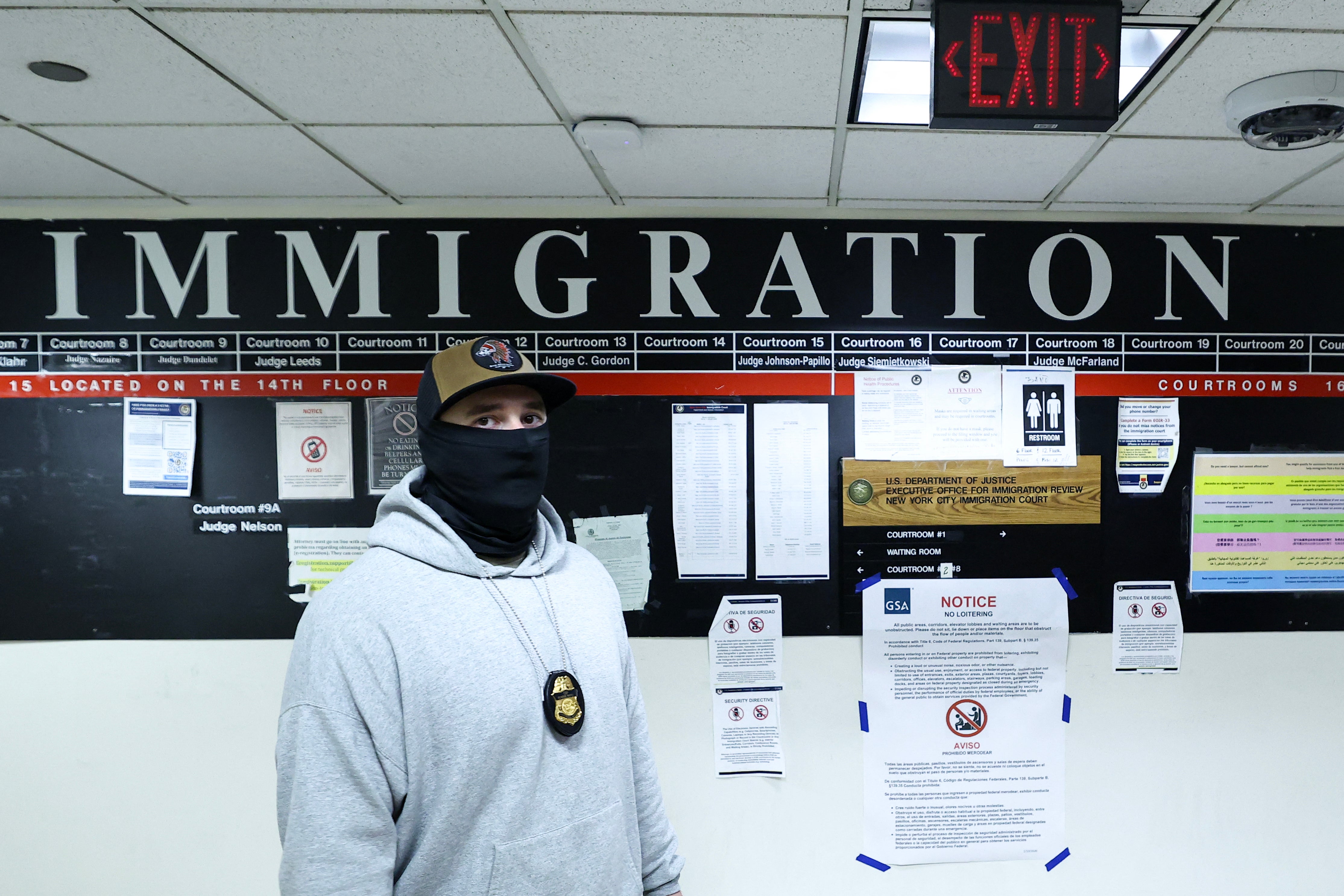
This includes carrying proof of immigration status or citizenship, experiencing detention or deportation, changing travel plans, or significantly modifying routines, such as avoiding work or school, or leaving home.
cookie.trim() === ‘__DEBUG__=true’)) { console.log(‘Ad logs: “mpu1”, injectedAtParagraph: 4’); }]]>
These findings emerge as the Supreme Court deliberates on the administration’s efforts to restrict birthright citizenship, following months marked by widespread immigration enforcement actions and mass deportations.
Reid Gibson, a 72-year-old independent retiree from Missouri, expressed his outrage over the administration’s approach to immigrants.
cookie.trim() === ‘__DEBUG__=true’)) { console.log(‘Ad logs: “taboola-carousel-thumbnails”, injectedAtParagraph: 6’); }]]>
He hopes for a return to a more welcoming America but fears it “may take many years to reverse the damage that the Trump administration has inflicted” with its policies. Mr. Gibson’s own stepdaughter, he noted, has begun carrying her passport out of concern that her darker skin might make her a target during immigration crackdowns. “It’s just plain wrong,” he stated. “This is not a good country for immigrants anymore.”
The poll highlights how deeply these policies have permeated American communities. Democrats are more likely than independents or Republicans to know someone affected, and those with a personal connection are more inclined to believe the US is no longer a great place for immigrants.
cookie.trim() === ‘__DEBUG__=true’)) { console.log(‘Ad logs: “mpu2”, injectedAtParagraph: 8’); }]]>
Kathy Bailey, a 79-year-old Democrat from Illinois, recounted how the administration’s immigration policies have impacted her small-town swim class. She observed that two naturalized US citizens in the class now carry their passports when they leave home.
One of the women, originally from Latin America, is particularly anxious about standing out in a predominantly white community. “She’s an American citizen now, but she’s so scared that she has to carry her passport,” Ms. Bailey said. “She’s just another sweet old grandmother swimming at 5 in the morning.” She added, “This is terrible for these women! I’m just stunned at what we are coming to.”
cookie.trim() === ‘__DEBUG__=true’)) { console.log(‘Ad logs: “mpu3”, injectedAtParagraph: 10’); }]]>
Nick Grivas, a 40-year-old Democrat from Massachusetts, shared that his own grandfather’s immigration from Greece makes him acutely aware of the impact of the president’s policies. This personal history contributes to his belief that the US is no longer a promising destination for those seeking a new life.
“We can see how we’re treating children and the children of the immigrants, and we’re not viewing them as potential future Americans,” Mr. Grivas commented. He worries that federal immigration policies could hinder the country’s growth by discouraging new arrivals from investing in their local communities, especially if they doubt their ability to remain. “You’re less willing to commit to the project if you don’t think that you’re gonna be able to stay,” he explained.
While roughly three in ten US adults still consider the country a great place for immigrants, about one in ten believe it never was. The sentiment that America is no longer great for immigrants is more prevalent among Democrats, independents, and those born outside the US.
The Supreme Court recently heard arguments regarding President Donald Trump’s attempts to restrict birthright citizenship by asserting that children born to parents who are in the country illegally or temporarily are not American citizens.
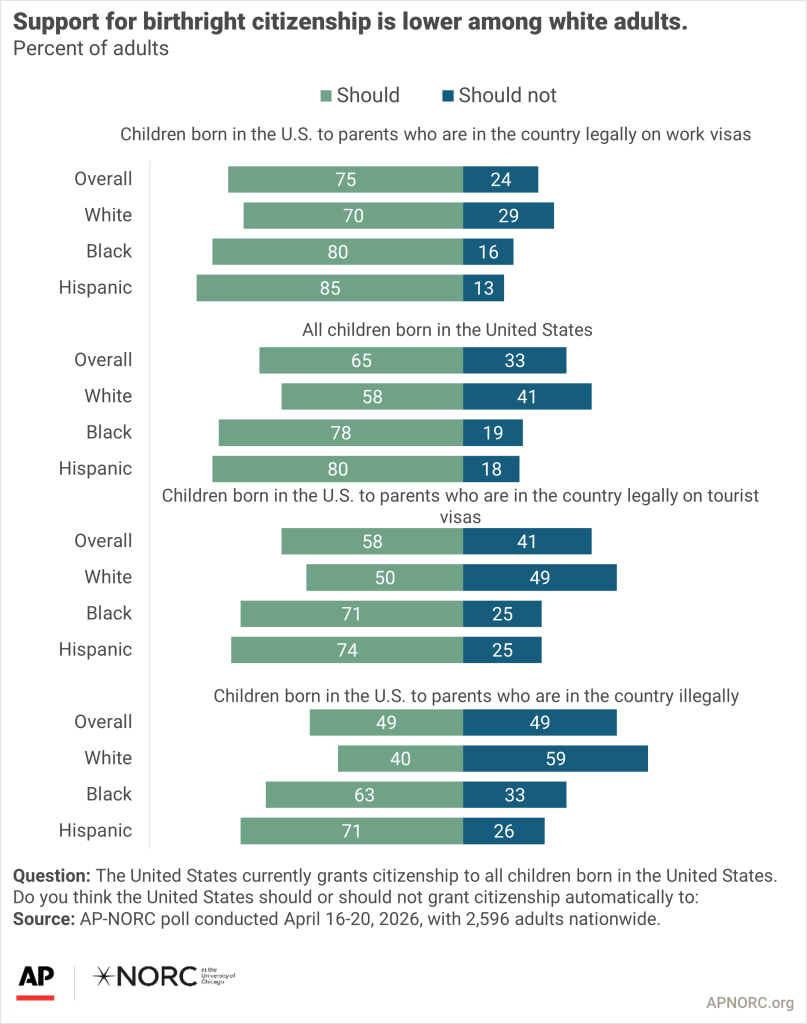
The poll indicates that about two-thirds of US adults support automatic citizenship for all children born in the country, a view largely shared by Democrats and independents. Republican support is lower, at 44 percent. The survey also revealed nuanced opinions, with some individuals supporting birthright citizenship generally but opposing it in specific scenarios.
-agents-patrol-at-Washington-Reagan-Nationa.jpeg)
Linda Steele, a 70-year-old Republican from Florida, objects to automatic citizenship, believing it should only be granted to children born to American citizens. She argues that foreigners living legally in the US, whether for work or other reasons, should not have children who automatically become US citizens. “That shouldn’t be allowed,” she said. “They’re just here visiting or going to school.”
However, when presented with specific circumstances, approximately six in ten US adults support birthright citizenship for children born to parents on legal US tourist visas, while only about half support it for those born to parents who are in the country illegally. Support rises to 75 percent for automatic citizenship for children born in the US to parents on legal work visas, with a notable increase in Republican backing for this particular situation.
Kevin Craig, a 57-year-old from Wilmington, North Carolina, who leans conservative, does not believe citizenship should be automatically granted. He suggests there should be “at least some opportunity for intervention by a human being who can make some sort of a judgment.” Yet, he conceded, “I think my personal opinion is that I can’t think of a situation where it would not be granted.”