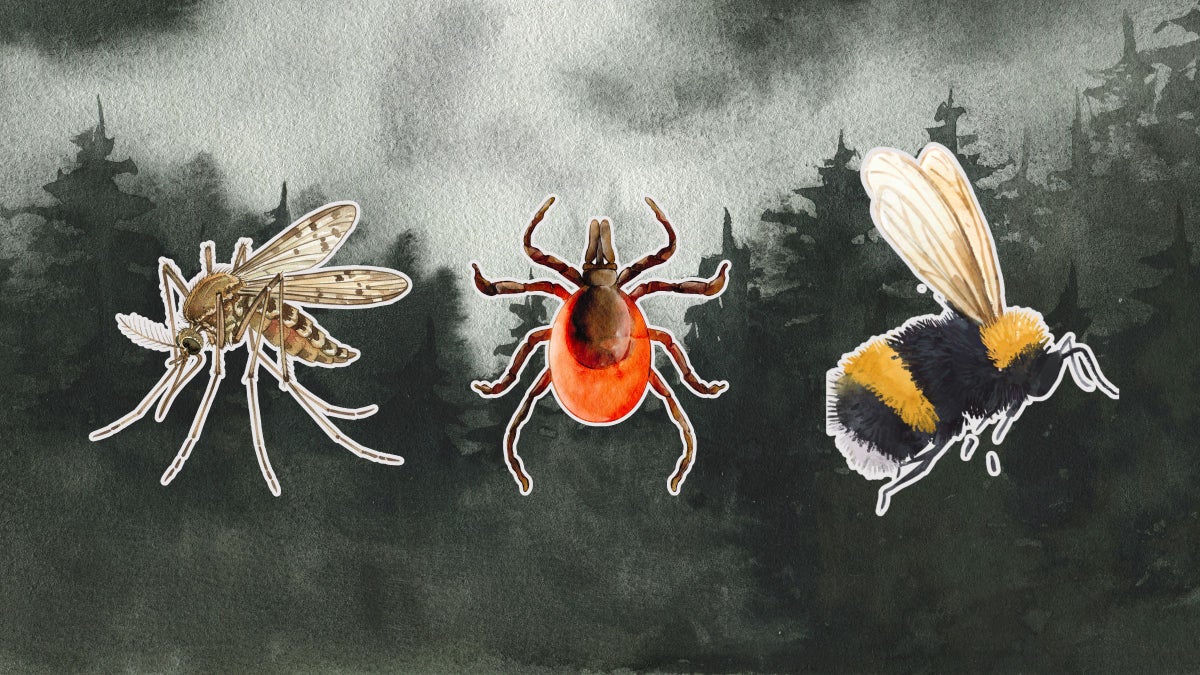
Явган аялал болон байгальд амарч байх үед шавжид хазуулах нь түгээмэл тохиолддог бөгөөд хазуулсан шинж тэмдгээр нь ямар шавж болохыг таньж, зохих арга хэмжээг авах нь чухал юм.
Аялагчдын дунд шумуул нь хамгийн түгээмэл тааралддаг бөгөөд хазсанаас хэдэн цагийн дараа загатнаж, хавдсан товруу үүсгэдэг. Ихэнх тохиолдолд эдгээр нь ноцтой аюулгүй ч, хазуулсны дараа ханиадны шинж тэмдэг илэрвэл эмчид хандах хэрэгтэй. Харин хачиг нь халдвар дамжуулах өндөр эрсдэлтэй тул Lone Star, нохойны хачиг, хар хөлт хачиг зэрэгт онцгой анхаарах шаардлагатай. Хачигт хазуулсан тохиолдолд хачгийг нэн даруй зөв аргаар салгаж, халуурах, үе мөч өвдөх, эсвэл арьсан дээр цагираг хэлбэрийн тууралт гарах зэрэг шинж тэмдгийг 30 хоногийн турш ажиглах нь зүйтэй.
Хөх түрүү, соно, хар ялаа зэрэг нь арьсыг зүсэж хаздаг тул шууд өвдөлт мэдрэгддэг. Эдгээр нь ихэвчлэн халдвар дамжуулдаггүй ч хазуулсан хэсгийг савантай усаар угааж халдваргүйжүүлэх шаардлагатай. Түүнчлэн, “No-see-ums” хэмээх бичил ялаа болон бүүрэг нь бүлэглэн хазаж, хүчтэй загатнуулдаг онцлогтой. Бүүрэг нь халдварт өвчин дамжуулах эрсдэлтэй тул биеийн байдлаа хянах нь чухал.
Шавжид хазуулсан тохиолдолд арьсаа маажиж гэмтээхээс зайлсхийж, хүйтэн жин тавих, стероид агуулсан тос эсвэл антигистамин эм хэрэглэх нь загатнааг намдаахад тусалдаг. Хэрэв хазуулсан хэсэгт хавдар үүсэх, халуурах, дотор муухайрах зэрэг шинж тэмдэг илэрвэл мэргэжлийн эмчид яаралтай хандахыг зөвлөж байна.
Дэлгэрэнгүйг эх сурвалжаас харах
↓Эх сурвалжийг нээх ↓
A hike or going on any outdoor adventure can leave you feeling good-exhausted, at peace, and connected to nature. But you might also end up with a less pleasant souvenir: a gnarly bug bite—or smattering of them.
Figuring out which bite you have can help determine what kind of itching or pain you might expect and whether you need to worry about an insect-borne disease.
“Everyone reacts a bit differently to bug bites, so it’s not always possible to know the culprit just from looking at the bite,” Allison Gardner, a medical entomologist and associate professor of arthropod vector biology at the University of Maine, tells Outside. That said, there are clues in how bites feel, as well as where and how they crop up, that point to one bug versus another.
Read on for a guide to common outdoor-related bug bites, including their infection risk level on a scale of 1 to 3 (1 being harmless and 3 being serious in terms of potential disease transmission and infection risk), plus how to minimize your risk of illness and get relief.
1. Mosquitoes
Infection Risk Level: 1
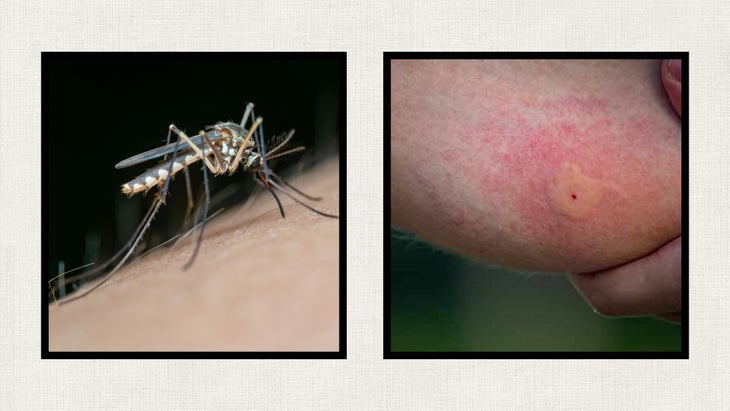
When a mosquito pierces your skin to siphon blood, “it injects what is effectively a numbing agent, so you don’t notice its presence,” Gardner says. It’s only a few hours later that an itchy, puffy bump usually appears, she adds.
“People with skeeter syndrome have an exaggerated allergic response to these bites, so the bump may be bigger, more raised, and intensely itchy,” Dr. Morgan Goheen, a physician scientist who studies mosquitoes and infectious diseases at Yale School of Medicine, tells Outside.
The Centers for Disease Control and Prevention labels most mosquitoes in the U.S. as “nuisance mosquitoes” because while annoying, they don’t typically spread diseases. However, some mosquitoes that are known to transmit illnesses such as Zika, dengue, and chikungunya have been identified in parts of the southern U.S., Goheen says, so be sure to see a doctor if you experience flu-like symptoms after a bite.
2. Lone Star Tick
Infection Risk Level: 3
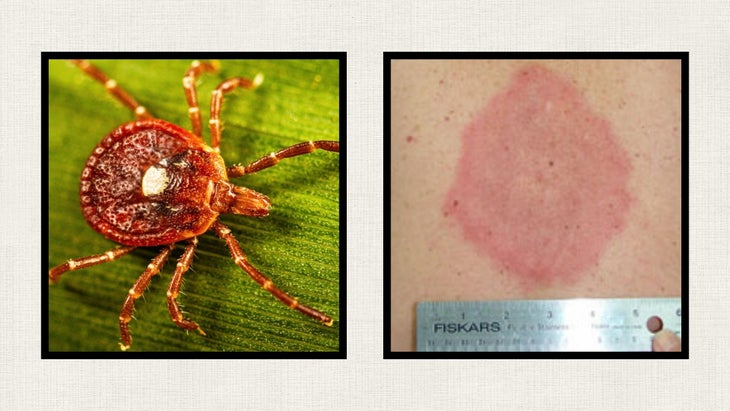
If you were bitten by any type of tick on a hike, you’ll likely spot the tick itself, versus the bite, says Gardner. These insects latch on for hours and up to several days if you don’t pluck them off. The reddish-brown lone star tick gets its name from the white spot on the backs of adult females, Gardner says. (Males have greyish streaks along their edges.)
Lone star ticks can transmit a few diseases—such asehrlichiosis, Heartland virus, and southern tick-associated rash illness (STARI)—and are infamous for triggering alpha-gal syndrome, which prompts a severe allergy to red meat. It’s best to remove the tick ASAP; the longer it’s attached, the greater the chance that it passes along a pathogen, Goheen says. Use tweezers to grab it close to your skin and pull straight up.
Stay vigilant for symptoms that warrant medical care, like fever, vomiting, and muscle or joint pain. With STARI, you may develop a single bullseye-shaped rash at the bite site; the others don’t generally have skin signs, but ehrlichiosis could cause a splotchy or pinpoint rash.
3. American Dog Tick
Infection Risk Level: 3
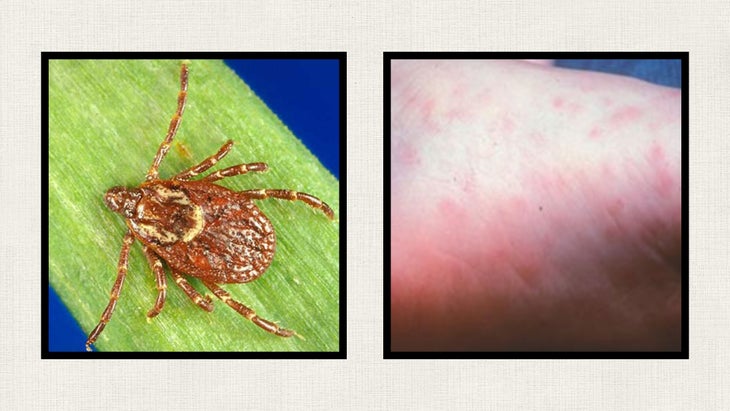
With these ticks, too, you’re bound to spot the bug rather than the bite. Dog ticks are brown and have white striations or a mottled white pattern on their backs, Gardner says. It’s important to pluck them off as soon as you can because they may transmit bacterial infections, namely Rocky Mountain Spotted Fever (RMSF) and tularemia.
RMSF starts with flu-like symptoms and progresses to a rash of tiny purple dots on the hands and feet that spreads toward your trunk, Goheen says. Tularemia typically causes chills, fever, and swollen lymph nodes. If you notice any of these symptoms after a tick bite, you should seek medical attention.
4. Black-Legged Tick (aka Deer Tick)
Infection Risk Level: 3
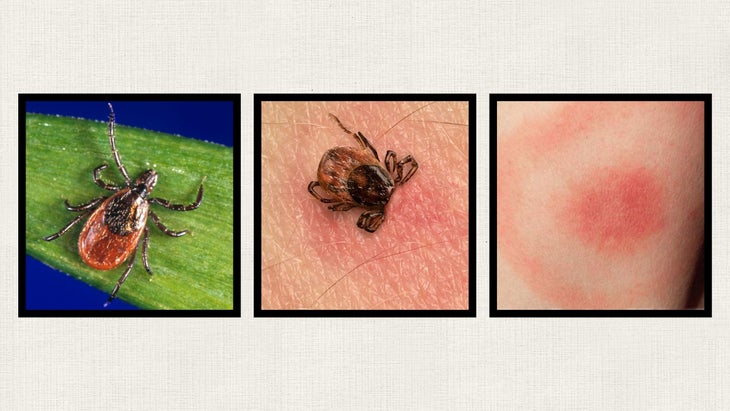
If a black-legged tick nips you during a hike, you’ll probably catch its black legs dangling out of you—that’s its defining trait, Gardner says. These are the ticks that can transmit Lyme disease.
One way to tell if you have Lyme is the hallmark bullseye-shaped rash (which, unlike with STARI, can occur in multiple spots on the body). But also beware: that rash may take up to 30 days post-bite to develop and never occurs at all in some people with Lyme, who may still experience joint pain, fevers, and other flu-like symptoms, Gardner says.
Black-legged ticks can also transmit babesiosis (a disease caused by a parasite that attacks red blood cells) and anaplasmosis (a bacterial disease that’s most commonly contracted in early summer or late fall), among other illnesses, so it’s crucial to remove them swiftly and seek medical care should you experience fever, nausea, aches, fatigue, or any other flu-ish symptoms in the month following a bite.
5. Horseflies
Infection Risk Level: 2
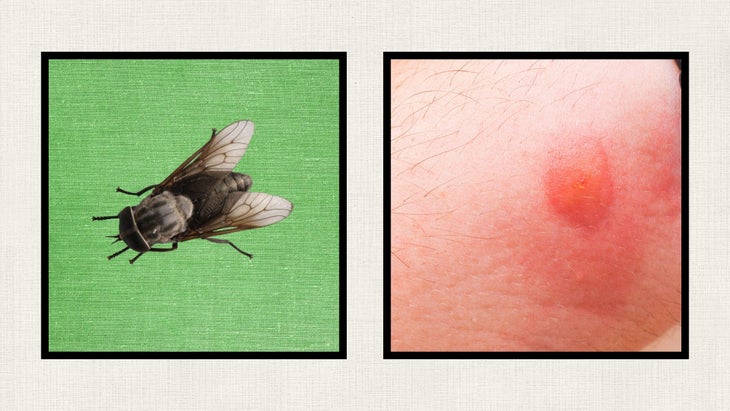
Chances are, you’ll see and feel one of these large—up to one-inch long—bloodsucking flies when it bites you. Different from mosquitoes, their mouthparts function like pincers, which slice skin open versus pierce it, Gardner says. This is immediately painful, like a bee sting, and you might bleed near the bite site before a tender, raised welt forms, she explains.
Though these bites can really hurt, they won’t put you at risk for illness, as horseflies aren’t typically vectors for disease. If your skin does crack open, however, it’s key to wash the area with warm soapy water (or swab it with an alcohol wipe) to keep it from getting infected with the bacteria on your skin, Dr. Shannon Dowler, a North Carolina-based family physician and member of the board of directors of the American Academy of Family Physicians, tells Outside.
6. Deer Flies
Infection Risk Level: 1
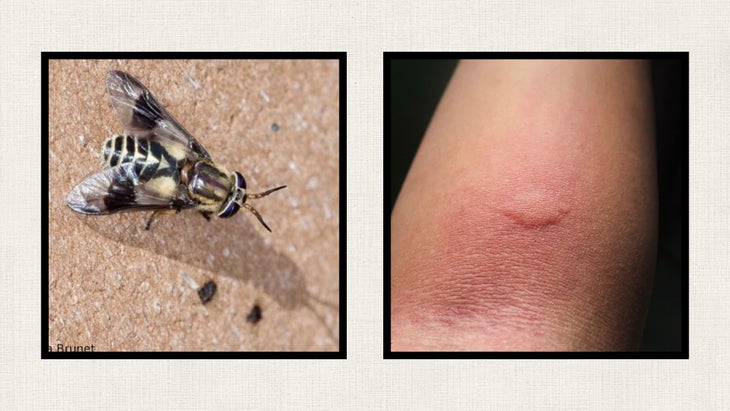
A deer fly bite will look much like that of a horsefly—typically a larger, more swollen welt than a mosquito bite that immediately hurts or stings more than it itches. Deer flies and horseflies are in the same family and bite in a similar fashion, Gardner explains. A deer fly is about half the size of a horsefly and may be more likely to bite your face, other parts of your head, and shoulders.
The bite site could bleed (be sure to disinfect it if so), and the area surrounding it could get puffy and tender, but as with horsefly bites, there’s little risk of catching a disease from a deer fly bite.
7. Blackflies
Infection Risk Level: 2
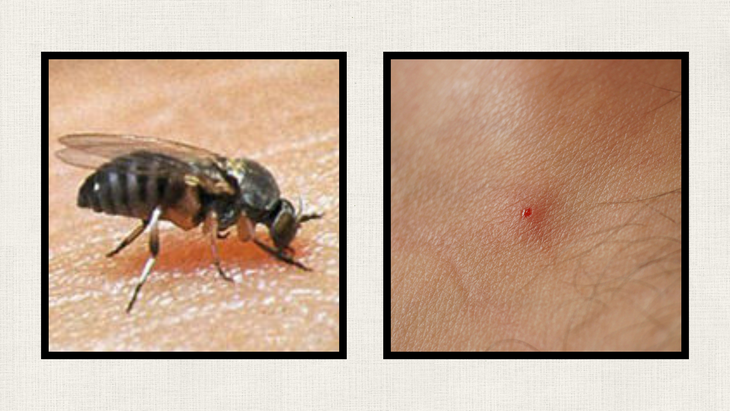
Bites from blackflies, aka buffalo gnats, are very similar to mosquito bites, Gardner says, in that they typically form reddish, itchy bumps. But these flies feed more like deer flies and horseflies, so you could feel them as they bite you—it may just be a prick versus full-fledged pain because these are smaller in size, Gardner says. It’s common to wind up with multiple blackfly bites at once, and they can become extremely itchy with time.
The good news is, blackflies don’t transmit infectious diseases to humans in the U.S. But some people can develop a collection of symptoms known as “blackfly fever,” an allergic reaction to the flies’ saliva that involves fever, nausea, and swollen lymph nodes. Should these symptoms crop up, see a doctor.
8. Chiggers
Infection Risk Level: 1
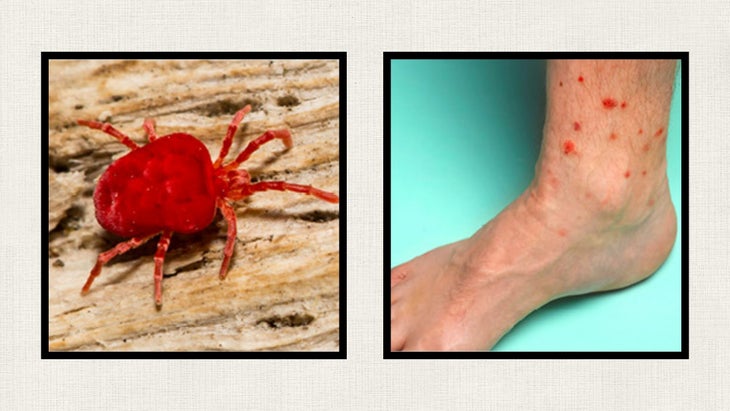
There’s a common myth that these microscopic mite larvae burrow into skin—but in reality, they cling on temporarily, use an enzyme to liquify and consume skin cells, and then drop off. The intensely itchy rash that crops up in their wake is a reaction to the leftover enzyme.
The bites can look like a constellation of little red dots or hives that may turn into blisters, Gardner says, and they typically occur on the ankles and in skin folds, like behind the knees or where clothing is tight to the body, like the waist. Chiggers have not been found to transmit diseases to people in the U.S., so their bites don’t pose a long-term threat.
9. Fleas
Infection Risk Level: 2
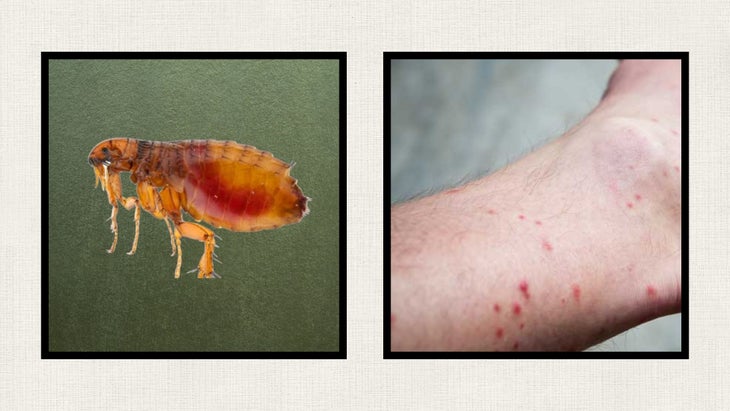
The same bugs you might associate with your pets can also feed on human blood, leaving behind small reddish or discolored bumps that typically occur in clusters or lines of three, called the “breakfast, lunch, and dinner sign.” These wingless insects do not fly but instead leap onto people and pets, so their bites are often on the lower legs and ankles. They resemble small mosquito bites, are very itchy, and may blister.
While flea-borne diseases are rare in the U.S., these bugs can transmit bacteria such as those that cause typhus (which can be cured with antibiotics) and plague. These illnesses can manifest with fever, chills, nausea, and weakness, among other symptoms, and require prompt medical care.
10. No-see-ums
Infection Risk Level: 1
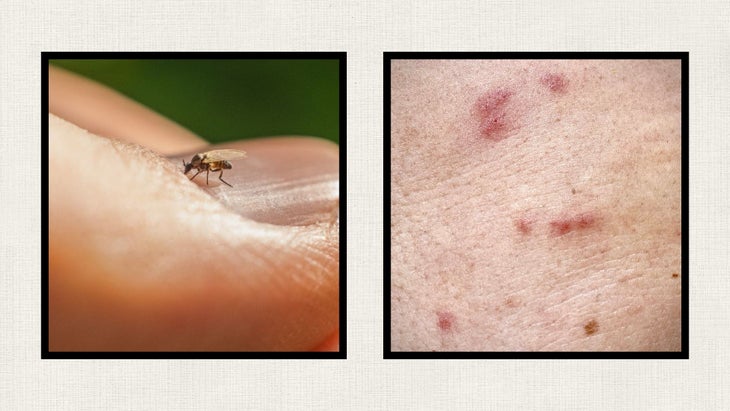
These blood-sucking flies are tiny (hence their name) but slice open skin much like their larger fly counterparts, creating immediately painful, itchy welts. Also known as biting midges or sand flies, no-see-ums typically swarm around the ankles, back of the neck, and other exposed areas, leaving behind random clusters of bites. Though no-see-ums have been linked to cases of Oropouche virus (a flu-like illness) in South and Central America, they’re not known to spread disease in the U.S.
What to Do When You Spot a Bug Bite or Rash After Being Outdoors
If it’s a tick bite, removing the bug and monitoring for flu-like symptoms is critical. If a black-legged tick feeds long enough to get engorged (several hours), see your doctor. They may recommend a prophylactic dose of doxycycline to prevent Lyme disease, Goheen says.
For other bites, do your best to avoid scratching aggressively, Dowler says, which could introduce bacteria from your skin or fingernails into the bite site and trigger an infection.
And make sure to treat any symptoms, Dowler says. If you’re itchy, she recommends applying a cool compress. Over-the-counter (OTC) topical steroid creams like hydrocortisone can be soothing, and if the welts are very swollen, an OTC antihistamine (e.g., Benadryl or Zyrtec) can lessen the severity of the reaction, she says. Calming agents like calamine lotion or aloe vera can also alleviate itch, and if pain is the problem, she adds, acetaminophen or ibuprofen is your best bet.
Want moreOutsidehealth stories?Sign up for the Bodywork newsletter.
The post If You’re Not Sure What Bit You On Your Last Outdoor Adventure, Compare Your Bite or Rash with the Pictures in Our Ultimate Bug Guide appeared first on Outside Online.

