Миннесотагийн их сургуулийн судлаачид амьд организмын оролцоогүйгээр, химийн бүрэлдэхүүн хэсгүүдээс бүрдсэн анхны “SpudCell” нэртэй зохиомол эсийг бүтээж, түүний амьдралын бүрэн мөчлөгийг ажиглажээ.
Энэхүү эс нь 90 килобазаас бүрдэх геномтой бөгөөд өмнө нь амьд эсэд шаардлагатай гэж үздэг байсан хамгийн бага хэмжээнээс ч бага үзүүлэлт юм. Судлаач Кейт Адамалагийн тайлбарласнаар, уг эс нь бодисын солилцоо, өсөлт болон хуваагдал зэрэг амьд организмын үндсэн шинжүүдийг химийн аргаар бүрэн дуурайлган үзүүлж чадсан байна. Энэ нь амьдралын үндсэн үйл явц ямар нэгэн “нууцлаг хүч” шаарддаггүй болохыг баталж буй чухал нотолгоо юм.
Гэсэн хэдий ч SpudCell нь олон үе дамжин үржих, хувьсан өөрчлөгдөх чадваргүй тул шинжлэх ухааны зарим хүрээлэлд үүнийг жинхэнэ биологийн амьд организм гэж үзэхэд эргэлзээтэй байгаа аж. Эсийн бүтэц нь өөх тосон бүрхүүл буюу липосом болон долоон плазмид ДНХ-ээс бүрдэх бөгөөд уургийн илэрхийллийн системээр дамжуулан гадны тэжээлийг ашиглан хуваагддаг байна.
Энэхүү судалгаа нь амьдралын үүсэл болон хил хязгаарыг судлахад чухал ач холбогдолтой юм. Ирээдүйд ийм төрлийн зохиомол эсийг эм бэлдмэл, биоматериал болон бусад ашигтай химийн нэгдлүүдийг үйлдвэрлэх “бичил үйлдвэр” болгон ашиглах боломжтой гэж эрдэмтэд үзэж байна. Одоогоор уг судалгааны үр дүн хянан магадлагаанд ороогүй байгаа бөгөөд “Biotic” байгууллагын цахим хуудсанд урьдчилсан байдлаар нийтлэгджээ.
Дэлгэрэнгүйг эх сурвалжаас харах
↓Эх сурвалжийг нээх ↓
Scientists from the University of Minnesota say they have created the first-ever synthetic cell built entirely from scratch, and seen it go through an entire ‘life’ cycle – including reproduction.
“This is likely the most exciting project I’ve ever worked on,” says synthetic biologist Kate Adamala, a co-lead on the project.
“We’ve replicated in chemistry what only used to be possible in biology: the complete set of behaviors of a cell. It proves that the most fundamental functions of life, like growth and replication, do not need a mysterious magical spark.”
The project is called SpudCell, and it has a genome of just 90 kilobase pairs (kbp). For comparison, the human genome is about 3 million kpb, and biologists previously assumed that a living cell would require at least 113 kpb of genetic data to function properly.
According to Adamala and her colleagues, SpudCell appears to stretch these limits, though their research is yet to be formally published and has not been peer-reviewed.
But it has been shared on the website of a new nonprofit bioengineering institution Adamala has helped found, Biotic.
According to Science magazine, SpudCell has met some hurdles in publication: apparently one reviewer at Cell, a prestigious science journal, said the project was not real biology.
That might be partially because SpudCell doesn’t quite meet the requirements for real ‘life’: it can’t replicate itself over many generations, and so it also can’t evolve.
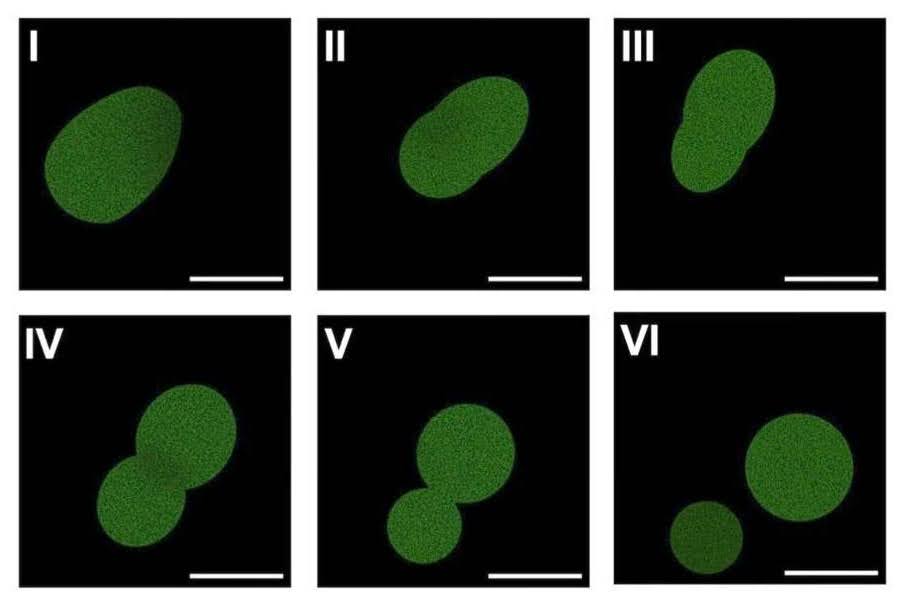
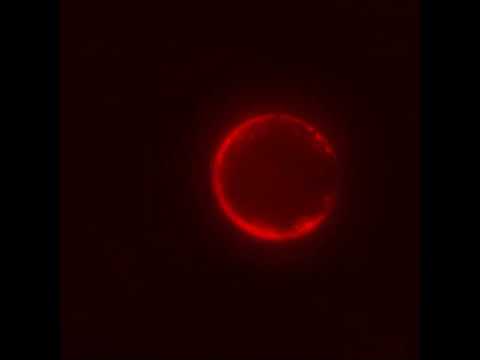
Each artificial SpudCell consists of a liposome – a sphere of fats that mimics the outer membrane of a real cell – wrapped around seven plasmids, small units of DNA (often found in bacteria) that are a bit different from the chromosomes you might be familiar with.
Together, these seven plasmids make up the SpudCell genome, all 90 kbp of it.
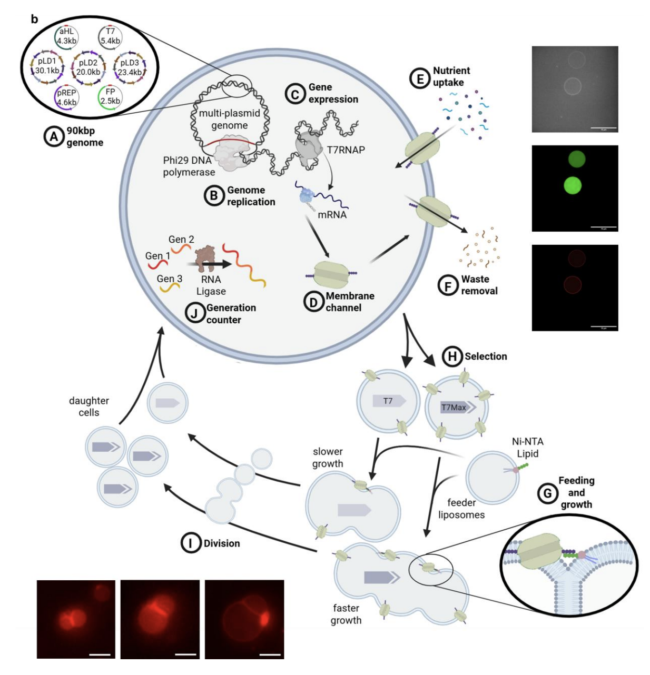
The ‘cell’ is also equipped with an in-built ‘protein expression system’, which translates the DNA’s genetic instructions into action. That’s what allows the ‘cell’ to turn the nutrients it absorbs from the surrounding liquid into useful materials, and enables cell division.
According to the researchers, the SpudCell system is capable of “selection, genome replication, growth, resource acquisition via feeding, and genetically encoded division.”

You might be wondering, why do scientists want to make artificial cells from scratch in the first place?
Aside from probing the fundamental question of where the threshold for life really sits, future synthetic cell-like systems could potentially be designed to act like mini biological factories, pumping out organic materials such as drugs, biomaterials, chemicals, and other useful stuff.
Labs already use genetically modified bacteria and other microbes in this way, and it’s also similar to how medical-grade insulin is produced.
A fully synthetic cell may allow for efficiencies and specificities that surpass existing biotechnologies.
They may also prove less helpful than nature’s own designs.
Currently, SpudCells don’t last more than a few generations. They can’t actually produce their own protein expression system, nor can they regulate their metabolism, so they rely entirely on substances and components in the liquid medium in which they float.
Related: Scientists Have Just Created The Most Synthetic Life Form Ever
The blobs also lack a cytoskeleton, the internal scaffolding that props up natural cells. This simplifies things, but it also means they can’t shuttle materials around or clear waste.
But what they do provide is a proof-of-concept that we will keep a close eye on in the coming years.
The research has not yet been peer-reviewed, but a preprint is available on Biotic’s website.