
Италийн IRCCS San Raffaele Scientific Institute-ийн судлаачид үүдэл эс шилжүүлэн суулгах арга нь нейромиелит оптика (NMO) өвчтэй өвчтөнүүдэд урт хугацааны эерэг үр дүн үзүүлж болохыг тогтоожээ.
Нейромиелит оптика нь хүний дархлааны систем өөрийн эсүүд рүүгээ дайрснаар тархи болон нугасны туслах эсүүдийг (astrocyte) устгадаг, хүнд хэлбэрийн аутоиммун өвчин юм. Одоогийн эмчилгээний аргууд өндөр өртөгтэй, үр дүн тааруу, дахилт өгөх эрсдэлтэй байдаг. Судлаачид 28 настай хоёр өвчтөнд донорын үүдэл эс шилжүүлэн суулгах (alloHCT) аргыг ашиглан дархлааны системийг бүхэлд нь шинэчилж, өвчин үүсгэгч эсрэг биетийг (AQP4-IgG) устгах туршилт хийжээ.
Туршилтад оролцсон өвчтөнүүдийг 15-16 жилийн турш ажиглахад, тэдний дархлааны систем тогтворжиж, өвчин үүсгэгч эсрэг биетүүд бүрэн алга болсон байна. Эрэгтэй өвчтөний мэдрэлийн үйл ажиллагаа сайжирч, хэвийн амьдралдаа эргэн орсон бол эмэгтэй өвчтөний амьдралын чанар дээшилж, эм тариа хэрэглэх шаардлагагүй болжээ. Энэхүү эмчилгээ нь өвчнийг удаан хугацаанд хяналтад байлгах боломжтойг харуулж байна.
Гэсэн хэдий ч энэ арга нь эрсдэлтэй бөгөөд дархлааны систем дарангуйлагдах үед хүндрэл үүсэх магадлалтай. Эрдэмтдийн тэмдэглэснээр, энэхүү эмчилгээг зөвхөн уламжлалт аргад үр дүн өгөхгүй байгаа, хүнд хэлбэрийн NMO өвчтэй, сонгогдсон залуу өвчтөнүүдэд анхааралтай хэрэглэх шаардлагатай. Судалгааны үр дүнг Med сэтгүүлд нийтэлжээ.
Дэлгэрэнгүйг эх сурвалжаас харах
↓Эх сурвалжийг нээх ↓
The severe and aggressive autoimmune disease known as neuromyelitis optica (NMO) just met a new match.
Without treatment, NMO can lead to serious disability, as rogue antibodies (AQP4-IgG) destroy the astrocyte support cells in the brain and spinal cord.
Therapies do exist to manage the condition, but they’re expensive, not always effective, and come with risks of their own – and relapses are common.
Enter the allogeneic hematopoietic cell transplantation (alloHCT), which has led to extremely positive results after the treatment of two individuals, as reported by researchers from the IRCCS San Raffaele Scientific Institute in Italy.
It works by using donor stem cells from another person, which are then deployed to reboot the patient’s immune system and reprogram it to stop fighting against itself.
Both patients were 28 when treated – and the results have been incredible.
“Over more than 15 years of follow-up, both patients remained relapse-free without ongoing immunosuppression, accompanied by enhanced quality of life and the disease-driving antibodies permanently disappearing,” write the researchers in their published paper.
“Their new immune systems remained stable and showed features consistent with improved immune regulation.”
The male patient has improved in terms of neurological function, and has fathered two children since the alloHCT treatment. He’s now “resumed a normal life”, in the words of the researchers.
While the change hasn’t been as dramatic in the female patient, she has “achieved a good quality of life”, with no need for further medication. She has also been able to regain some use of her arms.
“To date, no approved therapy allows patients to remain treatment-free while maintaining sustained disease control and complete disappearance of pathogenic antibodies,” write the researchers.
The alloHCT approach has previously been used to treat conditions such as cancer and sickle-cell disease, and has been tried against NMO a small number of times before, but this is the longest follow-up of alloHCT patients with NMO reported to date, at 15 and 16 years.
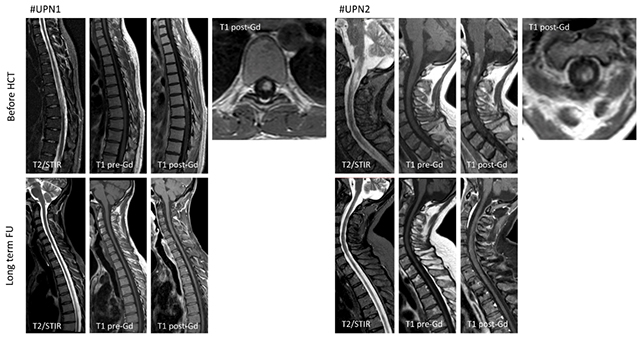
Before the stem cells were transplanted, the man and women were given the chemotherapy drugs fludarabine and treosulfan, to flush out the immune system’s B cells ready for a reset. These B cells produce the AQP4-IgG antibodies that attack astrocytes.
As the healthy donor cells are added to the bloodstream, they multiply and rebuild the body’s defenses from scratch – without the rogue AQP4-IgG attackers.
It’s a drastic option, and a lot can go wrong as the immune system powers down and powers back up again.
But as this study shows, if done carefully, it can overcome the damaging grip of neuromyelitis optica. Bear in mind that these patients were selected because previous treatment approaches hadn’t worked.

“In this evolving therapeutic landscape, alloHCT should be considered within a balanced, individualized risk-benefit framework,” write the researchers.
“Its use is best reserved for carefully selected younger patients who are intolerant to standard therapies and present with aggressive, treatment-refractory disease or concomitant autoimmune conditions.”
The extended follow-up time for this particular study is evidence of the long-lasting effects of the procedure, even if we are talking about a small sample size of just two people.
It is risky, however. After the alloHCT, the man developed a chronic immune deficiency requiring ongoing antibody supplementation, and had a bout of swollen lymph nodes that resolved on its own, while the woman developed a bladder cancer that was surgically treated.
The cause of the man’s condition remains unexplained, and neither complication was proven to be directly due to the transplant. The researchers are keen to learn more about how this treatment option might stand up against other emerging approaches.
Related: Nightmares May Have an Eerie Link to Autoimmune Disease
We’re now seeing a variety of immune system ‘reset’ treatments appear, backed by science, either using donor cells or those from the patients themselves. As improvements are developed for the way these treatments are administered and the risks minimized, it’s a promising route to explore.
“These findings suggest that, in selected cases, immune system replacement may achieve long-term disease control and possibly a cure, although larger studies are needed to confirm safety and identify appropriate candidates,” write the researchers.
The research has been published in Med.
This article was fact-checked by Kate Mallord and edited by Peter Dockrill. While we pride ourselves on our process, we are only human. If you spot a mistake, please let us know.


