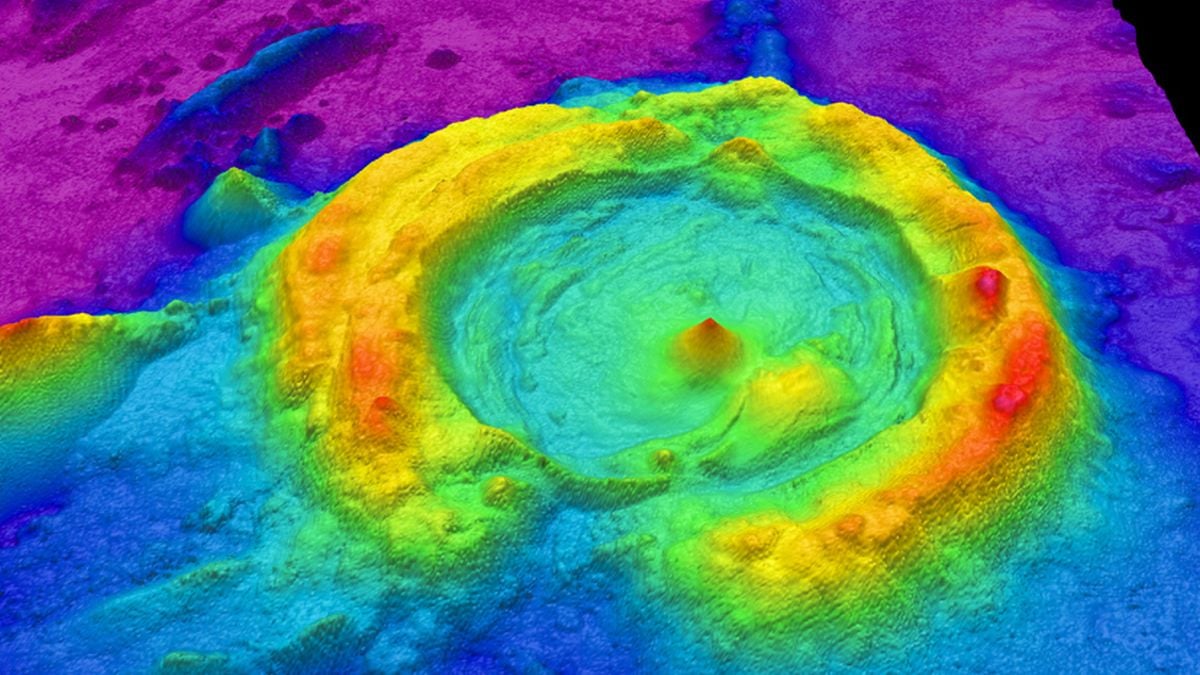
Эрдэмтэд хиймэл оюун ухааны тусламжтайгаар далайн гүнд нуугдаж байсан галт уулын 73 тогоог шинээр нээсэн нь дэлхийн галт уулын идэвхжилийг судлах ажилд чухал ахиц болж байна.
Францын Парис-Саклэ их сургуулийн галт уул судлаач Андреа Веролино болон түүний багийнхан далайн ёроолын топографийн зураглалд хиймэл оюун ухааны алгоритм ашиглан судалгаа явуулжээ. Анх Ангараг гарагийн мөргөлдөөний тогоог илрүүлэхэд ашиглаж байсан энэхүү технологийг далайн ёроолын батиметрийн зураглалд тохируулан ашигласнаар өмнө нь бүртгэгдээгүй байсан олон арван галт уулын тогоог олж илрүүлсэн байна.
Галт уулын тогоо (caldera) нь магмын камер хоосорч, газрын гадаргуу дотогш шигдэн унах үед үүсдэг асар том хотгор юм. Эдгээр нь цунами, үнсэн бүрхүүл, агаарын даралтын хүчтэй долгион үүсгэх эрсдэлтэй байдаг тул эрдэмтэд 2022 онд Тонга арлын ойролцоо болсон хүчтэй дэлбэрэлтийн дараа далайн ёроолын галт уулын аюулгүй байдлыг үнэлэх зайлшгүй шаардлага тулгарсан гэдгийг онцолжээ.
Судалгааны багийнхны мэдээлснээр, шинээр илрүүлсэн тогоонуудын ихэнх нь тектоник хавтангуудын зааг дээр бус, харин далайн доторх уулын гинжин хэлхээ зэрэг дотоод бүсэд байрлаж байна. Уг судалгааны үр дүн нь далайн ёроолын галт уулын эрсдэлийг үнэлэх, дэлхий дахины бэлэн байдлыг сайжруулахад чухал суурь мэдээлэл болох юм.
Энэхүү шинэ нээлт нь өмнө нь бүртгэгдсэн далайн доорх галт уулын тогоонуудын тоог гурав дахин нэмэгдүүлж байна. Судлаачид эдгээр тогоо бүрийг идэвхтэй эсэхийг бүрэн тогтоогоогүй ч, цаашид нарийвчилсан ажиглалт хийх шаардлагатайг анхааруулжээ.
Дэлгэрэнгүйг эх сурвалжаас харах
↓Эх сурвалжийг нээх ↓
Deep beneath the ocean waves, dangers lurk.
Not from cryptic monsters like the kraken, but from powerful forces reshaping the ocean floor itself.
Most of Earth’s volcanic activity takes place underwater. Yet the scars those volcanoes leave behind have remained largely hidden.
Now, through an AI-assisted search of the seafloor, a team led by volcanologist Andrea Verolino of Paris-Saclay University in France has identified 73 previously unknown volcanic calderas hidden beneath Earth’s oceans.
Calderas are vast crater-like depressions left when a volcano empties enough of its underground magma chamber for the ground above to collapse in on itself. Some are long extinct, but others mark volcanic systems that could erupt again.
“Our dataset,” writes the team in an early-access paper published in Communications, Earth & Environment, “fills a major observational gap and provides a reproducible, upgradeable framework for submarine volcano characterization, underscoring the need to incorporate submarine calderas into future global volcanic assessments.”
Most of Earth’s volcanic activity takes place beneath the sea, where tectonic plates are constantly pulling apart, colliding, and sliding beneath one another. These restless boundaries allow magma to rise toward the surface, building volcanoes across the ocean floor.
Most of that submarine volcanic activity consists of relatively gentle basaltic eruptions along spreading ridges – but every now and then, things get a little bit more dramatic.
Submarine calderas can generate enormous eruptions, tsunamis, shock waves, ash plumes, and tremendous amounts of steam as they explode deep under the ocean.

The 2022 Hunga Tonga-Hunga Haʻapai event, an explosive eruption from an undersea caldera in the Tongan archipelago, was something of a wake-up call. It produced atmospheric pressure waves that reached space, widespread tsunamis, and damage thousands of kilometers away.
If we don’t know where submarine calderas are, we can’t know which ones deserve closer monitoring. Yet before this survey, fewer than 30 had been documented beneath the oceans.
To address this gap in our knowledge, Verolino and his colleagues adapted an algorithm that was originally trained to detect impact craters on Mars, and applied it to bathymetric maps – those that record the topography of the seafloor.
The algorithm initially flagged 87,435 possible formations.
Most of those were false alarms. By applying a series of filters and then manually inspecting the remaining candidates, the researchers narrowed their final list down to 78 likely calderas.
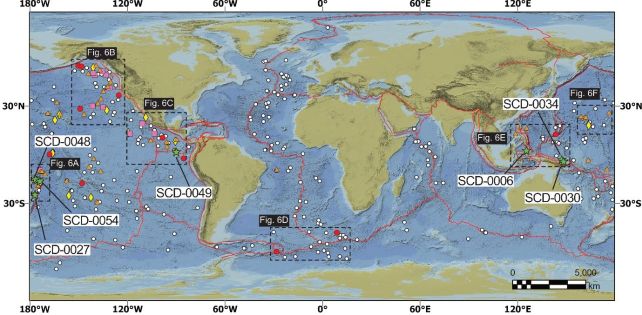
Five of the candidates were already recognized as submarine calderas, lending confidence that the method can successfully identify real examples.
This means that the researchers found 73 possible calderas that we didn’t know about before. If confirmed, their discovery would more than triple the number of known submarine calderas – and the algorithm may be refined to find even more in the future.
The discoveries also reveal where submarine calderas are most likely to occur.
Eight of the newly found features were at mid-ocean ridges at the boundary between two tectonic plates.
Nine were identified in volcanic arcs.
And a whopping 61 were found in interior tectonic settings, such as seamount chains, rather than at tectonic boundaries.
The researchers also highlighted seven of the newly identified calderas as especially worthwhile targets for future exploration because their location, water depth and shape suggest they could be important for understanding submarine volcanic hazards.

It’s important to note that the paper did not assess whether any of these calderas are currently active.
However, several recent studies have found that even volcanoes we think are extinct may be quietly refilling with magma and may become active in the future.
Related: A Giant Seismic Wave Bounced Off Earth’s Core And May Have Shifted Japan
So it’s important to know where these locations are and make a closer examination of the ones that could cause the most disruption.
“This study lays a critical foundation for evaluating submarine volcanic risks and improving global preparedness,” the researchers write.
“Our aim is not to produce a complete global inventory of submarine calderas, but to establish a transparent and reproducible framework that yields a conservative baseline dataset, which can be expanded as higher-resolution bathymetry and future studies become available.”
The research has been published in Communications Earth & Environment.
This article was fact-checked by Jess Cockerill and edited by Clare Watson. While we pride ourselves on our process, we are only human. If you spot a mistake, please let us know.

