Найруулагч Кристофер Ноланы бүтээл “Одиссей” киноны жүжигчдийн бүрэлдэхүүн болон соёлын өвийг дүрсэлсэн байдал нь олон улсад, ялангуяа АНУ-ын консерватив хүрээнийхний дунд шүүмжлэл дагуулаад байна.
Найруулагч Кристофер Ноланы шинэ бүтээл болох “Одиссей” кино баасан гарагт нээлтээ хийх гэж байна. Мэтт Дэймоны гол дүрд нь тоглосон энэхүү кино нь Гомерын туульсаас сэдэвлэсэн боловч жүжигчдийн сонголт, ялангуяа Тройн Хелений дүрд хар арьст жүжигчин Лупита Нионгог сонгосон нь АНУ-ын зарим улс төрчид болон Илон Маск нарын зүгээс шүүмжлэлд өртөв. Тэд үүнийг түүхэн үнэнийг гуйвуулж, улс төрийн үзэл суртал шингээсэн хэмээн буруутгаж байна.
Грекийн соёлын салбарынхан болон олон нийтийн хувьд энэ асуудалд харьцангуй тайван хандаж байна. Грекийн Соёлын сайд Лина Мендони төрөөс уран бүтээлчдийн бүтээлч байдалд хөндлөнгөөс оролцож, дүрд хэнийг тоглуулахыг заах эрхгүй гэдгийг мэдэгдэв. Тус улсын иргэд өмнө нь ч гадны жүжигчид Грекийн түүхэн дүрүүдийг бүтээж байсан туршлагатай тул энэ нь шинэ зүйл биш гэж үзэж байгаа юм.
Грекийн “Ники” нам зэрэг цөөн тооны улс төрийн хүчин засгийн газраас уг кинонд 6 сая еврогийн татаас олгосныг эсэргүүцэж, татвар төлөгчдийн мөнгийг “woke” буюу орчин үеийн нийгмийн идэвхтнүүдийн үзэл суртлыг түгээхэд ашиглалаа хэмээн шүүмжилсэн байна. Гэсэн хэдий ч эрдэмтэн судлаачид “Одиссей” бол цаг хугацааны туршид хувьсан өөрчлөгдөж ирсэн, хүн төрөлхтний нийтлэг соёлын өв болохыг онцолж, кино бүтээлийн үнэ цэнийг үзэгчид өөрсдөө дүгнэх ёстой гэж байр сууриа илэрхийлжээ.
Дэлгэрэнгүйг эх сурвалжаас харах
↓Эх сурвалжийг нээх ↓
Moviegoers across the world are waiting in anticipation at Christopher Nolan’s “The Odyssey” opens on Friday.
But what about where the movie is set? What do Greeks actually think of the movie?
Conversation about adaptations often revolves around how closely they follow a source text. But in a country where Homer’s story is taught and retold at all schools, many point to how the epic has been kept alive for nearly 3,000 years: not despite reinvention, but because of it.
“What we want children to understand is that every new creation is exactly that — a new creation,” Filippos Mantzaris, who teaches “The Odyssey” to seventh graders, said.
The film, starring Matt Damon as King Odysseus and a number of Hollywood stars, follows Homer’s outline: The king’s return home from war through gods and monsters to find a palace overrun by rivals.

In seventh grade, “The Odyssey” is taught in all Greek classrooms.
In Mantzaris’ class, students eagerly debate Odysseus’ encounters with monsters and other adventures. They are taught to compare the hero’s intelligence with his strength, ask whether revenge is moral, whether the battle-hardened king is truly a role model, and whether his killing of his wife’s suitors is justified. Role-playing exercises encourage children to imagine what they would do in Odysseus’ place.
“It’s an amazing literary text, with which children can identify, perhaps see Odysseus in themselves, but also see their own homeland,” Mantzaris said.

Kyriakos Agapiou, 12, said reading the poem in Mantzaris’ class taught him: “That everything is possible and we should never give up.”
Farm scientist Nikos Varelas attended a stage adaptation with his 4-year-old son, after the pair read youth versions of both “The Iliad” and “The Odyssey” together.
“It is our duty as parents, as Greeks,” Varelas said.
Interpreting the story as theater, said actor Manos Pintzis, who portrayed Odysseus in the local production, helps children discover mythology in a way books alone cannot.
“You don’t tell a child, ‘Just read the story because you have to,’ because the child will resist when something is forced on them,” Pintzis said. “When the child sees all of this unfolding before their eyes — that becomes a valuable step toward learning, to willingly learn what they’re expected to study.”
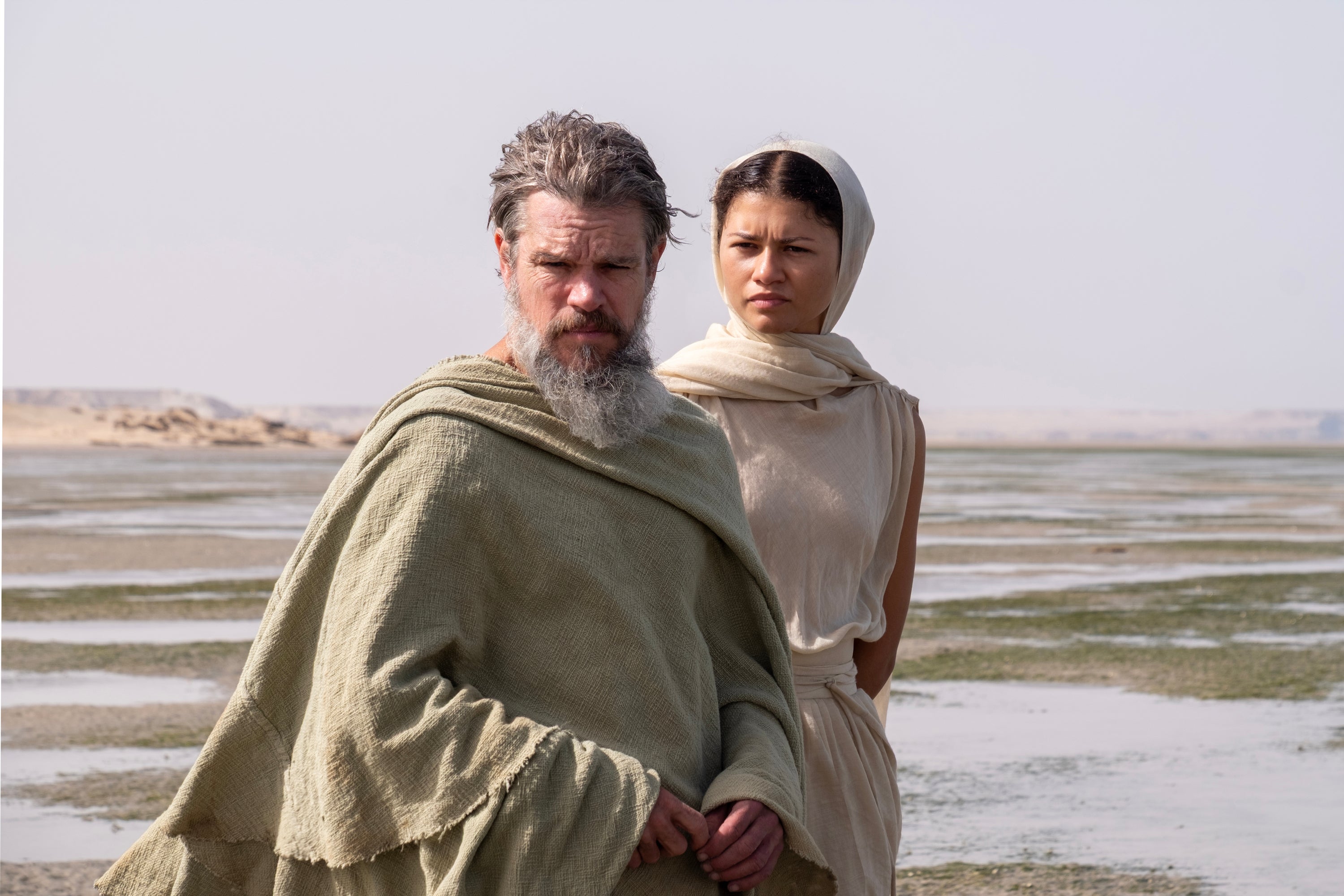
In conservative circles in the U.S., much of the attention has focused on Nolan’s casting choices rather than his adaptation of Homer’s story.
Elon Musk claimed Nolan had desecrated “The Odyssey” after Black actor Lupita Nyong’o was picked as Helen of Troy — despite not having seen the movie. Conservative commentators including Matt Walsh argued the film prioritized identity politics, echoing past fan criticisms of sci-fi and fantasy reboots that cast Black and Latino actors as beloved characters of a different race or ethnicity.
In an interview with The Telegraph, Nolan said backlash “comes with the territory,” adding “these conversations that happen before people see the film — they’re always irrelevant, because no one having them knows what the film actually is yet.”

Nolan told the AP he wanted to make the film accessible and relatable, and “not look back to sort of past Hollywood versions of how to take on the ancient world.”
“You want to question people’s assumptions about how things should be portrayed in movies and what those are based on,” he said of his overall approach to the film. “There’s a challenge to that and a risk to that. But my hope is that by creating a cohesive world, people understand the world as they watch the movie and they feel they understand it.”
The controversy hasn’t found much purchase in Greece, where people are used to foreigners playing ancient Greeks.
Scotsman Gerard Butler bellowed “This is Sparta!” as King Leonidas in “300.” Oklahoma-born Brad Pitt played Achilles in “Troy.” Ireland’s Colin Farrell starred as Alexander the Great alongside Angelina Jolie as his mother.
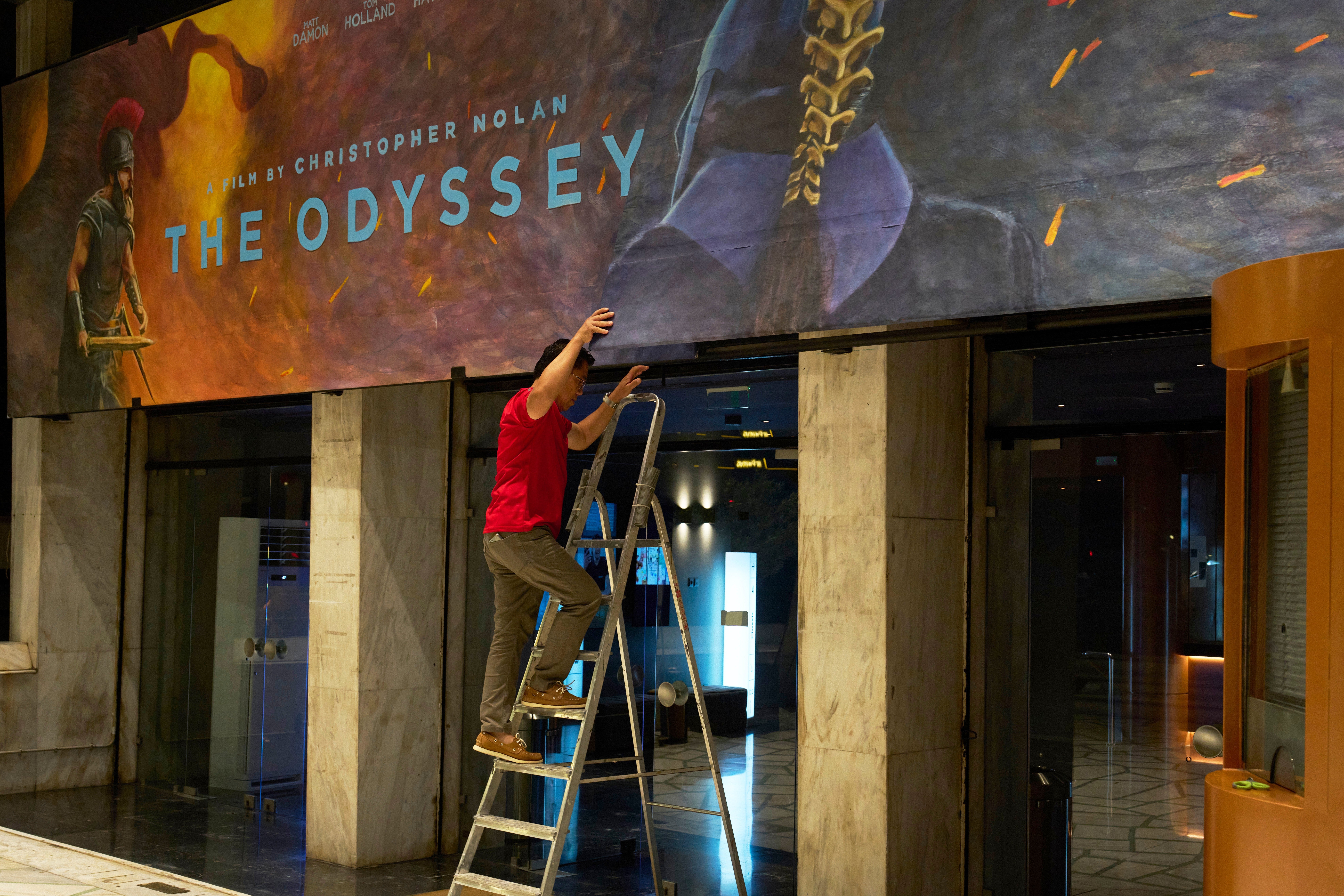
Anthony Quinn’s performance in “Zorba the Greek” way back in 1964 remains one of Greece’s most beloved screen portrayals of a Greek character.
Nolan’s version continues the tradition with a star-filled cast including Nyong’o, Damon, Tom Holland, Anne Hathaway, Robert Pattinson, Zendaya and Charlize Theron, with narration from rapper Travis Scott.
In Greece, the small nationalist party Niki objected to the casting and a Greek government decision to provide roughly 6 million euros ($6.9 million) in subsidies to support local production. The party said Greek taxpayers were funding an imposition of “woke-type ideology” on Greek history and cultural identity, citing Musk.
Culture Minister Lina Mendoni offered a blunt rebuttal.
“It is not the state’s role to dictate to a creator how they should artistically interpret a work or a myth,” she told the Greek popular culture magazine, Lifo. “Can we seriously be having a conversation about whether the

Christos Tsagalis, professor of ancient Greek literature at the Aristotle University of Thessaloniki, said it’s ultimately up to moviegoers to judge whether the latest interpretation of “The Odyssey” works. What matters, he said, is whether it captures something fundamental about one of history’s great stories.
Homer’s works — retold and reinterpreted across generations — have endured by becoming universal, he said.
“I think it’s wonderful that something that is created at a specific point in time by a given people is shared by so many people across the globe … It’s shared culture,” Tsagalis said.
“It’s a fascinating story,” he said. “It is like a movie.”