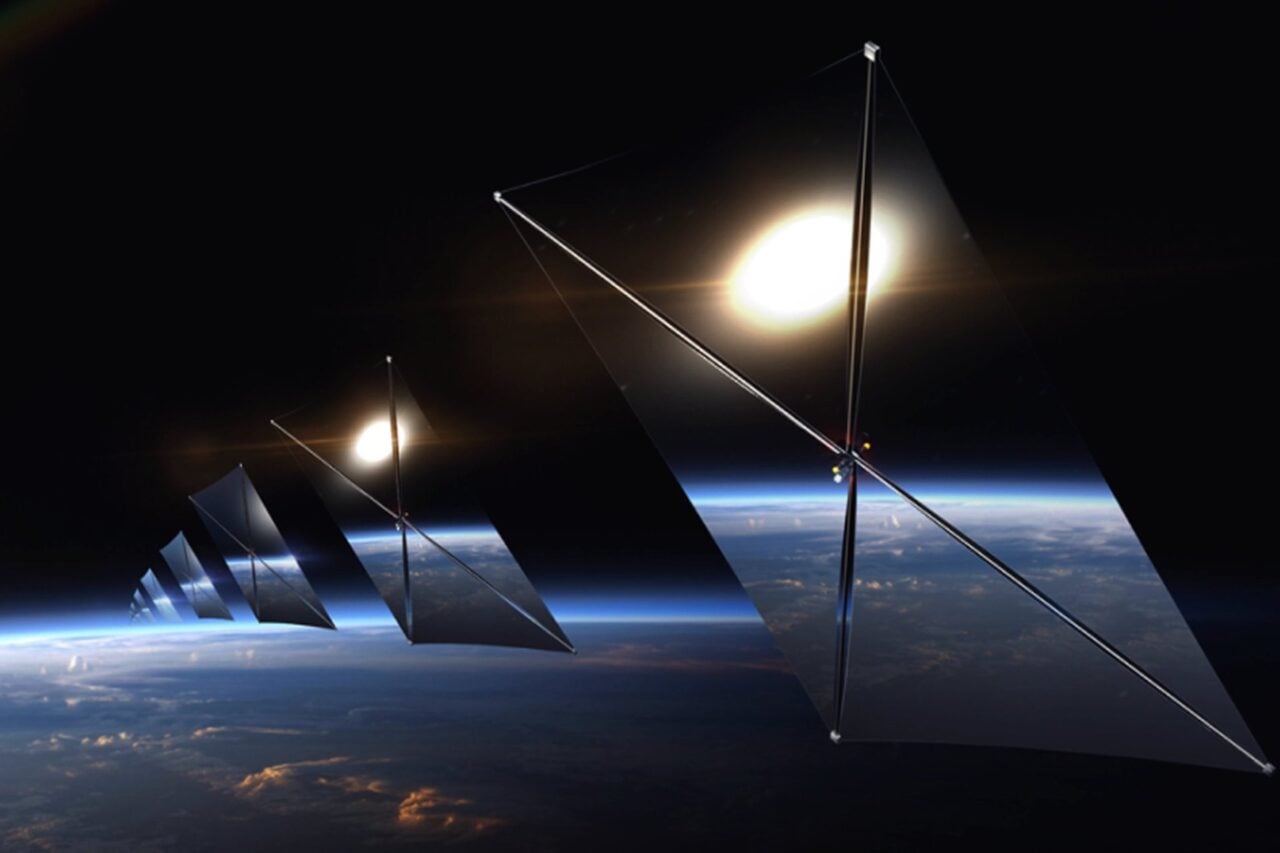
Калифорнийн “Reflect Orbital” гарааны компани сансраас нарны гэрлийг ойлгох замаар дэлхийн харанхуй хэсгийг гэрэлтүүлэх туршилтын хиймэл дагуул хөөргөх зөвшөөрлийг АНУ-ын Харилцаа холбооны хорооноос (FCC) авлаа.
“Reflect Orbital” компани энэ онд “Earendil-1” нэртэй 18 метр урт хальсан толь бүхий туршилтын хиймэл дагуулыг нам орбитод хөөргөхөөр төлөвлөж байна. Энэхүү технологи нь нарны гэрлийг тодорхой цэг рүү ойлгон, 5 км хүртэлх талбайг гэрэлтүүлэх зорилготой юм. Ингэхдээ тус толь нь бүтэн сарны гэрлээс 3-аас 46 дахин илүү хүчтэй буюу 0.8-2.3 люкс эрчимтэй гэрэл үүсгэх тооцоотой байна.
Тус компани уг технологийг байгалийн гамшиг, эрэн хайх аврах ажиллагаа, хөдөө аж ахуйн бүтээмж болон аж үйлдвэрийн үйл ажиллагааг дэмжихэд ашиглах зорилготой байгаагаа мэдэгджээ. Хэрэв туршилт амжилттай болбол ирээдүйд 50,000 хүртэлх толь бүхий хиймэл дагуулын цуглуулга үүсгэхээр төлөвлөж байна.
Гэвч энэхүү төсөл нь одон орон судлаачдын дунд ихээхэн болгоомжлол төрүүлээд байна. Европын өмнөд одон орон судлалын төвийн (ESO) тайланд дурдсанаар, ийм олон тооны толь нь сансрын ажиглалтын камеруудын дүрслэлийг бүрэн алдагдуулах эрсдэлтэй гэжээ. “DarkSky International” байгууллага ч мөн уг системийг хэрэгжүүлэхийн өмнө байгаль орчны нарийвчилсан үнэлгээ хийхийг шаардаад байна.
Компанийн зүгээс одон орон судлаачидтай нягт хамтран ажиллаж, шаардлагатай үед гэрлийг унтраах, чиглэлийг өөрчлөх бүрэн хяналттай ажиллахаа мэдэгдлээ. Гэсэн хэдий ч АНУ-ын Харилцаа холбооны хороо (FCC) одон орон судлалд үзүүлэх нөлөөллийн асуудал нь өөрсдийнх нь эрх мэдлийн хүрээнд хамаарахгүй бөгөөд зөвшөөрөл олгоход саад болохгүй гэсэн байр суурьтай байна.
Дэлгэрэнгүйг эх сурвалжаас харах
Эх сурвалжийг нээх ↓
California startup Reflect Orbital received clearance to launch its first satellite, aiming to build a constellation to illuminate dark areas with in-space mirrors.
The Federal Communications Commission (FCC) granted approval for the launch of Reflect Orbital’s prototype satellite, which will test the ability to reflect sunlight down to Earth after dark. The satellite is set to launch to low Earth orbit later this year, where it is designed to deploy a 59-foot (18-meter) film reflector.
If proven successful, Reflect Orbital has plans to deploy up to 50,000 in-space mirrors mounted on satellites to create sunlight after dark. Its proposed constellation raises concerns over disrupting astronomers’ views of the cosmos.
Sunlight after dark
The California-based startup applied to launch a 59-foot-long (18-meter-long) prototype satellite named Earendil-1 to test its idea: bouncing sunlight off a mirror and reflecting it onto a designated area.
Through its proposed constellation, Reflect Orbital envisions being able toilluminate areas up to 3 miles (5 kilometers) at a time with intensities ranging between 0.8 and 2.3 lux. By comparison, a full Moon provides an illumination of around 0.05 to 0.3 lux on a clear night.
Why, you might ask? Well, the company wants to use its technology to illuminate disaster zones and search-and-rescue missions, extend working hours for industrial sites, boost agricultural yields and extend cycles, reduce light pollution by replacing city lights, and provide light for defense operations, according to Reflect Orbital’s website.
Orbital disruption
Ahead of the launch of its first satellite, Reflect Orbital’s proposed constellation has already drawn criticism from astronomers who fear the in-space mirrors will impact their ability to capture the night skies.
The European Southern Observatory (ESO) released a recent report that measured the extent to which bright constellations, such as the one proposed by Reflect Orbital, would affect ground-based observations. The report found that the full fleet of Reflect Orbital’s satellites, when illuminated by the Sun, would lead to the loss of every image from a camera like that of the Rubin Observatory.
DarkSky International also issued a statementin response to the proposed constellation, advocating for “transparency, environmental review, and public accountability before any such systems are approved or deployed.”
Reflect Orbital stated that the company is a member of the International Astronomical Union’s Centre for the Protection of the Dark and Quiet Sky and works closely with astronomers to mitigate the effects of its satellites. The company claims that it will “systematically avoid redirecting light near observatories,” Reflect Orbital wrote in an emailed statement.
“Our satellites’ default will be “off” and we will retain full control to turn them off, dim the light and relocate the spot at any stage,” the company wrote. “Every spot of light we deliver will be requested, approved and contained. We will only provide redirected sunlight when it is signed off by the appropriate authorities in the relevant jurisdiction.”
In response to Reflect Orbital’s application, the FCC stated that concerns over the impact of Eärendil-1 on astronomy were out of its jurisdiction and “are not a basis for denial of or additional conditions on Reflect Orbital’s operations.”

