АНУ-ын Армийн 155 мм-ийн их бууны сумны үйлдвэрлэлийг сард 100,000 ширхэгт хүргэх төлөвлөгөө Техас мужийн Мескит хот дахь үйлдвэрийн үйл ажиллагааны доголдлоос үүдэн саатлаа.
Батлан хамгаалах яамны Ерөнхий байцаагчийн албанаас гаргасан тайланд дурдсанаар, General Dynamics Ordnance and Tactical Systems (GD-OTS) компани 500 сая орчим долларын санхүүжилт авсан хэдий ч 2026 оны гуравдугаар сарын байдлаар шаардлагатай эд ангиудыг огт үйлдвэрлээгүй байна. Үүний улмаас АНУ-ын армийн сард 100,000 сум үйлдвэрлэх зорилт биелэх боломжгүй болж, одоогоор сард 36,000 сум үйлдвэрлэх хүчин чадалтай хэвээр байна.
Мескит дэх үйлдвэр нь хуучин тоног төхөөрөмжийг шинэ төрлийн сум үйлдвэрлэхэд ашиглахаар оролдсон нь бүтэлгүйтлийн гол шалтгаан болжээ. Армийн гэрээний командлал болон холбогдох албаныхан энэхүү төслийг өндөр эрсдэлтэй гэдгийг мэдэж байсан ч үйлдвэрлэлийг хурдасгах үүднээс уг шийдвэрийг дэмжсэн байна. Тус үйлдвэр нь 155 мм-ийн их бууны сумны эд ангиудыг үйлдвэрлэх ёстой байсан ч гэрээний техникийн шаардлагыг хангаж чадаагүй аж.
Украины зэвсэгт мөргөлдөөний улмаас АНУ-ын их бууны сумны нөөц эрс багассан нь энэхүү үйлдвэрлэлийн өргөтгөлийг зайлшгүй болгосон юм. Тайланд дурдсанаар, Украины хэрэгцээнд гурван сая гаруй сум илгээж, цэргийн сургуулилт болон гадаадын захиалгад 300,000 гаруй сумыг зарцуулснаар нийт нөөц 3.6 сая гаруй ширхэгээр буурчээ.
General Dynamics компани алдаагаа засахын тулд 200 сая долларын хувийн хөрөнгө оруулалт хийж, үйлдвэрлэлийн тоног төхөөрөмжөө солихоор төлөвлөж байна. Армийн зүгээс Айова, Канзас, Арканзас дахь үйлдвэрүүдээ шинэчилснээр 2027 оны арванхоёрдугаар сар гэхэд сард 140,000 сум үйлдвэрлэх хүчин чадалд хүрэх зорилт тавин ажиллаж байна.
Дэлгэрэнгүйг эх сурвалжаас харах
↓Эх сурвалжийг нээх ↓
The inability of a munitions plant in Mesquite, Texas, to build a key part set back the U.S. Army’s plans for ramping up production of 155mm shells to 100,000 rounds per month, according to a scathing new report by the War Department’s Office of Inspector General (DOWIG). Despite receiving close to $500 million from the U.S. Army funded through supplemental spending bills from Fiscal Years 2022 and 2023, General Dynamics Ordnance and Tactical Systems (GD-OTS), failed to make a single subcomponent needed to produce the badly needed shells as of last March.
“Without the 30,000 additional projectile metal parts anticipated from the Mesquite facility, the Army will be unable to reach its monthly capability goal of 100,000 155-mm artillery rounds,” the report concluded. “As of March 2026, the CPE A&E [Capability Program Executive Ammunition & Energetics] officials have not developed a plan to produce the additional rounds that are supposed to be produced at the Mesquite facility.”
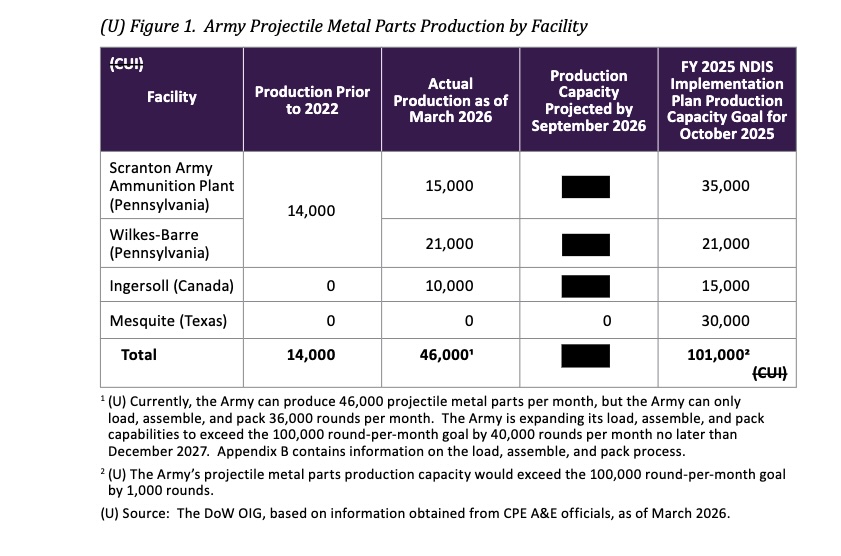
At present, the Army is only producing 36,000 rounds per month, inspectors revealed.
NEW REPORT
While the DoW increased its capability and capacity to produce 155-millimeter (mm) artillery, it did not reach its own modernization plan goal of 100,000 155-mm rounds per month. Find out what this could mean for military readiness
: https://t.co/7GgfXQqa7H
— DoW Office of Inspector General (@DoW_IG) July 13, 2026
Through modernization efforts and two new facilities, the Army expects to exceed the 100,000-round-per-month goal significantly by the end of next year. The initial goal was established by Congress in the wake of the U.S. providing millions of rounds to Ukraine.
Still, the report highlights the challenges U.S. arms makers face in trying to meet tighter timelines to produce more weapons. This all comes as the U.S. is increasingly concerned about stockpiles of a wide array of munitions after heavy usage in past and current conflicts and donations to partners like Ukraine, as well as foreign military sales. These are issues that we raised long before and during the current war with Iran, but they have become major headlines in the aftermath of the initial stages of that conflict.
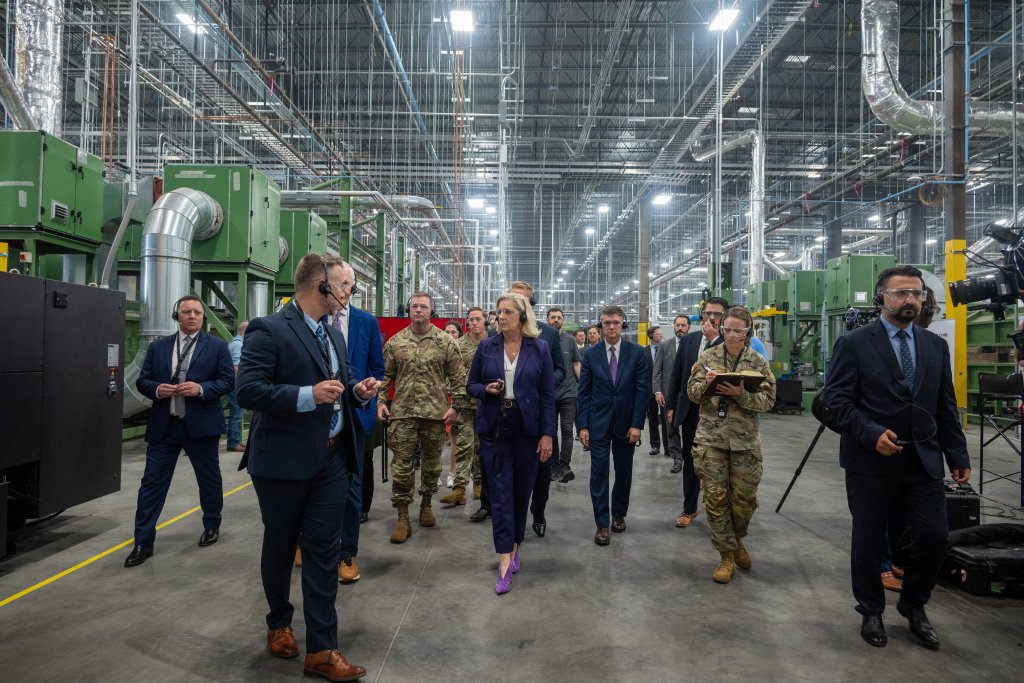
The plant at the center of this new report is the Universal Artillery Projectile Line owned and operated by General Dynamics Ordnance and Tactical Systems. It opened in May 2024 to great fanfare and high hopes.
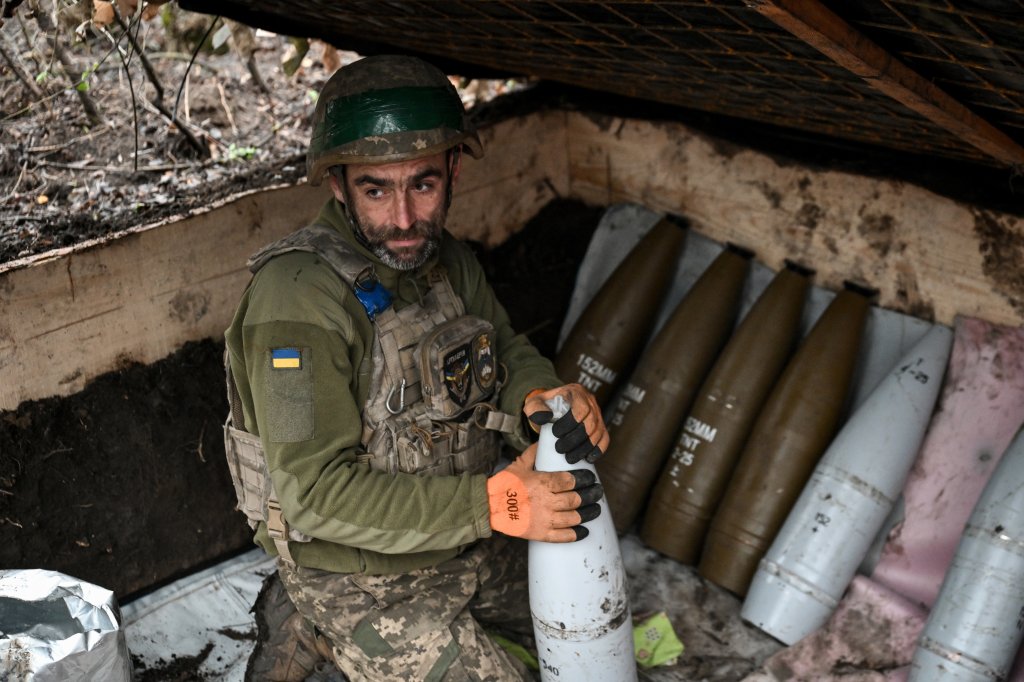
According to the IG report, more than three million 155mm shellswere donated to Ukraine, more than 111,000 rounds were used over the past four years on training and testing, and nearly 218,000 rounds were sold to foreign customers. Combined, U.S. stocks were depleted by more than 3.6 million rounds since the start of the war in Ukraine.
The Mesquite plant was opened to help replenish the supply.However, according to DOWIG, it failed to live up to expectations.
“The DoW increased its capability and capacity to produce 155-mm artillery ammunition but did not reach the 2025 National Defense Industrialization Strategy Implementation Plan goal of 100,000 rounds per month by October 2025,” the DOWIG report pointed out.
As of March 2026, “the Army had increased its monthly production from 14,000 to 36,000 rounds because of expansion and modernization efforts at both the projectile metal parts and the load, assemble, and pack facilities,” the IG report noted. “However, at a contractor-owned, contractor-operated facility in Mesquite, Texas, the contractor has been unable to produce any projectile metal parts that meet contract specifications.”
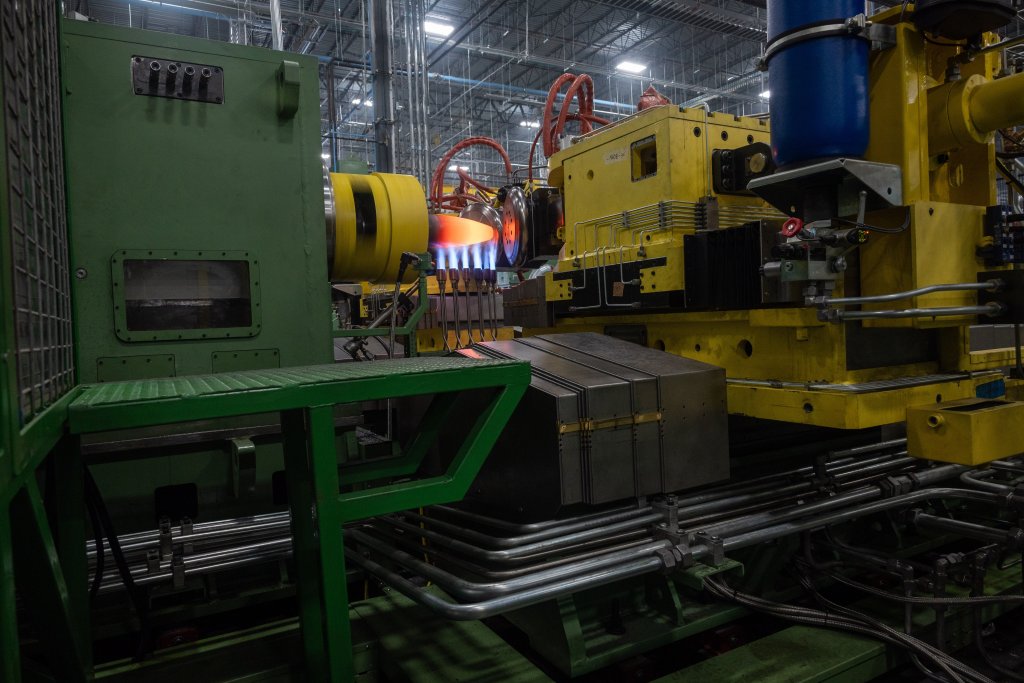
According to an Army news release about the plant opening, it was built to “feature high-volume production capabilities for large-caliber metal parts and is equipped with long-stroke, high-tonnage forging capabilities.”
“The facility’s 155mm metal parts production lines also meet Army modernization goals by incorporating high levels of automation, modern manufacturing practices, and digital-data-capture ability. It will offer the flexibility to produce a variety of metal parts ranging from 60mm to 155mm, with minimal changeover requirements,” the Army added.
The Army “planned for the Mesquite Texas facility to produce 30,000 rounds per month,” the report added. “With only three facilities producing the required projectile metal parts, the DoW will reach only 71,000 rounds per month, or 71 percent of its monthly production capacity goal for 155-mm artillery rounds.”
We’ve reached out to General Dynamics and the Army for comment and will update this story should the company respond.
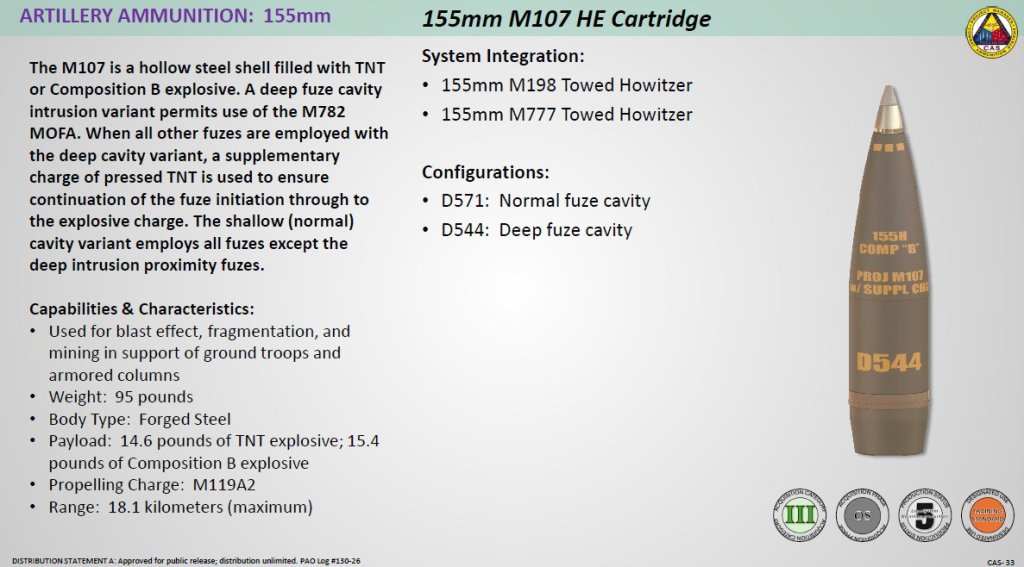
The main issue inspectors found was that the plant adapted equipment used to make parts for M107 155mm shells to produce parts for M795 155‑mm shells. The latter is an upgraded version of the munition that is slightly heavier and longer, and has an extended range.
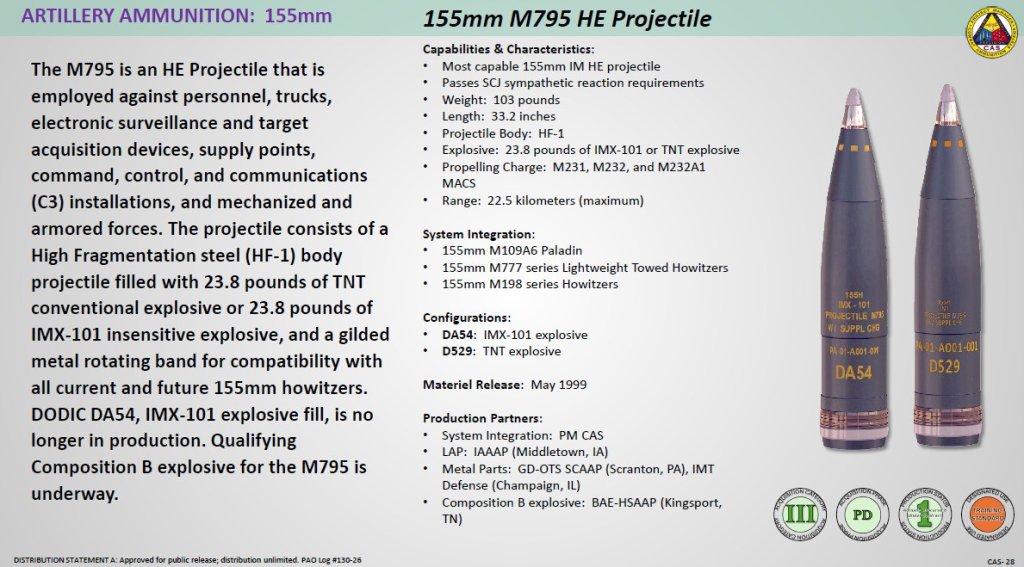
As a result of this adaptation, several factors came into play, according to DOWIG. Army officials knew that the concept of trying to produce the more advanced 155mm shells using equipment not designed for that was risky. However, officials felt that would pay off because that machinery was already available. In addition, the report stated that the existing Scranton plant’s past work with GD-OTS on ammunition production was a factor in deciding to take a chance on what turned out to be a flawed assumption.
The report states, in part:
- According to the Army’s CPE A&E, “ACC issued the contract and CPE A&E accepted the risk associated with the contractor’s plan to purchase and adapt M107 metal part production equipment to produce a newer variant of the 155-mm projectile metal parts at different specifications.”
- “According to CPE A&E officials, the Mesquite facility was a high-risk, high-reward opportunity, and CPE A&E is realizing some of that risk now because the facility has been unable to produce acceptable rounds.”
- “CPE A&E accepted the contractor’s proposal to acquire and adapt unique production equipment and an unproven production process because equipment was already available. According to the CPE A&E official, obtaining and adapting the available production line equipment was expected to be faster than obtaining new M795 production line equipment.”
- “The contractor has been working since the original contract task order was issued in November 2022 to produce the contracted 155-mm projectile metal parts. However, according to CPE A&E officials, acquiring the equipment and adapting it to produce M795 155-mm projectile metal parts resulted in significant challenges.” The report redacted specific examples.
- “In addition, according to CPE A&E officials, CPE A&E recommended the contractor for the Mesquite facility because the contractor has 20 years of experience producing 155-mm projectile metal parts at the Scranton Army Ammunition Plant.”
- “Scranton Army Ammunition Plant officials stated that despite the contractor’s years of experience, the Scranton facility encountered separate ongoing problems with the contractor in terms of responsiveness, equipment maintenance, and timeliness.”
- “Those officials expressed concern to the evaluation team that ACC did not open the contract for the Mesquite facility to competition from other contractors.”
- “In addition, according to ACC officials, the contract for the Mesquite facility was issued as a task order under the property management contract for the Scranton Ammunition facility and not as a separate contract.”
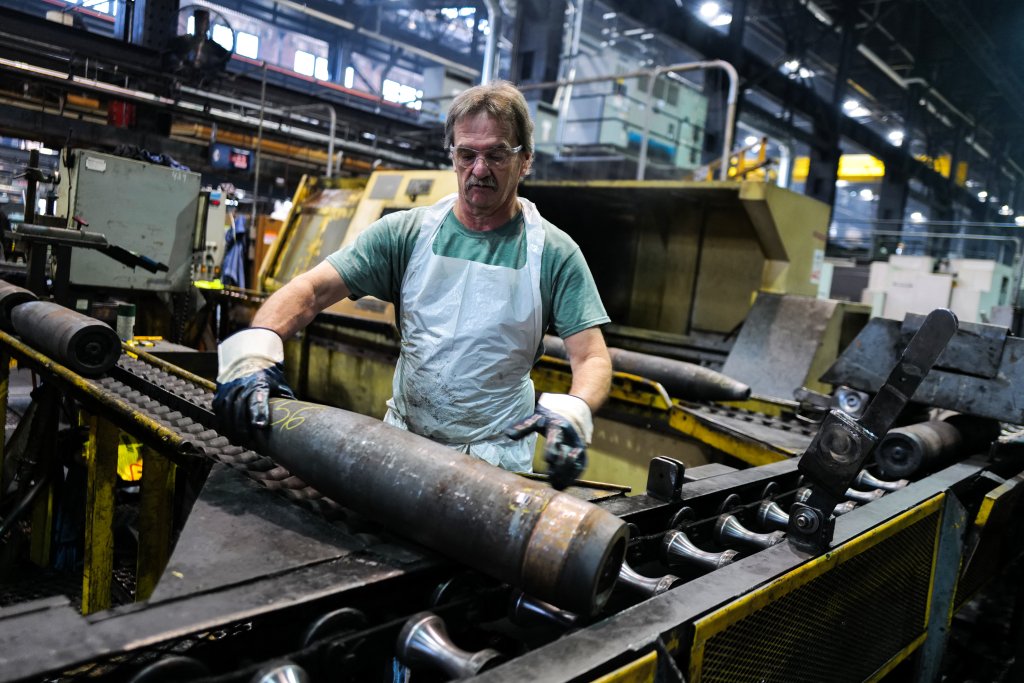
The Army did not dispute that the Mesquite factory was not producing the needed parts.
“The Capability Program Executive Ammunition & Energetics will correct issues identified in this report, and develop and implement a corrective action plan,” CPE A&E responded.
The “United States Army concurs with the report as written,” the Assistant Secretary of the Army, Acquisition, Logistics and Technology stated.
Army Contracting Command (ACC), however, took issue with how the relationship between the Scranton and Mesquite plants was characterized. In its response, ACC stated that no one reached out to them to question GD-OTS’s plan and that it had received sign off from higher authorities to execute the contract without Congressional approval. Moreover, ACC added that it did not need to open up competition for the new plant.
The report says:
- “It is unclear what parties or organization are being referred to by ‘SCAAP officials,’ so it cannot confirm the accuracy of this information, however, ACC-RI would like to clarify that at no point did anyone question or raise concerns to ACC in terms of the acquisition strategy to award this effort to the contractor under the existing Scranton facility effort. Further, ACC-RI did document the contract file with a Determination of Contractor Responsibility in accordance with FAR 9.104 prior to award of these task orders.”
- “ACC-RI received concurrence and approval on the acquisition strategy to execute these efforts on a sole source basis under W52P1J-19-D-0075 from the requiring activity, the Deputy Assistant Secretary of the Army-Procurement, and the Office of General Counsel, with notification provided to Congress prior to execution.”
- “ACC-RI would like to clarify that while some might refer to W52P1J-19-D-0075 as the ‘Property Management contract for the Scranton Ammunition facility,’ the scope of the contract states that it covers operation, maintenance, and modernization; includes Production Based Support projects; and doesn’t require active operation at Scranton.”
- “The contract states that ‘The Property Management of SCAAP can be accomplished either through active operation of the Government-Owned, Contractor-Operated facility or layaway maintenance’ and allows the contractor to operate the contract at a privately-owned facility. As such, ACC-RI already determined it in scope to execute the Universal Artillery Projectile Line requirement as separate task orders under W52P1J-19-D-0075 and documented such in-scope determinations in memorandums within the contract file.”
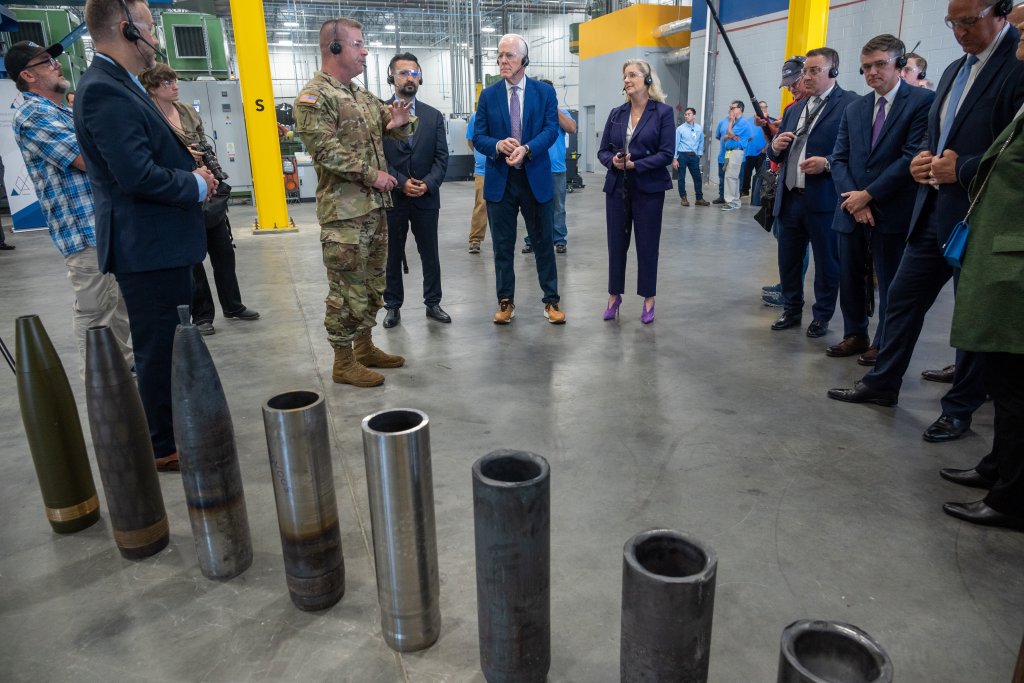
Problems with the plant were emerging even before the DOWIG released its report.
In February, Brent Ingraham, Assistant Secretary of the Army for Acquisition, Logistics, and Technology, complained to lawmakers about the inability of the plant to produce needed parts.
“First, let me start by saying I’m not happy with where we are at Mesquite either, right?” he testified. “So I’m in the same boat you are.”
The Army was considering scrapping GD-OTS’s contract to manage the production lines in Mesquite, but Ingraham said the service ultimately did not go through with it, according to Breaking Defense. The Army is still in negotiations with the company, he said at the time.
“I anticipate you will see an investment from the company themselves, from the industry partner themselves, to ensure they can continue to build out that facility that would make rounds that would primarily be supported by the [foreign military sales],” Ingraham said. “But we are currently in negotiation [on] what that looks like, both from a line perspective, a quantity perspective, and hopefully we’ll have that wrapped up soon.”
A month ago, General Dynamics announced it would “invest $200 million of its own money and unwind a partnership with Turkish defense contractor Repkon in a bid to finally start producing 155mm artillery shells at a Texas plant that’s been beset by delays,” Bloomberg News reported, citing people familiar with the matter.
The factory “has joined a long list of US defense programs that have failed to meet the lofty goals set out for them,” the publication added.
Munitions manufacturing equipment provided by Repkon “had failed to meet required standards and will be replaced by hardware and management from Deterrence Defense, a privately-held company based in Fremont, Calif.,” Bloomberg added. “General Dynamics and the US Army ‘have reached an agreement on a path forward, which includes additional investment,’ the company said in a statement without disclosing the amount.”
Bloomberg
General Dynamics, geciken mühimmat fabrikasını yeniden faaliyete geçirmek için 200 milyon dolar yatırım yapacak
General Dynamics, Teksas’taki 155 mm top mermisi fabrikasını yeniden işler hale getirmek amacıyla kendi kaynaklarından 200 milyon dolar yatırım yapacak.… pic.twitter.com/rZYpvDV7zn
— Yabancı Basın (@yabancibasin) June 2, 2026
As we noted earlier in this piece, despite the problems at the Mesquite plant, the Army projects that it will turn things around by next year.
“According to Army officials, the Army did not reach its goal for increased capability and capacity to load, assemble, and pack 155-mm artillery ammunition,” investigators found. “However, through the modernization of the Iowa Army Ammunition Plant and the addition of two new facilities in Kansas and Arkansas, the Army is on track to increase its capability and capacity to load, assemble, and pack 140,000 155-mm artillery rounds per month by December 2027. This exceeds the NDIS Implementation Plan goal by 40,000 rounds per month.”
Still, that’s more than a year away and, as we noted earlier in this story, about 14 months later than the Army was expecting to receive these shells. Whether it can meet these revised goals remains to be seen.
Contact the author: howard@twz.com
The post New $500M Artillery Shell Plant Failed To Produce Any 155mm Parts appeared first on TWZ.