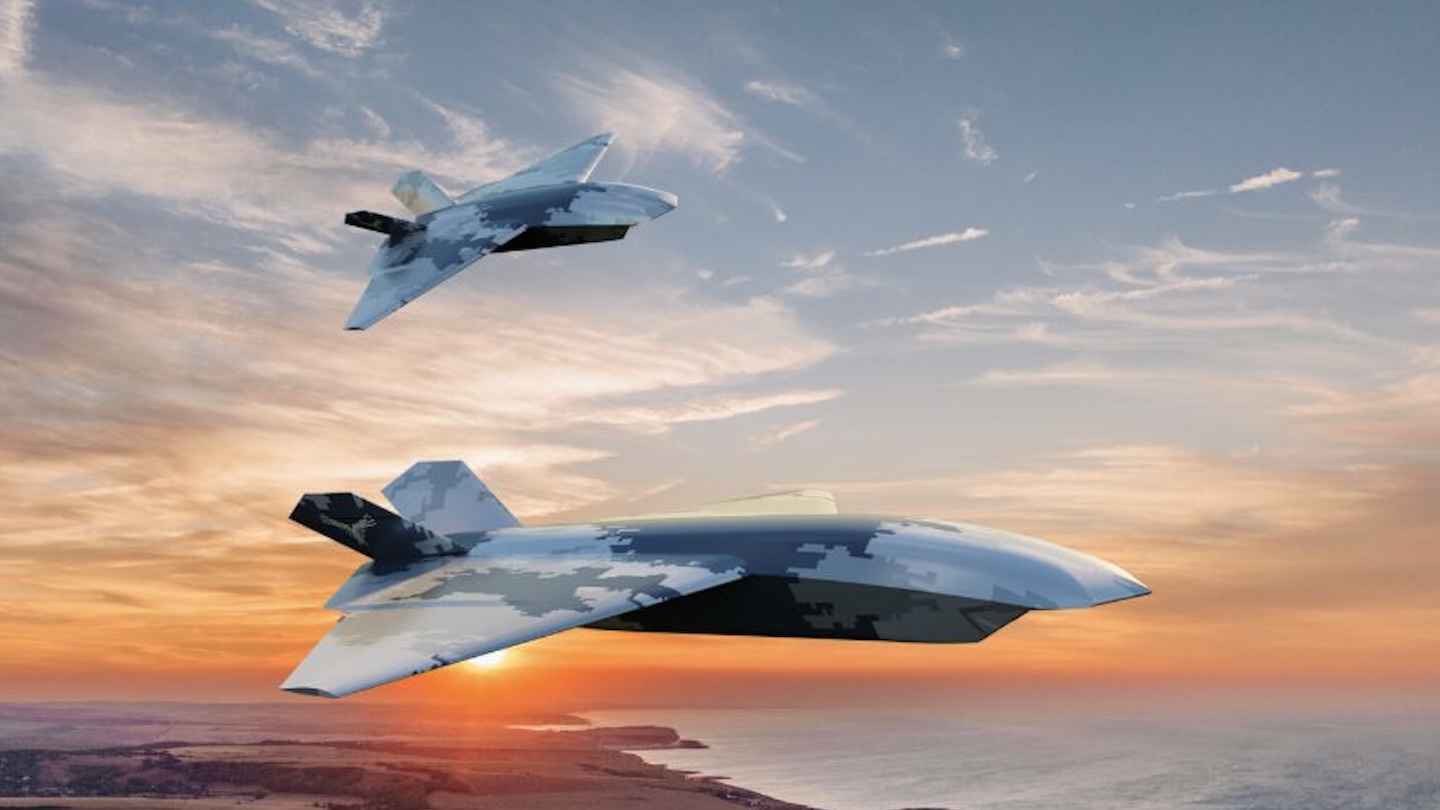
Их Британийн Батлан хамгаалах яам нисгэгчгүй онгоцыг сөнөөгч онгоцнуудтай хослуулан ажиллуулах “Storm Fighter” шинэ хөтөлбөрийг зарлаж, Европын анхны зургаа дахь үеийн агаарын цэргийн хүчин болох зорилтоо тодорхойллоо.
Лондон хотноо болсон Агаарын хүчний удирдлагуудын бага хурлын үеэр Батлан хамгаалахын бэлэн байдал, аж үйлдвэрийн асуудал эрхэлсэн сайд Люк Поллард энэхүү төсөл нь ойрын дөрвөн жилд батлагдсан 6.6 тэрбум долларын төсөвт багтаж байгааг мэдэгдэв. “Storm Fighter” хөтөлбөрт 406 сая доллар хуваарилсан бөгөөд энэ нь Typhoon, F-35 болон ирээдүйн Tempest сөнөөгч онгоцнуудтай хамтран ажиллах, дайралт хийх болон хамгаалах чадавхтай нисгэгчгүй онгоцуудыг бүтээхэд чиглэнэ.
Их Британийн зэвсэгт хүчин “Storm Shroud” электрон дайны дрон, 1,000 милийн тусгалтай “Storm Fire” довтолгооны дрон зэрэг “Storm” цуврал хөтөлбөрүүдийг идэвхтэй хэрэгжүүлж байна. Мөн “Vanquish” төслийн хүрээнд 2027 он гэхэд нисэх онгоц тээгч хөлөг онгоцноос хөөрч, газардах чадвартай бие даасан агаарын платформыг туршихаар төлөвлөж байгаа юм.
Өмнө нь хэрэгжүүлж байсан “Project Mosquito” хөтөлбөр төсвийн хязгаарлалт болон бусад шалтгаанаар цуцлагдсан туршлагад үндэслэн, энэ удаагийн шинэ хөтөлбөрт өртөг багатай, хурдан үйлдвэрлэх боломжтой, үр ашигтай систем бүтээхийг зорьж байна. Одоогоор BAE Systems болон Boeing зэрэг компаниуд уг төсөлд оролцох сонирхлоо илэрхийлээд байгаа бөгөөд MQ-28 Ghost Bat зэрэг нисгэгчгүй онгоцны технологиуд ч анхаарлын төвд байна.
Дэлгэрэнгүйг эх сурвалжаас харах
↓Эх сурвалжийг нээх ↓
The U.K. Royal Air Force has launched a new collaborative combat aircraft (CCA) program, named Storm Fighter, reviving a British push into the autonomous ‘loyal wingman’ arena as the service seeks to build what officials describe as “Europe’s first sixth-generation air force.” The announcement, made by a senior government official today, marks a renewed effort to field uncrewed combat aircraft designed to operate alongside crewed combat jets after earlier British CCA initiatives lost momentum.
Storm Fighter forms part of a much broader U.K. push to introduce uncrewed and autonomous systems across the armed forces under a defense modernization effort backed by around $6.6 billion over the next four years. You can read more about this Defense Investment Plan (DIP) here.
Speaking at the Air Power Association Global Air and Space Chiefs’ Conference in London today, Luke Pollard, the U.K. minister for defense readiness and industry, said that Storm Fighter will be funded using the $406 million investment in CCAs included in the DIP published earlier this month.
“We are maximizing our air power in the eye of the storm of future combat, that will be swarming with drones, sixth-generation fighter jets and ever evolving EW [electronic warfare] capabilities,” Pollard said, adding, “I am delighted to reveal that our new autonomous CCA program will be named Storm Fighter […] to deliver guardian angel and attack dog drones to fly into combat with the Typhoon, F-35, and Tempest. Storm Fighter will make the RAF Europe’s first sixth-generation air force.”
The Storm Fighter nomenclature is in line with a set of ‘Storm’ programs in the air warfare domain. Previous ones include Storm Shroud, which will provide the Royal Air Force with a new uncrewed electronic warfare drone, which will enter service this year. Meanwhile, the Royal Air Force today also announced a new EW drone, named Storm Chrome, as well as Storm Fire, a 1,000-mile-range one-way attack drone.
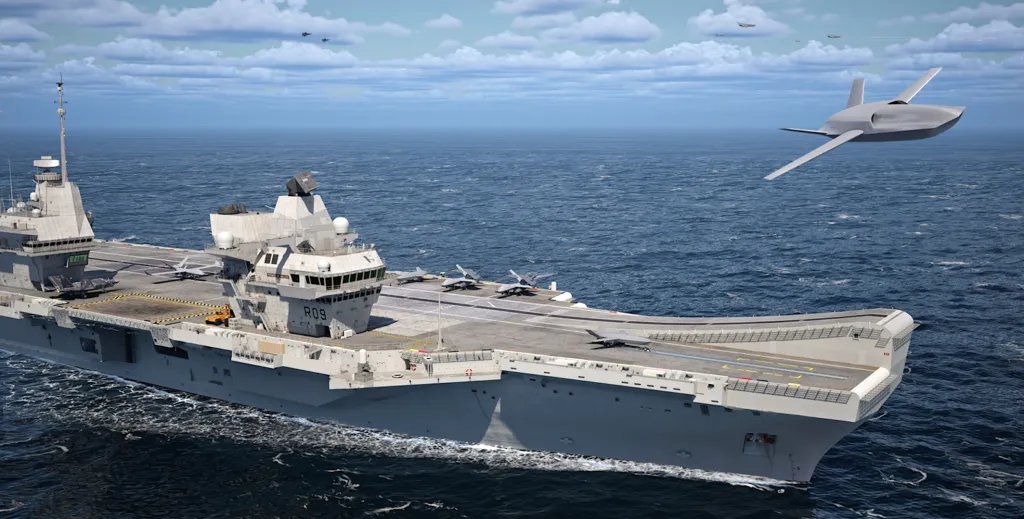
As an example of the experimental programs that could feed into Storm Fighter, Pollard highlighted Project Vanquish, which is intended to demonstrate a fixed-wing, short takeoff and landing autonomous collaborative platform (ACP) from a Queen Elizabeth class aircraft carrier before the end of 2027. The ACP terminology has been used in the United Kingdom in the past and is broadly equivalent to CCA.
The Royal Navy has explored various drone options for its carriers in the past. It has tested the General Atomics Mojaveshort takeoff and landing (STOL) drone from HMSPrince of Walesclass, as well as catapult-launching smaller, jet-powered drones.

Mojave Aircraft Carrier Takeoff and Landing
Pollard referencing the Royal Navy Vanquish ACP program is noteworthy and reflects the struggles that the Royal Air Force has faced in getting similar efforts off the ground.
The Royal Air Force had been working on the Project Mosquito as part of the broader Lightweight Affordable Novel Combat Aircraft (LANCA) initiative. Project Mosquito called for a prototype “uncrewed fighter aircraft” flying by 2023, and in 2021 a contract for the aircraft was awarded to Spirit AeroSystems. Mosquito was canceled in 2022 for reasons that are not entirely clear, although it may well have become clear that the ambition couldn’t be realized with the relatively tiny budget, just $41 million across three years.
Speaking at the Global Air and Space Chiefs’ Conference, a Royal Air Force official stressed that Storm Fighter should result in a vehicle “that is good enough, that is cheap enough, that can be produced fast enough, and we need enough of them.” The official added: “If you’re building something that takes 70 percent of the build time of an F-35 and costs three-quarters of it, then rip up your CCA program and start again.”
Clearly, however, the Royal Air Force still needs a loyal wingman-type platform. This is the same ambition outlined by the U.K. Ministry of Defense in the past, when it described drones that would “fly at high speed alongside fighter jets” and would carry “missiles, surveillance and electronic warfare technology.”
When Project Mosquito was still active, the U.K. Ministry of Defense also stressed that its future loyal wingman would be expected to target and shoot down enemy aircraft and “survive against surface-to-air missiles.”
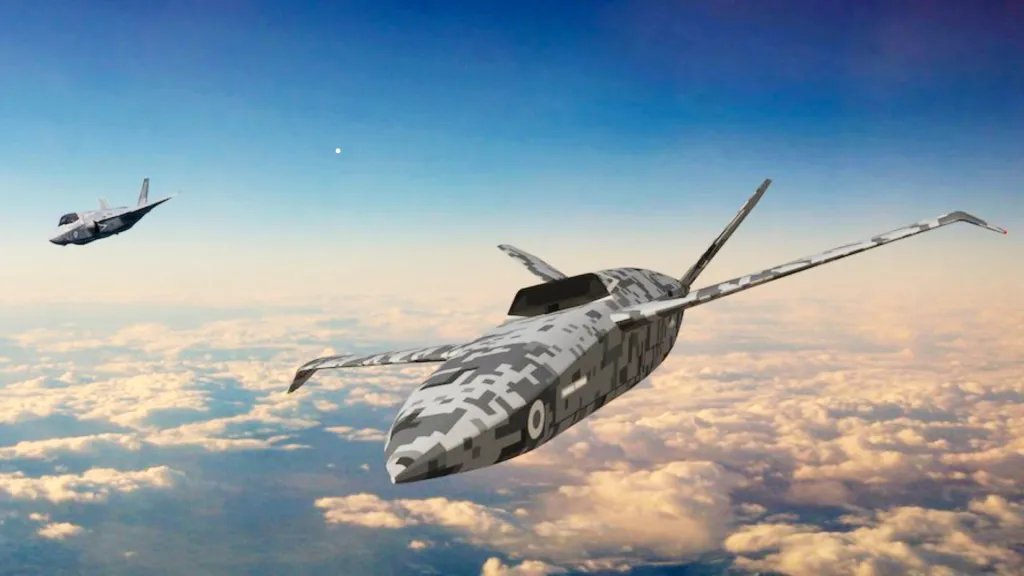
While Pollard’s words today were ambiguous, his reference to providing “guardian angel and attack dog drones” suggests that both aerial combat and strike missions could be covered. On the other hand, this might also describe both offensive and defensive counter-air missions.
It’s notable, too, that the new CCA should fly into combat with the F-35, Tempest, and Typhoon. The last of these is currently planned to be withdrawn from service by 2040, so the drone would have to be in operational use ahead of the arrival of the sixth-generation Tempest.
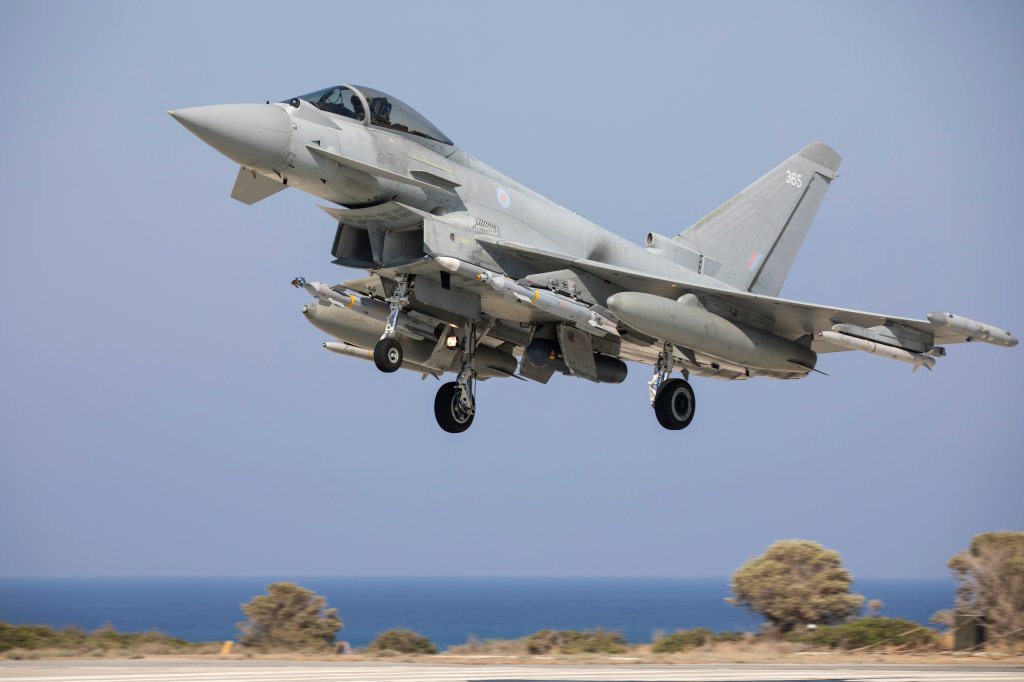
As to who might build the Storm Fighter, Janes reports that “several contractors have already indicated their interest, most prominently BAE Systems and Boeing,” although a formal set of requirements is yet to be published.
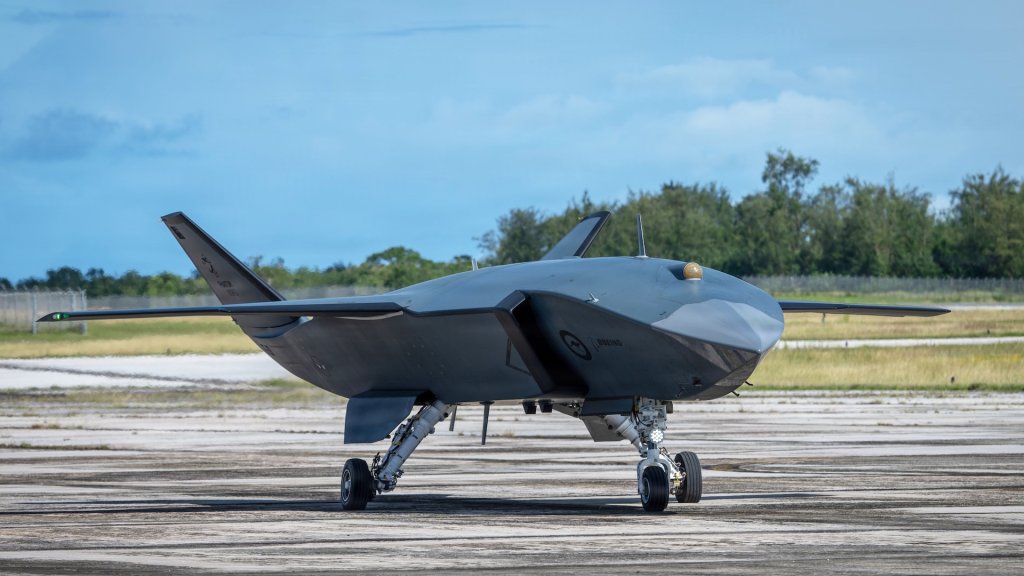
In the case of Boeing, the company’s MQ-28 Ghost Bat has already attracted some official interest in the United Kingdom. In 2023, Rear Adm. James Parkin, Director Develop for the Royal Navy, gave a presentation that included a slide with a Boeing rendering showing a variant or derivative of the MQ-28 with a visible tailhook landing on aQueen Elizabethclass carrier.
TWZ has also made the case for the Australia-United Kingdom-United States defense cooperation agreement, or AUKUS, to be extended to cover the MQ-28 and other uncrewed technologies.
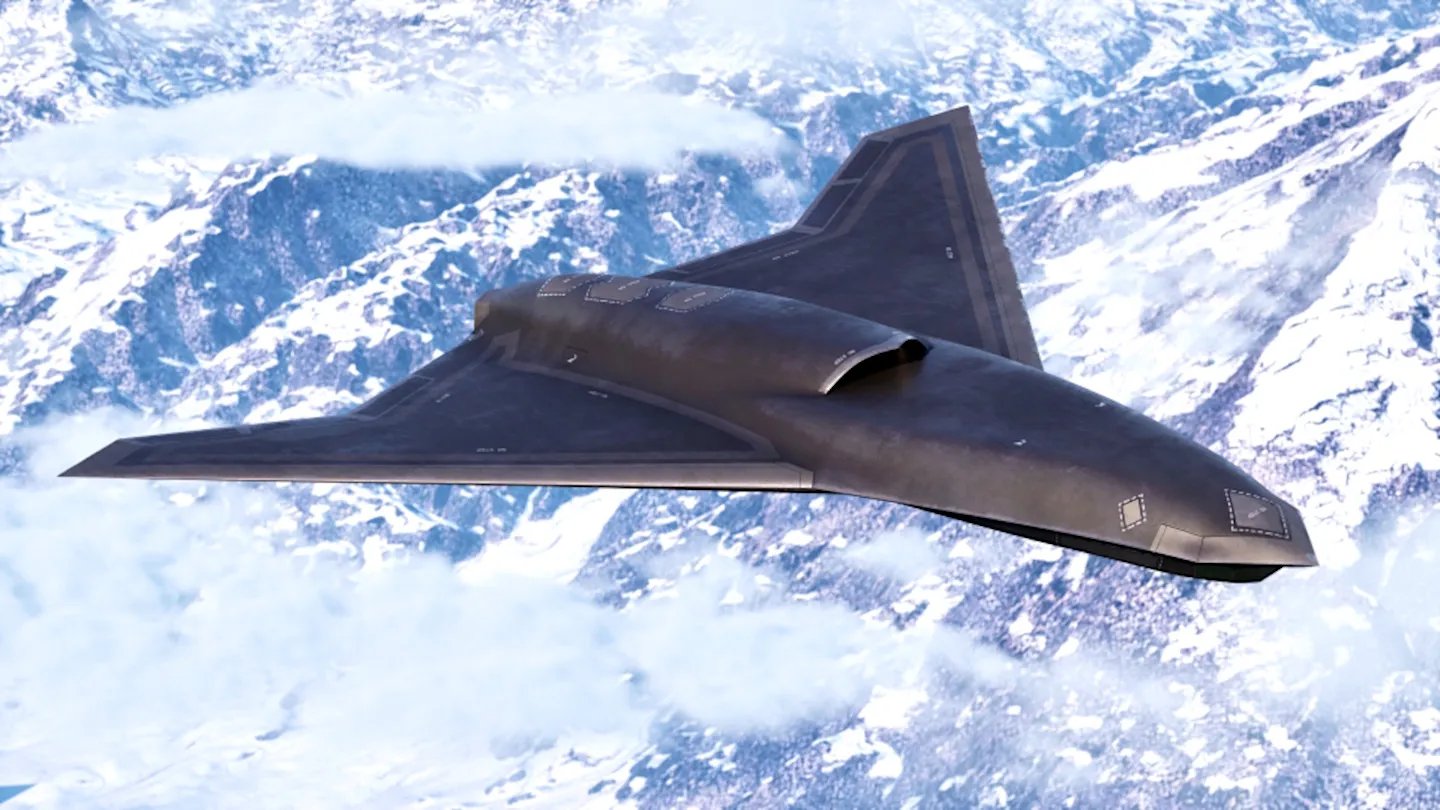
Meanwhile, BAE Systems is also involved in the MQ-28 program, providing the autonomous Vehicle Management System (VMS) and elements of the Ground Control Station (GCS) that monitor and control the drone. The company has also presented a rendering of a notional stealthy CCA, as seen at the top of this story. This has some features reminiscent of renderings of the Tempest crewed combat jet, including large-area trapezoidal wings and cropped outward-canted tailfins. The drone has a wedge-shaped nose intake, partially shrouded by a prominent ‘lip.’
In its work on CCAs, BAE Systems is also working in collaboration with Lockheed Martin’s Skunk Works division, which is also heavily involved in this field. This includes a higher-end stealthy CCA-type drone named Vectis. The uncrewed aircraft is designed to be highly adaptable to an operator’s requirements, which would appear to place it particularly well for the U.K. Storm Fighter initiative, especially if paired with BAE Systems.
When it comes to stealthy drones, BAE Systems’ experience dates back far longer, including a proof-of-concept UCAV testbed calledTaranis.
![BAE Systems - Taranis Unmanned Combat Air Vehicle (UCAV) First Flight [1080p] thumbnail](https://i.ytimg.com/vi/znwU_4lLoGE/hqdefault.jpg)
BAE Systems – Taranis Unmanned Combat Air Vehicle (UCAV) First Flight [1080p]
Apart from the two contractors mentioned, the Royal Air Force CCA effort is likely to attract attention from others, too.
General Atomics has pitched to the United Kingdom a carrier-capable member of its Gambit drone family, which is based arounda common modular core ‘chassis’ concept, and which could fit into a future air wing aboard the Queen Elizabeth class. The company already provides the Royal Air Force with Protector drones.
Other U.S. pitches could come from Northrop Grumman or Kratos, while there is also a growing pool of potential European players.
For now, Storm Fighter remains little more than a name attached to an emerging requirement, with no design, contractor, or acquisition timeline yet formalized — as far as we know. Even so, today’s announcement signals that the Royal Air Force is once again serious about fielding a loyal wingman capability after the demise of Project Mosquito. This comes as other European nations are already firming up their CCA requirements and setting in-service goals, while more major players are now deeply involved in proving out operational concepts.
With autonomous aircraft now central to the broader U.K. defense strategy and the Tempest program steadily advancing, the pressure will be on to turn Storm Fighter into an operational capability.
Contact the author: thomas@thewarzone.com

