19-р зууны одон орон судлаач Вильхельм Темпелийн нээсэн 10P/Tempel сүүлт од 1967 оноос хойших хамгийн таатай байрлалаар дэлхийд ойртон ирж байна.
Бархасбадь гаригийн гэр бүлд хамаарах 10P/Tempel сүүлт од нь 5.37 жилийн тойрог замтай бөгөөд 8-р сарын 2-нд нарны аймгийн төвд хамгийн ойр цэгтээ (perihelion) хүрнэ. Үүнээс нэг өдрийн дараа буюу 8-р сарын 3-нд уг биет Дэлхийгээс 62 сая км (0.414 AU) зайд хамгийн ойр тохиох юм. Одоогоор уг сүүлт од өглөө эрт тэнгэрийн хаяанд ажиглагдаж байгаа бөгөөд дуран авай эсвэл жижиг телескопоор харахад тохиромжтой.
Энэхүү сүүлт од нь +9-өөс +8 хүртэлх магнитудын гэрэлтэлттэй бөгөөд нүдээр харахад хэцүү ч жижиг телескопоор ногоовтор туяатай бүдэг мананцар мэт харагддаг. Одон орон судлаач Майкл Ягерийн тэмдэглэснээр, уг сүүлт од нь сүүлийн үеийн зураг авалтын технологийн тусламжтайгаар тод харагдах тоосны мөрийг үлдээдгээрээ онцлогтой. 7-р сарын 27-нд уг сүүлт од Messier 30 бөмбөлөг хэлбэрт одны бөөгнөрөлтэй зэрэгцэн өнгөрөх нь ажиглалт хийхэд хамгийн тохиромжтой үе юм.
Гэрэл зурагчин Дан Бартлеттын зөвлөснөөр, уг сүүлт одыг дүрслэхэд тэнгэрийн эрхсийг даган хөдөлдөг тусгай суурь бүхий телескоп шаардлагатай. Хотын гэрлийн бохирдолтой орчинд ч тохирох хугацаагаар (экспозици) зураг авах замаар уг биетийг тод гаргаж авах боломжтой гэдгийг ажиглагчид онцолж байна. 8-р сарын туршид Piscis Austrinus одны ордонд шилжин суурьших сүүлт од нь 9-р сарын дундаас эхлэн гэрэлтэлт нь буурч, нарны аймгийн алслагдсан хэсэг рүү буцаж эхэлнэ.
https://www.universetoday.com/articles/deep-impact-made-a-bright-flash
https://www.universetoday.com/article_images/CRAF_20260721_153739.jpg
https://www.universetoday.com/article_images/orbit-viewer-snapshot_23_20260721_154329.png
https://www.universetoday.com/articles/top-astronomical-events-to-watch-for-in-2026
https://www.universetoday.com/article_images/Evolution_20260721_153438.jpg
https://en.wikipedia.org/wiki/10P/Tempel
https://apod.nasa.gov/apod/ap260717.html
https://app.astrobin.com/u/h2ologg
https://www.universetoday.com/article_images/Dan_Bartlett_20260721_153245.png
https://www.universetoday.com/articles/review-dwarf-labs-new-dwarf-mini-smart-telescope
https://www.universetoday.com/article_images/55390325435_8cf60b8ff9_c_20260721_153007.jpg
https://www.universetoday.com/article_images/July_31_20260721_153907.png
https://www.universetoday.com/article_images/Screenshot_2026-07-20_114233_20260721_154512.png
https://www.universetoday.com/article_images/Magnitude_20260721_154128.jpg
Дэлгэрэнгүйг эх сурвалжаас харах
Эх сурвалжийг нээх ↓
Now is the time to catch Comet 10P/Tempel in the pre-dawn sky.
A low-number periodic comet is stalking our fair planet this summer, and putting on its best show of several generations. We’re talking about Comet 10P/Tempel. The comet is currently loitering in the early dawn sky, presenting a good target for binoculars or a small telescope. But act fast, as the comet is taking the plunge southward in August, post-perihelion.
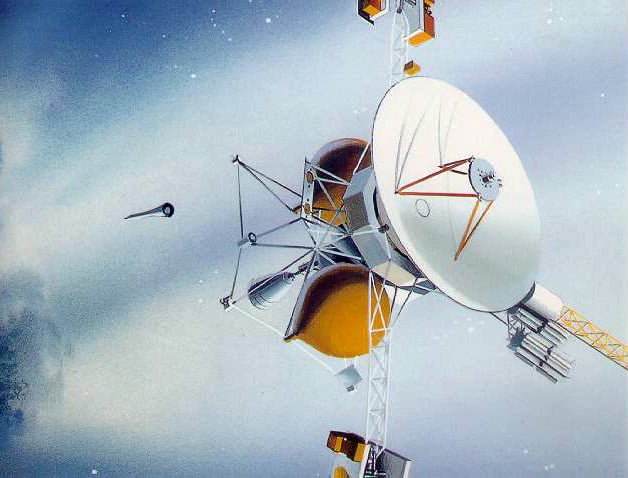
Comet 10P/Tempel was discovered by the prolific, late 19th century comet hunter Wilhelm Tempel. If the name ‘Tempel’ sounds familiar, it might be because Tempel 1 was the target of NASA’s Deep Impact mission in 2005. 10P/Tempel is sometimes referred to as Tempel 2. To date, we haven’t seen 10P up close, though it was the original destination envisioned for the joint NASA/ESA International Comet Mission.
An artist’s conception of the International Comet Mission. Credit: NASA/JPL.
Comet 10P/Tempel is a Jupiter-family comet with a 5.37 year orbit inclined 12 degrees to the ecliptic plane, sending it to an aphelion just interior to the King of the Planets. The comet’s Earth MOID (Minimum Orbit Intersectional Distance) is 0.407 Astronomical Units (AU) or just under 61 million kilometers, and the comet has an even closer Mars MOID of 0.046 AU, or just under 7 million kilometers.
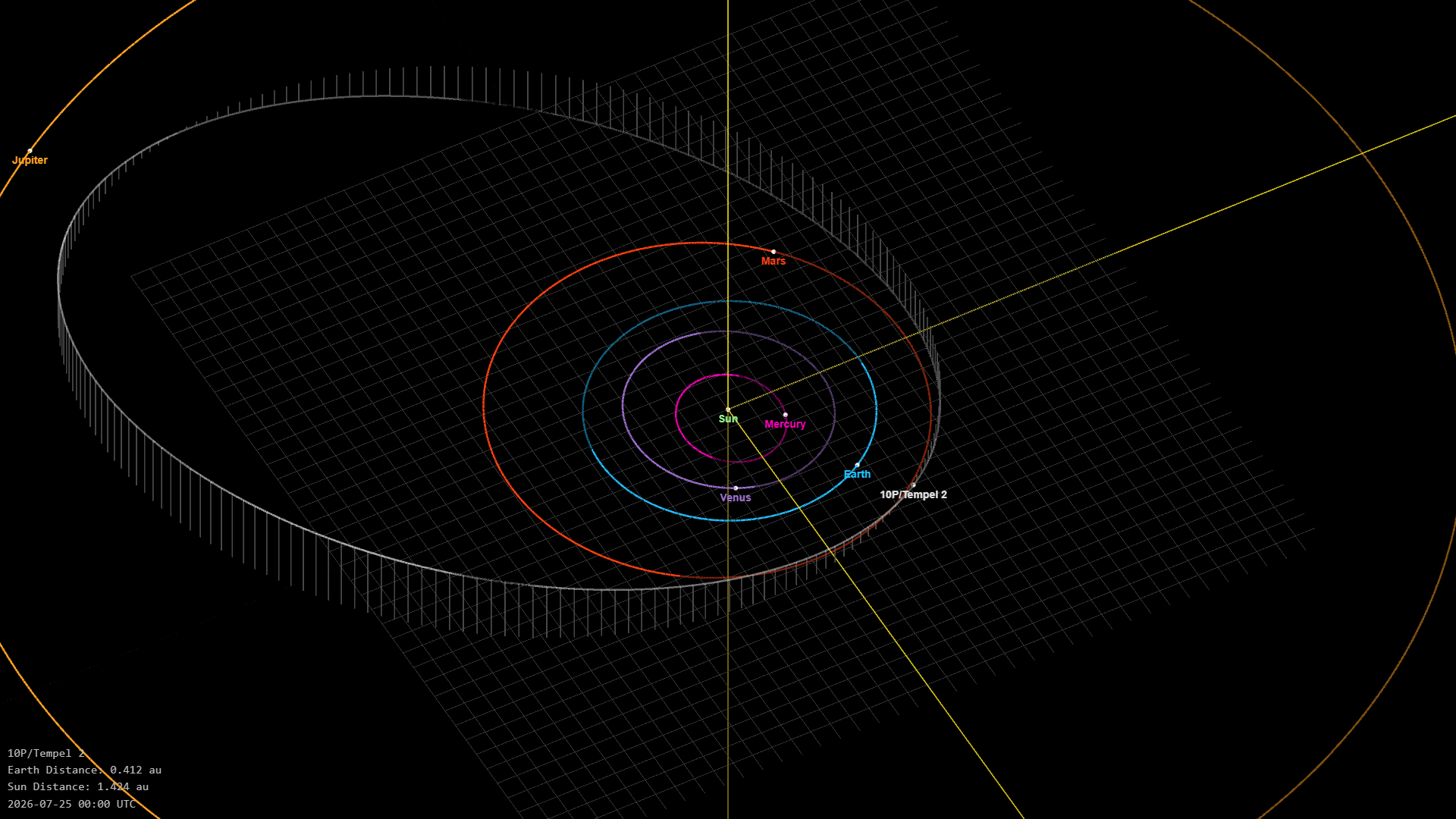 The path of Comet 10P/Tempel. Credit: NASA/JPL.
This year’s Earth passage of Comet 10P is just 0.414 AU from Earth on August 3rd, just a day after the comet reaches perihelion. We just passed Earth aphelion a few weeks ago on July 6th. Note that Tempel discovered the comet very near Earth aphelion, back in the late 19th century. This means that the 2026 apparition for the comet is its most favorable appearance since the summer of 1967.
For northern observers, the comet is high to the south about 30-40 degrees above the horizon at 3 AM local in late July-August. The comet is running roughly parallel to us in space, trekking southward versus the ecliptic. Comet 10P/Tempel will be moving about half a degree (the width of a Full Moon) per day across the Capricornus/Piscis Austrinus border at its closest in early August.
Pluto is also currently nearby in Capricornus, and reaches opposition for 2026 on July 26th.
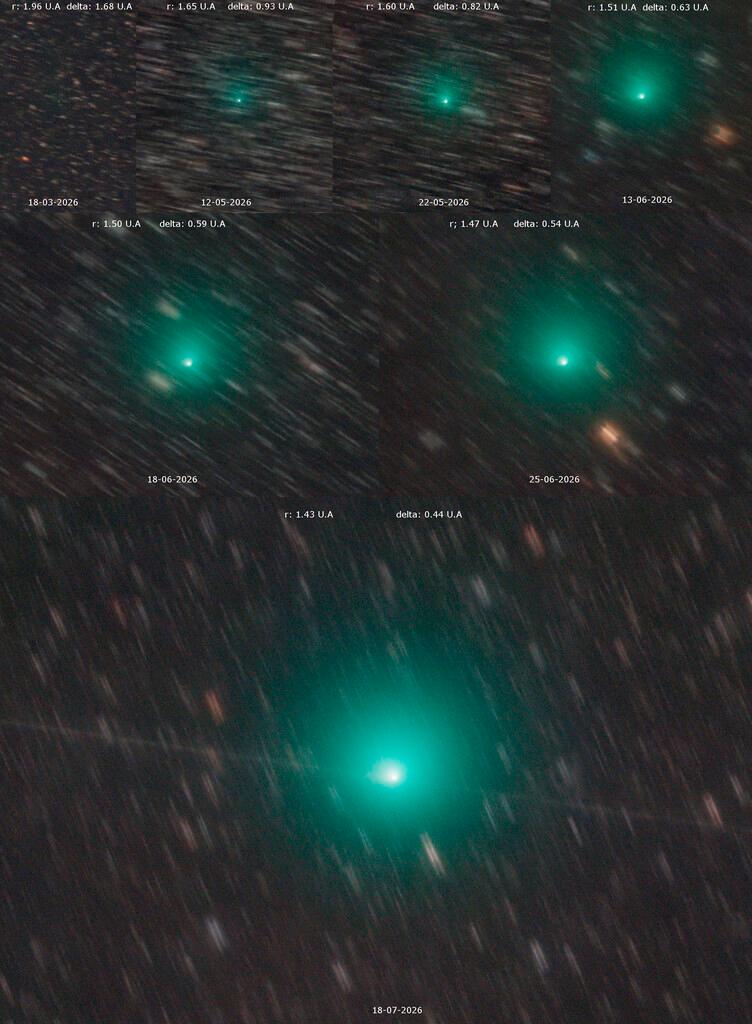 The evolution of Comet 10P/Tempel through the first half of 2026. Credit: Didac Mesa Romeu.
Currently shinning at +9th magnitude, Comet 10P/Tempel may top out at +8th magnitude in early August. This means it won’t crack naked eye visual magnitudes, and will instead appear as a greenish blob in a small telescope, similar to a globular cluster that refuses to snap into focus. We actually get a good contrasting comparison coming right up on the night of July 27th, when the comet passes near the globular cluster Messier 30. The ‘green’ color is due to the out-gassing of cyanogen gas.
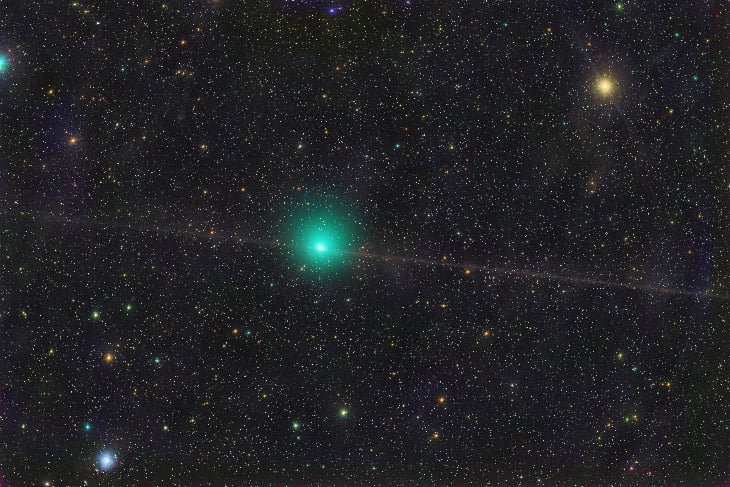
There’s a unique feature seen in recent images of Comet 10P/Tempel. While the dust and ion tail of the comet is streaming straight back behind the comet as seen from our Earthly perspective, we’re actually seeing the razor-edge line of the dust trail from the comet, fanning out across its path. This is due to residual dust from ancient passages of the comet through the inner solar system. We just passed the orbital plane crossing for the comet yesterday on July 20th, meaning the thin dust plane bracketing the comet may reach its brightest this week.
“Comet 10P/Tempel is one of the few periodic comets that displays a prominent dust trail. The one from 2P/Encke is at least as bright,” astrophotographer Michael Jaeger told Universe Today. “Modern CMOS cameras and software technology now make it possible for amateur astronomers to fully capture this phenomenon. The last time the comet was near Earth in 2010, I was also able to capture this dust trail. However, the field of view was much smaller back then, and we weren’t yet able to obtain such deep images.”
Imaging Comet 10P/Tempel is challenging. “You won’t be able to take images of this thing with a cell phone or a typical DSLR unless you have some modifications,” astrophotographer Dan Bartlett told Universe Today. “This comet is not visible to the naked eye. So in order to capture, or hopes to capture a souvenir image, one will need to have the ability to track the sky as it moves. Without this ability the comet and stars will smudge, or trail in the amount of time you need to keep the exposure going. A recommended exposure is based on the focal length of the lens or telescope they’re using. My recommendation is to go no less than 150mm lens to a fairly significant telescope of say no more than 750mm focal length.”
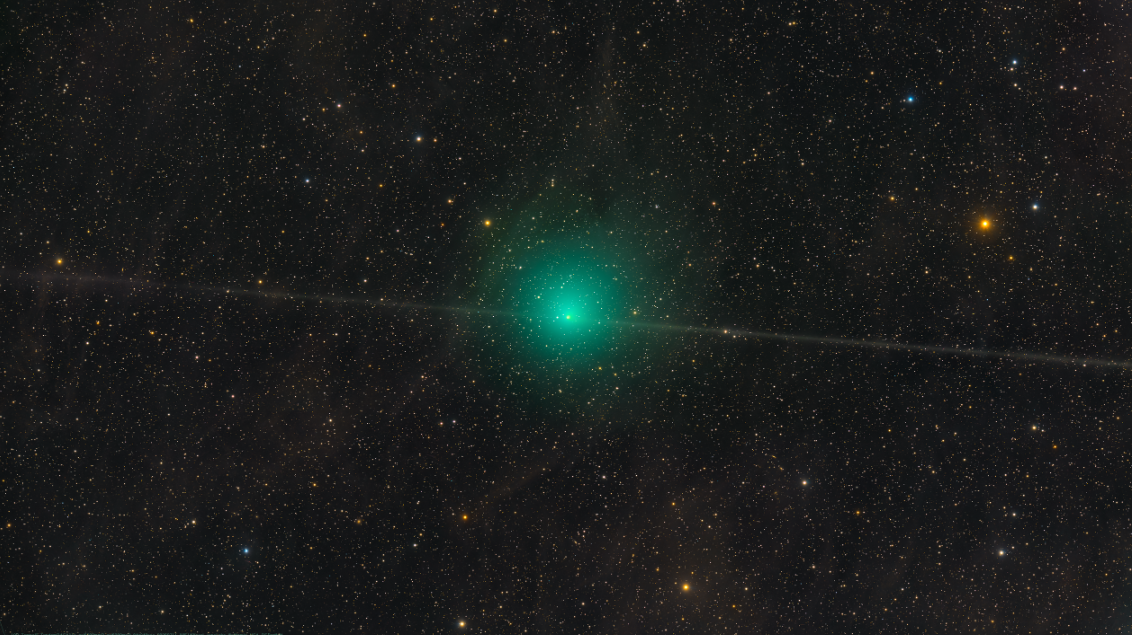 Comet 10P/Tempel from July 11th. Credit: Dan Bartlett.
“Of course, alignment of the tracking platform, or telescope mount, is imperative,” says Bartlett. “So a little experience with celestial pole alignment must be known.So the average photographer will probably not be able to pull this off, they’re gonna have to wait until the next bright comet shows itself. I haven’t even mentioned exposure times which probably will be on the order of 5 minutes for a 150mm lens and about 2 minutes for 750mm in order to see the comet in a single unstacked unprocessed image.”
We’ve managed to nab +10th magnitude comets with the Dwarf Mini in the past, so smartscope users might want to give Comet 10P a go.
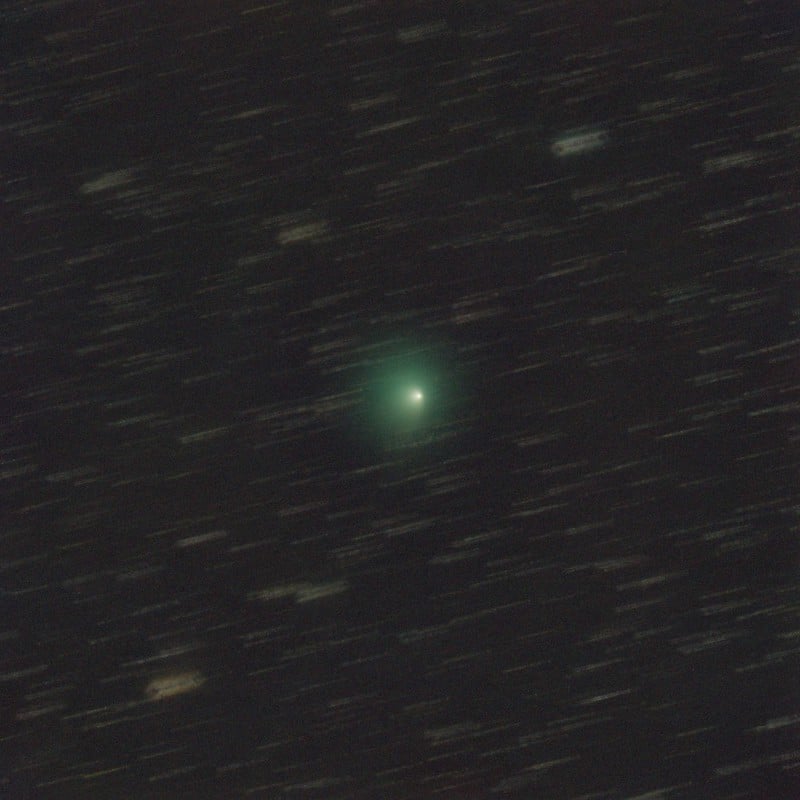 Comet 10P from July 13th. “This image was taken from my balcony,” says Tomislav. “I live in a city of over 100k residents, so light pollution is very severe. The comet was evident on single exposure. I checked how fast it was moving (around 1.2”/minute), so I can adjust exposure to get it sharp.” Credit: Tomislav Anic.
Comet 10P/Tempel kicks off the end of July in Capricornus, then loiters in the southern constellation of Piscis Austrinus (the Southern Fish) in August and September.
Here’s the month-by-month rundown for Comet 10P/Tempel:
July
21-Passes 14’ from the +4.5 magnitude star Epsilon Capricorni
27-Passes 1 degrees, 20’ from the globular cluster Messier 30 (photo op!)
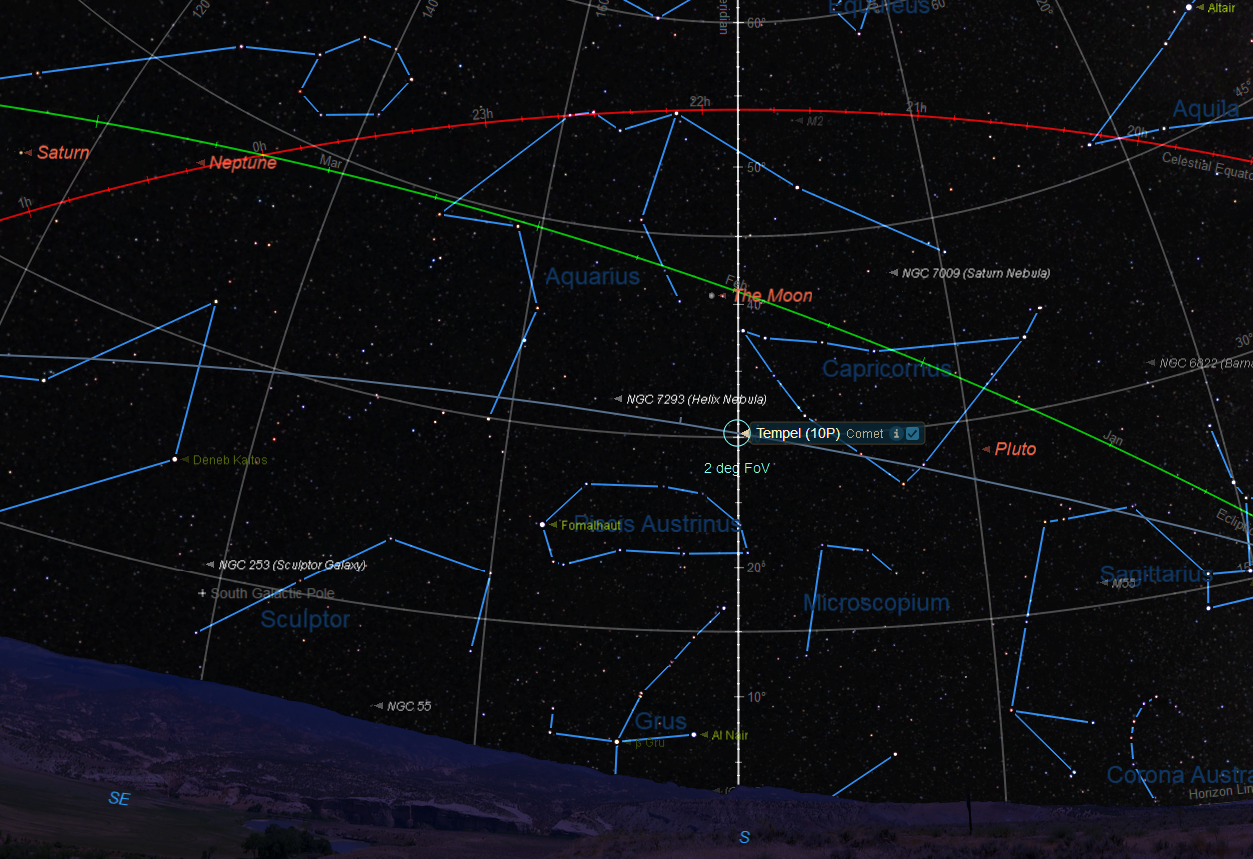 Looking southward at 3AM local on the morning of July 31st. Credit: Starry Night.
August
2-Passes into the southern constellation Piscis Austrinus
2-Reaches perihelion 1.418 AU from the Sun
3-Makes its closest passage near Earth at 0.414 AU (62 million kilometers) distant.
10-Passes 7’ from the +5.4 magnitude star Eta Piscis Austrini
22-Passes 35’ from the +4.9 magnitude star Tau Piscis Austrini
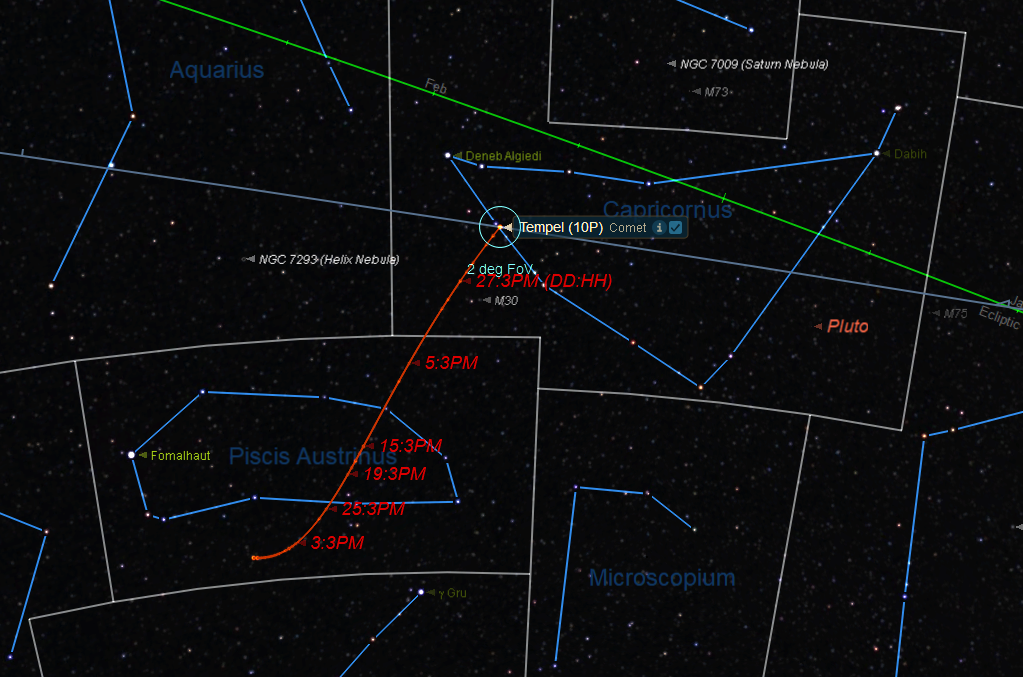 The celestial path of comet 10P/Tempel through September. Credit: Starry Night.
The comet drops back below +10 magnitude in mid-September, headed back out for aphelion on April 12th, 2029.
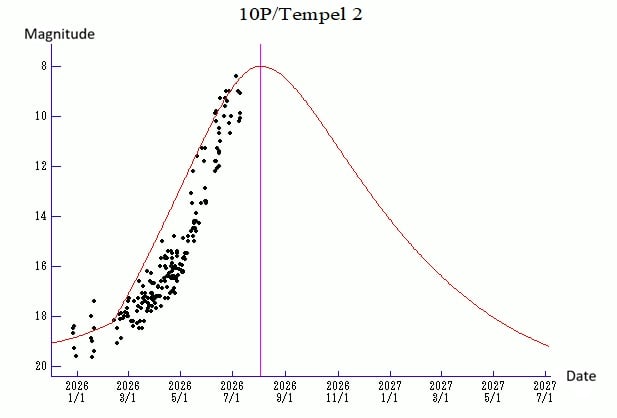 The projected and observed (black dots) magnitude light curve for Comet 10P/Tempel through 2026. Credit: Adapted from Seiichi Yoshida’s Weekly Information About Bright Comets.
If skies are clear, set your alarm and don’t miss your chance to see Comet 10P/Tempel in action.