Бангладеш улсад загасчлах үеэр амьд могой загас шулуун гэдсээр дамжин бүдүүн гэдэс цоолсон ховор тохиолдол бүртгэгдсэнийг олон улсын анагаах ухааны сэтгүүлд нийтэллээ.
Бангладеш болон Балбын эмч нарын мэдээлснээр, 55 настай эрэгтэй хэвлийн хөндийн хүнд хэлбэрийн өвдөлт, хэвлийн гялтангийн үрэвслийн шинж тэмдэгтэйгээр эмнэлэгт ханджээ. Өвчтөн загасчлах үеэр хувцсаараа дамжин шулуун гэдсэнд нь могой загас орсон болохыг хүлээн зөвшөөрсөн байна. Тэрээр уг асуудал өөрөө аяндаа шийдэгдэнэ хэмээн найдаж, эмнэлгийн тусламж авахаас зайлсхийж байжээ.
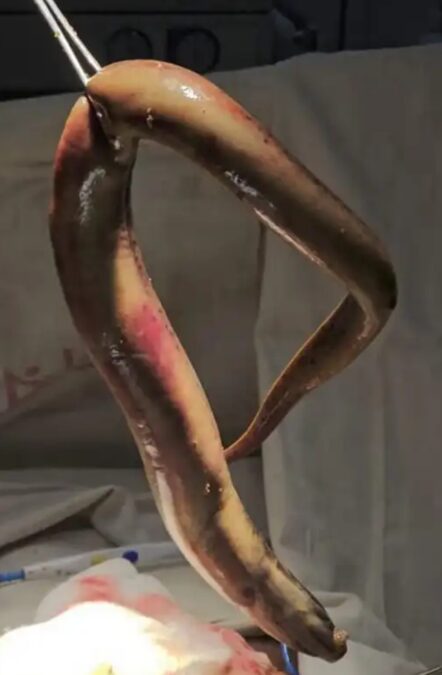
Эмнэлзүйн шинжилгээгээр өвчтөний хэвлийн хөндийд хий хуримтлагдсан нь тогтоогдсон бөгөөд яаралтай мэс заслын явцад бүдүүн гэдэсний доод хэсэгт 5 см-ийн цооролт үүссэн байсныг илрүүлжээ. Мэс заслын багийнхан 65 см урттай амьд могой загасыг гаргаж авсан байна. Ийм төрлийн гэмтэл нь маш ховор бөгөөд 2004 онд Хонконгт бүртгэгдсэн тохиолдлоос хойш анагаах ухааны түүхэнд хоёр дахь удаагаа тохиолдож буй нь энэ юм.
Эмч нар өвчтөнийг колостомийн хагалгаанд оруулсны дараа дөрөв хоногийн дотор биеийн байдал нь сайжирч эмнэлгээс гарсан болохыг дурджээ. Судлаачид хэвлийн хөндийн шалтгаан тодорхойгүй өвдөлтийн үед тухайн хүний ажил мэргэжил болон түүхэнд холбогдох нарийн мэдээллийг цаг алдалгүй тодруулах нь оношилгоонд чухал ач холбогдолтойг онцолсон байна.
Дэлгэрэнгүйг эх сурвалжаас харах
↓Эх сурвалжийг нээх ↓
You may already be keeping live eels well away from any sensitive parts of your body – or indeed any parts of your body at all – but for those who are in any doubt about what the best policy is, we have the case of an unfortunate 55-year-old fisherman.
The man, from Bangladesh, was seeking medical treatment for “severe abdominal pain and signs of peritonitis” – a potentially life-threatening infection of the abdominal lining.
As reported in the International Journal of Surgery Case Reports by medics from Bangladesh and Nepal, the situation was quickly recognized as being serious, and a whole battery of tests was carried out.
When pressed, the man admitted an eel had found its way into his clothing and then up his rectum during a fishing trip the day prior. However, he had been reluctant to seek medical assistance – and had hoped that the fish “would pass out on its own”.
“Foreign body ingestion or insertion is not uncommon, particularly in populations engaged in certain occupations or recreational activities,” write the clinicians in their published case report.
“However, the penetration of the intestinal wall by a live animal, such as a fish, is an unusual and scarcely documented event.”
The records show this has only happened once before: in 2004, in Hong Kong. That case is even stranger, because in that instance the 50-year-old man in question had deliberately inserted the eel up his butt “in an attempt to relieve constipation”.
To be completely clear: For the good of your health, you should keep live eels well away from your butt.
In the Bangladesh case, scans showed a risk of peritonitis, and pneumoperitoneum – air trapped in the wrong place in the abdomen, strongly suggesting the intestinal wall was broken and that dangerous infection was likely.
After an emergency surgery was initiated, doctors found a 5 centimeter (2 inch) hole in the sigmoid colon, the lowest part of the large intestine. They were also able to pull out the eel, still alive and squirming, which measured 65 cm (about 26 inches).
Most of us would be passing out about now, but not the dedicated professionals treating the fisherman, who continued to treat the incident as a learning experience.
“The mechanism by which the eel fish in our case traversed the anal canal and perforated the sigmoid colon raises intriguing questions regarding the anatomy and behavior of both the fish and the human gastrointestinal tract,” write the medical team.
Besides the obvious guidelines about live fish and openings into the human body, there are several other takeaways that the surgery team point to. First, that this kind of intestinal perforation should be considered if patients are experiencing abdominal pain.

Second, it’s well worth pushing patients on recent history and past conditions. As awkward as it might be, it could just save their life.
“Prompt and thorough history-taking is essential to elicit relevant information, as patients may be hesitant to disclose embarrassing or unusual circumstances surrounding their symptoms,” write the doctors.
Third, it’s important to use a combination of scans and tests as a matter of course, the medics say. This can help resolve unusual presentations like this, so that action can be taken before too much damage is done.
After a colostomy was carried out, our 55-year-old fisherman recovered well, the case report says. He was released from hospital four days after being admitted, with no further pain or complications – but perhaps having learned a lesson about eels and how wary to be around them.
Related: New Zealand Teen Loses Part of His Bowel After Swallowing Nearly 200 Magnets
“This case highlights the importance of considering unusual causes of abdominal pain, particularly in relevant occupational history,” write the report authors.
“Prompt surgical intervention is crucial for favorable clinical outcomes.”
A report on the case has been published in the International Journal of Surgery Case Reports.
This article was fact-checked by Rachel Garner and edited by Rebecca Dyer. While we pride ourselves on our process, we are only human. If you spot a mistake, please let us know.