
БНХАУ-д боловсрол эзэмшсэн хоёр математикч математикийн салбарын хамгийн нэр хүндтэй шагнал болох Филдсийн медалийг нэгэн зэрэг хүртсэн нь тус улсын шинжлэх ухааны түүхэн дэх чухал үйл явдал боллоо.
АНУ-д ажиллаж буй Хятадын иргэд болох 35 настай Ван Хун болон 37 настай Дэн Юү нар дөрвөн жил тутамд олгодог тус шагналыг хүртжээ. Тэд Бээжингийн их сургуулийг төгссөн бөгөөд зуу гаруй жилийн турш шийдэгдээгүй байсан математикийн томоохон бодлогуудыг амжилттай тайлснаар уг шагналыг хүртсэн байна. Ингэснээр БНХАУ АНУ, Франц, Их Британи, ОХУ-ын дараа нэг ёслолоос хоёр Филдсийн медальтан төрүүлсэн тав дахь улс болж, Ази тивд анхдагч нь боллоо.
Ван Хун нь гурван хэмжээст “Kakeya”-гийн таамаглалыг баталснаар Филдсийн медаль хүртсэн гурав дахь эмэгтэй математикч болсон бол Дэн Юү нь Германы математикч Давид Хилбертийн 1900 онд дэвшүүлсэн 23 бодлогын нэг болох зургаа дахь асуудлыг шийдвэрлэхэд оруулсан хувь нэмрээрээ үнэлэгджээ. Эдгээр ололт амжилт нь Хятадын математикийн салбарын хувьд олон арван жил хүлээсэн томоохон амжилт гэдгийг салбарын эрдэмтэд онцолж байна.
Шагналын эздийг албан ёсоор зарлахаас өмнө нэрс нь цахим орчинд задарсан явдал гарсан ч энэ нь тэдний амжилтын ач холбогдлыг бууруулсангүй. БНХАУ-ын төрийн мэдээллийн хэрэгслүүд болон Бээжингийн их сургууль уг үйл явдлыг өндрөөр үнэлж, эрдэмтдийнхээ амжилтыг бахархалтайгаар зарлажээ. Мөн Францын Ерөнхийлөгч Эммануэль Макрон Ван Хунд баяр хүргэж, шинжлэх ухааны салбарт Францыг сонгохыг уриалсан байна.
Дэлгэрэнгүйг эх сурвалжаас харах
↓Эх сурвалжийг нээх ↓
Two US-based Chinese mathematicians have won the Fields Medal, becoming the first representatives of their country to win the maths equivalent of the Nobel Prize.
Hong Wang, 35, and Yu Deng, 37, were among four winners announced on Thursday of the Fields Medal, a prestigious award given every four years to the best young researchers in the field of maths.
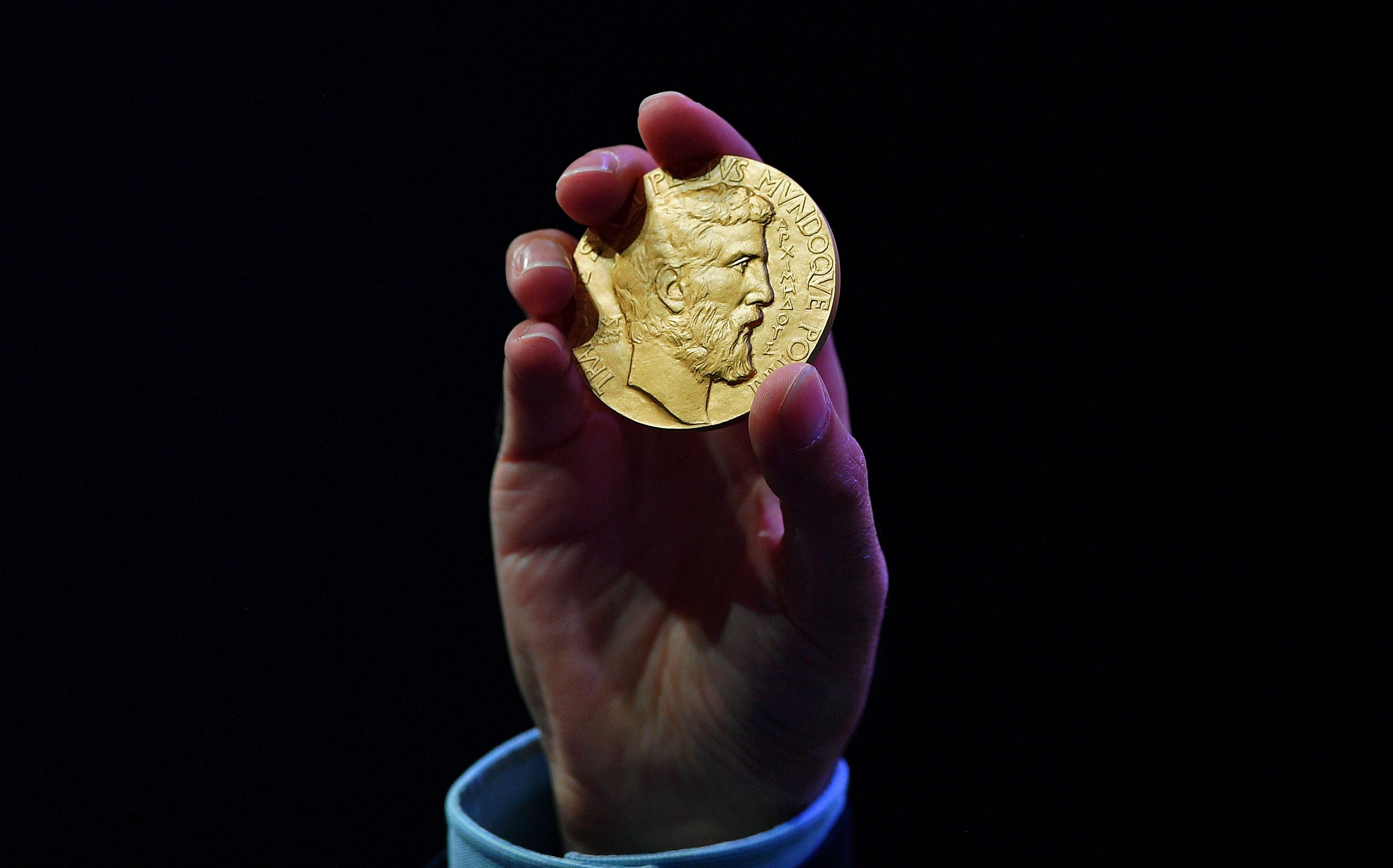
The two others were John Pardon from the US and Jacob Tsimerman from Canada. The honour is accompanied by 15,000 Canadian dollars (£8,000) and a gold coin with the face of the ancient Greek mathematician Archimedes.
Ms Wang and Mr Deng, who both attended Peking University in China, were given the award for solving maths problems that challenged mathematicians for more than 100 years.
This is the first time that two mathematicians who were educated in mainland China have received the Fields Medal in the same year.
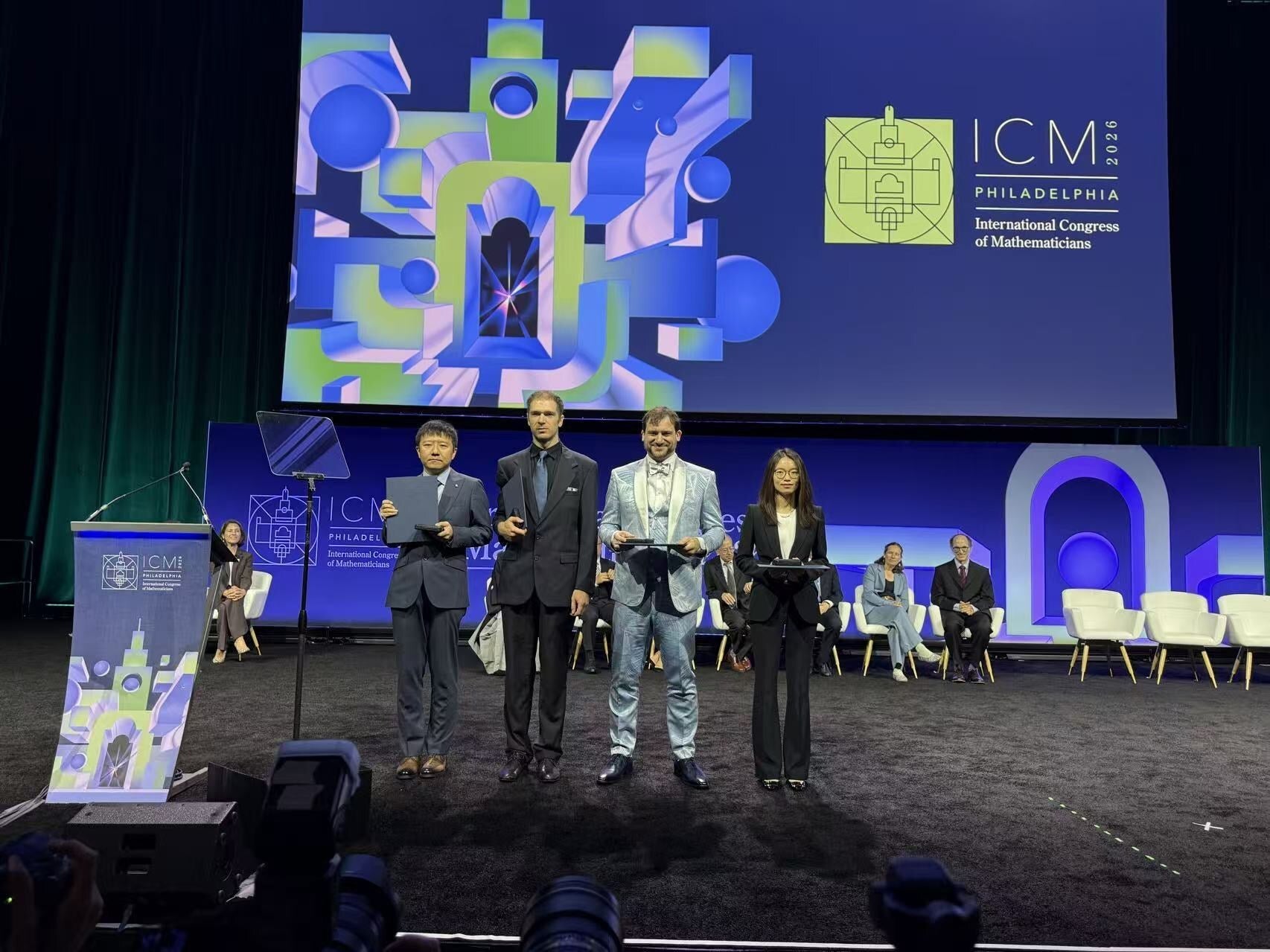
The achievement makes China only the fifth country, after the US, France, the UK and Russia, to produce two Fields medallists at a single ceremony, and the first in Asia to do so.
Before Ms Wang and Mr Deng, only two mathematicians of Chinese heritage had received the Fields Medal: Shing-Tung Yau in 1982 and Terence Tao in 2006. Neither was a Chinese citizen when they won the honour. The milestone has long been viewed as a landmark moment for China’s mathematics community.
Ms Wang, a professor at New York University and France’s Institut des Hautes Études Scientifiques, is only the third woman to receive the honour.
She was recognised for resolving the three-dimensional Kakeya conjecture, a decades-old geometry problem based on a puzzle first posed by Japanese mathematician Sōichi Kakeya in 1917: what is the smallest area within which a needle can be rotated in every direction?
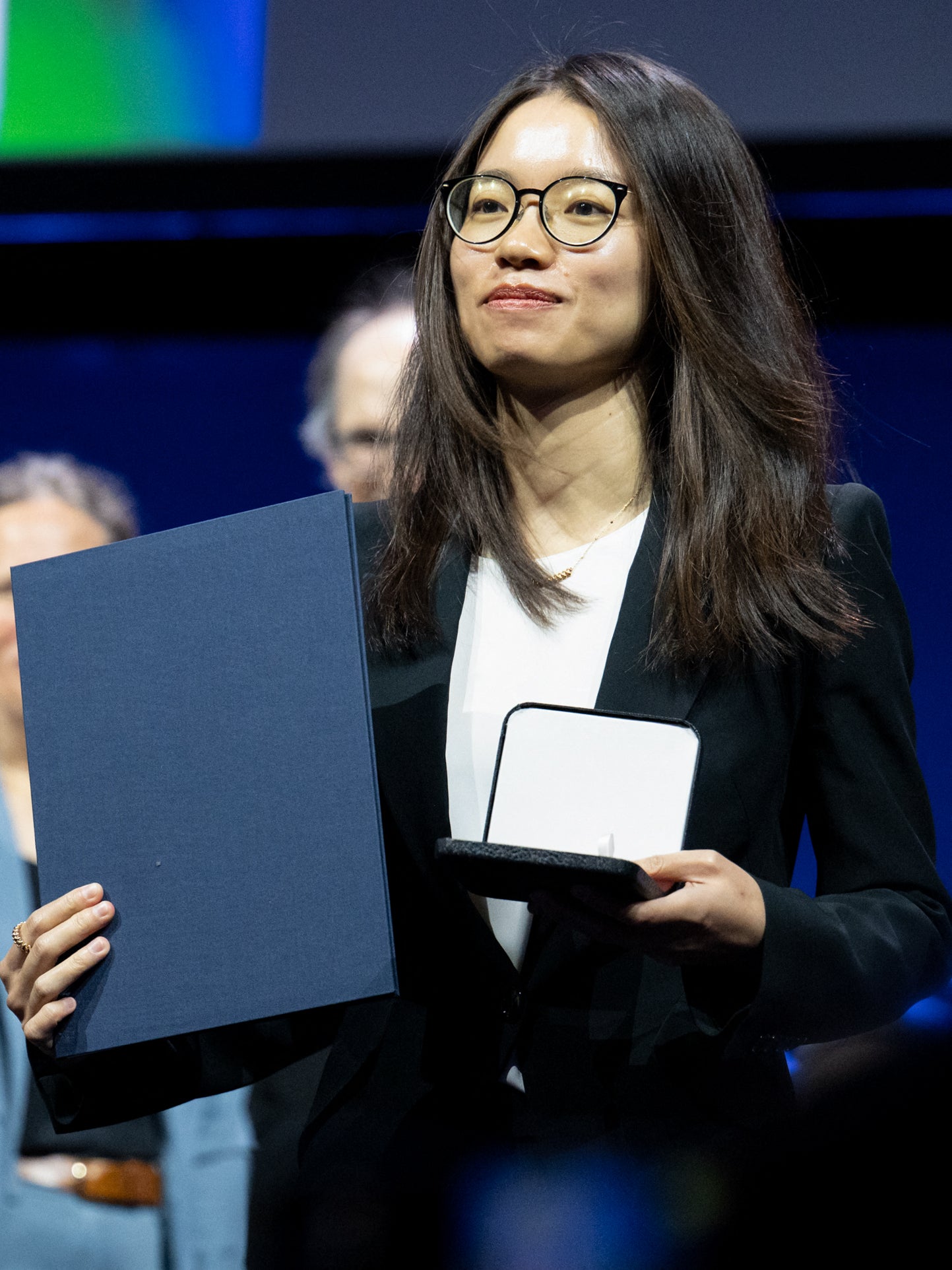
While Russian mathematician Abram Besicovitch solved the original problem in 1919 Ms Wang solved the three-dimensional Kakeya conjecture, a modern extension of Kakeya’s idea.
“It’s just a problem about how straight lines can intersect one another,” said Jonathan Hickman, a mathematician at the University of Edinburgh earlier said about the problem. “But there’s such an incredible richness encoded in it – an incredible array of connections to other problems.”
The three-dimensional Kakeya conjecture asks: As you change the width of the pencil, how does it affect the volume of space that it traces out?
She also won for major advances in harmonic analysis and geometric measure theory.
Ms Wang said the award was deeply meaningful to both her and her collaborators.
She recalled first learning about the Fields Medal as a high school student while reading about Terence Tao’s 2006 win in a mathematics magazine.
“I was quite excited then,” she said. “So I’m also excited today.”
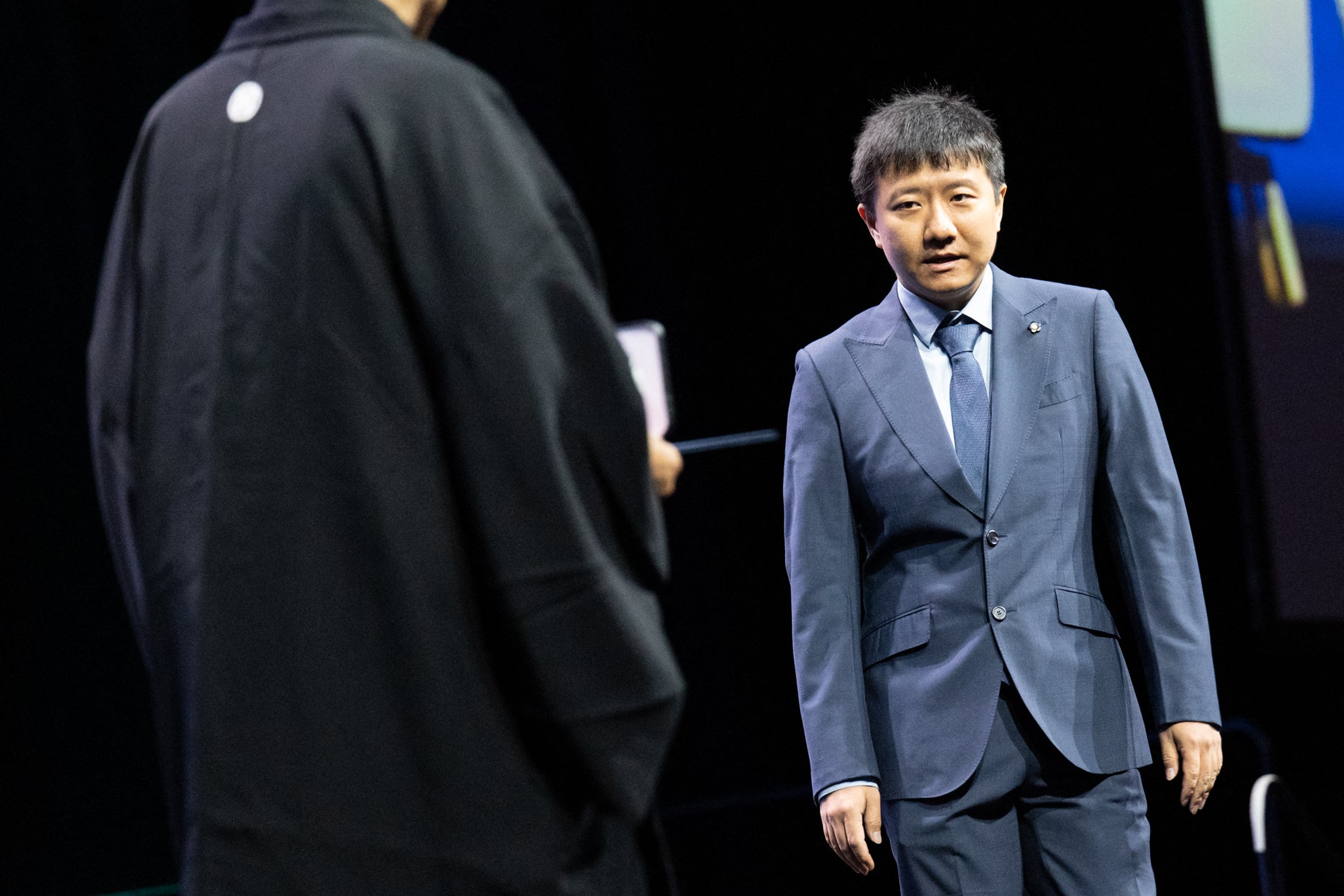
Mr Deng, a professor at the University of Chicago, was recognised for his work on one of the 23 landmark problems posed by German mathematician David Hilbert in 1900, another century-old problem widely regarded as a benchmark for progress in modern mathematics, according to the university.
Hilbert’s question came to be known as Hilbert’s Sixth Problem and asked: Can the behaviour of a large system – such as a gas or fluid – be calculated from the motions of its individual particles?
He said it is a “really great honour to have my name listed after all those great mathematicians I’ve always been admiring”.
Mr Deng and his collaborators solved a key problem in the broader effort to mathematically connect the equations that describe the behaviour of gases from the smallest, particle-level scale to the largest, observable scale, the Wall Street Journal reported.
An avid player of the ancient board game Go, he was recognised for research that laid the foundations for the breakthrough.
The announcement of this year’s winners came with a twist –although recipients had been informed of their awards months earlier and instructed to keep the news confidential, their identities leaked online last week after hackers discovered the names hidden on the conference website for the International Congress of Mathematicians.
“Some of my friends congratulated me, saying that they guessed maybe this is true and then they want to congratulate me,” Ms Wang said. “But I didn’t give them any confirmation.”
Chinese state media hailed Mr Dang and Ms Wang for their historic wins, covering their achievements extensively. Articles detailed their educational background, personal interests and other achievements to celebrate their win.
China Daily, a state-run newspaper, noted the historic nature of China producing two Fields Medalists at the same ceremony.
Peking University, where the two finished their undergraduate studies in 2007, said the awards were a moment of pride for Chinese mathematics.
“For the Chinese mathematics community, this is a dream we have been hoping to realise for decades,” said Shing-Tung Yau, the first ethnic Chinese Fields medallist.
“I am very happy,” Mr Yau said, adding that he had long hoped that at least one Chinese mathematician would win the prize.
On Thursday, Ms Wang received a call from French president Emmanuel Macron, who congratulated her on receiving the medal.
“She embodies the excellence of our research and our training,” Macron said in a post on X. “Choose France for science,” Mr Macron said.

