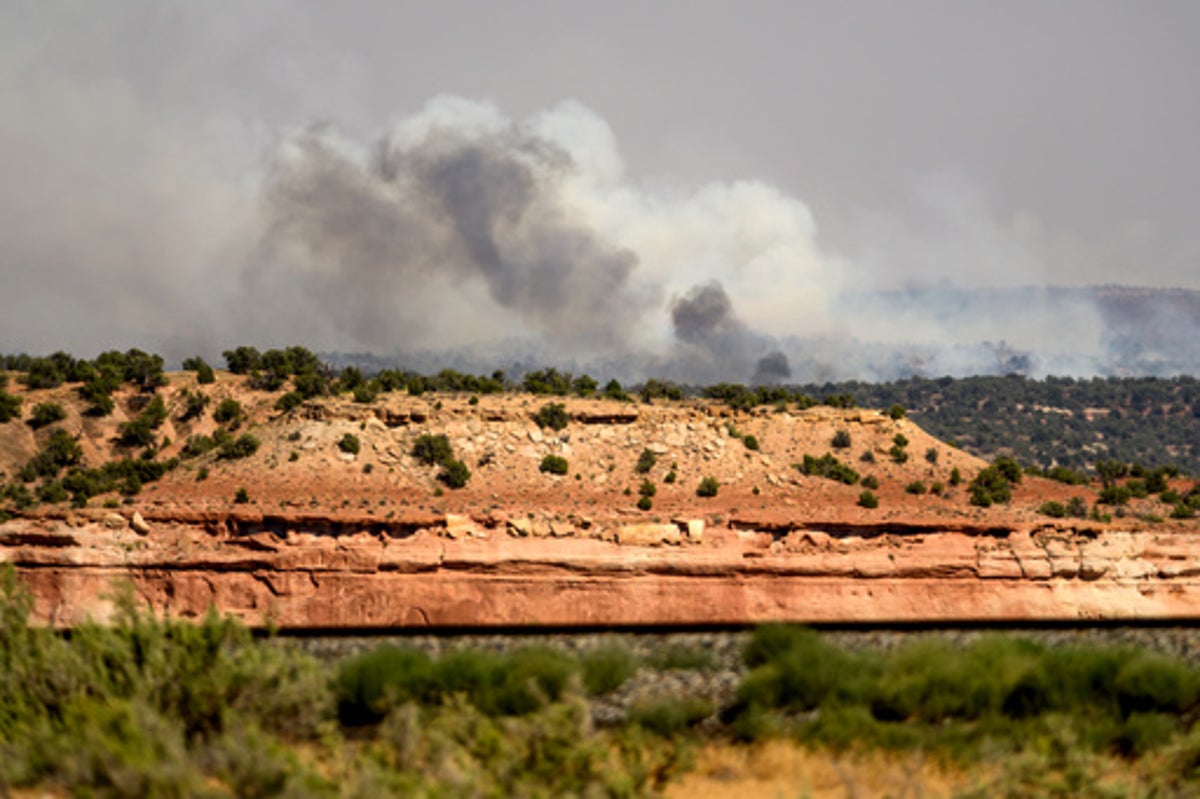
АНУ-ын Дотоод хэргийн яам Колорадо болон Юта мужийн хил орчимд гарсан ойн түймрийг унтраах ажиллагааны үеэр дөрөв дэх гал сөнөөгч амиа алдсаныг баталлаа.
Зургаадугаар сарын 27-нд гарсан “Knowles” хэмээх түймрийг унтраахаар ажиллаж байсан Нейтан Мэтьюс баасан гарагт шархаа даалгүй нас баржээ. Тэрээр түймрийн голомтод бүслэгдэж, зугтах гарцгүй болсон “burnover” хэмээх аюултай нөхцөл байдалд өртсөн Helitack багийн гишүүн байв. Уг түймрийн улмаас өмнө нь Эмили Баркер, Ник Хатчерсон, Сидни Уотсон нар амиа алдсан юм.
Тус бүс нутагт гарсан хэд хэдэн жижиг түймэр нэгдэн “Snyder” нэртэй томоохон түймэр болж, 30,202 акр талбайг хамарсан байна. Одоогоор түймрийг бүрэн унтраасан ч энэ жил Колорадо мужид 242,000 гаруй акр талбай шатаж, түүхэн дэх хамгийн том түймрийн тохиолдлууд бүртгэгдлээ.
Дотоод хэргийн яамны мэдээлснээр, энэ онд Колорадо мужид түймэртэй тэмцэх явцдаа амиа алдсан нийт гал сөнөөгчийн тоо тавд хүрсэн байна. Үүний өмнө, долдугаар сарын 12-нд Николас Дэйл хэмээх нисгэгч гал унтраах ажиллагааны үеэр нисдэг тэрэг нь осолдож амиа алдсан юм.
Болрадогийн их сургуулийн эрдэмтэд уур амьсгалын өөрчлөлт болон түймэрт өртөмтгий бүсүүдэд суурьшлын бүсээ тэлж байгаа нь ирээдүйд гамшгийн эрсдэлийг улам нэмэгдүүлж болзошгүйг анхааруулж байна. Мэргэжилтнүүдийн үзэж буйгаар, түймрийн давтамж, хүч чадлыг бууруулахын тулд уур амьсгалын бодлогыг эргэн харах шаардлагатай байгаа аж.
Дэлгэрэнгүйг эх сурвалжаас харах
↓Эх сурвалжийг нээх ↓
The Department of the Interior confirmed that a fourth firefighter has died while fighting a fast-moving wildfire near the border of Colorado and Utah in June.
Nathan Matthews, 43, of Lincoln, Nebraska, died on Friday according to a department press release.
“This is another heartbreaking loss for our wildland fire family,” U.S. Wildland Fire Service Chief Brian Fennessy said in a statement.
Matthews was among a group of firefighters who were caught in a “burnover” on June 27. A burnover occurs when a fire’s spread surrounds an area, closing off all routes of escape.
He was a member of a Helitack crew, which is a group of firefighters who are dropped into remote areas by helicopter to fight newly formed, quickly spreading fires in hopes of stopping its expansion into a larger blaze, ABC News reports.
Three other firefighters at the scene were killed by the fire; Emily Barker, 38, Nick Hutcherson, and Sydney Watson, 26. All three died at the scene.
“We mourn the loss of Nate while continuing to grieve the deaths of Emily, Nick and Sydney. Our hearts are with their families, friends, crewmates and everyone impacted by this tragedy,” Fennessy said. “We remain committed to supporting those affected and honoring the legacy of all four firefighters who made the ultimate sacrifice in service to our nation.”
Matthews and one other firefighter were taken for medical treatment. While Matthews ultimately died, the condition of the other firefighter has not been made public.
“Out of respect for the privacy of the injured firefighter and the family, we are not releasing information regarding the medical condition, treatment or location of care at this time,” a DOI spokesperson said in a statement to The Colorado Sun. “We will continue to provide information as appropriate and as circumstances allow.”
Matthews is the fifth firefighter to be killed battling wildfires in Colorado this year. Nicholas Dale, 56, was flying a firefighting mission in a helicopter and died on July 12 when his aircraft crashed into the Silver Jack Reservoir near Ouray.
The Knowles fire began on June 26 along with several other smaller fires in eastern Utah and western Colorado. The fires merged and formed the larger Snyder fire, which burned 30,202 acres before it was fully contained.
This year has been an especially difficult year for Colorado firefighters trying to stop wildfires. The state has seen three of its largest fires on record this year, and more than 242,000 acres have been burned as of late July.
Virginia Iglesias, the director of Earth Lab at the Cooperative Institute for Research in Environmental Sciences at Colorado University, Boulder, said that the wildfires are “here to stay” and warned that inaction toward climate change will ensure they get worse.
“If we keep doing what we’ve been doing—if we don’t take action on climate change and reduce fuel accumulation, and we continue developing in fire-prone areas, people in Colorado will face an increased risk of losing their homes to wildfires in the future,” she told Colorado University.

