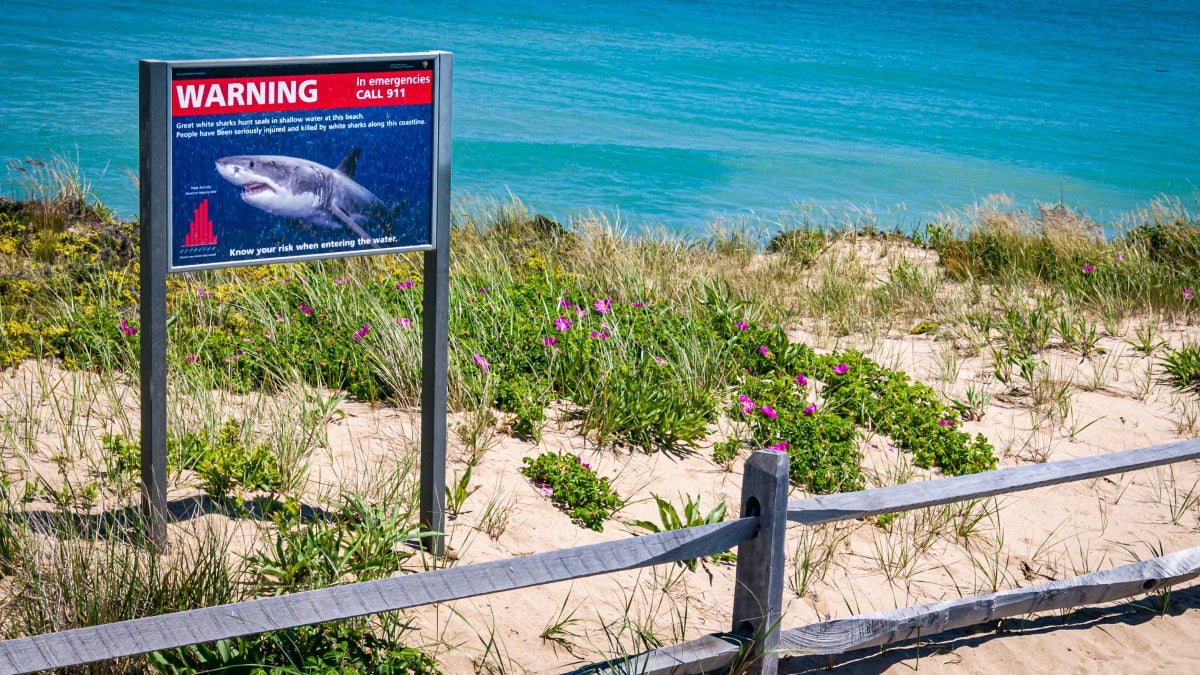
Далайн усны температур нэмэгдэж байгаатай холбоотойгоор акулуудын тархац өөрчлөгдөж буй нь далайн эрэгт амарч буй хүмүүсийн дунд болгоомжлол төрүүлж байна.
Дэлхийн далайн усны температур сүүлийн хэдэн арван жилд тасралтгүй нэмэгдэж байгаа нь акулуудыг илүү хойд зүг рүү, тухайлбал Мэн булан болон Канадын эрэг орчмын ус руу нүүхэд хүргэж байна. Тухайлбал, бар акул (tiger shark) болон бух акулын (bull shark) тархацын бүс нутаг урьд өмнөхөөсөө хэдэн зуун миль хойд зүгт тэлжээ. Энэхүү байгалийн өөрчлөлт нь акулууд хүмүүсийн сэлдэг гүехэн усанд илүү ойрхон үзэгдэх нөхцөлийг бүрдүүлж байгаа ч энэ нь аюул нэмэгдсэн гэсэн үг биш юм.
Далайн биологич Дэвид Шиффманы үзэж буйгаар акултай тааралдах, тэднийг ажиглах, хазуулах гэсэн ойлголтуудыг ялгаж салгах нь чухал. Ихэнх тохиолдолд акул хүн байгааг мэдсэн ч харилцан үйлчлэлгүй өнгөрдөг бөгөөд “акулын дайралт” гэж нэрлэгддэг мэдээллүүдийн дийлэнх нь хүн зүгээр л акулын ойролцоо сэлснээс үүдэлтэй айдас байдаг. Өдгөө хүн бүр гар утас болон дрон ашиглан бичлэг хийх боломжтой болсон нь акултай таарсан тухай мэдээллийг олшруулж байгаа боловч бодит эрсдэл нь селфи хийж байгаад хаднаас унаж амиа алдах тохиолдлоос ч хамаагүй бага хэвээр байна.
АНУ-ын эрэг орчмын бүсүүдээс Массачусетс мужийн Кейп Код нь цагаан акулын нүүдлийн гол цэг болсон бол Флоридагийн Волусиа тойрог нь акулын хазалт бүртгэгдсэн тоогоороо тэргүүлдэг. Гэсэн хэдий ч Нью-Йорк зэрэг газруудад нэвтрүүлсэн дроны хяналт, аюулгүй байдлын системүүд нь эрэг орчмын усанд сэлэгчдийн эрсдэлийг бууруулахад үр дүнтэй ажиллаж байна.
Далайн эрэгт аялахдаа эрсдэлийг бууруулахын тулд бусад хүмүүстэй хамт сэлэх, гүехэн усанд байх, гол мөрний адаг болон хадны ирмэгээс хол байхыг мэргэжилтнүүд зөвлөж байна. Мөн махчин амьтад хамгийн идэвхтэй байдаг үүр цайх болон бүрэнхий болох цагаар усанд орохоос зайлсхийх нь хамгийн энгийн бөгөөд үр дүнтэй урьдчилан сэргийлэх арга юм.
Дэлгэрэнгүйг эх сурвалжаас харах
↓Эх сурвалжийг нээх ↓
Every July, Discovery Channel’s Shark Week fills American screens with teeth and blood and dread. It’s the longest-running cable series in television history, on the air since 1988, and for one week a year it shapes how most people picture sharks.
It’s an arresting image, and one completely out of touch with reality.
If you’ve spent any real time in the ocean, a shark has almost certainly been near you, knew you were there, and left you alone without you ever noticing.
I say this as someone who goes looking for them. I’m an avid scuba diver, and I think responsible shark tourism is one of the great wildlife experiences left on the planet.
Seeking out a shark for a thrill is a far cry from running into one on a random Saturday at your favorite beach. Two things have changed that have increased your odds of experiencing that second scenario: Sharks are shifting into waters where they were once uncommon, following warmth and the prey that moves with it, and nearly everyone at the beach now carries a camera good enough to catch a fin from a hundred yards out.
Together those trends produce a summer of headlines that read like an invasion, even as the underlying numbers stay calm.
Outside interviewed David Shiffman,a Washington, D.C.-based marine biologist and author of the book Why Sharks Matter, about the biggest myths surrounding shark sightings, and shark bites. If you’re shark-curious or worried about seeing them on U.S. beaches this summer, here’s everything you need to know about the likelihood of seeing one, if an encounter is likely to be dangerous, and how to avoid getting bit.
Where and Why Sharks Are Shifting Their Ranges
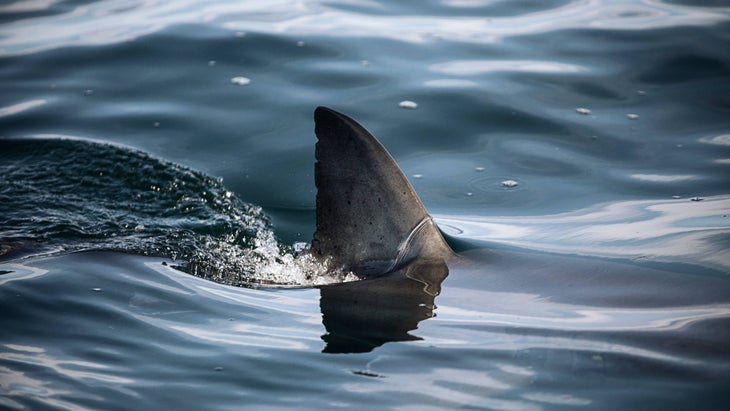
The driving force is heat. Global ocean temperatures have climbed roughly 32 degrees Fahrenheit per decade since 1981, with the pace quickening to about 0.18 since 1981, and some places are warming much faster than that average. The Gulf of Maine has heated up faster than 99 percent of the global ocean over the past decade. As the water warms, sharks follow the temperatures and the meals they’re built for.
Tiger sharks offer the clearest example of this shift. A National Oceanic and Atmospheric Administration (NOAA) Fisheries and University of Miami study published in Global Change Biology found that the northern edge of prime tiger shark territory has shifted more than 249 miles north since the eighties. Bull sharks are on the move too, and because they favor the same warm, shallow, near-shore water that swimmers do, their shift is the one East Coast beachgoers may actually notice. Florida’s Indian River Lagoon was long considered the northernmost bull shark nursery on the Atlantic coast, until a 2018 study documented the sharks establishing a new one hundreds of miles up the coast, in North Carolina’s Pamlico Sound, the largest estuarine lagoon on the East Coast.
Shannon Barry, a Florida Tech researcher who studies these nurseries, explains that as the coast warms, the shallows these sharks use to give birth are “moving into the temperature range preferred by juveniles.”
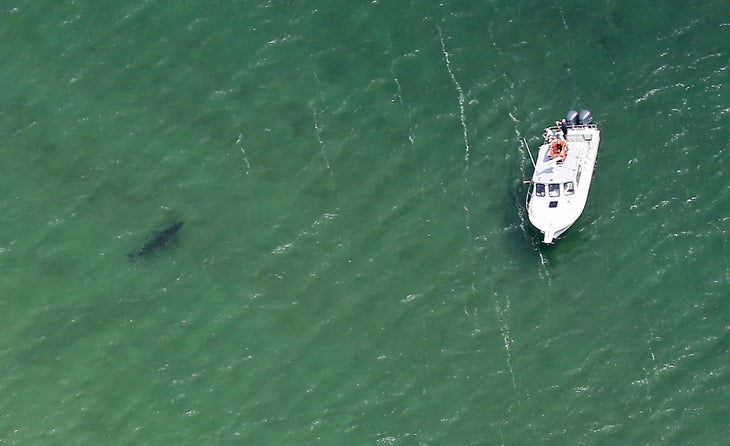
Great whites are pushing north hardest of all. Sightings off Cape Cod have become routine in recent years especially, and newer data shows the animals moving well past the state into New Hampshire, Maine, and Canadian waters, with detections off Halifax, Nova Scotia, rising about two and a half times between 2018 and 2022.
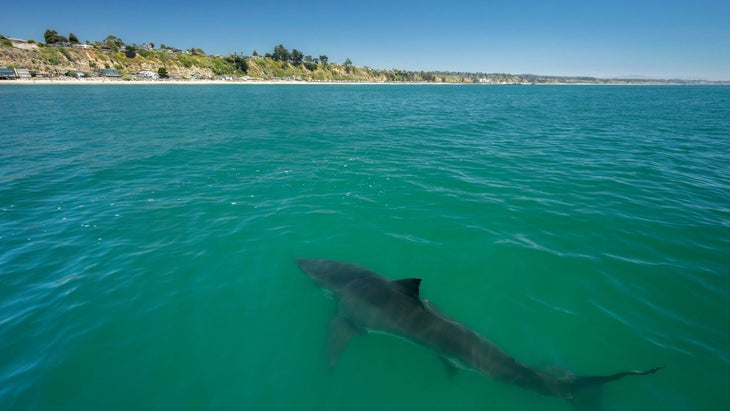
The West Coast is running the same accidental experiment: during the 2014–2016 Pacific marine heatwave, the cold edge of juvenile white sharks’ range jumped from an average of 34 degrees north latitude to 38.5, carrying young sharks into California’s Monterey Bay in unprecedented numbers.
The Difference Between a Shark Encounter, Shark Sighting, Shark Bite, and Shark Attack
These phrases mean very different things but are often conflated and presented as if every time a shark is near a human there is a major risk. Understanding how they differ is critical to parsingout what’s actually happened when a shark is mentioned.
Shark encounter: A shark is near you, aware of you, and leaves you alone. You may not notice it. “Millions of people experience that every day, and they don’t even realize it,” D.C. marine biologist Shiffman tells Outside. “If you’ve been in the ocean for any significant amount of time there was a shark not that far from you, and it knew you were there and left you alone.”
Shark sighting: Somebody personally witnesses a You see a shark in the water, or the shark is documented by researchers or officials—including via drone. Most sightings involve the shark engaged in normal behavior—hunting seals, migrating, cruising past—with no contact with people.
Shark bite: The shark makes physical contact and causes injury. Scientists prefer this term because it’s precise: either the shark bit you or it didn’t.
Shark attack: A loaded word implying the shark acted with malice. The term conflates everything from a minor bite requiring a bandage to a fatal mauling, and can include incidents where the shark never touched anyone at all.
About a third of shark attacks reported in the media are “an incident where the shark did not physically touch the human at all, but just swam near them in a way that the human found threatening,” Shiffman tells Outside. “When you hear there’s X number of shark attacks, without distinguishing between those very rare tragic instances where someone’s actually badly hurt or even killed versus a shark swam near a tourist and the tourist freaked out, it presents this false idea that sharks are more dangerous than they really are.”
The “attack” framing also implies the rogue shark myth at the center of the American blockbuster Jaws—that an individual shark develops a taste for human flesh. “That’s not real,” Shiffman says. Across all of recorded history, he can point to only “one, maybe two cases where we know for sure that one individual shark bit more than one human.”
Why More Shark Sightings Don’t Mean You’re In More Danger
A wider habitat range isn’t the same as more sharks in the water, and it certainly doesn’t put more of them where you happen to be standing.
Today’s shark populations are “very slightly more than in the last few decades, but way fewer than there used to be,” Shiffman toldOutside.
The reason you might feel like there are more sharks is because “everyone who goes to the beach has a camera, be it a phone camera, a GoPro, a drone,” he says. A swimmer reporting a sighting to the local news used to be nothing, but “people saying, ‘I have this HD video of it swimming right near me’—that’s news, even if the shark isn’t doing anything different than before.”
He offers a sense of scale worth carrying to the beach: a typical year brings roughly 50 to 70 bites worldwide, most requiring a bandage rather than a surgeon. “More people in a typical year die from taking a selfie and falling off a cliff,” Shiffman tells Outside.
Indeed, an estimated 30 to 40 people die trying to take a selfie annually, compared to about four or fiveglobal shark deaths.
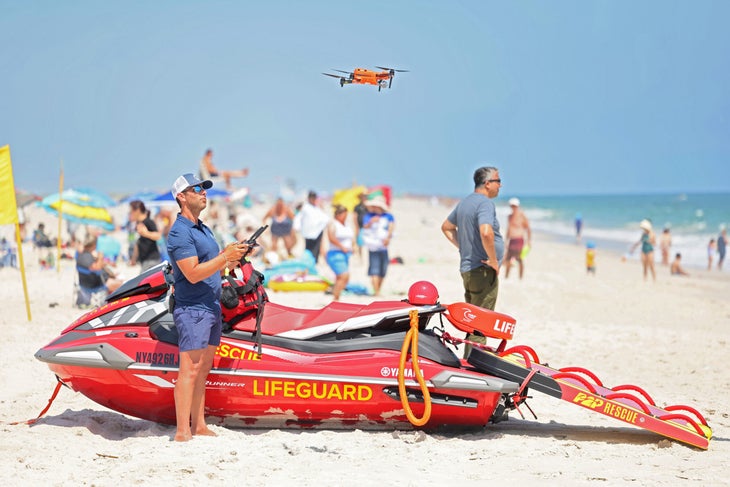
And some of those shark-spotting drones are actually making waters safer: New York now runs a fleet of 28 drones and 48 certified operators patrolling Long Island’s beaches—Jones Beach, Robert Moses, Gilgo, Montauk Point. On Cape Cod, the Atlantic White Shark Conservancy’s Sharktivity app pings you the moment a white shark is confirmed near a public beach. This type of phone alert may increase given the June adoption of Lulu’s Law, federal legislation originally introduced in July 2024, named after shark attack survivor Lulu Gribbin that requires the Federal Communications Commission (FCC) to allow amber-alert type notifications to be sent in the region of a shark attack. The eyes in the sky that make the headlines feel scary can actually be the ones keeping the water safe.
Where Shark Sightings Are Most Common
Cape Cod, Massachusetts
Cape Cod has emerged as the sighting epicenter for the Atlantic coast in recent decades. Greg Skomal, a Massachusetts marine biologist who tracked white sharks off the coast of New England since the eighties,didn’t encounter one near the Cape until 2004. A four-year population study estimated roughly 800 individual sharks visited the area between 2015 and 2018 alone, making it the only known white shark aggregation site in the North Atlantic. Chatham and the water off Monomoy Island see concentrated great white activity drawn by a booming gray seal population, with activity peaking from August into October. The sharks increasingly range north into Maine and New Hampshire, extending the seasonal sighting range well beyond historical patterns.
Monterey Bay, California
This central Californian marine adventure hub now holds juvenile white sharks in numbers it never used to, a legacy of the marine heatwave a decade ago that pushed young sharks northward into warmer central California waters where they remain seasonally today.
Where Shark Bites Are Most Common
Volusia County, Florida
Volusia County remains the world’s bite capital by a wide margin. New Smyrna Beach, a popular coastal destination on Florida’s east coast known for its surfing, and its surrounding water have logged 366 confirmed unprovoked bites since 1882, according to the International Shark Attack Files. Nearly all are minor bites from small coastal sharks in the surf zone.
Last year, Shark Week ran a program calling the area “Florida’s Death Beach.”
“You’d think a place called Death Beach would be a place where at least one person has ever been killed,” Shiffman tells Outside. “That’s not the case. No one has ever been killed by a shark at Florida’s ‘Death Beach.’” The bites there run “normally of the required-a-band-aid, not-stitches level of severity.”
The Carolinas
North and South Carolina are newer bull shark territory, where two swimmers were bitten at Hilton Head Island, South Carolina, within a single week last June, marking an expansion of bull shark nurseries northward from their traditional grounds in Florida.
Long Island, New York
New York’s 118-mile-long island is notable for a dramatic but volatile recent spike in bites tied to a specific cause. Before 2022, New York had recorded only about a dozen unprovoked bites in its entire documented history. Then came a surge: five bites in a single two-week stretch that July, prompting Governor Kathy Hochul to boost lifeguard staffing and deploy shark patrols. There were eight bites total in 2022 and four in 2023, before dropping back to just one bite in 2025. Most likely involve juvenile sand tiger sharks from a nursery off Fire Island, which accidentally bite while pursuing baitfish in low-visibility water.
How to Reduce Your Risk of Getting Bitten by a Shark
A shark simply cruising past is the norm and likely warrants no reaction. If you do see a shark behaving oddly—repeatedly circling back, arching its back, or very rarely snapping—leave the water calmly.
According Shiffman and the Shark Attack File’s guidance, you also decrease your odds of getting hurt by a shark if you:
- Stay near other people
- Stay relatively close to shore in shallow water
- Avoid murky water and steep drop-offs
- Keep away from river mouths where nutrients draw in fish
- Atay out of the water at dawn and dusk, when predators are most active
- Avoid swimming near anyone using bait, or going on baited shark dives
The sharks have shared this coastline with us all along, mostly declining to bother us, and lately running out of cold water to retreat to. All that’s really new is that we can finally see them.
Alexandra Gillespie is a freelance journalist based in Chicago, where locals love to boast the Great Lakes are “unsalted and shark free.” That’s a shame for her, as it means she’s had to go to the likes of French Polynesia, Belize, and Sudan to scuba dive with sharks. Her writing has been published in National Geographic, Afar, BBC, Travel + Leisure, NPR and other national outlets. She is the owner of New Atlas, a luxury adventure travel agency.
The post Sharks Sightings Are Up at Popular U.S. Beaches. How Concerned Should You Be? appeared first on Outside Online.

