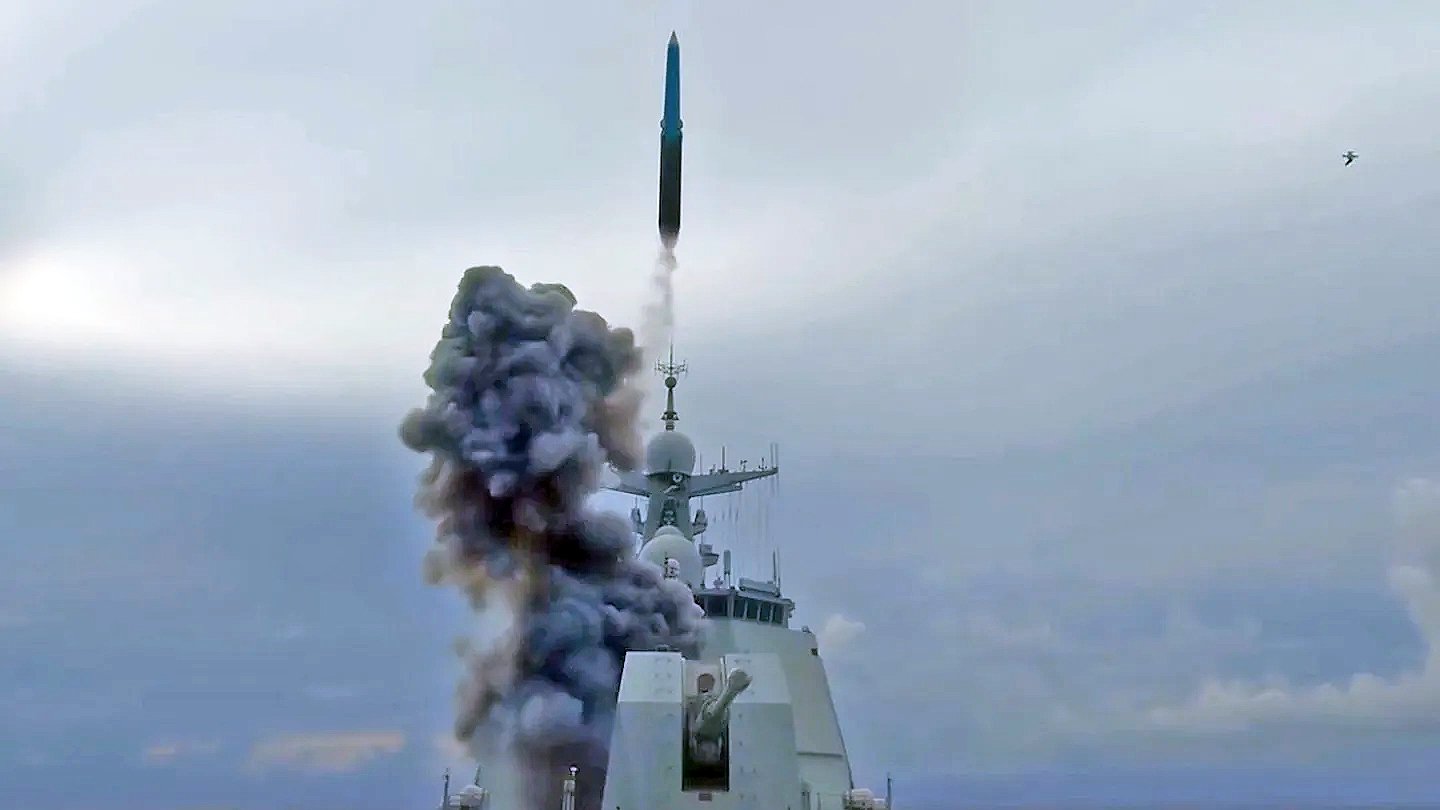
Хятадын тэнгисийн цэргийн хүчин YJ-20 хэт авианы пуужинг өмнө нь зөвхөн Type 055 ангиллын “супер сөнөөгч” хөлөг онгоцнуудад туршиж байсан бол одоо илүү олон тоогоор үйлдвэрлэгдсэн Type 052D (Luyang III) ангиллын хөлгүүдэд байршуулж байна. Энэхүү алхам нь Бээжингийн бүс нутаг дахь “нэвтрэх боломжгүй бүс” (A2/AD) байгуулах стратегийг өргөжүүлж, тэнгисийн цэргийн хүчний цохилт өгөх чадавхыг эрс нэмэгдүүлж буй хэрэг юм.
YJ-20 нь 6-аас дээш Махын хурдтайгаар нисэж, бай онох үедээ 10 Мах хүртэл хурдлах чадвартай хэт авианы пуужин юм. Агаарын болон баллистик пуужингийн шинж чанарыг хослуулсан энэхүү зэвсэг нь нисэх онгоц тээгч болон бусад томоохон байлдааны хөлөг онгоцуудад ноцтой аюул учруулах зориулалттай бөгөөд 1,000–1,500 км-ийн тусгалтай гэж үздэг. Пуужин нь нислэгийн явцад маневр хийх чадвартай тул орчин үеийн агаарын довтолгооноос хамгаалах системийг сөрөхөд илүү хүндрэлтэй болгодог.
Пентагоны 2025 оны сүүлээр гаргасан тайланд дурдсанаар, Хятад улс дэлхийд тэргүүлэгч хэт авианы пуужингийн зэвсэглэлтэй болсон бөгөөд энэ чиглэлд тасралтгүй хөрөнгө оруулалт хийж байна. Тус улс ийнхүү цөөн тооны хөлөг онгоцонд бус, харин бүхэл бүтэн флотын хэмжээнд дэвшилтэт зэвсэглэлийг түгээж байгаа нь Номхон далайн баруун хэсгийн тэнгисийн цэргийн хүчний тэнцвэрт байдалд томоохон өөрчлөлт авчрах төлөвтэй байна.
Дэлгэрэнгүйг эх сурвалжаас харах
↓Эх сурвалжийг нээх ↓
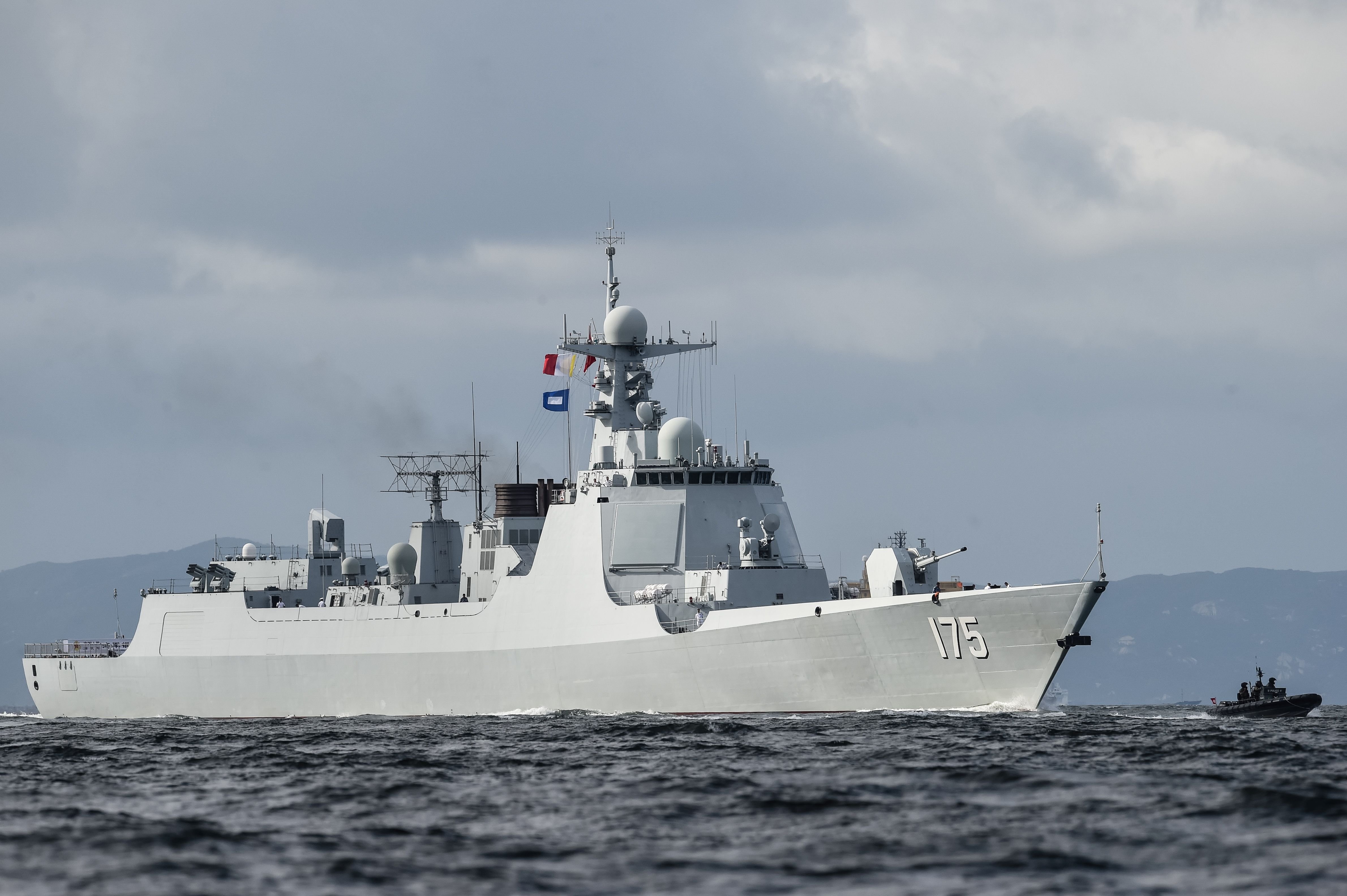
Evidence has emerged indicating that China’s YJ-20 hypersonic anti-ship missile is now also being fielded aboard the People’s Liberation Army Navy’s (PLAN) Type 052D class destroyers. These warships are far more numerous than the Type 055 ‘super destroyers,’ from which the missile was previously seen being fired, as we reported at the time. The new development suggests that the PLAN intends to distribute the weapon across a much broader portion of its surface fleet rather than reserving it exclusively for its largest combatants.
A new video apparently originating from the PLAN shows the launch of a YJ-20 from the cold-launch vertical launch system (VLS) on the foredeck of an unidentified Type 052D destroyer, known in the West as the Luyang III class. After being ejected from the launcher, the missile’s solid rocket motor ignites before it accelerates rapidly away. No target engagement is shown.
Typically, the Type 052D’s VLS would be loaded with variants of the HHQ-9 surface-to-air missile, YJ-18 subsonic anti-ship cruise missile, CJ-10 land-attack cruise missile, and CY-5 anti-submarine missile.
The 7,500-ton Type 052D has 64 VLS cells, 32 forward and 32 aft. It’s unclear whether each of these is able to accommodate the big YJ-20 missile.
This compares to the Type 055’s 112-cell VLS system, which makes it the PLAN’s premier surface strike platform. However, only 10 of these ships are currently in operational service, with additional vessels still under construction. By contrast, approximately 35 Type 052D destroyers have entered PLAN service, with production continuing.
Putting the YJ-20 on the Type 052Ds would significantly expand the number of Chinese warships capable of launching hypersonic anti-ship strikes, further strengthening Beijing’s growing anti-access/area-denial (A2/AD) posture across the western Pacific. On the other hand, it remains possible — although less likely — that the launch depicted is some kind of trial or experimental effort that might not lead to large-scale fielding on these hulls.
The new video follows the release of official Chinese military footage showing what the PLAN described as a “finalization test” of the YJ-20 launched from the Type 055 destroyer Wuxi, late last year. That video appeared to confirm the missile’s integration with China’s largest surface combatant, a warship design that you can read more about here.
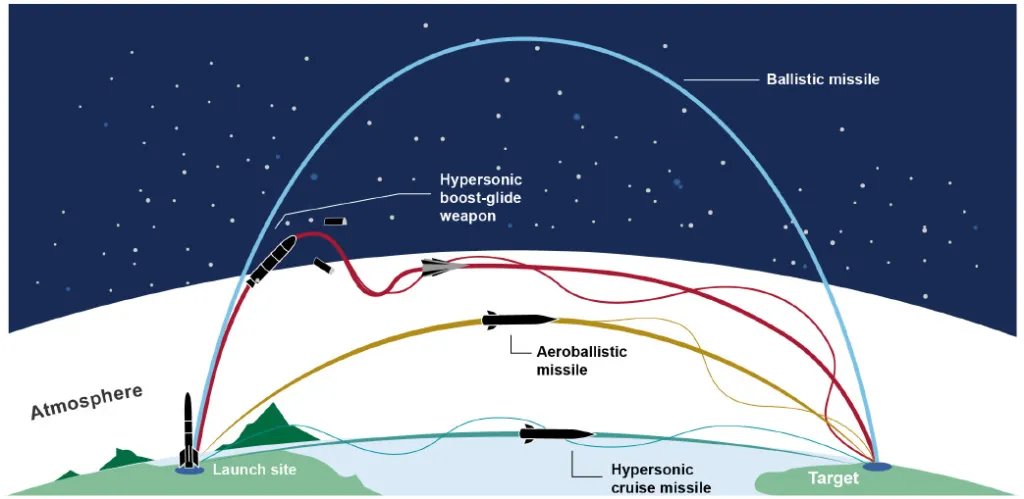
That test from the Wuxi provided the first official acknowledgement of the ship-launched YJ-20. The missile itself had previously been unveiled publicly during China’s military parade commemorating the 80th anniversary of victory over Japan in World War II, although speculation surrounding the weapon stretches back several years before that.
A missile first observed during what appeared to be a Type 055 launch in 2022 was widely referred to as the YJ-21. Subsequent official Chinese designations now strongly suggest that weapon was actually the YJ-20, or an earlier developmental version of it.
The YJ-20 is understood to be a hypersonic anti-ship weapon employing either an aero-ballistic flight profile or potentially a boost-glide vehicle: different Chinese sources have described both concepts at various times. In either case, the missile is optimized for extremely high terminal speed combined with unpredictable maneuvering designed to defeat modern naval air defenses.
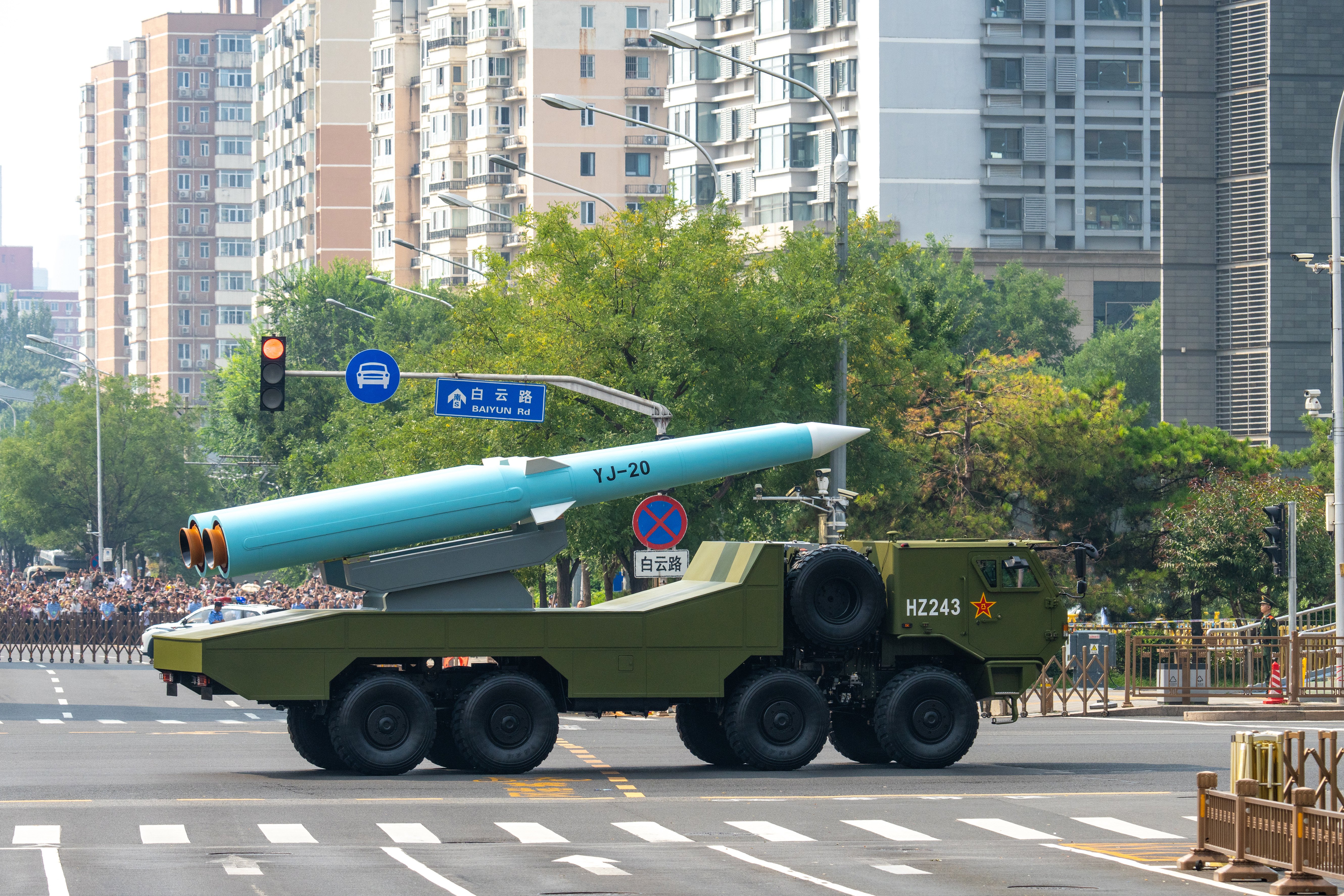
Unlike a traditional ballistic missile that follows a predictable parabolic arc, an aero-ballistic missile can execute quasi-ballistic maneuvers — including skip-glide or ‘porpoising’ trajectories — as it descends toward its target. These abrupt changes in altitude and direction make interception significantly more challenging.
Chinese state media have also described the missile as employing a conical boost-glide vehicle, which would use a rocket booster to accelerate to high altitude before gliding toward its target while conducting sustained maneuvering throughout the terminal phase.
Although many details remain murky, it is generally considered that the missile achieves speeds well above Mach 6 during cruise and may approach Mach 9 during its terminal attack. Estimated range is generally assessed at more than 620 miles.
Guidance is believed to combine satellite navigation and mid-course updates before transitioning to an active radar and/or infrared seeker during the final approach.
Weapons with these characteristics are particularly well suited to engaging high-value naval targets including aircraft carriers, amphibious assault ships, cruisers, and other major surface combatants. The missile likely also possesses a secondary land-attack capability against fixed targets.
With their combination of extreme speed and maneuverability, hypersonic weapons can dramatically compress an opponent’s decision-making timeline while reducing opportunities for interception, making them especially valuable against time-sensitive targets. They also require very high-end interceptors, if they can be intercepted at all.
The apparent expansion of the missile to the Type 052D is arguably an even more significant milestone than the Type 055 test itself.
For China, fielding the YJ-20 aboard both the Type 055 and the much more numerous Type 052D dramatically increases the number of PLAN hulls capable of conducting long-range hypersonic anti-ship attacks. Such a move represents another step in expanding the reach of its layered A2/AD strategy. Rather than concentrating hypersonic capability in a small number of flagship destroyers, the PLAN appears to be distributing it across a much larger force capable of operating throughout the First Island Chain and increasingly beyond it.
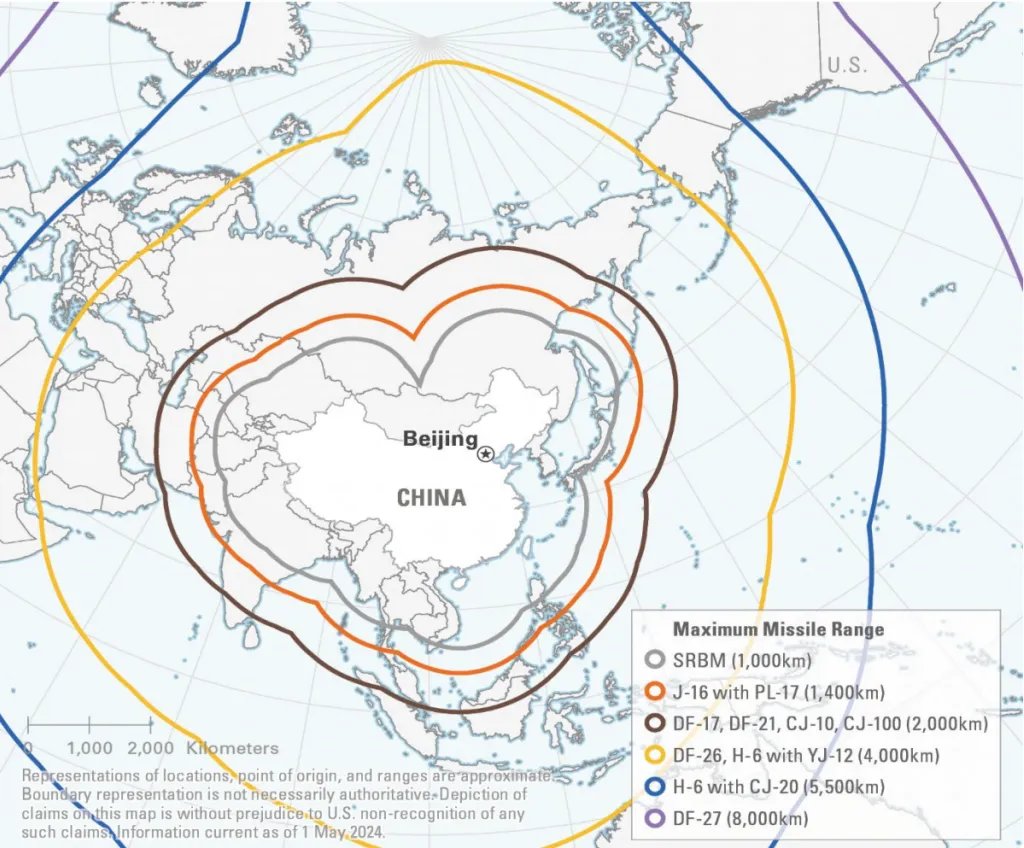
Clearly, a larger force of PLAN destroyers armed with hypersonic anti-ship missiles would complicate U.S. and allied naval operations across the western Pacific by increasing the number of launch platforms capable of threatening high-value warships from long stand-off ranges.
At the same time, it is unclear if the YJ-20 has formally entered full operational service. However, official test footage, public appearances during military parades, and, above all, launches from two separate destroyer classes all point toward the missile transitioning from a developmental program to a broader capability.
The development underscores two major issues for the U.S. military as it gears up to face the prospect of a potential conflict with China in the Indo-Pacific. On the one hand, the PLAN is growing at an alarming rate, and Chinese shipyards are churning out increasingly capable warship designs, not to mention submarines and other naval weapons.
The latest annualPentagon reportto Congress on China’s military, released at the end of 2025, stated that “China has the world’s leading hypersonic missile arsenal and continued to advance the development of conventional and nuclear-armed hypersonic missile technologies during the past year.”
With that in mind, the case study of the YJ-20 further underscores the fact that China is investing heavily in the development of hypersonic missiles and is now apparently scaling that capability across a larger proportion of its surface fleet, something that will have a significant effect on the regional naval balance.
Contact the author: thomas@thewarzone.com

